Why Do Foxes Laugh? What Their Strange Sounds Mean

Foxes can make some surprisingly human-sounding noises, and a few of them resemble laughter so closely that people often describe foxes as “laughing.” The reality is more interesting. Foxes use a wide range of vocalizations to communicate, including cackles, pants, barks, yips, whines, growls, and screams. Some of these calls may occur during play, excitement, or friendly interaction, but the sound alone does not prove that a fox is amused in the human sense.
When people ask “why do foxes laugh?”, they are usually referring to cackles, pants, and other vocalizations that sound like laughter to human ears. These calls can appear during social interaction, excitement, play, or affiliative behavior. However, fox “laughter” is best understood as communication rather than proof that foxes experience humor or amusement exactly as people do.
Do Foxes Really Laugh?
The question “why do foxes laugh?” often begins with vocalizations that sound remarkably similar to human laughter, but calling them “laughter” is mainly a description of how the sound appears to us. Similar curiosity surrounds questions such as Do Wolves Purr, where human terms are sometimes applied to animal vocalizations that serve very different purposes. Certain fox calls include repeated, breathy, or cackling bursts that can resemble chuckling or a rapid “ha-ha-ha,” but that does not necessarily mean the fox has found something funny.
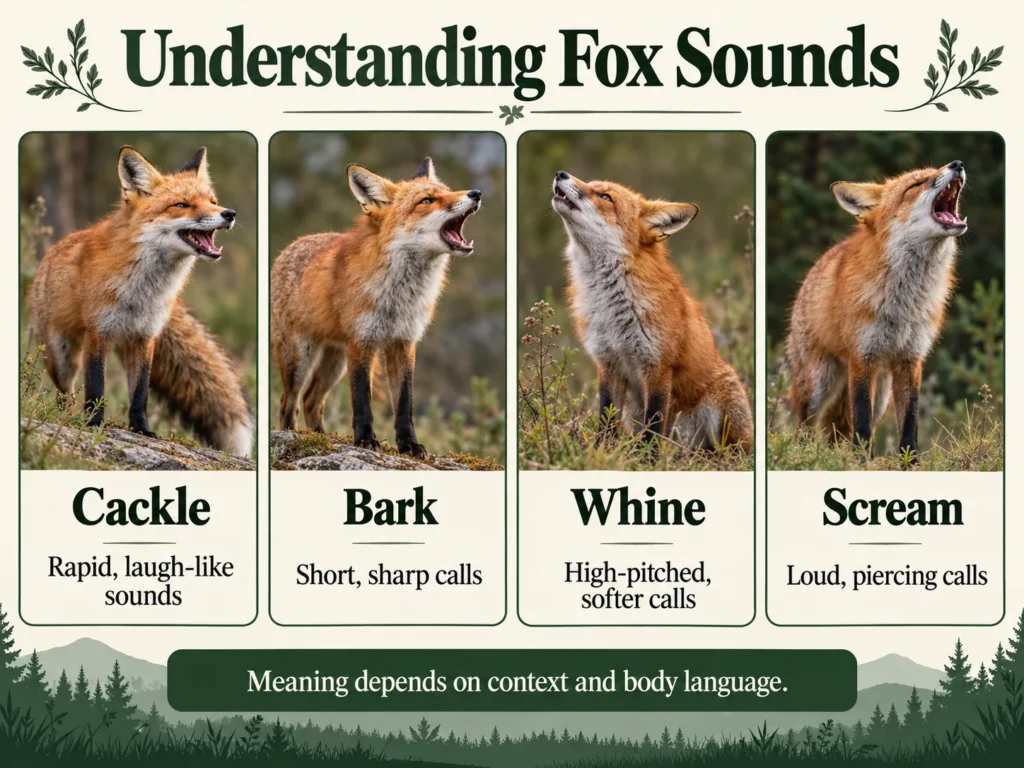
In animal behavior, researchers are cautious about assigning human emotions to vocalizations without supporting evidence. A fox may vocalize because it is excited, interacting socially, playing, seeking contact, warning another animal, or responding to a tense situation. The best way to interpret a laugh-like fox sound is therefore to consider the specific call, the fox’s body language, who or what is nearby, and what is happening at the time.
Why Do Foxes Sound Like They Are Laughing?
To answer the question “why do foxes laugh?” from a sound perspective, it helps to notice that some calls contain short, repeated vocal bursts with changes in pitch and rhythm. To human listeners, that pattern can sound familiar enough that the brain interprets it as chuckling, giggling, or laughing.
Cackling and vocal panting are two examples that can create this effect. In tame red foxes, certain repeated cackles and pants have been documented during social interactions with people. These sounds can be especially striking because they resemble breathy human laughter.
However, similarity in sound does not automatically mean similarity in emotion. A fox call is part of a broader communication system, and the same general vocal type may occur in different situations. This is similar to how Sneaky Animals can use signals or behaviors that look deceptive to humans but serve practical survival purposes. Context is what turns a strange noise into a more meaningful behavioral clue.
Quick Guide to Fox Sounds and Their Meanings
| Fox Sound | What It Can Resemble | Common Context |
|---|---|---|
| Cackle | Chuckling or laughter | Social interaction |
| Pant | Repeated breathy “ha” sounds | Affiliative or excited interaction |
| Bark | Short, sharp call | Alert, contact, or territorial context |
| Yip | Brief high-pitched call | Social or contact communication |
| Whine | Soft, high sound | Close social interaction or solicitation |
| Growl | Low, rough sound | Threat, tension, or defense |
| Scream | Loud human-like cry | Intense social or reproductive situations |
For readers asking “why do foxes laugh?”, these descriptions are useful, but they are not rigid translations. A fox call can change in meaning depending on the situation, distance between animals, receiver, and surrounding body language.
When Do Foxes Make Laugh-Like Sounds?

During Social Interaction
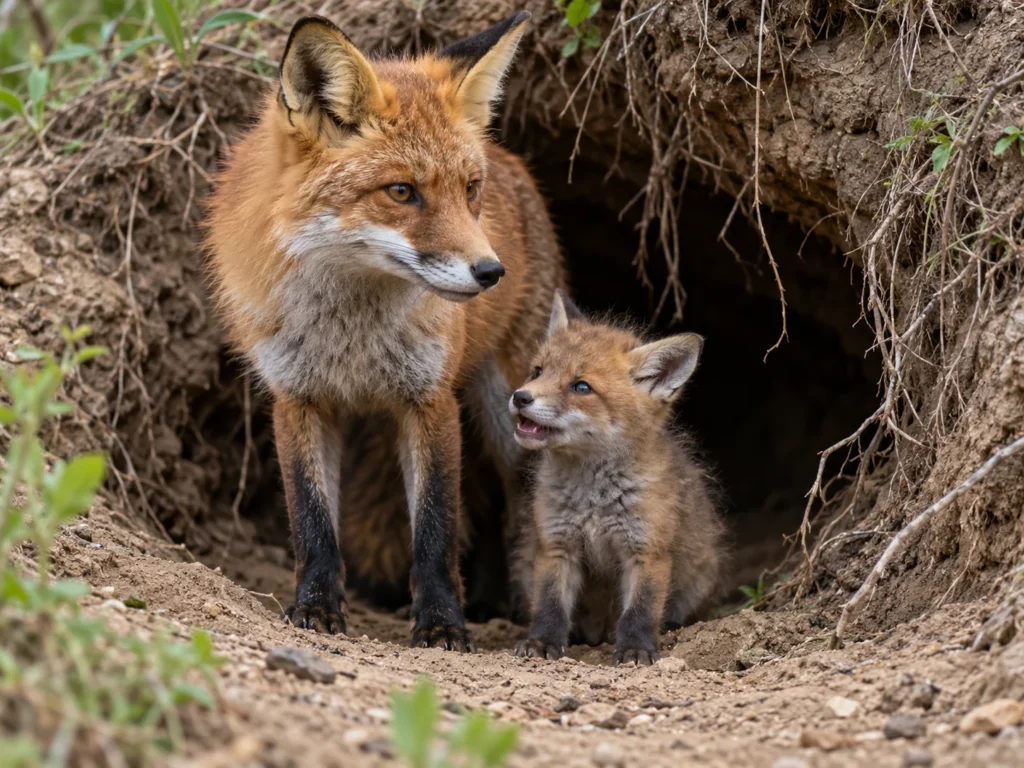
When asking “why do foxes laugh?” during social interaction, it helps to remember that foxes use vocalizations to communicate with other foxes, and some calls can sound surprisingly playful or laugh-like. Social contact may involve cackles, short calls, whines, or other sounds depending on the individuals and situation.
A relaxed interaction is likely to look different from a territorial dispute. Loose body movement, close approach, and non-threatening behavior can help distinguish a social exchange from a defensive one.
During Play or Excitement
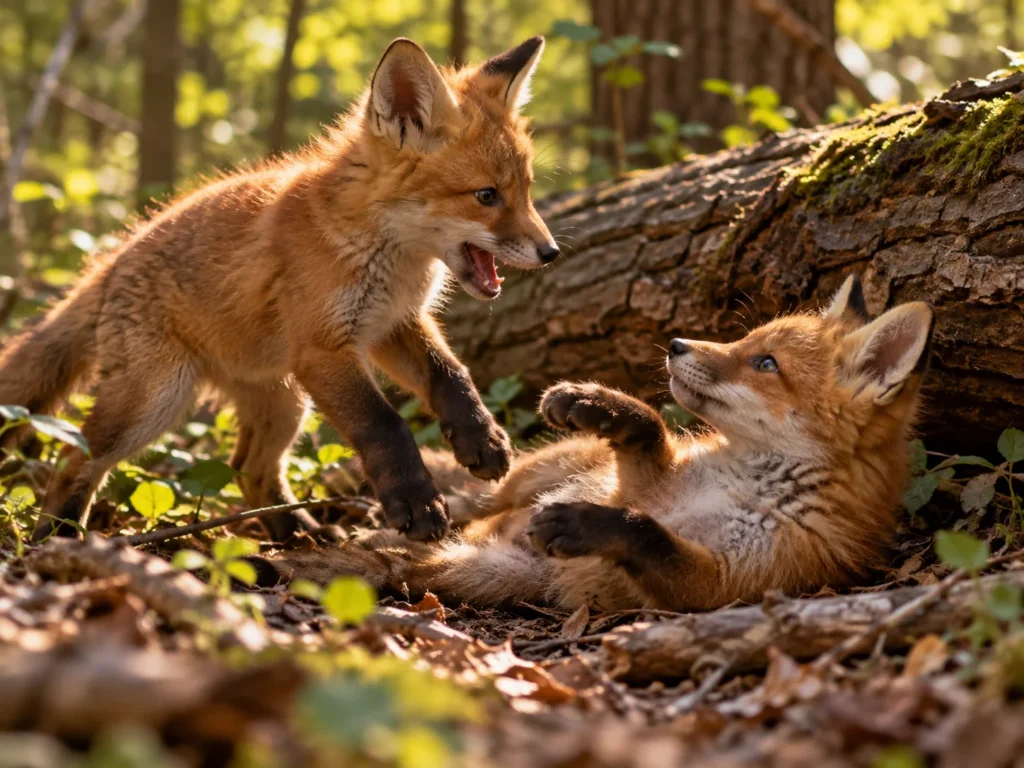
People often ask “why do foxes laugh?” while watching play because young foxes and socially comfortable foxes may become more vocal during active interaction. Running, chasing, wrestling, and other forms of play can be accompanied by short calls that human listeners may interpret as laughter. This playful behavior can make foxes seem similar to Mischievous Animals, although the sounds are better understood as part of normal social communication rather than deliberate mischief.
That does not mean every playful fox laughs. Play behavior varies between individuals, and some foxes may be much quieter than others. The safest interpretation is that vocal activity can accompany excitement and play rather than that foxes laugh at jokes.
Around Familiar Humans
The question “why do foxes laugh?” around people is often inspired by tame or domesticated red foxes interacting with humans. Research on foxes selectively bred for tameness found that certain cackling and panting vocalizations were especially common in human-directed social encounters.
This is important evidence that laugh-like calls can be associated with affiliative behavior. However, these foxes have a very different behavioral history from wild foxes. Their responses should not be treated as a universal rule for every fox species or every wild individual.

During Uncertain or Tense Situations
A fox may also vocalize when it is unsure, alert, defensive, or responding to another animal. Some sounds that seem funny or harmless to human ears can occur in situations that are not especially relaxed.
This is why sound alone is not enough. If the fox is stiff, retreating, growling, flattening its ears, or keeping distance, the interaction may involve tension rather than playfulness.
What Is a Fox Cackle?
When people ask “why do foxes laugh?”, the fox cackle is one of the clearest sounds behind the question because it is a short, repeated vocalization that can resemble chuckling or rapid laughter. It is one of the call types that most clearly explains why people say foxes “laugh.”
Cackles have been identified as distinct vocalizations in red fox research, and they can occur during social interactions. In tame foxes, cackling has been associated with certain human-directed encounters, which helps explain why videos of friendly foxes sometimes feature laugh-like sounds.
Still, a cackle should not be translated automatically as “I am happy.” Its meaning depends on the social context, the receiver, and the fox’s overall behavior.

What Is Fox Panting?
Another clue to the question “why do foxes laugh?” is fox panting, which can consist of short, repeated breathy vocal bursts that sound somewhat like “ha-ha-ha.” This is different from ordinary panting used for cooling after heat or physical exertion.
In studies of tame red foxes, vocal panting appeared prominently in certain interactions with humans. The rhythm and breathiness of the sound can make it especially laughter-like to people.
As with cackling, however, the safest interpretation is that it is a social vocalization rather than direct proof of amusement. The surrounding behavior remains essential for understanding what the fox is communicating.
Do Foxes Laugh When They Are Happy or Playing?
When considering “why do foxes laugh?” during positive interactions, foxes can produce laugh-like calls during situations that appear relaxed, social, playful, or affiliative. That makes it reasonable to say that some of these sounds are associated with positive social situations.
The problem comes when “associated with positive interaction” becomes “the fox is laughing because it is happy.” Animal emotions are difficult to infer from sound alone, and a familiar-sounding call can easily encourage people to project human feelings onto the animal.
A better approach is to look for supporting behavioral clues. Loose movement, play chasing, relaxed posture, voluntary approach, and repeated social engagement suggest a very different situation from stiff posture, retreat, growling, or defensive behavior. So yes, foxes can make laugh-like sounds while playing or interacting positively, but the call should still be interpreted as part of a larger communication pattern.
Why Do Foxes Scream Instead of Laugh?
Answering “why do foxes laugh?” also requires separating laugh-like calls from screams, because fox screams are different from the cackles and pant-like sounds people usually describe as laughter. Unlike the calm social behavior often associated with Humble Animals, fox vocalizations can become sharp, intense, and highly noticeable depending on the situation. A scream is typically louder and more piercing, sometimes sounding disturbingly similar to a human cry.
These calls can occur during intense social situations and are often associated with reproductive or territorial behavior. Foxes can also make screams, barks, and other high-energy calls at night, which is one reason people sometimes mistake foxes for distressed humans or other animals.
Not every strange fox noise is a laugh. A cackle, bark, yip, growl, and scream can all carry different information, and some are much more likely to occur in tense or high-intensity situations.
Do Wild Foxes and Tame Foxes Make the Same Sounds?
When exploring “why do foxes laugh?”, it is important to distinguish wild and tame red foxes, which share many aspects of the same vocal repertoire but can behave very differently toward humans. Selectively bred tame foxes have been studied because generations of breeding for reduced fear and increased friendliness changed how they respond socially to people.
Those foxes often produced distinctive cackles and vocal pants during human-directed interactions. This makes them especially useful for answering “why do foxes laugh?” without assuming that every call signals amusement.
Wild foxes, however, are generally more cautious around people and should not be expected to behave like tame research foxes or pet-like animals seen online. Findings from tame red foxes also should not automatically be applied to Arctic foxes, fennec foxes, gray foxes, or every other fox species. The underlying lesson is that species, individual temperament, social history, and context all influence vocal behavior.
How Can You Tell What a Fox Sound Means?
For anyone asking “why do foxes laugh?”, the call itself is only one part of the message. To interpret fox behavior more accurately, look at what is happening around the vocalization. A fox approaching another individual with loose movements and playful behavior creates a different context from one standing stiffly, growling, or backing away. Ear position, tail carriage, body tension, distance, and movement can all provide extra clues.
The receiver also matters. A fox calling toward another fox may use a sound differently from a tame fox vocalizing toward a familiar person. Whether the animal is approaching, retreating, playing, defending space, or seeking contact can change the likely meaning. This is why a simple “sound equals emotion” dictionary is unreliable. Fox communication makes more sense when vocalization and body language are interpreted together.
Frequently Asked Questions
Do foxes actually laugh?
Foxes can make vocalizations that sound very much like laughter, especially cackles and repeated breathy pants. However, these sounds are better described as fox communication than as proof that foxes laugh at humor the way humans do.
Why do foxes make laughing noises?
Laugh-like fox sounds may occur during social interaction, excitement, play, or affiliative encounters. Some tame red foxes are especially well known for producing cackling and panting sounds around familiar humans.
Do foxes laugh when they are happy?
Some laugh-like calls can occur in relaxed or positive social situations, but sound alone cannot prove that a fox is happy. Body language and the wider interaction provide important context.
Why do foxes make strange noises at night?
Foxes are often active at night and may use barks, screams, yips, and other calls to communicate. Some nighttime sounds are linked to social, territorial, or reproductive interactions and can sound surprisingly human.
What is the difference between a fox laugh and a fox scream?
A fox “laugh” usually refers to cackling or breathy, repeated calls that resemble chuckling. A scream is generally louder, sharper, and more intense and is more often associated with high-intensity social or reproductive situations.
Final Thoughts
So, why do foxes laugh? Foxes really can make calls that sound uncannily like laughter, but those sounds are part of a complex communication system rather than evidence of human-style humor. Cackles, pants, barks, yips, and screams all make more sense when the specific call is considered alongside body language and social context.