
Greedy Animals: 15 Animals That Always Seem to Want More
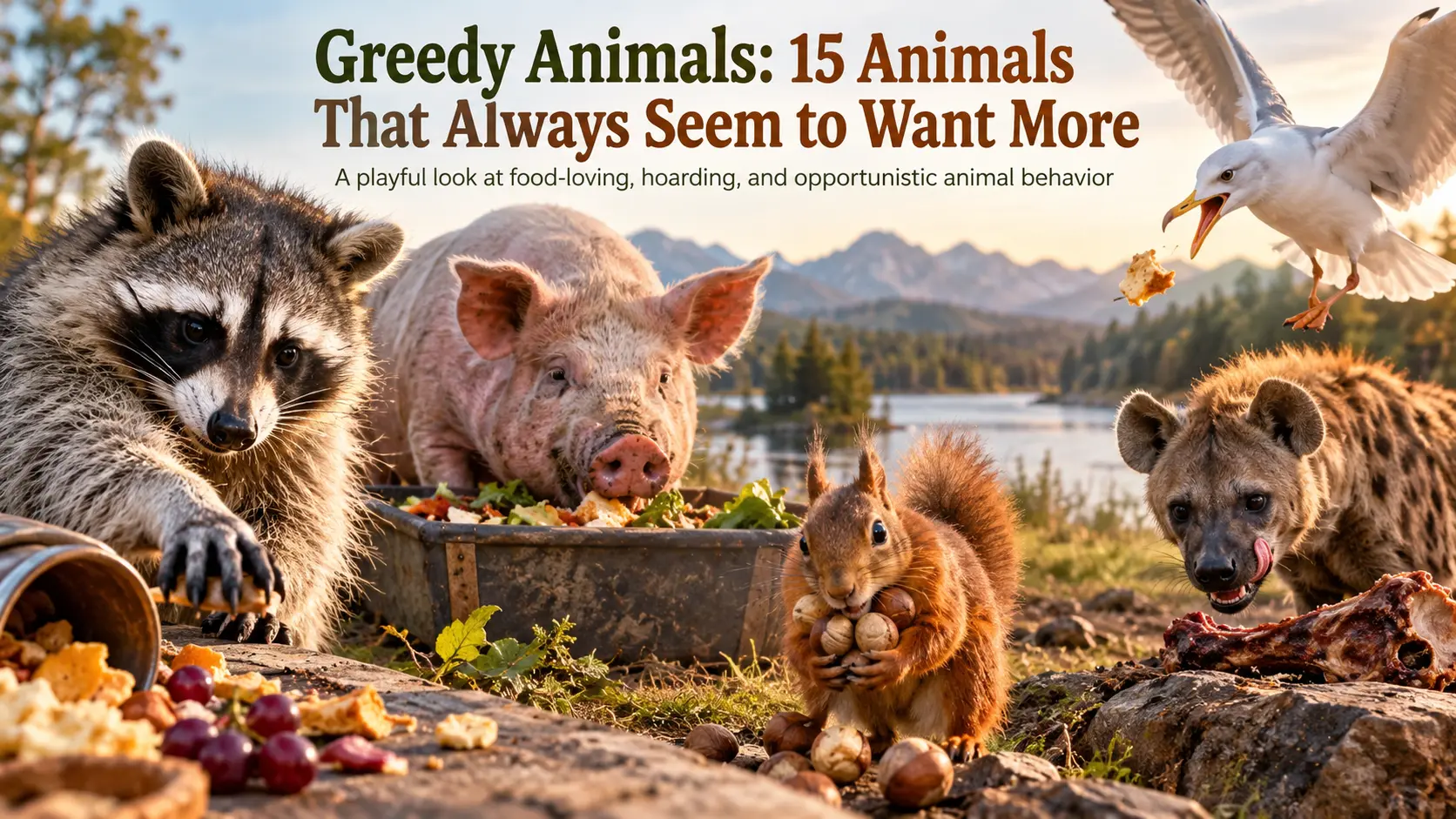
Some animals can look remarkably greedy. A hamster may pack both cheeks with food, a squirrel can build large stores, and a bear may spend much of the day feeding before winter. Yet “greed” is a human moral idea, not a scientific animal category. In nature, these behaviors usually reflect food storage, competition, opportunity, or seasonal energy needs. The 15 greedy animals below show how apparently greedy feeding can actually be a practical survival strategy.
Animals described as greedy are usually showing normal survival behaviors rather than human-style greed. Squirrels, hamsters, ravens, bears, raccoons, hyenas, vultures, and other species may hoard food, compete intensely, exploit opportunities, or consume large meals because these strategies help them survive changing food conditions and competition.
Are Animals Really Greedy?
Calling an animal “greedy” can be a useful informal description, but it is not a scientific diagnosis of its motives. Biologists usually describe observable behavior instead, such as caching, hoarding, hyperphagia, opportunistic feeding, scavenging, and resource competition. These behaviors often make ecological sense. Food can be seasonal, patchy, or quickly taken by competitors, so collecting, guarding, or consuming it while available can improve survival. A scavenger fighting for a carcass or a squirrel storing seeds may look excessive to us, but the animal is responding to uncertainty rather than following a human idea of greed.
15 Greedy Animals and Why They Seem That Way
The animals below are not ranked from most to least greedy. Each represents a different feeding or resource-use strategy that can look greedy while serving a practical biological purpose.
1. Red Squirrel — The Food Stockpiler
Red squirrels collect cones, seeds, fungi, and other foods and may keep large supplies in concentrated storage areas called middens. Some populations also scatter food across smaller caches. Carrying away item after item can look excessive, but the squirrel is building a reserve for periods when fresh food becomes harder to find. A well-stocked cache can be crucial during colder or less productive seasons.
2. Hamster — The Cheek-Pouch Hoarder
Hamsters have expandable cheek pouches that let them carry far more food than they can eat immediately. They transport that food back to a burrow, where it can be stored safely. Those bulging cheeks may look like classic greed, but the pouches work as efficient transport tools. Gathering food quickly also reduces the time a hamster must spend exposed while foraging.
3. Common Raven — The Strategic Food Hider
Common ravens cache valuable foods and later return to recover them. They can also adjust how they hide food when other ravens are nearby and might steal from the cache. A raven moving or guarding food may look unusually possessive, but the behavior helps preserve future access to a limited resource. It also reflects strong memory and sensitivity to social competition.
4. Clark’s Nutcracker — The Seed-Storing Specialist
Clark’s nutcrackers collect and hide thousands of seeds during periods of abundance, spreading their stores across many locations. They later use impressive spatial memory to recover much of that food. Taking so many seeds at once may seem greedy, but the strategy prepares the bird for seasons when fresh food is harder to obtain. Its huge caching effort is therefore a form of long-term food security.
5. Brown Bear — The Seasonal Heavy Feeder
Brown bears, including grizzlies, can become extremely food-focused before winter. During hyperphagia, they spend much of their time eating and building fat reserves before denning. This may resemble overeating, but the extra energy is essential preparation. Bears depend heavily on stored body fat through winter, so taking advantage of calorie-rich foods while they are abundant can make the difference between entering the den well prepared or undernourished.
6. Raccoon — The Opportunistic Omnivore
Raccoons eat a wide variety of foods, including fruits, nuts, insects, aquatic animals, eggs, carrion, and food associated with people. This flexibility gives them a reputation for greed, especially when they repeatedly investigate bins or campsites. Their behavior is better described as opportunistic feeding. An animal able to recognize and exploit many different resources has a strong advantage when one food source disappears.
7. Wild Boar — The Relentless Generalist Forager
Wild boars root through soil for roots, bulbs, plant material, invertebrates, and other edible items, while also taking animal foods when opportunities arise. Their broad diet can make them seem endlessly hungry. In reality, generalist feeding is what allows wild boars to survive across many habitats. They continually adjust their diet to changing seasons and whatever useful resources the environment provides.
8. Brown Rat — The Adaptable Food Collector
Brown rats thrive around people partly because they are highly adaptable feeders. They can use many kinds of available food and may carry or store useful items for later. In cities, farms, and warehouses, that flexibility can make them look constantly focused on getting more. Ecologically, it is a survival advantage: rats can exploit scattered resources and quickly adapt when food conditions change. Rats are usually called docile animals because they act calm and manageable.
9. American Herring Gull — The Opportunistic Food Grabber
American herring gulls use fish, marine invertebrates, carrion, refuse, and other available foods. They may also take food obtained by other birds or exploit fishing activity and human waste. Their bold food-grabbing behavior has earned gulls a greedy reputation, but it reflects opportunistic foraging. Coastal food sources can be patchy and temporary, so acting quickly before competitors arrive is often beneficial.
10. Spotted Hyena — The Competitive Feeder
Spotted hyenas are capable hunters as well as scavengers, despite the stereotype that they only steal kills. Around valuable food, several clan members and other scavengers may compete intensely for access. This can look aggressive or greedy, but the behavior reflects hunger, social rank, and limited availability. A carcass will not last indefinitely, so securing a share before competitors consume it is an important survival challenge.
11. King Vulture — The Dominant Carcass Visitor
King vultures feed on carrion and can gain priority access when they arrive at a crowded carcass. Smaller scavenging birds may give way, making the king vulture appear to be taking over the meal. Carcasses, however, are temporary resources that attract intense competition. Using size and strength to obtain access is therefore better understood as resource competition than as greed.
12. Tasmanian Devil — The Rowdy Communal Eater
Tasmanian devils are famous for noisy feeding sessions around carcasses. Several animals may gather at the same food source, producing growls, screeches, and confrontational displays. The scene can look like uncontrolled greed, but carrion is a concentrated resource that may disappear quickly. Each devil benefits from feeding while the opportunity exists, and their noisy interactions help negotiate access among competitors.
13. Burmese Python — The Large-Meal Specialist
A Burmese python can swallow substantial prey whole, which makes a single feeding event look extreme. After eating, however, the snake may spend days or even weeks digesting before it needs another meal. This is very different from constant overeating. Large snakes follow an intermittent feeding strategy in which one successful hunt can provide energy for a long period.
14. American Alligator — The Opportunistic Predator
American alligators eat fish, amphibians, birds, reptiles, mammals, and other suitable prey. They often take advantage of opportunities rather than feeding continuously. A large meal may look greedy, but reptiles generally have lower energy requirements than similarly sized warm-blooded animals. The fact is, they come in energetic animals. Capturing a good meal when it becomes available can sustain an alligator for a significant period without the need for constant feeding.
15. Chimpanzee — The Social Resource Competitor
Chimpanzees live in socially complex communities where access to desirable foods can be influenced by dominance, relationships, and competition. High-value resources may attract several individuals, and some may gain priority over others. Humans might interpret this as selfishness, but it is more accurate to describe it as social resource competition. Rank, timing, alliances, and nearby group members can all affect who gains access.
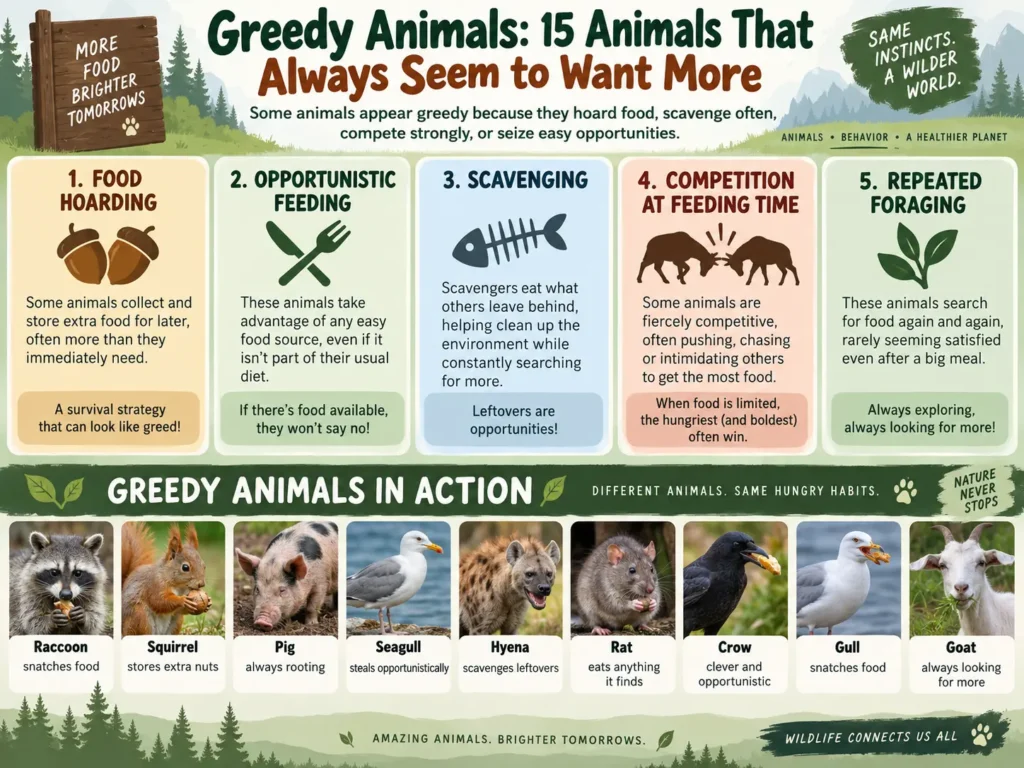
Why Do Some Animals Hoard or Compete for Food?
Food in nature is rarely available evenly throughout the year. Seeds may be abundant for only a short season, carcasses can disappear within hours, and winter may sharply reduce fresh resources. Animals that collect, store, or consume food when it is available can therefore gain a major survival advantage.
Caching helps squirrels, hamsters, ravens, and nutcrackers prepare for later shortages. Seasonal heavy feeding lets bears build energy reserves, while raccoons, rats, boars, and gulls benefit from flexibility. Scavengers often compete because several animals may depend on the same temporary food source. What appears excessive to humans can therefore be a sensible response to uncertainty.
Greedy Animals vs Animals That Simply Eat a Lot
Eating a huge amount does not automatically make an animal a strong example of apparent greed. Some species consume large quantities because of body size, metabolism, growth, migration, reproduction, or the need to support young. Greedy-looking behavior is more about how resources are used. An animal may cache food for later, defend access to a limited source, exploit an unexpected opportunity, or feed intensely before scarcity. A blue whale, for example, eats enormous quantities, but that is mainly driven by its immense body and energy requirements rather than hoarding or food competition.
Key Takeaways
- “Greedy” is an informal human label, not a scientific category of animal behavior.
- Squirrels, hamsters, ravens, and nutcrackers store food for future use.
- Bears may feed intensely before winter to build essential fat reserves.
- Raccoons, rats, boars, and gulls benefit from opportunistic feeding.
- Hyenas, vultures, Tasmanian devils, and chimpanzees may compete strongly when valuable food is limited.
Frequently Asked Questions
What Is the Greediest Animal in the World?
There is no scientifically recognized “greediest animal.” Different species show behaviors that humans may interpret as greed, including caching, intense competition, opportunistic feeding, and consuming large meals. Comparing those feeding strategies is more meaningful than trying to create a scientific greed ranking.
Why Do Squirrels Hoard So Much Food?
Squirrels store food because future supplies are uncertain. Seeds, cones, and nuts may be abundant during one season and much harder to find later. Building caches lets squirrels preserve some of that temporary abundance and return to it when fresh resources become scarce.
Why Do Hamsters Stuff Their Cheeks With Food?
A hamster’s cheek pouches are designed to transport food efficiently. Instead of eating everything where it finds it, the hamster can carry a large load back to a safer burrow and store it. The bulging cheeks therefore reflect food transport and hoarding rather than simple overeating.
Are Bears Greedy Because They Eat So Much Before Winter?
No. Bears enter a period of intense seasonal feeding called hyperphagia before winter. They use this time to build fat reserves that support them during denning, when normal feeding is greatly reduced or absent. The heavy eating is an important physiological preparation.
Do Animals Understand Greed As Humans Do?
Scientists generally avoid assuming that animals understand moral concepts such as greed in the same way humans do. Instead, they study observable behaviors including food storage, competition, dominance, feeding motivation, and resource use. These explanations are more reliable than assigning human motives to animal behavior.
Final Thoughts
Many so-called greedy animals are actually excellent examples of adaptation. Whether a squirrel builds a cache, a bear feeds heavily before winter, or a Tasmanian devil competes at a carcass, the behavior usually helps manage scarcity, competition, or unpredictable food supplies. What looks greedy from a human perspective is often simply an effective survival strategy.

2 Comments