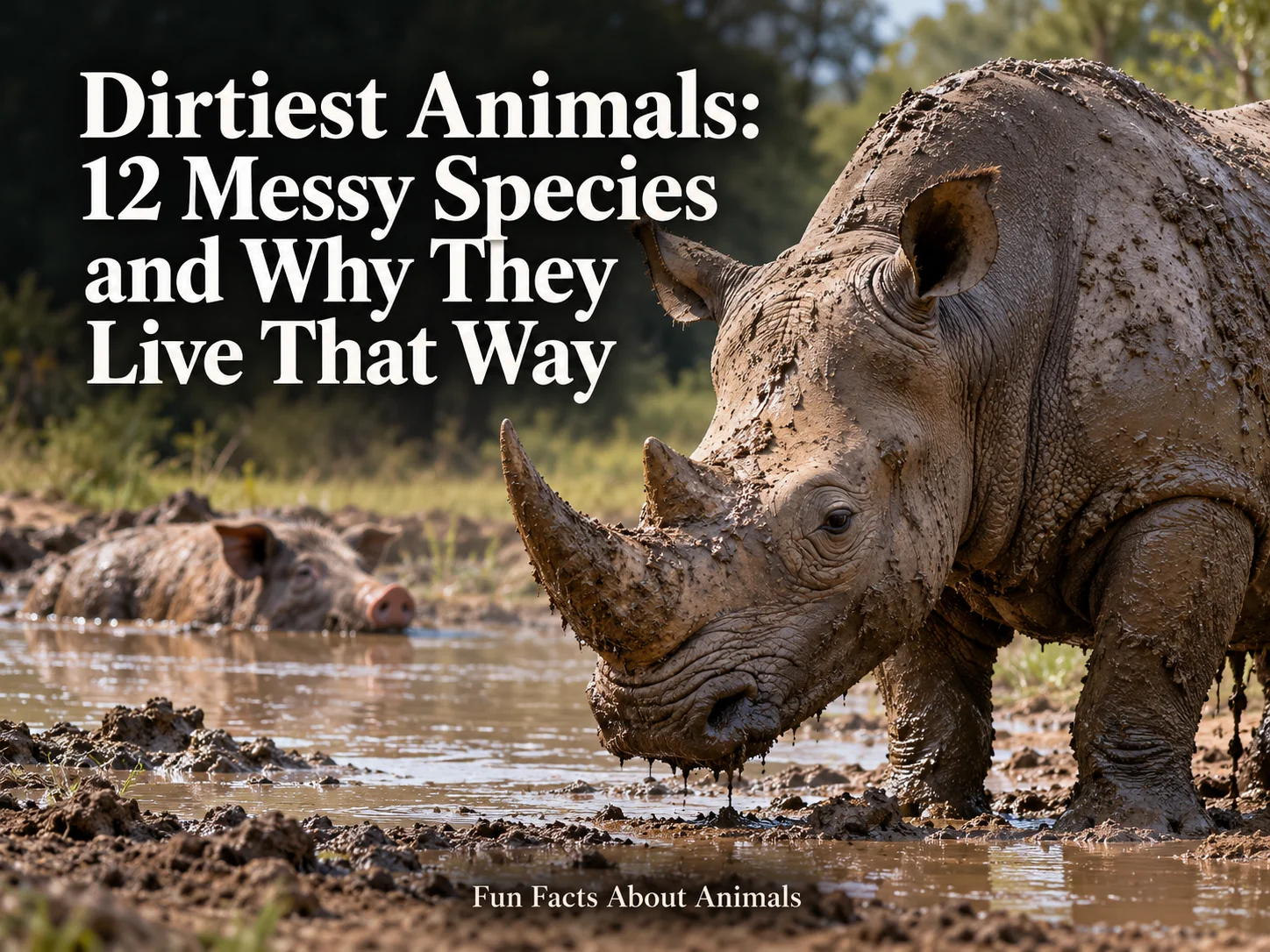
Dirtiest Animals: 12 Messy Species and Why They Live That Way
Some animals earn a “dirty” reputation because they roll in mud, handle dung, feed on carcasses, live around waste, carry algae, or produce huge amounts of slime. Yet dirtiness is a human judgment, not a biological category. Many of these behaviors help animals cool down, defend themselves, find food, reproduce, or maintain their bodies. Others even help remove waste from ecosystems. These 12 supposedly dirty animals show why a messy appearance often tells only half the story.
Animals often considered among the dirtiest include pigs, warthogs, rhinoceroses, bison, hippos, dung beetles, house flies, cockroaches, vultures, sloths, hagfish, and rats. However, many actively groom themselves or use mud, dung, carrion, algae, and slime for useful biological purposes. “Dirty” usually describes human perception rather than an animal’s actual hygiene.
What Does “Dirty” Mean for an Animal?
Biologists do not classify animals as clean or dirty in the way people often do. The label usually reflects human ideas about what seems unpleasant: feces, rotting meat, garbage, mud, strong smells, slime, or organisms growing on the body. Some species may also be grouped with Annoying Animals when these same behaviors bring them into conflict with people, but that does not mean the behavior is abnormal.
An animal can live in a contaminated environment while spending considerable time cleaning itself. Cockroaches and rats are good examples, while pigs may deliberately cover themselves in mud because the coating has practical value. The useful question is therefore not simply which animal looks dirtiest, but why the apparently messy behavior exists.
Why Do Animals Use Mud, Waste, and Other Messy Materials?
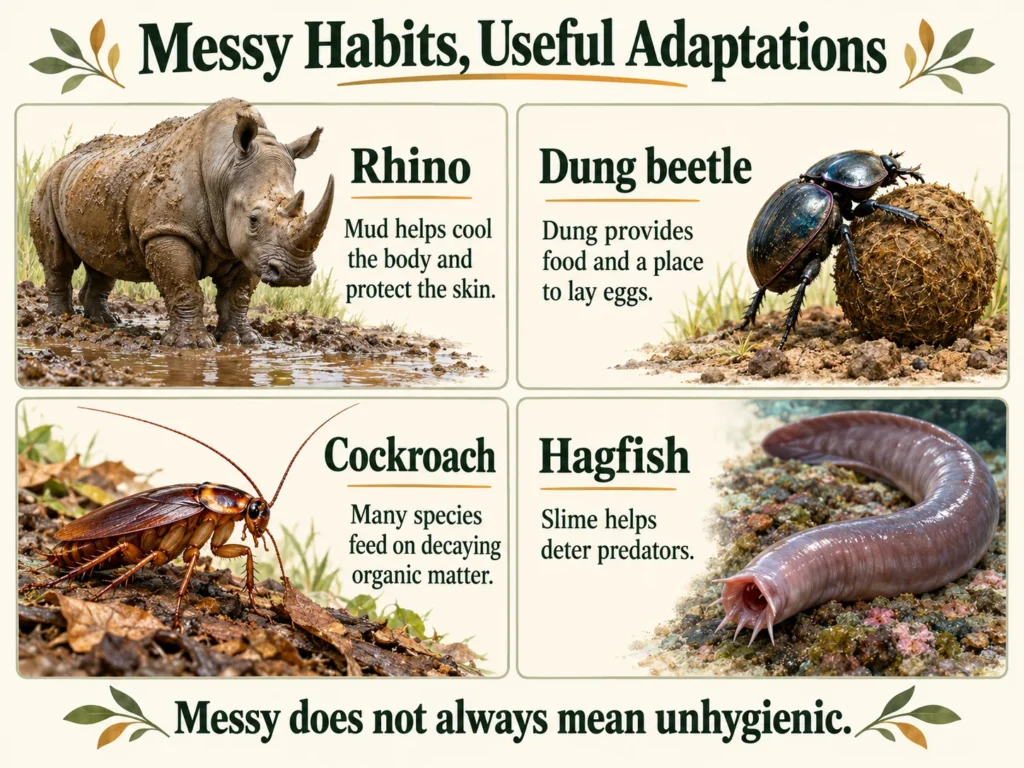
Messy materials can solve important problems. Mud can help an animal cool down or shield exposed skin. Dung can provide food and breeding material. Carrion gives scavengers a concentrated source of nutrients, while slime can function as a rapid defense against predators. Some of these behaviors also affect entire ecosystems. Dung beetles bury waste and redistribute nutrients through soil, while scavengers consume carcasses that would otherwise remain in the environment. What looks dirty from a human perspective may therefore be a feeding strategy, body-maintenance routine, communication signal, or ecosystem service.
Mud-Wallowing Animals
1. Pig
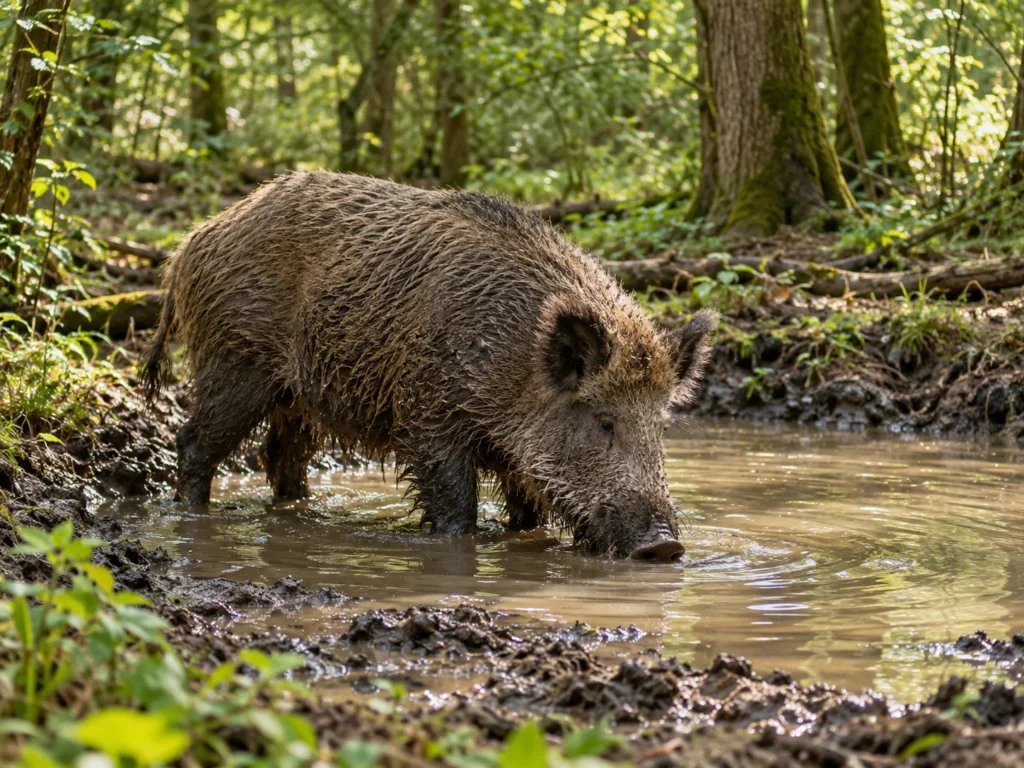
Pigs are often listed among the dirtiest animals, largely because they are frequently pictured covered in mud. Unlike many Animals That Gallop, pigs are not built for fast, springy running, but they are well adapted to rooting, foraging, and moving through varied terrain. Wallowing is normal pig behavior, and its best-supported function is thermoregulation. Because pigs have limited functional sweating, wet mud provides an effective way to lose heat. A muddy pig is therefore using a useful cooling strategy, not proving that pigs naturally prefer living in waste.
2. Warthog
Warthogs are also commonly mentioned among the dirtiest animals because they wallow in mud, especially during hot conditions. Their sparse hair offers little protection from heat and biting insects, and muddy wallows provide relief while coating the body. The result looks messy, but the behavior is functional. A warthog in a wallow is using its surroundings to stay comfortable rather than simply failing to keep itself clean.
3. Rhinoceros
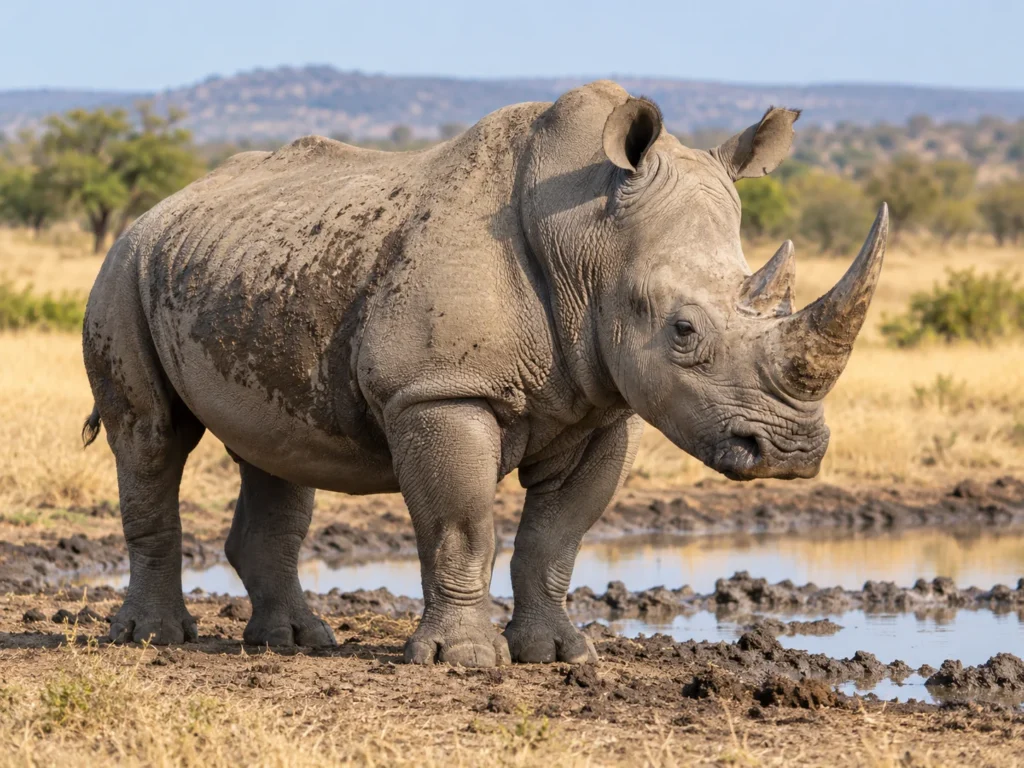
Rhinoceroses are often counted among the dirtiest animals because they regularly wallow and may emerge with thick mud dried across their skin. In white rhinos, mud helps with cooling and can provide a protective layer against sunlight and biting insects. Rhinos may also rub against objects after wallowing. Their mud-covered appearance makes them look dirty, but the coating functions more like useful body protection than unwanted grime.
4. American Bison
American bison can appear among the dirtiest animals because they roll vigorously in loose soil, creating shallow depressions called wallows. Wallowing can help with biting insects and shedding parts of the winter coat, and it also appears in social and reproductive contexts. The dusty coat may look unclean to us, but the behavior is part of normal body maintenance and can even alter patches of prairie habitat.
5. Hippopotamus
Hippos are often included among the dirtiest animals because they spend much of their time in water and mud, and their reputation for messiness is also tied to dung. They can wag their tails rapidly while defecating, spreading fecal material across a wider area. This is not simply random filth: dung spreading has communication and signaling functions and forms part of how hippos interact with their surroundings.
Animals Associated With Waste and Decay
6. Dung Beetle
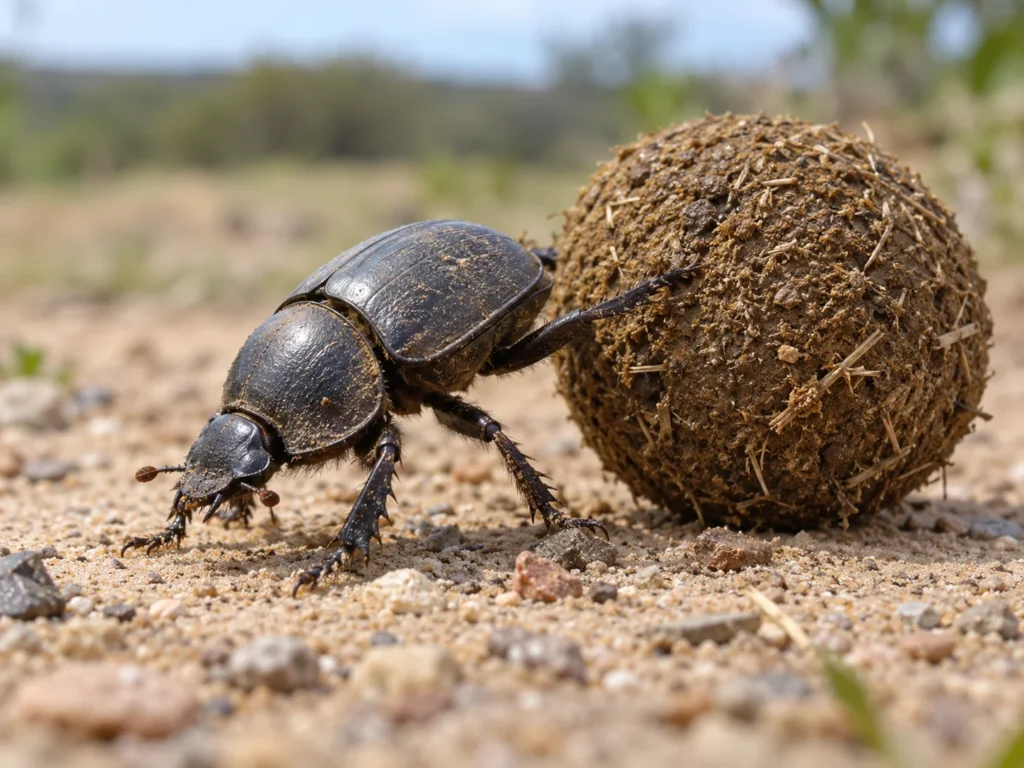
Dung beetles may have one of the strongest claims among the dirtiest animals because of their genuinely messy lifestyle. Many species feed on dung, bury it, roll it into balls, or use it for developing young. Unlike many Anxious Animals, whose behavior may be shaped by vigilance or threat avoidance, dung beetles are better known for specialized feeding and nesting behaviors built around animal waste. Ecologically, though, they are valuable cleanup workers. By moving and burying feces, dung beetles contribute to nutrient cycling, soil processes, seed dispersal, and parasite suppression.
7. House Fly
House flies are often grouped with the dirtiest animals because they regularly visit manure, garbage, and decaying organic matter, allowing their bodies to pick up material from contaminated surfaces. That explains their strong association with poor sanitation. Yet house flies also groom themselves, sweeping their legs across the head and other surfaces. A fly can therefore perform regular body cleaning while still moving through environments humans correctly consider unsanitary.
8. Cockroach
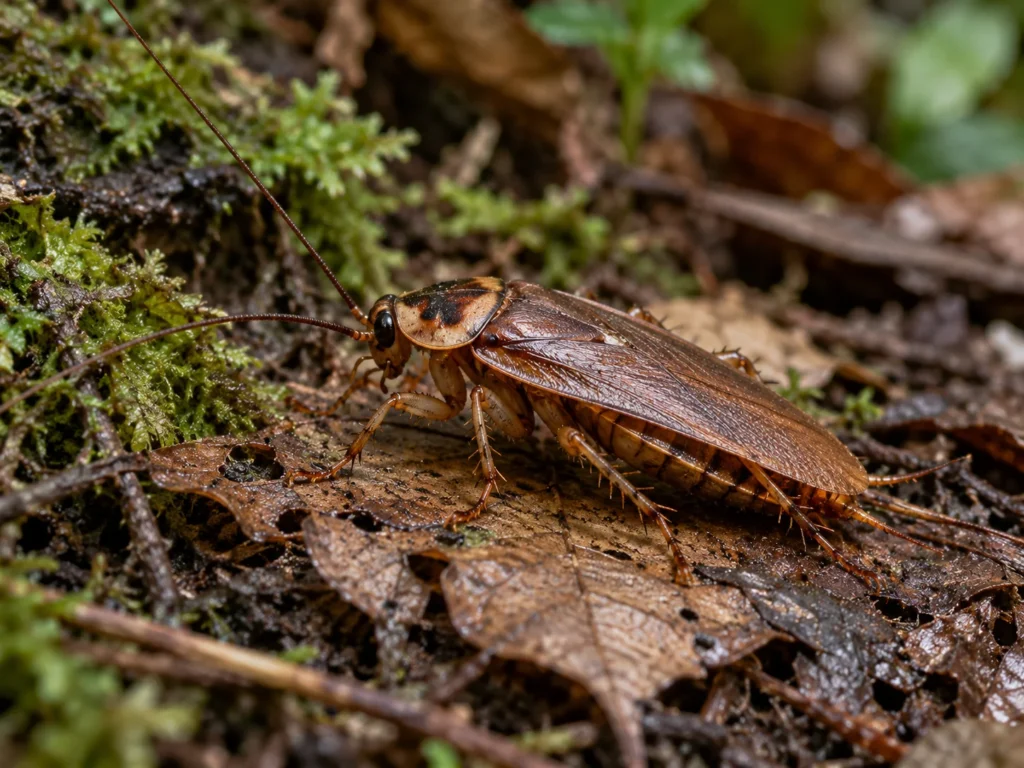
Cockroaches are also commonly placed among the dirtiest animals because some species thrive around garbage, drains, food waste, and buildings. However, cockroaches groom frequently, especially their antennae. Experiments show that preventing antennal grooming allows secretions and environmental chemicals to accumulate and reduces sensory performance. Dirty habitat and lack of self-maintenance are therefore not the same thing.
Carrion Feeders That Look “Dirty”
9. Vulture
Vultures are sometimes counted among the dirtiest animals because they consume carcasses at stages of decomposition that would repel most people. From an ecological perspective, carrion feeding is a valuable specialization. By consuming animal remains, vultures accelerate carcass removal and return nutrients to food webs. Eating carrion is therefore a feeding adaptation, not evidence that vultures simply lack hygiene.
Messy-Looking Animals With Unusual Adaptations
10. Sloth
Sloths sometimes appear on lists of the dirtiest animals because their fur can host green algae and a diverse community of other organisms, sometimes giving the coat a greenish appearance. That may look neglected, but studies show that sloth fur functions as an unusual miniature habitat. The organisms living there are part of a distinctive fur ecology, not proof that sloths are simply too lazy to clean themselves.
11. Hagfish
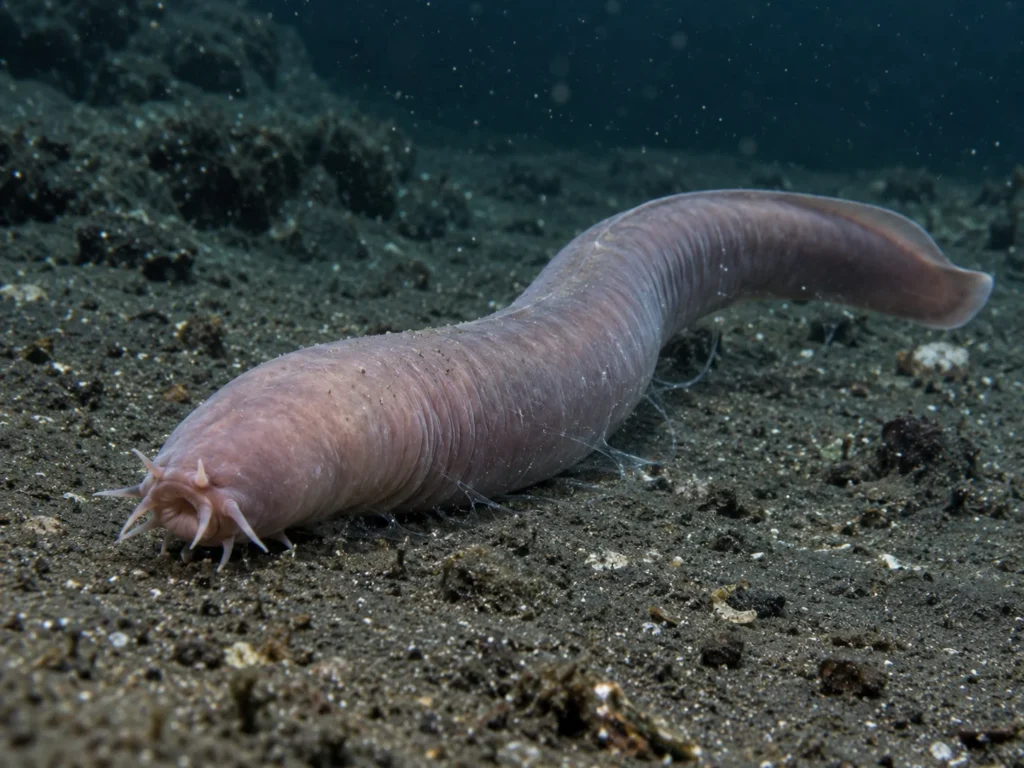
Hagfish are often included among the dirtiest animals for an entirely different reason: slime. When threatened, specialized glands release material that rapidly forms large quantities of defensive slime in seawater. The slime can interfere with a predator’s mouth and gills and help the hagfish escape. It may look revolting to humans, but it is a sophisticated defense secretion, not accumulated dirt.
12. Rat
Rats are frequently included among the dirtiest animals because they are deeply associated with sewers and garbage, making the phrase “dirty rat” feel natural to many people. Yet rodents are frequent self-groomers. Rats use organized sequences of face washing, licking, scratching, and body cleaning, and grooming contributes to hygiene and thermoregulation. Their reputation comes largely from where some populations live, not from an absence of cleaning behavior.
Quick Comparison: Why These Animals Look Dirty
| Animal | Why It Looks Dirty | What Is Really Happening |
| Pig | Covered in mud | Wallowing helps with cooling |
| Warthog | Rolls in mud | Cooling and body protection |
| Rhino | Thick mud coating | Cooling and skin protection |
| Bison | Rolls in dirt | Body care and insect relief |
| Hippo | Spreads dung | Communication behavior |
| Dung beetle | Handles feces | Feeding and nutrient recycling |
| House fly | Visits waste | Waste exposure plus grooming |
| Cockroach | Lives around waste | Frequent self-grooming |
| Vulture | Eats carrion | Specialized scavenging |
| Sloth | Algae grows in fur | Fur supports a living community |
| Hagfish | Produces slime | Predator defense |
| Rat | Associated with sewers | Frequent grooming |
When comparing the dirtiest animals, the important pattern is that no single explanation makes these animals “dirty.” Mud, dung, carrion, algae, slime, and contaminated habitats involve completely different behaviors and adaptations.
Are Pigs Really Dirty Animals?
Not in the simple sense suggested by the stereotype. Pigs naturally wallow, and research identifies thermoregulation as the best-supported reason for the behavior. Although pigs can sometimes be grouped with Mischievous Animals because of their curious and persistent behavior around food or objects, wallowing is not mischief. Because pigs have limited functional sweat glands, wet mud provides an effective alternative for cooling the body.
Wallowing is also normal behavior in its own right. Most importantly, choosing mud is not the same as preferring feces. A pig covered in clean mud may actually be expressing a normal need rather than showing poor hygiene.
Are Cockroaches and Flies Actually Clean?
Neither should be called sanitary simply because it grooms. House flies can move through feces and decaying material, while pest cockroaches may occupy contaminated parts of buildings. Environmental exposure still matters.
What the stereotype misses is that both actively clean important body surfaces. Research shows cockroach antennal grooming removes accumulated substances and supports smell sensitivity, while house flies also groom their antennae. Self-cleaning can therefore coexist with a highly contaminated habitat.
Why Do Dung Beetles and Vultures Matter to Ecosystems?
Dung beetles transform animal waste into an ecological resource. By feeding on and burying dung, they move nutrients into soil, disturb soil layers, bury some seeds, and can reduce habitat available to certain parasites.
Vultures perform a different cleanup role by consuming carrion. Their scavenging accelerates carcass removal and nutrient recycling. These animals show that materials humans find unpleasant can remain valuable sources of energy and nutrients in functioning ecosystems.
Do Rats Really Have Poor Hygiene?
Rats can inhabit sewers, rubbish areas, farms, and other contaminated places, but that should not be confused with an absence of grooming. Rodent self-grooming is frequent, organized behavior associated partly with hygiene maintenance.
A rat may wash its face with its forepaws and then groom the head and body in recognizable sequences. Grooming cannot make a contaminated environment harmless, but it undermines the idea that rats are naturally indifferent to keeping their bodies clean.
Common Misconceptions About “Dirty” Animals
Even among the dirtiest animals, visible messiness does not automatically mean poor hygiene. Pigs and warthogs use mud deliberately, while bison roll in dust as normal behavior. Cockroaches, flies, and rats all groom despite associations with contaminated environments.
Carrion does not make vultures biologically unhygienic, and dung beetles turn feces into useful ecological work. Sloth algae forms part of an unusual fur community, while hagfish slime is defensive mucus. There is also no standardized scientific test that identifies one species as the objectively “dirtiest animal in the world.”
Frequently Asked Questions
What animal is considered the dirtiest?
There is no scientific winner. Pigs, dung beetles, house flies, cockroaches, vultures, and rats all receive dirty reputations for different reasons. Comparing them directly is difficult because mud wallowing, feces feeding, carrion consumption, and waste exposure are completely different behaviors.
Are pigs actually dirty animals?
Not in the stereotypical sense. Pigs wallow primarily because mud helps regulate body temperature. A pig choosing a cool wallow is performing normal behavior, not demonstrating a natural preference for feces or poor hygiene.
What animals eat dung or waste?
Dung beetles are the clearest examples because many species feed on feces and use it for their young. House flies also feed and breed around manure and decaying organic matter. These behaviors exploit nutrient-rich resources rather than reflecting a concept of cleanliness.
Are cockroaches and rats actually clean?
Both perform regular self-grooming. Cockroaches clean their antennae and other body parts, while rats use organized grooming sequences involving the face and body. However, grooming does not prevent either animal from encountering contaminants in unsanitary environments.
Which dirty-looking animals help clean ecosystems?
Dung beetles and vultures are standout examples. Dung beetles bury and process feces, supporting nutrient cycling and soil processes. Vultures consume carrion and accelerate carcass removal. Their lifestyles may look unpleasant to humans, but their ecological roles can be highly useful.
Final Thoughts
The dirtiest animals are difficult to rank because “dirty” describes human perception rather than a measurable biological category. Pigs, rhinos, and bison deliberately coat themselves with mud or dust, while dung beetles and vultures work with materials humans usually avoid. Cockroaches and rats complicate the stereotype by grooming themselves regularly, while sloths and hagfish show that algae-covered fur and defensive slime can look messy without being poor hygiene. In nature, what appears dirty often has a practical purpose.