Animals That Gallop: 15 Species and How They Move
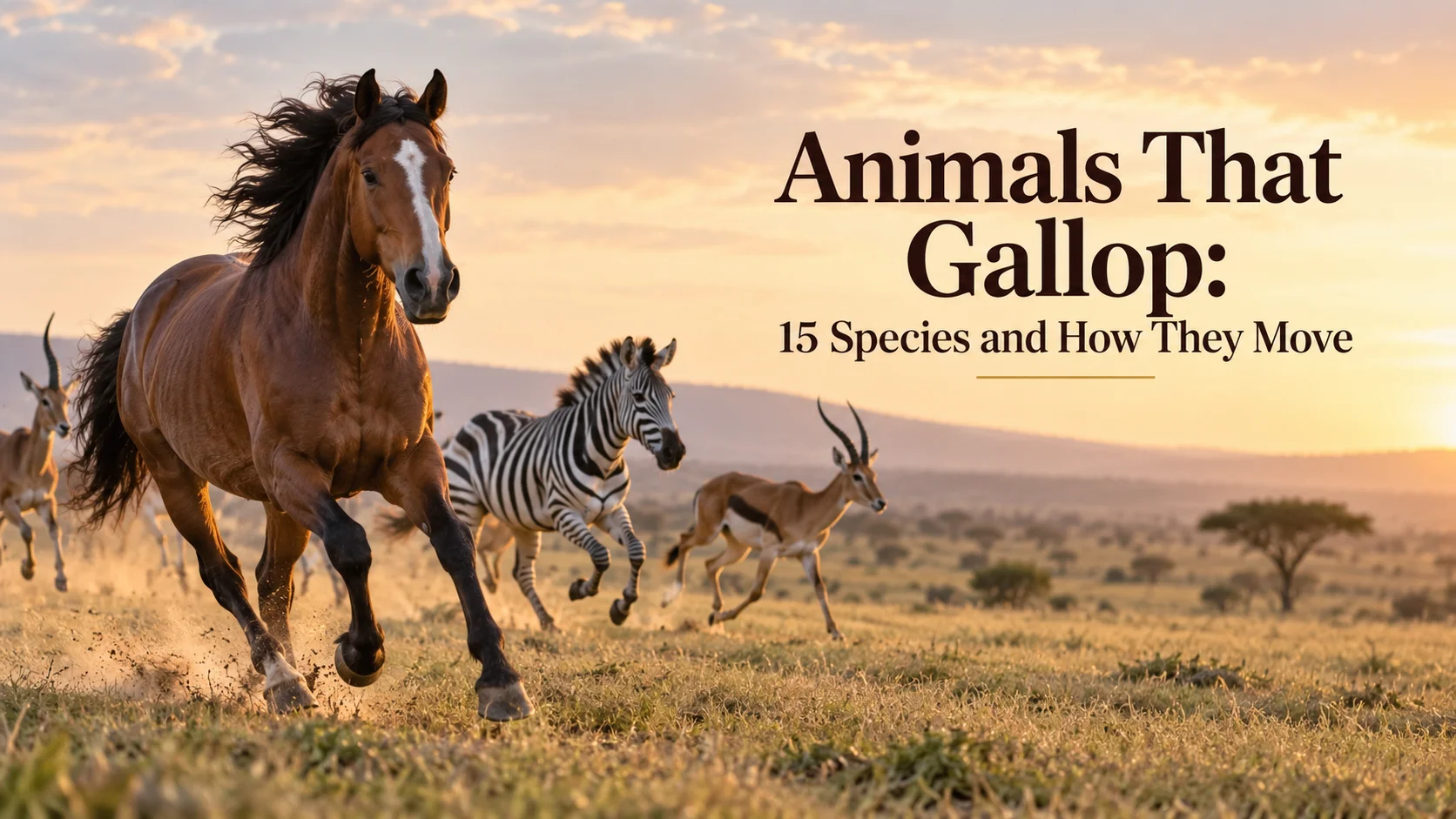
Galloping is often associated with horses, but many other animals use this high-speed gait as well. Zebras, camels, cheetahs, Greyhounds, rhinoceroses, tapirs, and even some crocodiles can gallop under the right conditions. Yet galloping is not simply another word for running fast. Different species use different limb sequences, suspension phases, and body mechanics. These 15 animals that gallop show how varied high-speed locomotion can be across the animal kingdom.
Animals that gallop include horses, zebras, camels, wildebeest, elk, rhinoceroses, cheetahs, Greyhounds, lynx, tapirs, and some crocodiles. Galloping is an asymmetrical gait rather than simply fast running. Horses typically use a transverse gallop, while cheetahs and several other fast-moving animals use rotary galloping patterns.
What Is a Gallop?
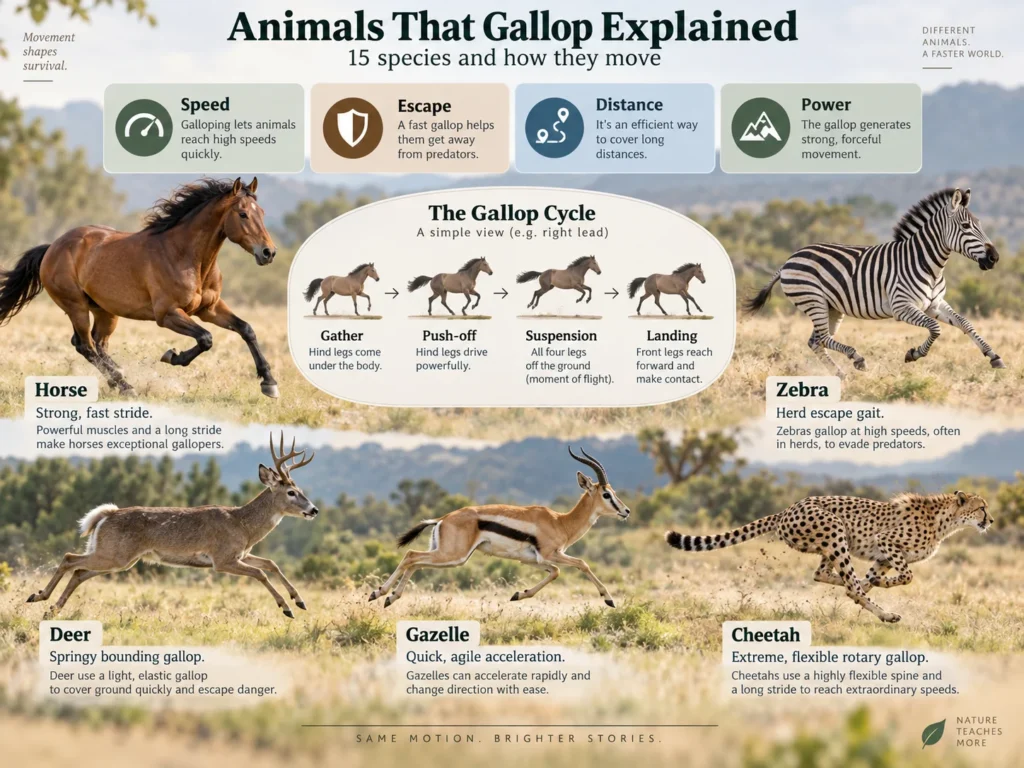
A gallop is a fast, asymmetrical gait used by many four-legged animals. “Asymmetrical” means the left and right limbs do not move in perfectly mirrored, evenly timed patterns as they generally do during a trot. Galloping usually appears at higher speeds, but there is no single footfall pattern shared by every species. Body proportions, limb mechanics, spinal movement, and speed can all influence exactly how an animal gallops. Many gallops also include a suspension phase, a brief moment when no feet are touching the ground. The number and type of suspension phases vary among animals, so galloping should not be defined simply as having all four feet airborne at once.
Transverse vs Rotary Gallop
Two important forms are the transverse gallop and rotary gallop. Horses are classic transverse gallopers. Their feet contact the ground in a different sequence from animals using a rotary gallop, which is common among several high-speed carnivores. Cheetahs are the best-known rotary gallopers. Greyhounds and lynx also use rotary patterns, while tapirs provide an unusual hoofed example. These differences show that animals can solve the challenge of rapid four-legged movement in very different ways.
15 Animals That Gallop
These animals are not ranked by speed. Each is included because galloping is genuinely part of its locomotion rather than simply because it can run quickly.
1. Horse — The Classic Transverse Galloper
Horses are probably the animals most closely associated with galloping. At high speed, they use a transverse gallop with an asymmetrical sequence of hoof contacts and a suspension period when the body is unsupported. The gallop is faster than the canter and is used during rapid movement, escape, racing, and other short periods of intense locomotion. Horse movement also provides the standard comparison scientists often use when discussing transverse galloping in other large mammals.
2. Zebra — Galloping for Rapid Escape
Zebras belong to the genus Equus, alongside horses and wild asses, and share the basic ability to walk, trot, canter, and gallop. Galloping becomes particularly useful when zebras need rapid acceleration or sustained escape across open habitat. Their movement follows the broader equid pattern, although wild zebras should not simply be treated as mechanically identical to domestic horses. Their example shows that galloping is widespread across the horse family rather than limited to domesticated species.
3. African Wild Ass — Another Galloping Equid
The African wild ass is another member of Equus capable of using a canter or gallop during faster movement. Its normal habitat includes dry, open landscapes where rapid locomotion can be valuable. Like horses and zebras, wild asses combine relatively long limbs with an equid locomotor system suited to several distinct gaits. Their galloping ability makes them a useful reminder that the familiar horse gallop is part of a broader pattern found across closely related wild species.
4. Dromedary Camel — Gallop and Pace Specialist
Dromedary camels are famous for their unusual pacing gait, in which the limbs on the same side of the body move more closely together. However, they can also gallop at higher speeds. Biomechanical studies of camel locomotion document transitions between pacing and galloping. Their long legs and unusual body proportions make them look very different from a horse’s, but it is still a genuine high-speed asymmetrical gait. Camels therefore provide an excellent example of an animal capable of switching between very different locomotor strategies.
5. Wildebeest — A Galloping Herd Animal
Wildebeest are powerful hoofed mammals that use transverse galloping during rapid movement. Their open African habitats often demand quick responses to predators and coordinated movement across large spaces. Although wildebeest are famous for migration, their inclusion here is about gait rather than distance travelled. When they accelerate, their asymmetrical galloping pattern allows them to move quickly despite their relatively heavy front ends and sturdy bodies. Galloping is therefore an important part of their escape and herd locomotion.
6. Alpaca — An Unexpected Transverse Galloper
Alpacas may not look like obvious galloping animals, but locomotion research has documented them using asymmetrical gaits at higher speeds, predominantly transverse gallops. Their slower movement can look relaxed and compact, which makes the transition to a gallop surprisingly dramatic. The alpaca is useful because it challenges the assumption that galloping belongs only to horses, deer, or fast predators. Even a relatively small domesticated camelid can shift into a genuine galloping gait when speed increases.
7. Elk (Wapiti) — Galloping Through Open Ground
Elk, also called wapiti, are large deer capable of transverse galloping. Despite their considerable body size, they can accelerate rapidly when disturbed or escaping danger. Their gallop demonstrates that high-speed asymmetrical movement is not limited to light-bodied animals. Long limbs, powerful muscles, and coordinated hoof placement allow elk to move efficiently across open terrain and through varied landscapes. Like many large herbivores, they shift between slower, economical gaits and galloping when greater speed becomes necessary.
8. White Rhinoceros — A Heavy Animal That Can Gallop
A white rhinoceros may look too heavy to gallop, but rhinoceroses are capable of genuine high-speed asymmetrical locomotion. Comparative studies place rhinos with transverse gallopers rather than rotary gallopers such as tapirs. This makes the rhinoceros one of the most surprising animals on the list. Galloping does not require a delicate or lightweight body. Even an extremely heavy terrestrial mammal can coordinate its limbs into a rapid asymmetrical gait when it needs to accelerate or cover ground quickly.
9. Cheetah — The Classic Rotary Galloper
Cheetahs use a rotary gallop during high-speed pursuit. Their stride involves dramatic spinal flexion and extension, powerful limb movement, and suspension phases in which the body is completely airborne. At top running speeds, the cheetah can pass through both gathered and extended body positions during the stride. The flexible spine contributes to this movement, but it is only one part of a much larger locomotor system involving muscles, limb proportions, foot contact, balance, and precise timing. Its gallop is therefore mechanically very different from the classic horse pattern.
10. Greyhound — A Domestic Rotary Galloper
Greyhounds also use a rotary gallop during sprinting. Their long legs, flexible bodies, deep chests, and athletic musculature support rapid acceleration and long strides. At higher speeds, Greyhounds can show an extended suspension phase in which the limbs stretch away from the body while none of the feet touch the ground. This creates a visual similarity to cheetah locomotion, although the two species are not mechanically identical. Greyhounds provide one of the clearest domestic examples of rotary galloping.
11. Lynx — A Wild Cat That Uses Rotary Gallop
Lynx are another documented example of rotary galloping among carnivores. They normally spend much of their time moving more slowly, but they can switch into rapid asymmetrical locomotion during short pursuits or sudden bursts of movement. Their inclusion is useful because it shows that rotary galloping is not restricted to extreme specialists such as cheetahs. Other cats can also employ this gait when greater speed is required, although different felid species vary in body size, flexibility, and typical hunting style.
12. Domestic Dog — More Than One Galloping Strategy
Dogs make galloping more complicated because they can alter their gait mechanics depending on speed and individual body form. At some speeds, dogs may use a more horse-like galloping sequence. During faster running, they can shift toward mechanics that resemble the rotary patterns seen in high-speed carnivores. This flexibility shows why transverse and rotary gallops should not always be treated as completely separate boxes. Gait patterns can form a continuum, and one species may modify limb sequence and spinal movement as its speed changes.
13. Spotted Hyena — From Lope to Faster Gallop
Spotted hyenas are often seen travelling in a lope, a slower asymmetrical gait well suited to covering ground efficiently. When speed increases further, however, genuine galloping is also part of their locomotion. Their body proportions are unusual, with relatively long and powerful forelimbs and a sloping back. These features give the hyena’s gallop a distinctive appearance compared with horses or cats. The species is a good example of how animals can transition through several gaits rather than moving directly from trot to maximum-speed gallop.
14. Tapir — A Hoofed Rotary Galloper
Tapirs provide one of the most interesting exceptions to the pattern seen in many hoofed mammals. While horses and rhinoceroses are associated mainly with transverse galloping, tapirs primarily use a rotary gallop. That makes them mechanically more similar in this particular gait feature to several fast-running carnivores than to their fellow odd-toed ungulates. Tapirs are not built like cheetahs, of course, but their limb-contact sequence shows that taxonomy alone does not perfectly predict how an animal will gallop.
15. Australian Freshwater Crocodile — The Surprise Galloper
Galloping is not restricted to mammals. The Australian freshwater crocodile is among the crocodilian species documented using asymmetrical gaits, including galloping, during terrestrial movement. When it gallops, the body is lifted higher than during the familiar low crawl, and the limbs work in a coordinated pattern that can propel the crocodile rapidly across land for a short distance. This ability should not be generalized to every crocodilian. True galloping has been documented in particular crocodile lineages, while comparable complete gallops have not been confirmed across all alligator-family species.
Why Do Animals Gallop?
The most obvious advantage of galloping is speed, but animals use that speed for different purposes.
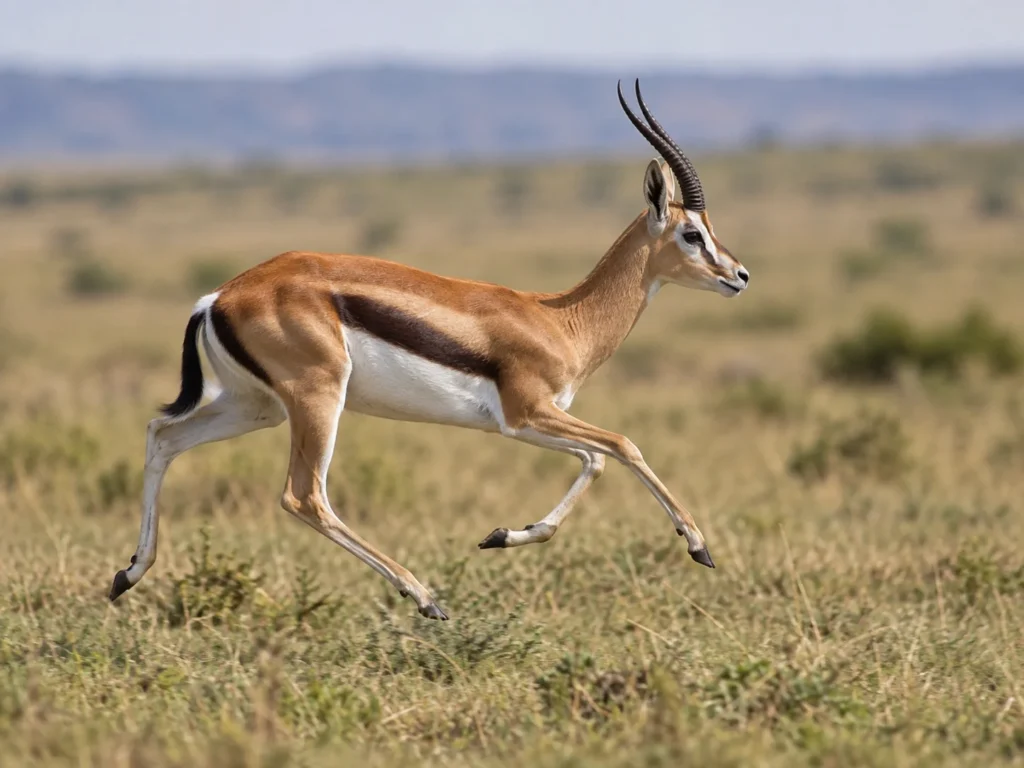
Zebras, wildebeest, wild asses, and elk may gallop to escape predators. Cheetahs and lynx can use galloping during pursuit, while horses and camels may employ it during rapid travel. Rhinoceroses and tapirs can use high-speed gaits during short bursts of movement. Different body plans achieve galloping in different ways. Cheetahs use dramatic spinal movement, horses rely on a more dorsostable transverse pattern, and crocodiles use a completely different reptilian body design. There is therefore no single “galloping anatomy” shared by every species.
Gallop vs Canter, Lope, Trot, and Bound
Several animal gaits can look similar at a glance, but they are not identical.
| Gait | Basic Pattern |
| Walk | Slower gait with continuous support |
| Trot | Usually a symmetrical gait |
| Canter / Lope | Slower asymmetrical gait |
| Gallop | Faster asymmetrical gait |
| Bound | Limb pairs move more closely together |
| Pronk | Stiff-legged jumping movement |
Canter and lope are closely related to galloping but generally occur at lower speeds. Trotting is usually more symmetrical, while bounding and half-bounding use different limb coordination. Terminology also varies among species and research traditions, so gait categories are best understood as biomechanical patterns rather than rigid labels based only on appearance.
Does Every Fast Four-Legged Animal Gallop?
No. Maximum speed and gait type are separate questions. Elephants can move surprisingly quickly, but they do not use the conventional suspended gallop seen in horses or cheetahs. Rabbits and hares commonly use bounding or half-bounding mechanics, while kangaroos rely on hopping. Many lizards can run rapidly without performing a mammal-style gallop. Even among animals capable of asymmetrical gaits, a lope, bound, or canter should not automatically be labelled a full gallop. This is why identifying genuine galloping animals requires examining footfall patterns and locomotor mechanics, not simply watching which species looks fast.
Key Takeaways
- Galloping is a fast asymmetrical gait, not simply another term for running.
- Horses are classic transverse gallopers.
- Cheetahs, Greyhounds, lynx, and tapirs can use rotary gallops.
- Dogs can change their galloping strategy depending on speed and context.
- Rhinoceroses show that very heavy mammals can gallop.
- Some crocodiles can also gallop, proving the gait is not exclusive to mammals.
Frequently Asked Questions
What Animals Can Gallop Besides Horses?
Many animals can gallop besides horses, including zebras, African wild asses, dromedary camels, wildebeest, alpacas, elk, rhinoceroses, cheetahs, Greyhounds, lynx, domestic dogs, spotted hyenas, tapirs, and some crocodiles. Their galloping mechanics are not all identical.
Do Cheetahs Gallop?
Yes. Cheetahs use a rotary gallop during high-speed running. Their stride includes substantial spinal flexion and extension, along with suspension phases when none of the feet touch the ground. This differs from the transverse gallop commonly associated with horses.
Do Dogs Gallop?
Yes. Domestic dogs can gallop, and their exact gait mechanics can change with speed and body type. At higher speeds, dogs may use a more rotary-style pattern, while other galloping sequences can appear at more moderate speeds.
What Is the Difference Between a Canter and a Gallop?
Both are asymmetrical gaits, but a canter is generally slower and uses different timing from a full gallop. In horses, the canter usually has three beats, while the faster gallop separates the limb contacts more clearly. Similar slower asymmetrical gaits are sometimes called lopes in other animals.
Can Crocodiles Really Gallop?
Yes, some crocodile species can. The Australian freshwater crocodile is one documented example. It can raise its body and use an asymmetrical galloping pattern during short bursts on land. However, this ability should not be assumed for every crocodilian species, especially alligators.
Final Thoughts
Animals that gallop range from familiar horses and cheetahs to massive rhinoceroses, rotary-galloping tapirs, and even freshwater crocodiles. Their movements may look very different, but each demonstrates how animals can use asymmetrical gaits to achieve rapid locomotion. Galloping is therefore much more diverse than the familiar image of a horse racing across open ground.