
Mischievous Animals: 17 Clever and Playful Species
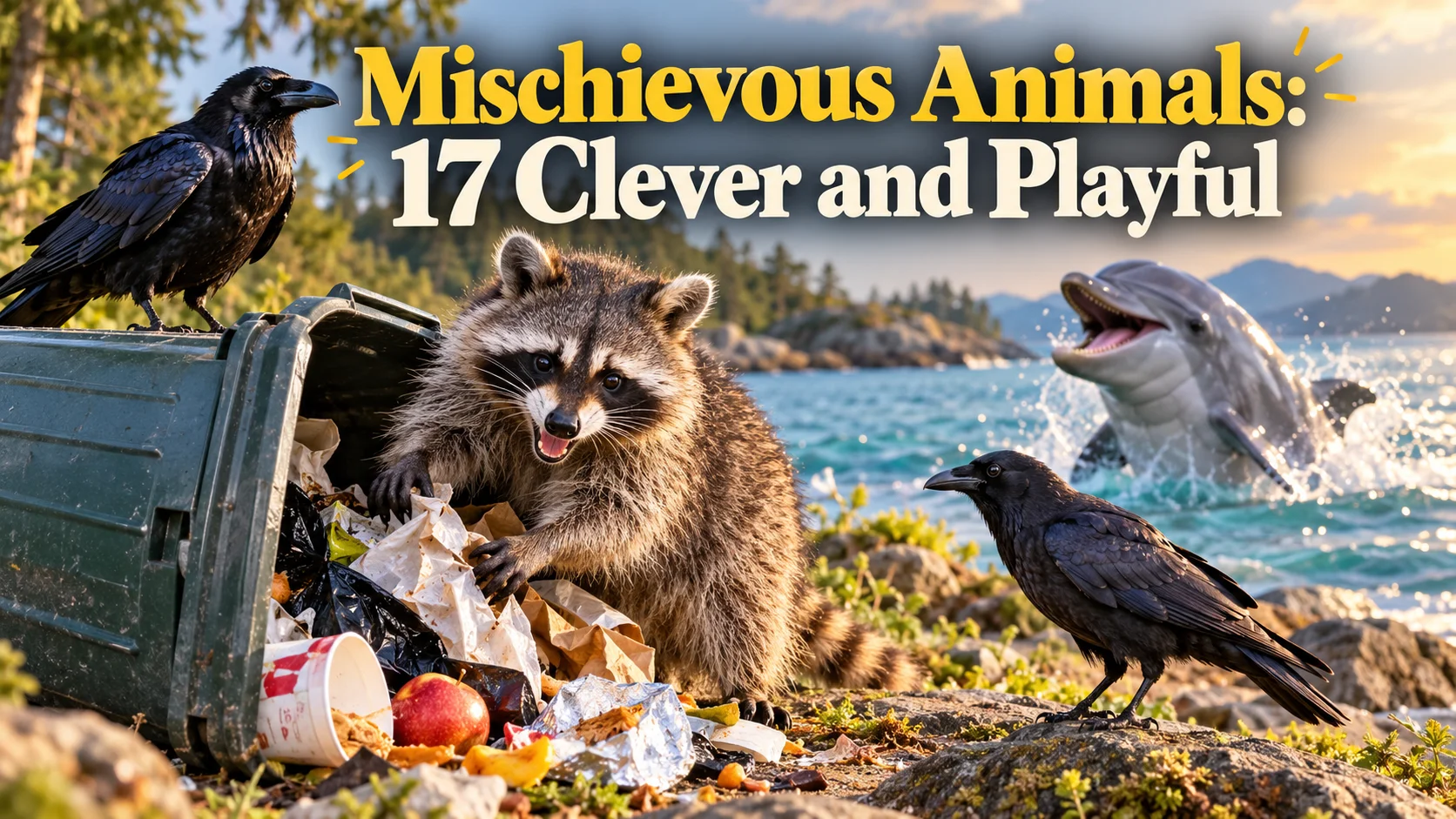
Mischievous animals often earn their reputation by opening containers, stealing food, moving objects, solving puzzles, or turning ordinary surroundings into opportunities for play. Yet “mischievous” is a human description, not a scientific behavior category. What looks like troublemaking usually reflects curiosity, exploration, flexible feeding, social play, or problem-solving. From raccoons and ravens to dolphins and cockatoos, these 17 species show how fascinating animal behavior can look surprisingly playful from a human perspective.
Mischievous animals include raccoons, monkeys, ravens, crows, parrots, dolphins, otters, foxes, squirrels, cats, and pigs. Their apparent mischief usually comes from curiosity, play, flexible foraging, object manipulation, or problem-solving rather than deliberate naughtiness. Intelligent behavior can contribute, but not every mischievous-looking action is evidence of exceptional intelligence.
Mischievous Animals at a Glance
| Animal | Mischievous-Looking Behavior | Likely Explanation |
| Raccoon | Opening bins and containers | Exploration and food seeking |
| Tufted capuchin | Manipulating objects | Dexterity and learning |
| Long-tailed macaque | Taking food or objects | Opportunistic behavior |
| Chimpanzee | Tool and object play | Cognition and exploration |
| Common raven | Carrying and manipulating objects | Play and problem-solving |
| American crow | Exploiting new food sources | Flexible foraging |
| Kea | Investigating unfamiliar objects | Curiosity and play |
| Sulphur-crested cockatoo | Opening garbage bins | Innovation and social learning |
| Bottlenose dolphin | Playing with objects and bubbles | Social and object play |
| Asian small-clawed otter | Rock juggling | Object manipulation |
| Smooth-coated otter | Tossing objects | Play and exploration |
| Red fox | Solving food-access problems | Exploration and flexibility |
| Eastern gray squirrel | Raiding feeders | Persistent foraging |
| Domestic cat | Knocking and chasing objects | Predatory play and novelty |
| Domestic pig | Manipulating surroundings | Exploration and learning |
| White-nosed coati | Investigating food sources | Opportunistic foraging |
| African grey parrot | Object manipulation | Learning and exploration |
What Makes an Animal Seem Mischievous?
Animals usually look mischievous when their normal behavior conflicts with what humans expect. A raccoon opening a garbage bin, a squirrel defeating a bird feeder, or a parrot dismantling an object may appear deliberately troublesome. Many mischievous animals earn this reputation because curiosity, food seeking, play, and problem-solving bring them into situations humans interpret as naughty behavior. By contrast, Docile Animals are more often associated with calm, tolerant behavior and are less likely to develop the same troublemaking reputation.
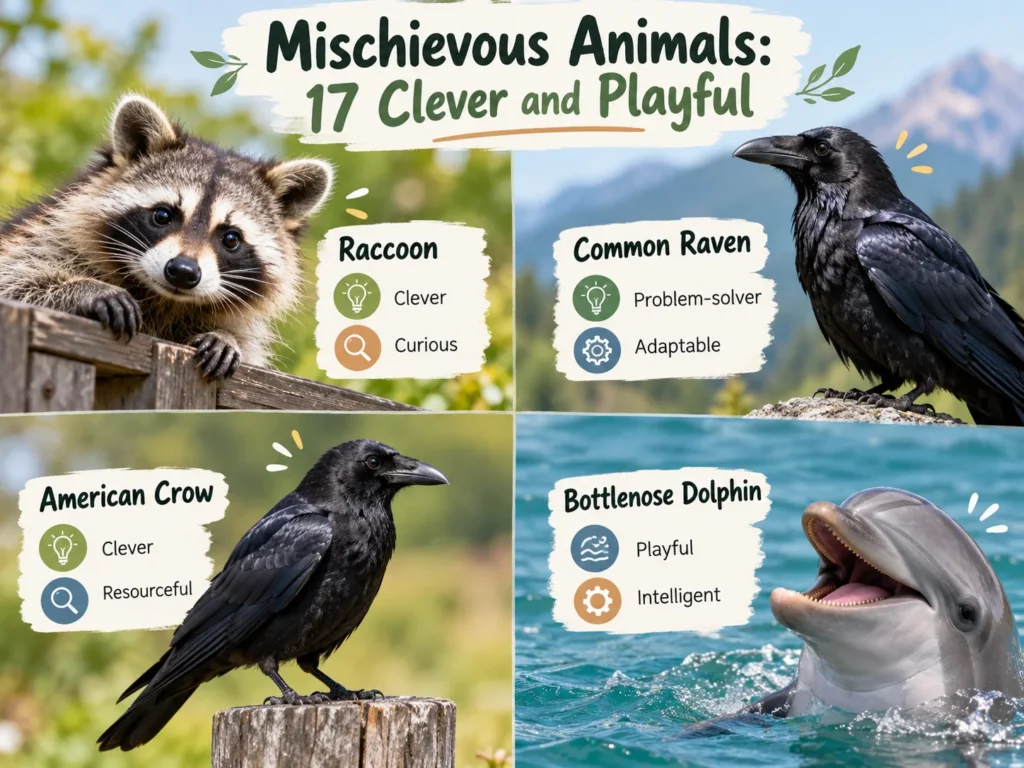
Scientifically, these actions are better understood through behavior. Animals investigate new objects, search for food, practice motor skills, learn from other individuals, and repeat actions that produce useful or stimulating results. Mischief therefore describes how the action appears to us, not necessarily what the animal intends.
1. Raccoon
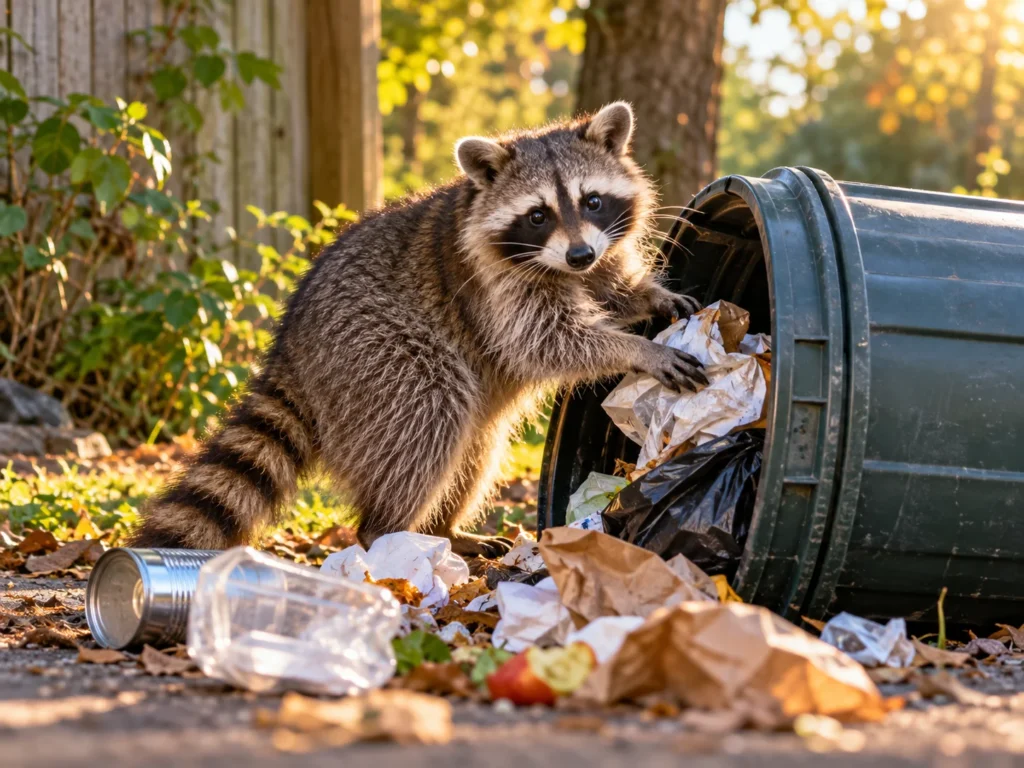
Raccoons are perhaps the classic mischievous animals. Their sensitive, highly mobile forepaws allow them to manipulate lids, containers, latches, and unfamiliar objects with impressive persistence. Urban raccoons often investigate human-made structures because they can contain food.
Research has also shown that raccoons may continue exploring puzzle mechanisms even after finding a reward, suggesting that information gathering itself can motivate their behavior. What looks like deliberate troublemaking is usually a combination of curiosity, dexterity, persistence, and flexible foraging.
2. Tufted Capuchin Monkey
Capuchin monkeys have excellent hand control and frequently manipulate objects in their environment. Their curiosity and object-handling abilities also help explain why they are often perceived as mischievous animals. They are known for investigating unfamiliar items, learning through interaction, and in some populations using objects as tools.
Social observation can also influence what individuals learn to do. Their energetic handling of objects may look mischievous, but it reflects a primate well adapted for exploration and flexible problem-solving.
3. Long-Tailed Macaque
Long-tailed macaques are highly adaptable monkeys that often live close to people in parts of Asia. Some populations learn to exploit human food, containers, bags, or other accessible resources.
Repeated contact with people can reinforce behaviors that appear to humans as stealing. Rather than applying a moral label, it is more accurate to describe these macaques as opportunistic animals that quickly learn which actions produce useful rewards.
4. Chimpanzee
Chimpanzees combine social intelligence, object manipulation, tool use, and extensive play. These qualities can make them appear similar to other mischievous animals, especially when their exploration produces unexpected results. Young chimpanzees especially spend considerable time exploring and handling objects.
Adults can also use tools for specific tasks and learn behaviors through observation and experience. Their flexible interactions with objects sometimes resemble human-style mischief, but the underlying behaviors are better explained through play, experimentation, learning, and problem-solving.
5. Common Raven
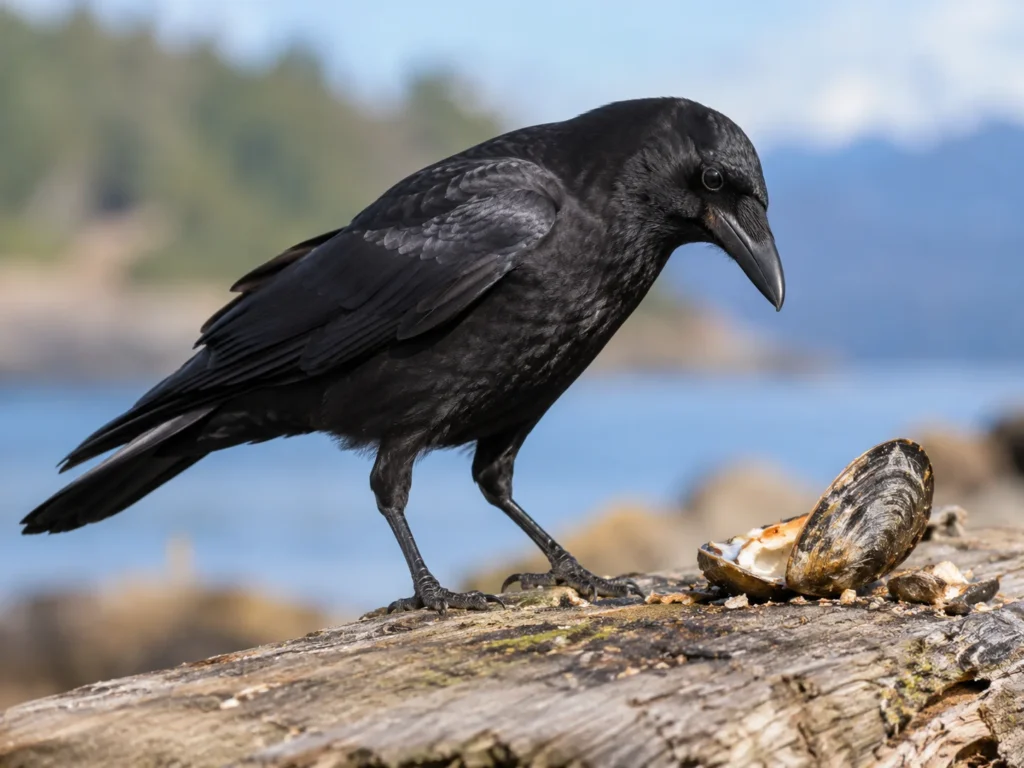
Ravens are famous for their curiosity and complex interactions with objects. They may pick up, hide, move, drop, or manipulate items even when there is no immediate feeding reward.
Ravens also cache food and carefully monitor the behavior of other individuals around those caches. These actions have contributed to their trickster reputation. However, play, information gathering, memory, and flexible problem-solving offer stronger explanations than assuming that ravens simply enjoy causing trouble.
6. American Crow
American crows thrive in both natural and human-modified environments because they are extremely flexible foragers. They can exploit garbage, roadways, gardens, and other food opportunities, and they learn from experience when particular places or situations are rewarding.
Crows are sometimes described as thieves or pranksters, but popular claims that all crows constantly collect shiny objects are exaggerated. Their real strengths lie in learning, memory, and adaptability.
7. Kea
The kea, a parrot native to New Zealand, has an especially strong reputation for curiosity. Their willingness to investigate almost anything has also earned them a place among commonly described mischievous animals.
Keas investigate objects with their beaks and feet and may pull, turn, tear, or move unfamiliar materials. Their persistent exploration can sometimes damage human-made objects, which has helped create their mischievous image. The behavior is better understood as intense curiosity, object exploration, and play rather than deliberate destruction for its own sake.
8. Sulphur-Crested Cockatoo
Sulphur-crested cockatoos provide one of the clearest examples of animal innovation in an urban environment. Their ability to solve practical food-access problems is one reason these birds are often viewed as mischievous animals around homes and neighborhoods.
Some Australian cockatoos learned how to open household garbage bins to obtain food. The technique then spread socially as other birds observed or acquired the behavior within local populations. From a homeowner’s perspective it looks like mischief, but animal behavior can easily be misinterpreted when judged only by appearance—similar to why questions such as Do Wolves Purr? require looking at the actual behavior behind a sound. From a behavioral perspective, the cockatoos’ actions demonstrate innovation, food seeking, persistence, and social learning.
9. Bottlenose Dolphin
Bottlenose dolphins engage in many forms of play, including chasing, object manipulation, social games, and interactions with bubbles or floating materials. They may carry or move objects using different parts of the body and repeat actions without an obvious immediate survival benefit.
This playful flexibility is also why dolphins may be described informally as mischievous animals by human observers. However, scientists generally describe such actions through social play, object play, exploration, and motor practice rather than human-style practical joking.
10. Asian Small-Clawed Otter
Asian small-clawed otters are well known for manipulating stones and other small objects with their forepaws. Captive individuals have been observed rolling, tossing, and shifting stones in behavior often described as rock juggling.
The exact function is still debated, and studies have not shown that frequent juggling automatically improves food-puzzle performance. The behavior may involve play, anticipation, or object manipulation, making it a perfect example of apparent mischief with no simple explanation.
11. Smooth-Coated Otter
Smooth-coated otters also manipulate and toss objects, creating similarly playful-looking behavior. Like other otters, they are active, social animals capable of exploring their surroundings through touch, movement, and repeated interaction.
Calling the behavior mischievous is harmless informally, but its biological meaning may include play, exploration, or stimulation rather than a deliberate attempt to entertain or annoy observers.
12. Red Fox
Red foxes are adaptable predators that can live successfully in rural landscapes and major cities. Urban individuals frequently investigate gardens, bins, buildings, and unfamiliar objects while searching for food.
Research on some British fox populations has also found differences in exploration and problem-solving around novel feeding challenges. Their apparent mischief therefore reflects behavioral flexibility and adaptation to human-dominated environments rather than a desire to create chaos.
13. Eastern Gray Squirrel
Anyone who has tried to keep squirrels away from a bird feeder may understand why they are frequently included among mischievous animals.
Eastern gray squirrels can persist through repeated failed attempts, adjust their movements, and learn how to access challenging food sources. Experimental work supports considerable flexibility and persistence in food-related problem-solving. To the squirrel, defeating a feeder is not a prank. It is simply successful foraging.
14. Domestic Cat
Domestic cats frequently create their own version of household mischief by knocking objects, pouncing on moving items, hiding, stalking, or repeatedly investigating something new. These behaviors help explain why cats are often considered familiar household mischievous animals.
Many of these actions connect to normal predatory play and curiosity. Changes in an object can renew a cat’s interest even after it previously became familiar. What owners interpret as intentional naughtiness may therefore be a combination of play, hunting-related behavior, novelty seeking, and environmental exploration.
15. Domestic Pig
Pigs are highly exploratory animals that use their snouts and bodies to manipulate their surroundings. They readily investigate new materials, engage in play, and learn from repeated experiences.
Research also shows that providing opportunities for exploration and play can influence learning and welfare. A pig moving objects, opening simple barriers, or repeatedly investigating an enclosure may look cheeky, but those actions reflect natural exploratory motivation.
16. White-Nosed Coati
White-nosed coatis are active omnivores that search constantly for food using their flexible snouts and capable forepaws. Their persistent investigations can make them appear like mischievous animals, particularly in places where they frequently encounter people.
In areas where they encounter people, they may investigate bags, containers, picnic areas, or other potential food sources. Such behavior easily earns them a troublemaker reputation. Like raccoons, they are opportunistic foragers, although their abilities should be judged on their own behavior rather than assuming every raccoon trait also applies to coatis.
17. African Grey Parrot
African grey parrots are famous for learning, vocal ability, and object interaction. They can explore objects using the beak and feet, learn through experience, and respond flexibly during cognitive tasks.
Their willingness to manipulate unfamiliar items can sometimes produce behavior that owners interpret as mischievous. However, describing them as deliberate pranksters goes beyond the evidence. Learning, exploration, and cognitive flexibility are better explanations.
Mischief vs. Play vs. Problem-Solving
These behaviors can overlap, but they are not identical.
| Behavior | What It Means | Example |
| Exploration | Investigating new places or objects | Raccoon |
| Play | Repeated behavior without an immediate survival goal | Dolphin |
| Problem-solving | Overcoming an obstacle to achieve a goal | Squirrel |
| Social learning | Learning through other individuals | Cockatoo |
| Opportunistic foraging | Exploiting an available food source | Macaque |
| Object manipulation | Handling, moving, or changing objects | Capuchin |
An animal may display several of these behaviors at the same time. A cockatoo opening a bin, for example, combines problem-solving with food seeking and may also learn the technique socially.
Why Do Animals “Steal” Food or Objects?
Some Australian cockatoos learned how to open household garbage bins to obtain food. The technique then spread socially as other birds observed or acquired the behavior within local populations. From a homeowner’s perspective it looks like mischief, but broad labels can sometimes oversimplify animal behavior, whether we are describing clever problem-solvers or Animals that Sleep Alot. From a behavioral perspective, the cockatoos’ actions demonstrate innovation, food seeking, persistence, and social learning.
Objects can also attract animals without containing food. Novelty, play, nest building, investigation, or other species-specific motivations may encourage an animal to carry or manipulate them.
Is Mischievous Behavior a Sign of Intelligence?
Sometimes—but not automatically. Problem-solving, flexible learning, memory, and innovation can contribute to behaviors humans describe as mischievous. Ravens, parrots, primates, raccoons, and dolphins all provide good examples of animals with sophisticated cognitive abilities.
However, curiosity or persistence alone does not prove that one species is “smarter” than another. Intelligence consists of many different abilities, and species often excel at tasks that match the ecological problems they evolved to solve.
FAQs
What animals are considered mischievous?
Raccoons, monkeys, ravens, crows, parrots, dolphins, otters, foxes, squirrels, cats, and pigs are commonly described as mischievous because of their curiosity, play, food seeking, or object manipulation.
Why are raccoons considered mischievous?
Raccoons are persistent explorers with dexterous forepaws. They can open containers, investigate unfamiliar objects, and solve food-access problems, which often brings them into conflict with people.
Do animals actually steal things?
Animals can take food or objects, but describing the behavior as “stealing” applies a human moral concept. In many cases, the biological explanation is opportunistic feeding, caching, play, or exploration.
Is mischievous behavior a sign of intelligence?
It can involve intelligence when problem-solving, learning, or flexibility is required, but mischievous-looking behavior alone does not prove exceptional intelligence.
Why do animals play with objects?
Object play can provide stimulation, support motor development, encourage exploration, or occur simply because manipulating the object is rewarding. Its exact function varies among species.
Do animals deliberately play tricks on humans?
Some animal behavior may look like a practical joke, but proving human-style intention is difficult. Scientists generally prefer explanations based on play, learning, curiosity, social interaction, or food seeking unless stronger evidence is available.
Final Thoughts
Mischievous animals are usually not trying to be naughty in the human sense. Raccoons opening containers, squirrels defeating feeders, parrots dismantling objects, and otters juggling stones all reflect real behavioral abilities shaped by curiosity, learning, play, and the search for useful resources. Their antics become even more interesting when the human label is separated from the biology underneath it. What looks like mischief can reveal how adaptable, persistent, socially aware, or exploratory an animal really is.

One Comment