
15 Animals That Sleep a Lot and Why They Need So Much Rest
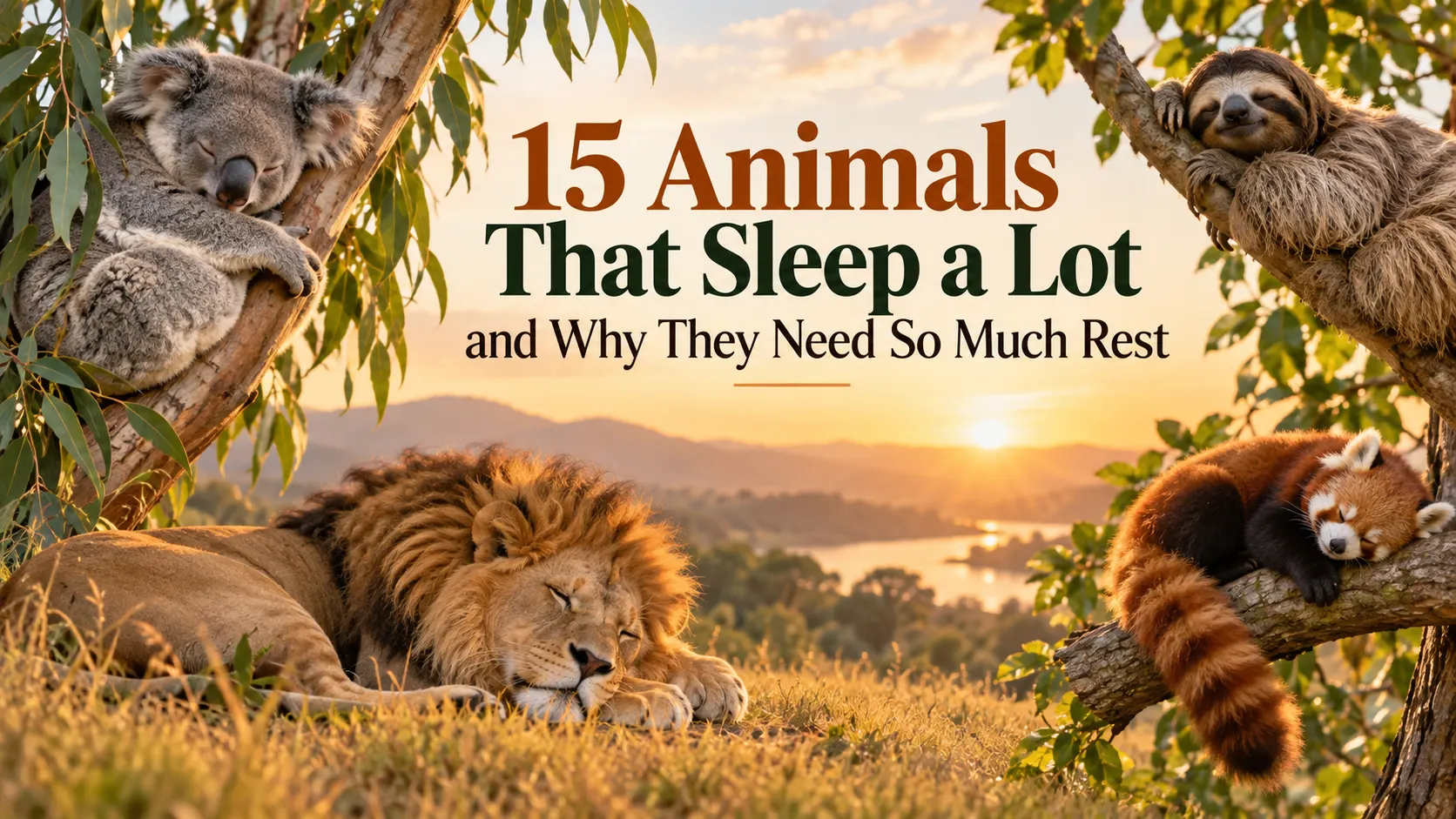
Some animals sleep for only a small part of the day, while others spend most of their time resting. Animals that sleep a lot are not simply “lazy.” Their sleep patterns can reflect diet, metabolism, hunting strategy, activity timing, and how safe it is to stay inactive. Published figures also need context because some come from laboratory studies, others from captivity, and a smaller number from animals measured in the wild.
Animals that sleep the most include little brown bats, opossums, giant armadillos, koalas, sloths, ferrets, and several other mammals. Reported daily sleep ranges from roughly 12 hours to nearly 20 hours among long sleepers. Exact figures vary with species, age, environment, research method, and whether scientists measure true sleep or general inactivity.
Animals That Sleep a Lot at a Glance
The figures below provide useful comparisons, but they should not be treated as fixed rules for every individual animal. Sleep can vary depending on age, environment, season, captivity, activity level, and how researchers define and measure sleep.
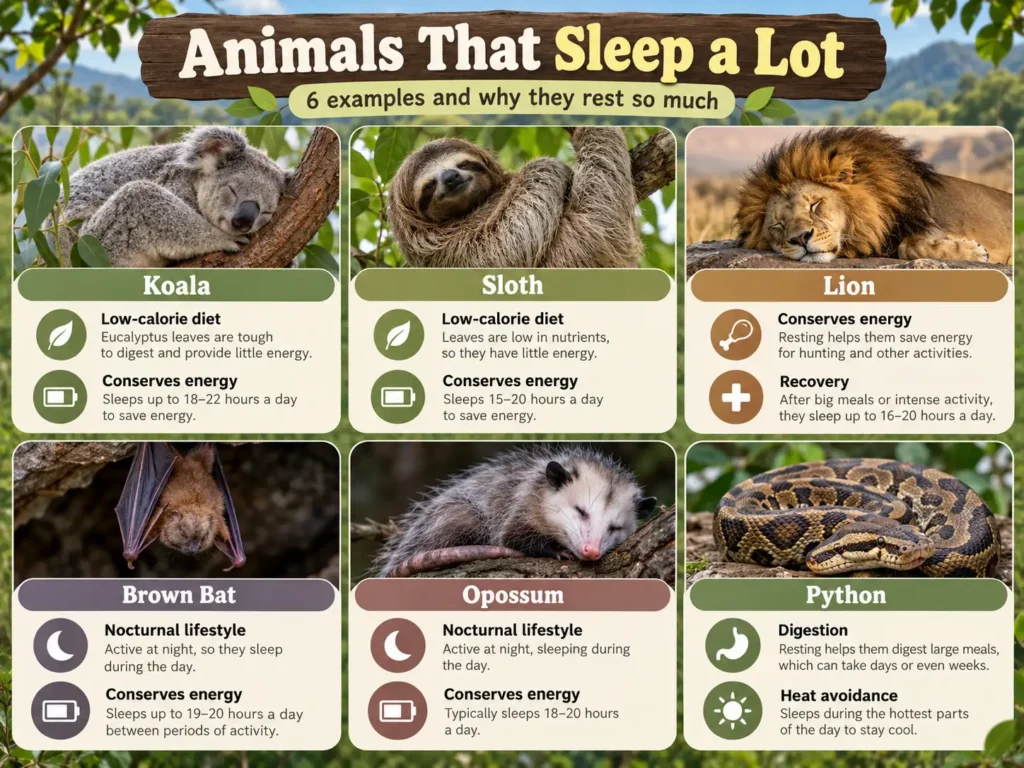
| Animal | Approx. Daily Sleep | Important Context |
| Little brown bat | 19.9 hours | Classic laboratory estimate |
| North American opossum | 18–19 hours | Nocturnal |
| Giant armadillo | 18.1 hours | Burrowing lifestyle |
| Python | About 18 hours | Classic comparative estimate |
| Owl monkey | About 17 hours | Nocturnal primate |
| Koala | 18–20 hours | Often reported as sleep/rest |
| Tiger | 15.8 hours | Long inactive periods |
| Tree shrew | 15.8 hours | Historical sleep estimate |
| Sloth | 9.6–16.4 hours | Wild and captive data differ |
| Squirrel | About 14.9 hours | Varies by species |
| Ferret | 12–16 hours | Several sleep bouts |
| Platypus | About 14 hours | Very high REM sleep |
| Lion | About 13.5 hours | Resting can be much longer |
| Domestic cat | 12–16 hours | Polyphasic sleeper |
| Golden hamster | About 14.3 hours | Mostly active after dark |
15 Animals That Sleep a Lot
1. Little Brown Bat
The little brown bat is one of the best-known extreme sleepers. Classic electrophysiological research has reported close to 20 hours of sleep per day, although the figure comes largely from laboratory research and should not automatically represent every bat living in the wild. Its ecology helps explain the pattern. Little brown bats feed mainly at night when flying insects are available, then spend daylight hours in sheltered roosts. Staying inactive outside the best feeding window can conserve energy and reduce exposure to daytime predators.
2. North American Opossum
Opossums appear near the top of many mammalian sleep comparisons, with historical estimates putting daily sleep at roughly 18 to 19 hours. Virginia opossums are nocturnal and conduct much of their feeding and movement between dusk and dawn. That concentrated schedule leaves a large portion of the day available for sleep. Their example also shows why activity timing matters: an animal may sleep for long periods because its most useful foraging hours occur within a relatively narrow nighttime window.
3. Giant Armadillo
The giant armadillo has been reported to sleep about 18.1 hours per day. Armadillos commonly spend inactive periods in underground burrows, and many species are nocturnal or crepuscular. Burrows provide shelter and more stable conditions for extended rest. However, not every armadillo species follows the same schedule, so the famous 18-hour figure should be attached to the giant armadillo rather than applied to the entire armadillo family.
4. Python
Classic comparative sleep estimates often place pythons at around 18 hours per day. This figure deserves some caution because measuring sleep in reptiles is more complicated than simply judging whether an animal appears motionless. Pythons can remain inactive for long periods because of their ectothermic biology and ambush-predator lifestyle. They may also stay relatively still after consuming a large meal while digestion demands substantial physiological effort. Inactivity, however, should not automatically be counted as confirmed sleep.
5. Owl Monkey
Owl monkeys are nocturnal primates, and comparative estimates commonly place them at roughly 17 hours of sleep per day. During daylight, they shelter in protected sites and become active around dusk. Their schedule illustrates how sleep can fit an ecological niche: movement, feeding, and social activity are concentrated during darkness rather than spread evenly throughout a 24-hour cycle.
6. Koala
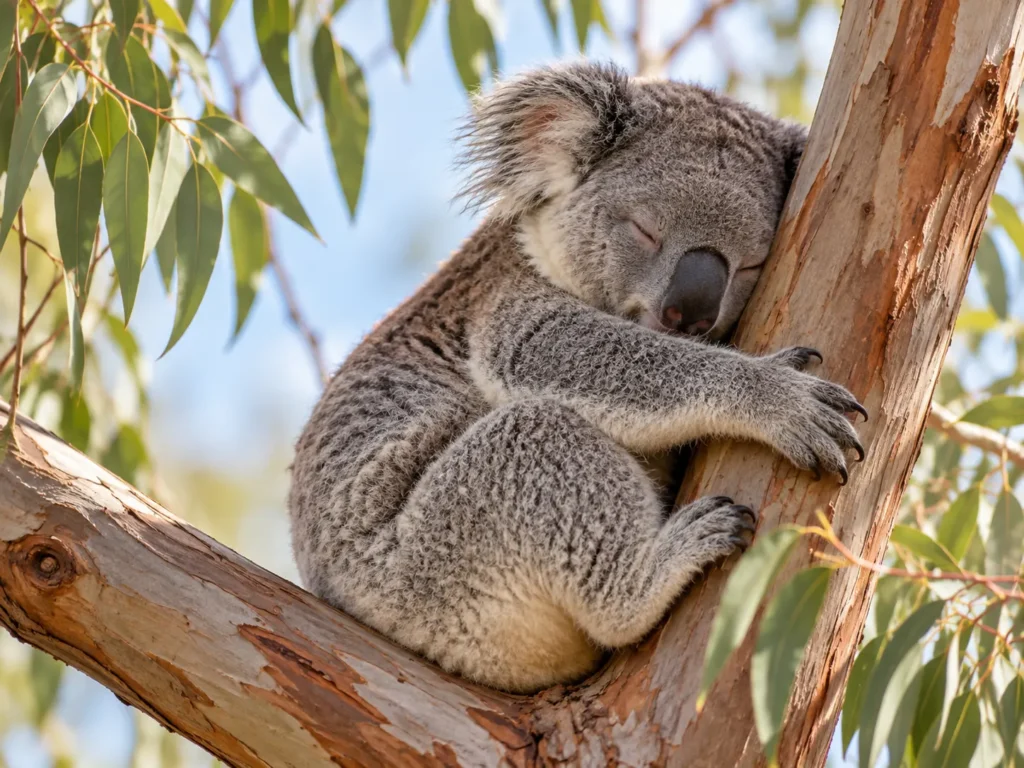
Koalas are among the most recognizable animals that sleep a lot. They are commonly reported to spend around 18 to 20 hours sleeping or resting each day. Their eucalyptus-based diet is fibrous, relatively low in available energy, and demanding to process. Long periods of inactivity help keep energy expenditure low. Koalas become more active at night and around dawn or dusk. They are not simply made sleepy by eucalyptus; their low-energy lifestyle is better understood as an adaptation to the nutritional characteristics of their diet.
7. Tiger
Comparative sleep data commonly estimate tiger sleep at about 15.8 hours per day. Tigers are powerful predators, but their daily lives do not involve continuous hunting. Much of their time can be spent resting between walking, stalking, feeding, and territorial activity. Conserving energy makes sense for an ambush hunter that may need short bursts of intense effort. Age, prey availability, temperature, disturbance, and captivity can all affect an individual tiger’s schedule.
8. Tree Shrew
Tree shrews appear in older cross-species sleep estimates at roughly 15.8 hours per day. Despite their name, they are not true shrews, and the group contains species with different habitats and routines.
They are a useful reminder that long sleep is not limited to famously slow animals. Similar daily totals can occur in animals with very different bodies, diets, and lifestyles, meaning sleep duration cannot be explained by one simple biological rule.
9. Sloth
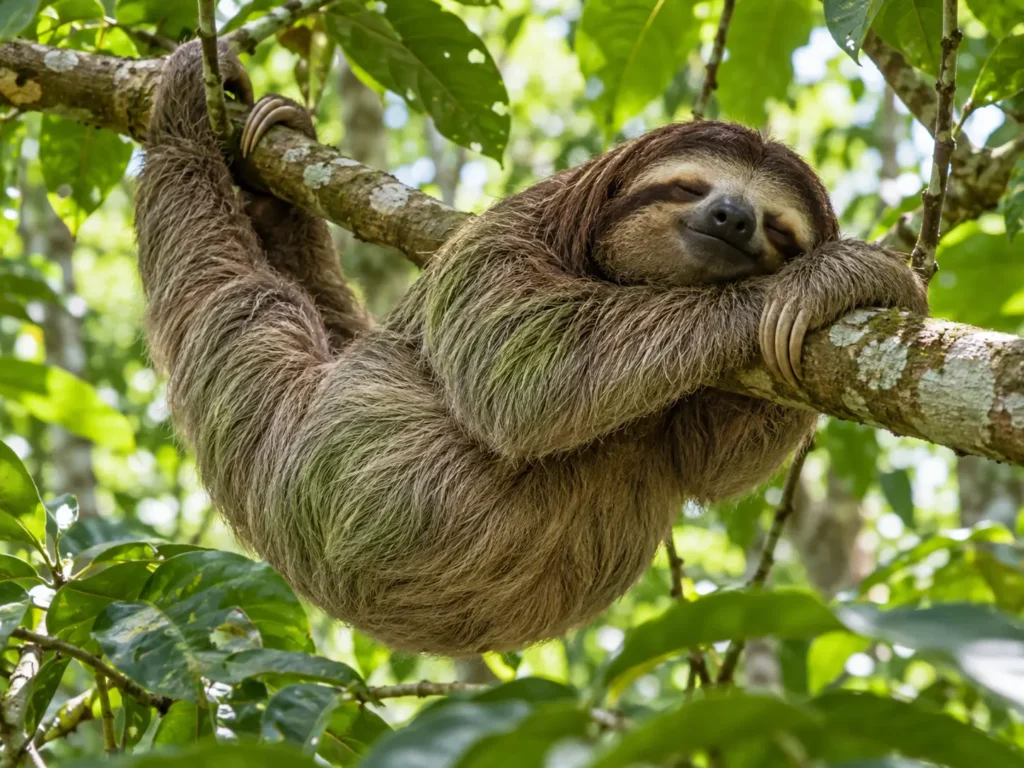
Sloths are probably among the most misrepresented sleepers. Captive three-toed sloths have been recorded sleeping for around 15.8 hours per day, while research involving other sloths has produced similarly long estimates. However, measurements from wild three-toed sloths have found averages closer to 9.6 hours per day. That difference makes the common claim that sloths always sleep 20 hours a day unreliable. Environment, predation risk, food availability, disturbance, and research methodology can all influence how much sleep researchers observe.
10. Squirrel
A commonly cited comparative figure for squirrels is about 14.9 hours of sleep per day. Yet “squirrel” describes a large and diverse group of species, so one number cannot accurately represent every squirrel. Season can also change their behavior considerably. Some ground squirrels enter torpor or hibernation, which is physiologically different from ordinary sleep. The safer conclusion is that many squirrels spend substantial periods inactive, while exact daily sleep depends on species, season, and environment.
11. Ferret
Domestic ferrets usually sleep about 12 to 16 hours per day, although some individuals may sleep for even longer periods. Their routine often alternates deep-looking sleep with short, energetic periods of play and exploration. Ferrets also spend a significant portion of their sleep in REM. Age and household routine can influence the pattern: older ferrets generally sleep more frequently, while younger animals often remain active for longer stretches.
12. Platypus
Platypuses have been recorded sleeping for around 14 hours per day, but their most interesting characteristic is not simply the total amount of sleep. Research has found that they can spend a remarkably large portion of that time in REM sleep. Platypus sleep has attracted scientific interest because monotremes represent an early branch of mammalian evolution. Their unusual sleep characteristics therefore give researchers another way to investigate how different mammalian sleep states may have evolved.
13. Lion
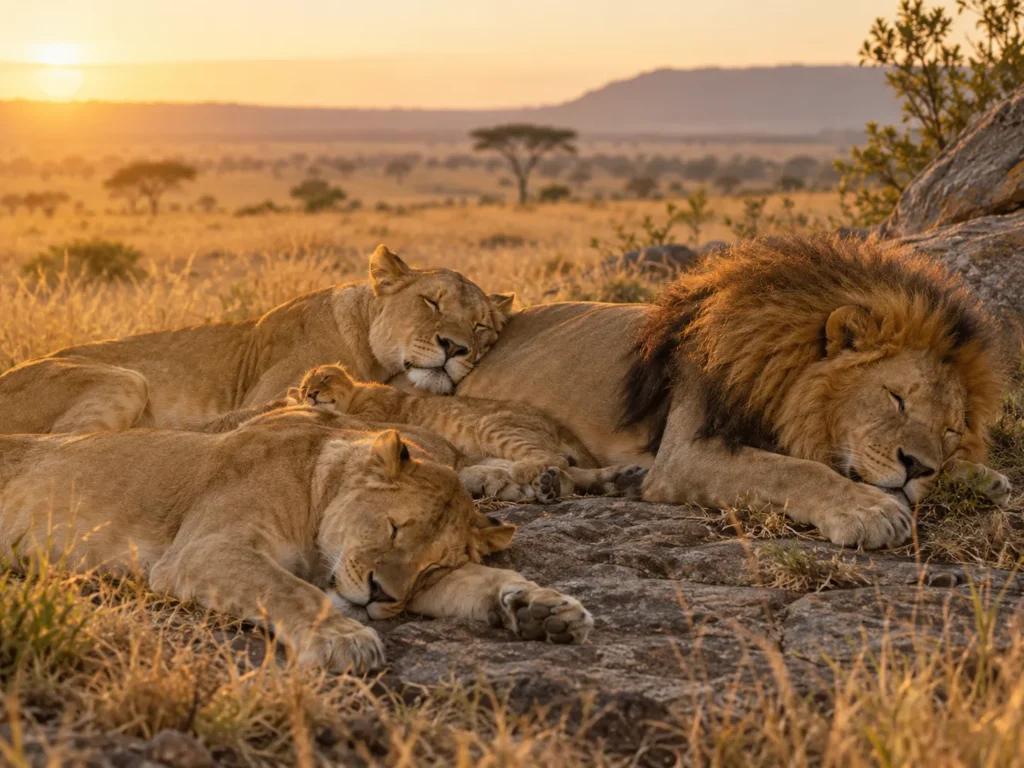
Lions spend much of their day inactive. Comparative estimates place actual sleep at around 13.5 hours, although sleeping and resting combined can occupy substantially more of a lion’s 24-hour day. The distinction matters because a lion lying quietly on the ground is not necessarily asleep. Lions alternate long periods of inactivity with shorter periods of hunting, feeding, territorial defense, movement, and social behavior, particularly during cooler parts of the day.
14. Domestic Cat
Domestic cats commonly sleep around 12 to 16 hours per day. They are polyphasic sleepers, which means their sleep is divided into numerous shorter bouts instead of occurring as one continuous nighttime block. This pattern suits an animal capable of shifting quickly from rest to alertness. Kittens and older cats may sleep even more, while play, weather, household routine, stimulation, and individual health can all influence how long a particular cat sleeps.
15. Golden Hamster
Golden hamsters appear in comparative sleep estimates at about 14.3 hours per day. Their sleeping schedule is closely connected with activity during the darker part of the day, although pet hamsters may adjust their routine somewhat to household conditions. When awake, hamsters can be highly active, spending time feeding, grooming, digging, running, and exploring. Their long sleep total therefore does not mean they are sluggish; it reflects how their activity is concentrated into particular periods.
Why Do Some Animals Sleep So Much?
There is no single explanation for why certain animals need significantly more sleep than others. Sleep duration can be influenced by ecology, diet, body size, metabolism, predation risk, development, activity patterns, and access to safe sleeping locations.
For bats, remaining inactive during the day fits a lifestyle focused on nighttime feeding. Koalas conserve valuable energy while surviving on eucalyptus leaves. Predators such as cats and tigers can rest for extended periods between relatively short periods of demanding hunting and movement. Food can also influence sleep indirectly. An animal living on a low-energy diet may benefit from conserving energy, while predators that consume large meals do not necessarily need to remain continuously active in search of food.
Do Animals Sleep the Same Amount in the Wild and Captivity?
Not always. Sloths provide one of the clearest examples. Captive observations have produced sleep estimates approaching 16 hours per day, while measurements from wild sloths have found considerably lower totals. Wild animals must find food, travel through their habitat, monitor predators, compete with other animals, respond to weather, and deal with changing environmental conditions. These pressures can affect when and how safely they can sleep.
Captive animals often receive food at predictable times, face fewer predators, and live in controlled surroundings. Captive sleep studies can therefore provide valuable information, but their figures should not automatically be presented as the normal schedule of every animal living in the wild.
Sleep vs. Resting, Torpor, and Hibernation
Sleep is a biological state, not simply a period when an animal looks still. An animal may be lying quietly while remaining awake and responsive to its surroundings. This is particularly important when discussing predators that spend large parts of the day resting. Torpor is different from ordinary sleep. During torpor, an animal can reduce its metabolism and body temperature to conserve energy. Hibernation involves longer or repeated periods of profound metabolic suppression and is much more than simply “sleeping through winter.” The distinction matters for animals such as bats, squirrels, hedgehogs, and other species that can remain inactive for extended periods. Reptiles can also be extremely still without necessarily being in the same type of sleep experienced by mammals.
FAQs
What animal sleeps the most?
The little brown bat is frequently listed among the longest-sleeping mammals, with classic laboratory research reporting around 19.9 hours of sleep per day. However, researchers have not measured every animal species under equivalent conditions, so declaring one species the undisputed sleepiest animal should be done cautiously.
Do koalas really sleep 20 hours a day?
Koalas can spend approximately 18 to 20 hours per day sleeping or resting. Their eucalyptus-based diet provides relatively little usable energy, so long periods of inactivity help them conserve energy for digestion, movement, feeding, and other essential activities.
Do sloths sleep all day?
No. Sloths do not necessarily sleep all day. Although captive sloths have sometimes been recorded sleeping around 15 to 16 hours, research on wild three-toed sloths has found averages closer to 9.6 hours per day. This is why the popular claim that every sloth sleeps 20 hours daily is misleading.
Why do lions sleep so much?
Lions spend long periods resting because their lifestyle includes shorter bursts of demanding activity such as hunting, territorial movement, feeding, and social interactions. Conserving energy between those activities can be advantageous, especially during hot daytime conditions.
Which pet animals sleep the most?
Cats and ferrets are familiar pets that spend large portions of their day asleep. Domestic cats commonly sleep around 12 to 16 hours, while ferrets often sleep approximately 12 to 16 hours and may sometimes sleep even longer depending on their age and daily routine.
Why do some animals need more sleep than humans?
Animals have evolved very different physiological requirements and daily schedules. Diet, metabolism, body size, predation risk, food availability, development, activity timing, and ecological niche can all influence sleep duration, so human sleep needs are not a useful benchmark for every other species.
Final Thoughts
Animals that sleep a lot are usually following biological and ecological strategies suited to their way of life rather than simply being lazy. Diet, metabolism, hunting style, safety, and activity timing can all shape sleep patterns, while wild conditions and research methods can substantially change the numbers scientists observe.
3 Comments