
Clumsy Animals: 15 Species That Look Awkward and Why
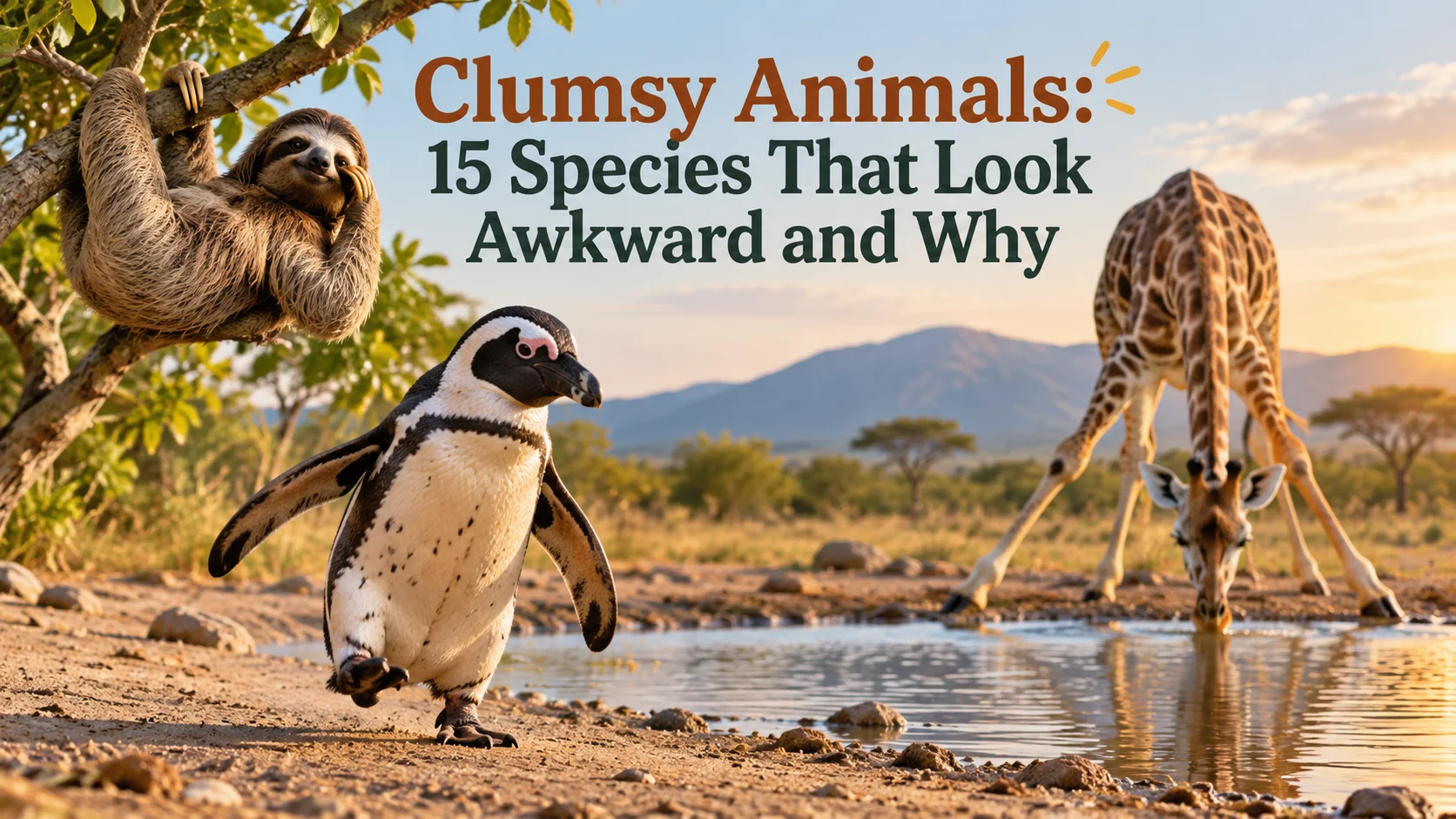
Some animals look clumsy because they waddle, shuffle, crawl, or struggle with takeoff and landing. Yet “clumsy” is a human description, not a scientific category. In many cases, awkward-looking movement reflects a body specialized for swimming, climbing, diving, or soaring. A penguin may look ungainly on land but become remarkably agile underwater, while an albatross can land roughly despite being an exceptional long-distance flier. These 15 clumsy animals show why movement makes more sense when viewed in context.
Clumsy-looking animals include penguins, sloths, elephant seals, harbor seals, walruses, koalas, platypuses, albatrosses, loons, grebes, and other specialists. Their awkward movements usually reflect anatomical trade-offs rather than poor coordination. An animal may move inefficiently on land while being highly capable in water, trees, or the air.
What Does “Clumsy” Mean in Animals?
“Clumsy” is not a zoological classification, and there is no scientific ranking of the world’s clumsiest animals. When people describe clumsy animals, they usually mean species whose movement appears unstable, slow, lumbering, or unusual to a human observer.
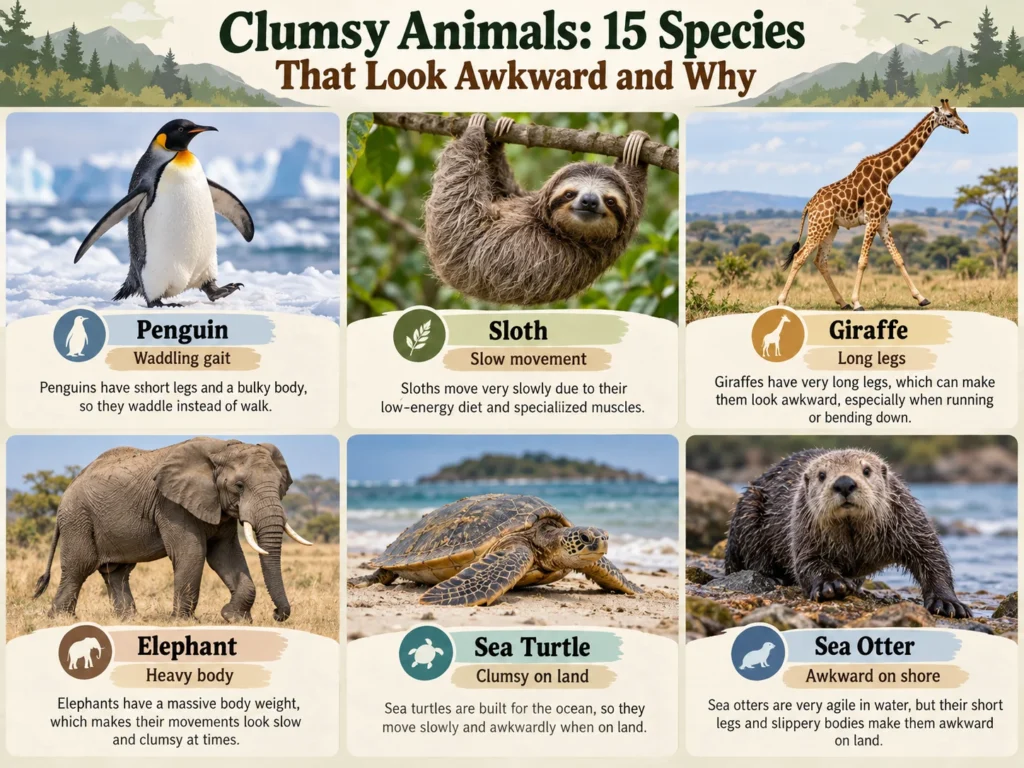
That appearance can be misleading. A streamlined swimmer may sacrifice some terrestrial mobility, while a tree specialist may have claws and limb positions that work brilliantly on branches but poorly on flat ground. Visual proportions can be misleading too, and Animals that Sleep Alot may look unusual to us even though their distinctive features often serve useful functions. The same principle applies to clumsy animals: awkward-looking locomotion often represents an evolutionary trade-off rather than poor coordination.
1. Penguin
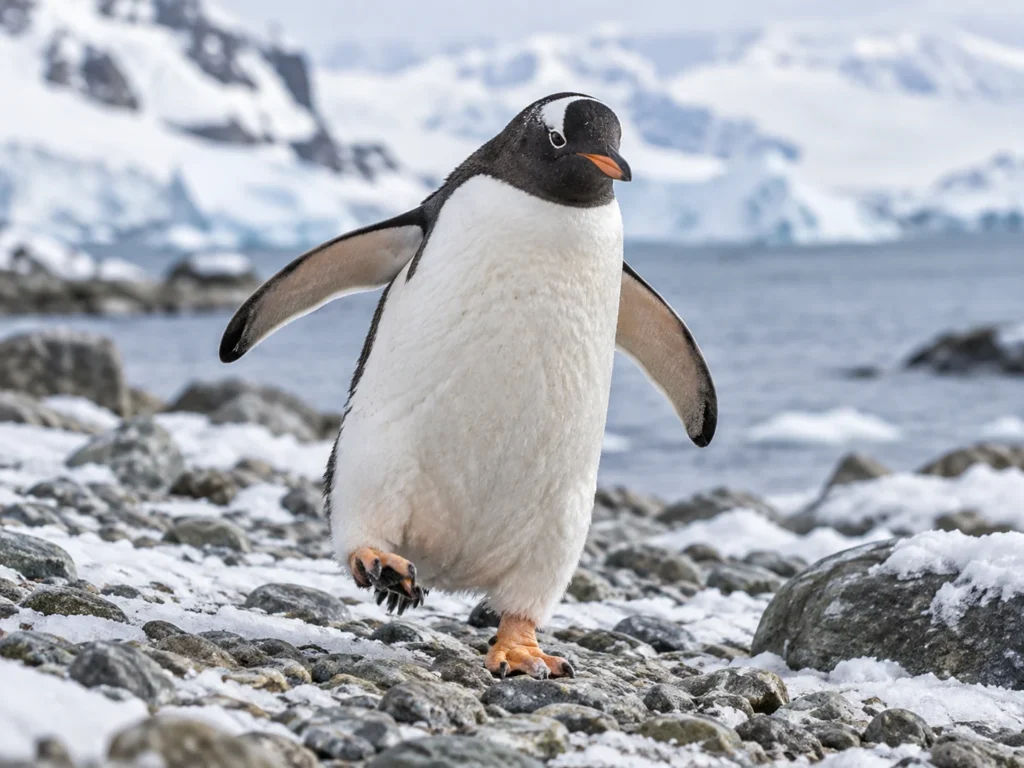
Penguins are famous for their side-to-side waddle. Their short legs and aquatic body shape make terrestrial walking relatively costly, but research shows that waddling itself helps recover mechanical energy. Once underwater, the compact body that looks awkward on land becomes highly effective for swimming.
2. Two-Toed Sloth
On the forest floor, a two-toed sloth can appear extremely awkward. Its long limbs and curved claws are much better suited to hanging beneath branches than walking normally on the ground. Sloths are specialized tree dwellers and can also swim surprisingly well despite their clunky terrestrial movement.
3. Northern Elephant Seal
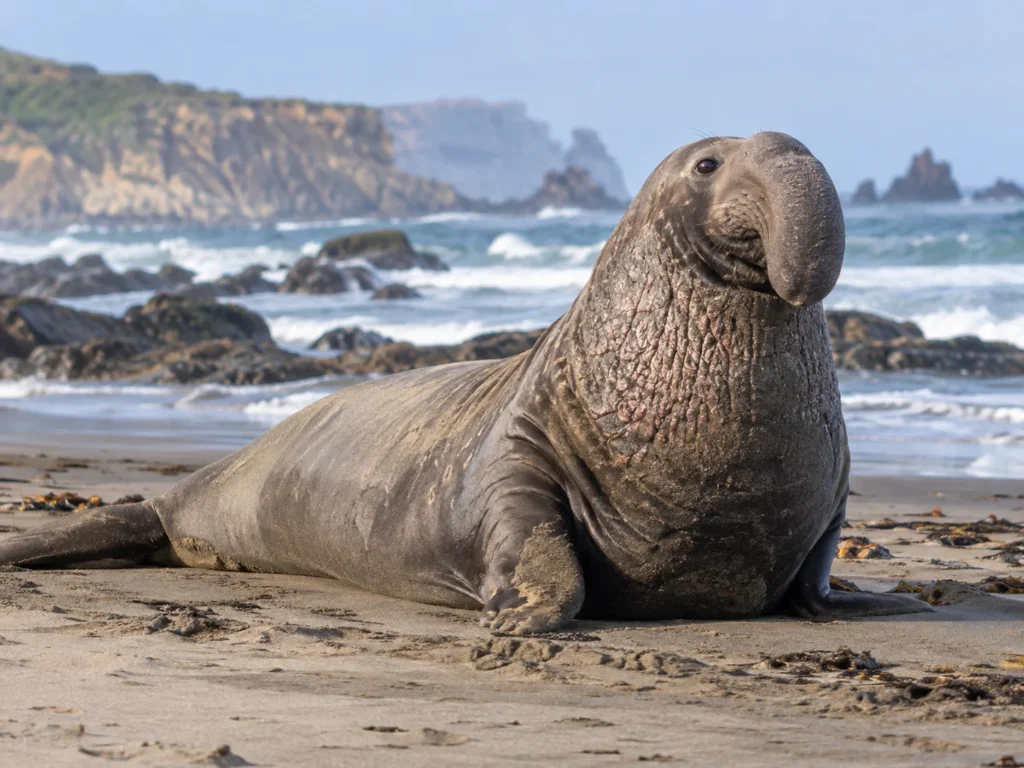
Northern elephant seals move across beaches through rhythmic body undulations rather than ordinary four-legged walking. Their enormous size and aquatic anatomy limit terrestrial speed and endurance. In the ocean, however, these same animals are proficient swimmers and deep divers, creating a dramatic land-versus-water contrast.
4. Harbor Seal
Harbor seals are true seals, meaning their hind flippers cannot rotate beneath the body for normal walking. Instead, they shift and undulate across land in a caterpillar-like motion. The movement looks awkward, but their streamlined bodies and powerful hind flippers are highly effective underwater.
5. Walrus
Walruses can look lumbering because of their huge bodies and flipper-shaped limbs. Unlike true seals, however, they can rotate their rear flippers underneath themselves and move on all fours. Their land gait may still seem ungainly, while their bodies are much more naturally suited to aquatic movement.
6. California Sea Lion
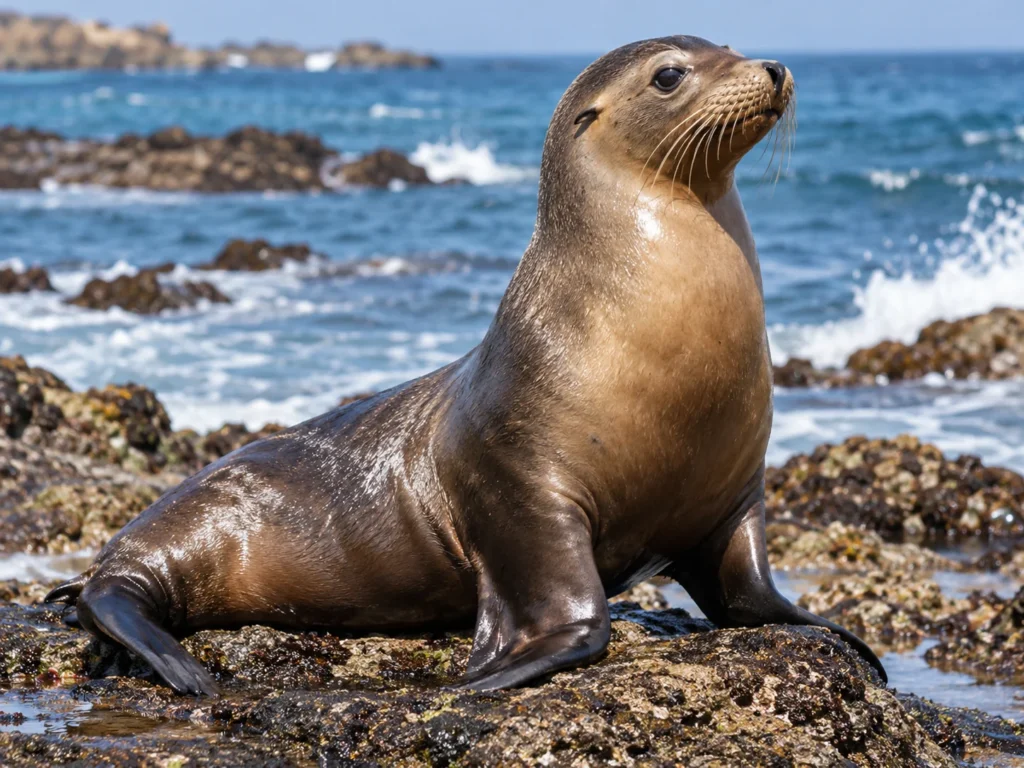
California sea lions may look awkward when moving around on shore, but they are more mobile terrestrially than true seals. They can rotate their hind flippers beneath the body and support themselves on all four limbs. In water, their long front flippers and flexible bodies produce fast, agile swimming.
7. Platypus
The platypus has short, heavy, splayed limbs that give it a waddling appearance on land. Terrestrial movement also costs it more energy than it would for a similarly sized land mammal. In water, broad webbed front feet power smooth swimming while the hind feet contribute to steering.
8. Koala
Koalas are equipped with powerful limbs, sharp claws, and gripping feet for climbing trees. On the ground, they move less comfortably and are considered poorly adapted for ordinary walking. Even so, a threatened koala can break into a bounding gallop, so awkward everyday movement does not mean helplessness.
9. Giant Anteater
A giant anteater looks unusual when walking because it protects its enormous front claws by folding them inward and bearing weight on its knuckles. This produces a slow, shuffling gait. The posture is functional rather than clumsy, preserving the powerful claws used for opening insect nests.
10. Royal Albatross
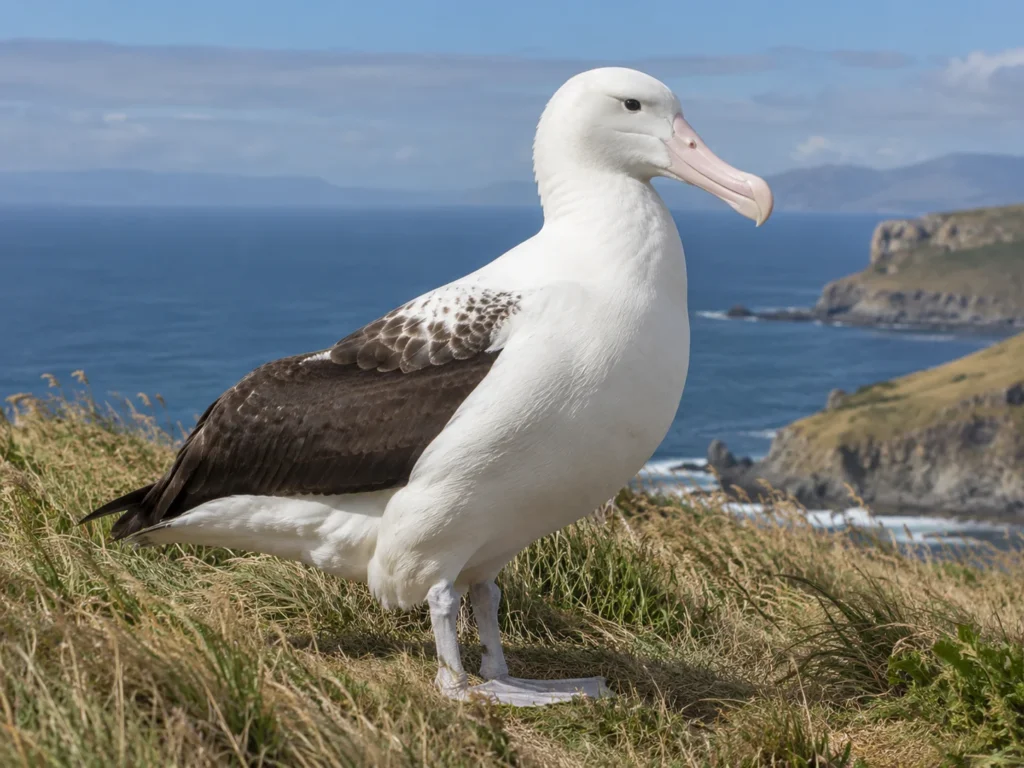
Royal albatrosses are magnificent once airborne but can look much less graceful during takeoff and landing. Their enormous wings favor efficient soaring, so takeoff often requires a running start. Slowing down for landing can also be difficult, sometimes resulting in rough or tumble-like arrivals.
11. Common Loon
Common loons have legs positioned far toward the rear of the body. This gives them excellent propulsion and control while swimming and diving, but makes walking on land ungainly. Loons therefore spend little time traveling over land and usually stay close to water.
12. Pied-Billed Grebe
Pied-billed grebes show a similar aquatic trade-off. Their feet and legs sit near the back of the body, where they function effectively for underwater propulsion. That same arrangement makes walking awkward and difficult, so grebes are far more comfortable swimming and diving than moving across dry ground.
13. Kākāpō
The kākāpō is a heavy, flightless parrot with a waddling gait, which can make its movement look clumsy. Yet it is a capable hiker and climber with strong legs and claws. It can travel considerable distances and uses its wings for balance and controlled falls rather than powered flight.
14. Leatherback Sea Turtle
Leatherback sea turtles are powerful ocean travelers with long front flippers and streamlined bodies. Adult females must crawl onto beaches to nest, where their movement appears slow and laborious. Their limbs are specialized primarily for swimming rather than supporting the body during sustained movement across land.
15. European Green Crab
A European green crab may look awkward because it typically travels sideways rather than straight ahead. This is not poor coordination. Its leg anatomy and neuromuscular control are well suited to lateral movement, making the familiar sideways scuttle an efficient locomotor strategy for its body design.
Clumsy-Looking vs Actually Adapted
Many clumsy animals seem awkward only because we observe them performing a movement their anatomy is not optimized for. The same can be true of Stubborn Animals , whose unusual proportions may look striking to us even though those features are well suited to their environment and survival needs.
| Animal | Looks Awkward When | Actually Specialized For |
| Penguin | Walking on land | Swimming |
| Sloth | Moving on ground | Hanging and climbing |
| Elephant seal | Moving ashore | Swimming and deep diving |
| Harbor seal | Moving on land | Aquatic locomotion |
| Albatross | Taking off and landing | Long-distance soaring |
| Common loon | Walking | Swimming and diving |
| Koala | Ground movement | Tree climbing |
A limitation in one environment therefore tells us very little about an animal’s overall movement ability.
Why Do Penguins Waddle?
Penguin walking is a classic example of why some clumsy animals only appear inefficient in a particular setting. Penguins have short legs and bodies heavily specialized for swimming, which makes terrestrial walking more energetically expensive than it is for many similarly sized animals.
Their side-to-side waddle actually helps conserve mechanical energy during each step. The high cost of walking is linked more closely to their short legs and rapid muscular force production than to the waddling motion itself.
Why Are Sloths So Awkward on the Ground?
Sloths are another example of clumsy animals whose awkward appearance changes with the environment. They evolved around life in forest canopies rather than regular travel over open ground. Their long limbs and strongly curved claws allow them to suspend themselves beneath branches, but the same anatomy makes ordinary terrestrial walking difficult. A similar principle applies to Greedy Animals , where a feature that may look unusual often plays an important role in balance, movement, or adaptation to a particular environment. Their low-energy lifestyle also favors slow, deliberate movement. A sloth dragging itself across the ground can look extremely clumsy, yet that observation ignores how well its body performs while hanging, climbing, and even swimming.
Why Are Aquatic Animals Awkward on Land?
Many clumsy animals on land are highly specialized for life in water. Aquatic specialization often changes limb shape, body posture, and how an animal supports its weight. Penguins have compact swimming bodies, while true seals have hind flippers that cannot rotate beneath them. Elephant seals add enormous body mass, making land travel especially demanding.
Walruses and sea lions provide an important contrast because they can bring their rear flippers underneath themselves and move on all fours. Platypuses and sea turtles show the same broader principle: strong swimming adaptations can reduce efficiency on solid ground.
Why Can Albatross Landings Look So Clumsy?
Albatrosses can look clumsy during takeoff and landing even though their flight performance is exceptional. They are designed to exploit winds over vast stretches of ocean. Their long wings make soaring extraordinarily efficient but are less convenient at low speeds near the ground. Royal albatrosses may need a running start to become airborne.
Landing presents the opposite challenge. The bird must lose speed and control its long wings before touching down. Rough landings therefore reflect the demands of its flight specialization rather than an inability to fly well.
Are These Animals Actually Clumsy?
Usually not in any scientific sense. Calling them clumsy animals is a human judgment based largely on how a movement looks. Zoologists instead examine gait, anatomy, biomechanics, energy use, and performance within the animal’s normal environment.
A harbor seal shuffling across a beach may appear poorly coordinated until it enters the water. A loon looks awkward on land because the rear-set legs that hinder walking are excellent for diving. Even a sideways-moving crab shows that an unusual gait can be highly functional.
Common Misconceptions About Clumsy Animals
Discussions of clumsy animals can create several misconceptions. Penguins do not waddle simply because they have bad balance, and sloths are not badly designed because they struggle on flat ground. Albatrosses remain outstanding fliers despite awkward-looking landings, while true seals and walruses should not be treated as having identical terrestrial movement. Slow movement also does not automatically equal clumsiness. Funny videos of pandas, giraffes, or young animals falling are not evidence that an entire species lacks coordination. There is no scientific “clumsiness score.”
Frequently Asked Questions
What is the clumsiest animal?
There is no scientifically recognized clumsiest animal. Penguins, sloths, seals, and albatrosses are often described as clumsy because certain movements look awkward, but each is highly adapted for another form of locomotion such as swimming, climbing, diving, or soaring.
Why do penguins look clumsy when walking?
Penguins have short legs and streamlined bodies primarily adapted for swimming. Their side-to-side waddle looks awkward but actually helps conserve mechanical energy while walking. Their relatively high walking cost is therefore not simply the result of poor balance.
Why are sloths awkward on the ground?
Sloth limbs and curved claws are specialized for hanging and climbing rather than conventional terrestrial walking. On flat ground, that anatomy produces slow, clunky movement. The same animal is much better suited to suspended movement through forest canopies.
Which animals are clumsy on land but good swimmers?
Penguins, elephant seals, harbor seals, walruses, sea lions, platypuses, loons, grebes, and sea turtles can all look comparatively awkward on land while performing much more effectively in water. The anatomical reasons differ among these species.
Are clumsy animals actually poorly coordinated?
Usually not. Awkward-looking movement often results from anatomical specialization or a locomotor trade-off. An animal can perform poorly on one type of surface while excelling in its normal environment, making overall judgments about coordination misleading.
Final Thoughts
Clumsy animals are often far more capable than their waddles, shuffles, and rough landings suggest. Penguins conserve energy while waddling, sloths are built for suspended tree life, elephant seals excel underwater, and albatrosses become exceptionally efficient once airborne. The key is context. Evolution does not optimize every species for every kind of movement. Instead, anatomy reflects particular environments and lifestyles, creating trade-offs that may look clumsy to us while working extremely well where they matter most.



3 Comments