Animals That Eat Honey: 12 Species and How They Find It
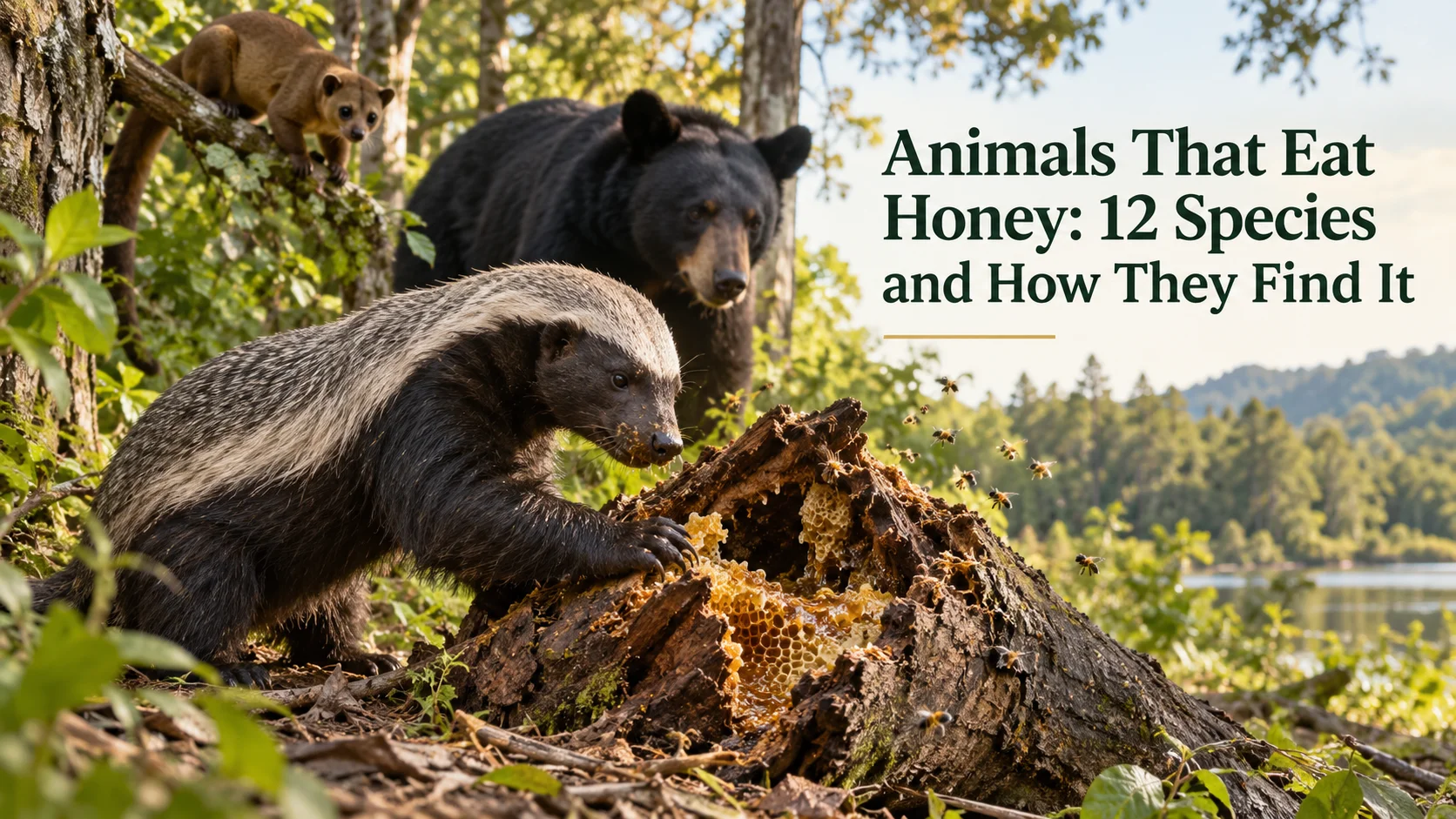
Honey is a concentrated source of sugar, so it is not surprising that several animals take advantage of it when they find a bee nest. However, a hive offers much more than honey. Bee larvae, pupae, pollen, adult bees, and comb can also attract hungry wildlife. Some animals tear nests apart, some use tools, and others simply live inside the hive. These animals that eat honey show why bee nests can be valuable food sources in very different ecosystems.
Animals that eat honey include black bears, brown bears, sun bears, honey badgers, chimpanzees, baboons, gorillas, African civets, kinkajous, honey bees, small hive beetles, and certain ants. Many also eat bee larvae, pupae, pollen, or comb, meaning honey is often only one part of the nutritional reward found inside a bee nest.
Why Do Animals Eat Honey?
Honey is primarily made from concentrated sugars, making it an energy-rich food that can provide calories quickly. For an opportunistic omnivore such as a bear, discovering a bee nest can therefore be worthwhile even though honey is not a major part of its normal diet. Other animals may encounter honey while deliberately searching for insects or other foods. The important point is that bee nests contain several nutritional rewards. Honey provides carbohydrates, while developing bee larvae and pupae contain protein and fat. Pollen also contributes nutrients. An animal that breaks open a nest may consume several of these foods together rather than carefully separating the honey from everything else.
Honey vs Bee Brood: What Do Hive Raiders Really Eat?
A common misconception is that every animal entering a bee nest is mainly searching for honey. In reality, bee brood—the eggs, larvae, and pupae developing in the nest—can be extremely attractive. For some predators, brood may be more nutritionally valuable than the honey surrounding it. This distinction is particularly important with bears and honey badgers. Both are famous for their association with honey, yet immature bees can be an important part of what they obtain from a nest. Chimpanzees may also extract honey, brood, and pollen together. Calling all of these species “honey lovers” therefore oversimplifies their feeding behavior.
Bears That Eat Honey
1. Black Bear
Black bears really do eat honey, but the popular image of a bear searching only for something sweet misses much of the story. When a black bear opens a bee colony, it can consume brood comb containing eggs, larvae, and pupae along with honey. Immature bees provide valuable protein and fat, making the entire nest an attractive feeding opportunity.
2. Brown Bear
Brown bears are broad omnivores whose diets change with season and food availability. When they encounter bee nests or managed hives, honey can be consumed along with bees and developing brood. Honey is therefore best viewed as an opportunistic food rather than a staple. A bear may exploit a hive because several concentrated food resources are available in one place.
3. Sun Bear
Sun bears are well suited to investigating tree cavities for food. Their strong claws can open decaying wood and nests, while a long tongue helps them reach insects and sweet substances hidden inside cavities. Honey may form part of this feeding, but sun bears also consume insects and many other foods, so their diet should not be reduced to honey alone.
Other Mammals That Eat Honey or Raid Bee Nests
4. Honey Badger
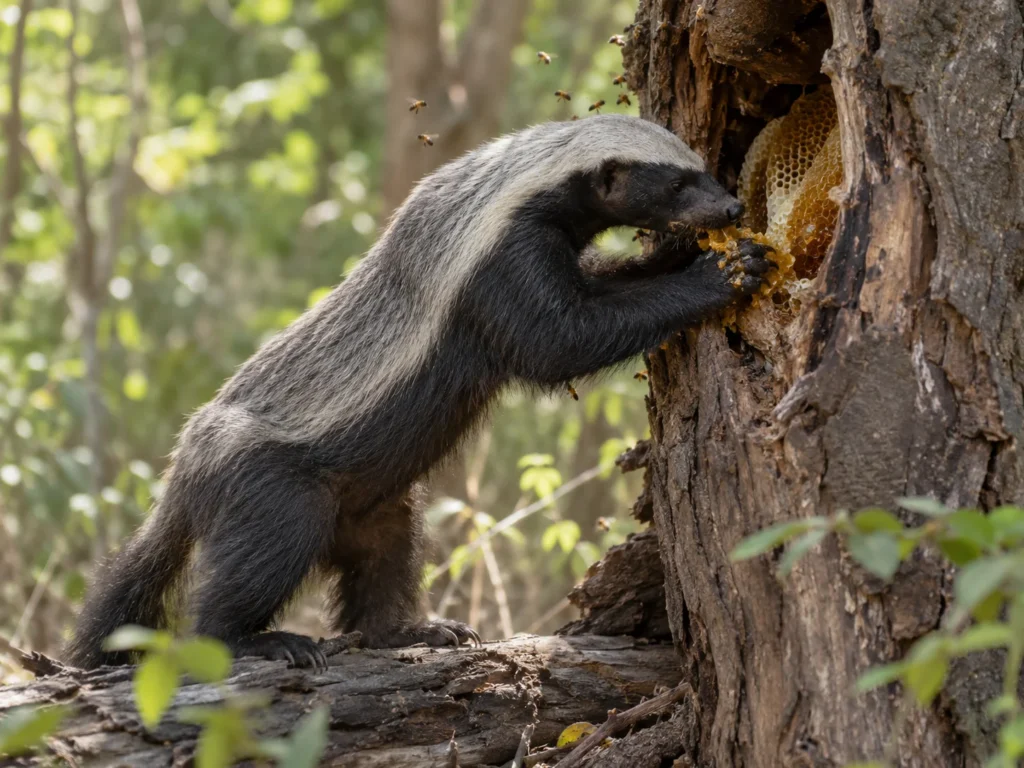
Despite its name, the honey badger should not be portrayed as a specialized honey eater. Honey badgers raid bee nests, but bee larvae are an important attraction and may be more significant than the honey itself. They can encounter and consume honey while breaking open nests, yet their overall diet is broad and includes many insects and other animal foods.
5. Kinkajou
The kinkajou is sometimes called a “honey bear,” although it is not a bear and fruit dominates its natural diet. Its long tongue helps it feed on nectar and soft foods, and honey can also be eaten when available. Reports of honey consumption in wild kinkajous are less extensive than the nickname suggests, so honey should be described as occasional rather than central.
Primates That Take Honey From Bee Nests
6. Chimpanzee
Chimpanzees provide one of the most interesting examples because some populations use tools to reach food inside bee nests. Sticks or flexible plant stems can be inserted into nest cavities to obtain honey, brood, and pollen. This feeding behavior combines diet with problem-solving and shows that extracting honey can require much more than simply breaking open a hive.
7. Baboon
Baboons are opportunistic omnivores capable of exploiting many different foods. Field research in African forests has recorded baboons taking advantage of stingless-bee nests and harvesting honey and brood, including from nests that had already been opened. Honey is not a major component of the general baboon diet, but bee colonies can provide a concentrated seasonal or opportunistic reward.
8. Gorilla
Gorillas are mainly plant eaters, yet observations from African forest studies have documented gorillas exploiting stingless-bee nests. They may use their hands or mouths to access honey and developing brood rather than employing the specialized tools seen in some chimpanzees. Such feeding is occasional and should not be mistaken for an important everyday part of the gorilla diet.
9. African Civet
African civets have also been documented taking honey and brood from stingless-bee nests. As adaptable omnivores, they consume a wide variety of animal and plant foods, so bee-nest resources fit an opportunistic feeding strategy. A civet may exploit a nest opened by another predator, allowing it to reach honey without having to penetrate the entire nest itself.
Insects That Eat Honey
10. Honey Bee
Honey bees are the most obvious honey eaters once their biology is considered. They create honey from nectar specifically to store energy for the colony. When flowers are scarce, particularly during winter or other periods of limited forage, adult bees consume stored honey and metabolize its sugars to fuel activity and help maintain colony temperature.
11. Small Hive Beetle
Small hive beetles live very differently from honey bees but can take advantage of the same stored food. Adults and larvae enter bee colonies and feed on honey and pollen. Larvae can also damage brood and comb while moving through the hive. Their feeding can contaminate stored honey, making this beetle an important example of an insect that consumes honey as a hive pest.
12. Certain Ants
Some ant species enter honey bee colonies searching for food and may feed on honey or supplemental sugar within the hive. This does not mean that all ants are honey eaters; ant diets vary enormously among species. Where hive invasion occurs, however, stored carbohydrates provide an easily accessible food reward if the ants can get past the colony’s defenses.
How Different Animals Get Into Bee Nests
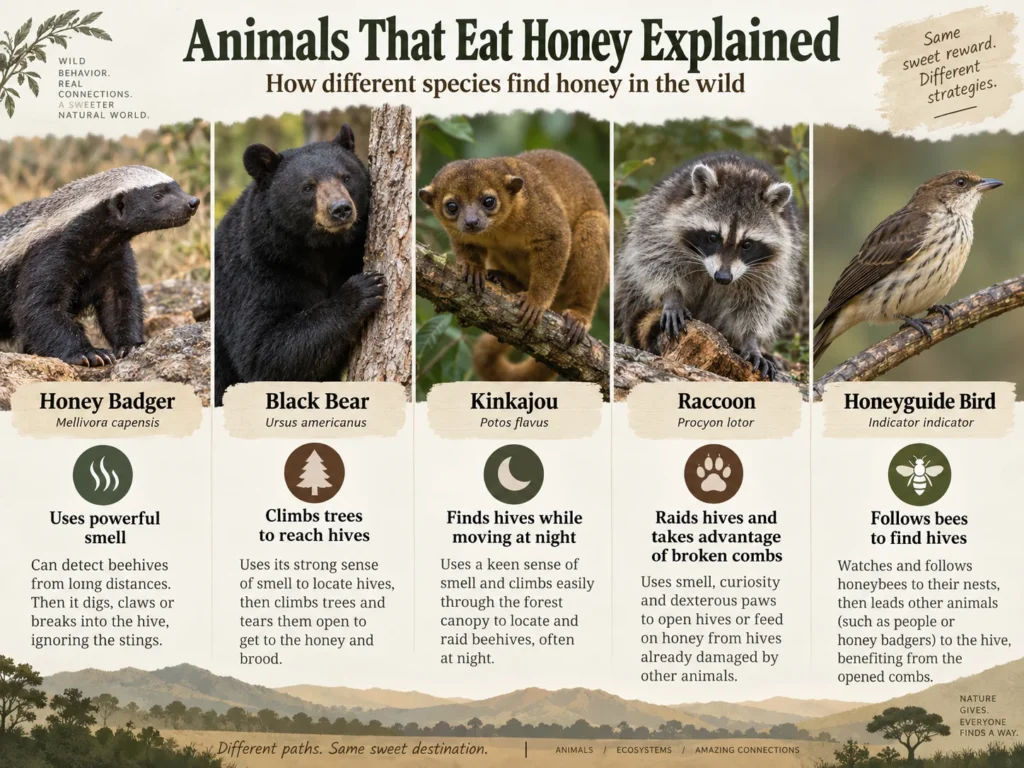
Honey-eating animals use very different methods to obtain hive food.
| Animal | How It Gets Access | Foods It May Take |
| Black bear | Tears open nests or hives | Brood, honey, comb |
| Sun bear | Claws into cavities and uses long tongue | Honey, insects, brood |
| Honey badger | Digs or breaks into nests | Mainly brood, sometimes honey |
| Chimpanzee | May use sticks or plant tools | Honey, brood, pollen |
| Baboon | Opens or exploits accessible nests | Honey and brood |
| Honey bee | Lives within the colony | Stored honey |
| Small hive beetle | Invades bee colonies | Honey and pollen |
| Certain ants | Enter through hive openings | Honey and other sugary stores |
The feeding method often determines which hive resources an animal can reach. Large mammals can physically destroy protective structures, while chimpanzees can probe narrow cavities with tools. Small insects need far less force because they can enter through openings that larger animals cannot use.
Animals With “Honey” in Their Name Can Be Misleading
A common name does not always describe an animal’s main food. Greater honeyguides are closely associated with bee nests, but beeswax, larvae, pupae, and other nest materials are particularly important in their diet. Their name should therefore not be interpreted as evidence that they mainly drink honey.
The honey buzzard is another misleading example. Despite its name, this bird specializes much more strongly in the nests, larvae, and pupae of wasps and bees than in honey itself. Honey badgers really do raid bee nests, but even in their case the name exaggerates how central honey is to the overall diet.
Do Animals Get Stung While Raiding Hives?
Bee colonies defend themselves, so raiding a hive is not necessarily risk-free. Bears can receive stings around less protected areas such as the face, while animals breaking into nests may need to feed quickly before defensive bees become overwhelming. Thick fur or skin can reduce exposure but does not create complete immunity. Honey badgers are also sometimes described online as being unaffected by bee stings, which is too strong. They can tolerate hive attacks well enough to raid colonies, but severe exposure can still be dangerous. The nutritional value of brood and honey simply makes the risk worthwhile in some situations.
Common Misconceptions About Honey-Eating Animals
Bears do eat honey, but they do not survive mainly on it, and bee brood can be an even more valuable hive food. Honey badgers should likewise not be described as honey specialists simply because of their common name. Their interest in bee larvae is an important part of the story. It is also incorrect to assume that every animal associated with bee nests eats large quantities of honey. Skunks, for example, often attack hive entrances primarily to eat adult bees, while honey buzzards target insect brood. On the other hand, honey bees themselves are genuine honey consumers because honey is stored specifically as colony food.
Frequently Asked Questions
What animals eat honey in the wild?
Wild honey eaters include several bear species, honey badgers, chimpanzees, baboons, gorillas, African civets, and occasionally kinkajous. Certain insects also consume honey. However, many of these animals eat bee brood, pollen, or other nest contents along with the honey.
Do bears really eat honey?
Yes. Bears can eat honey when they raid bee colonies, but honey is not usually the only attraction. Developing bee larvae and pupae contain valuable protein and fat, so bears may consume brood comb, adult bees, honey, and other nest materials during a raid.
Do honey badgers actually eat honey?
Honey badgers can encounter and consume honey while raiding bee nests, but their name exaggerates its dietary importance. Research and wildlife authorities emphasize bee larvae as a major hive reward. Honey should therefore be treated as one possible food rather than their primary diet.
Do honey bees eat their own honey?
Yes. Honey bees make honey as stored food for the colony. Its sugars provide energy when fresh nectar is limited, and stored honey is especially important during winter or other periods when workers cannot obtain enough food from flowers.
Are hive-raiding animals after honey or bee larvae?
Often both. The answer depends on the species. Honey provides concentrated carbohydrates, while larvae and pupae provide protein and fat. Bears, honey badgers, chimpanzees, and other nest predators may therefore consume several hive resources instead of targeting honey alone.
Final Thoughts
Animals that eat honey use bee nests in surprisingly different ways. Bears may consume honey alongside protein-rich brood, chimpanzees can use tools to extract nest foods, and honey badgers raid colonies even though bee larvae may be more important to them than the honey suggested by their name. Honey bees themselves store honey precisely so they can eat it later, while beetles and ants may exploit those same reserves. Looking at the entire hive rather than honey alone gives a much more accurate picture of why so many animals take the risk of entering bee nests.