
15 Animals That Eat Frogs and How They Catch Them
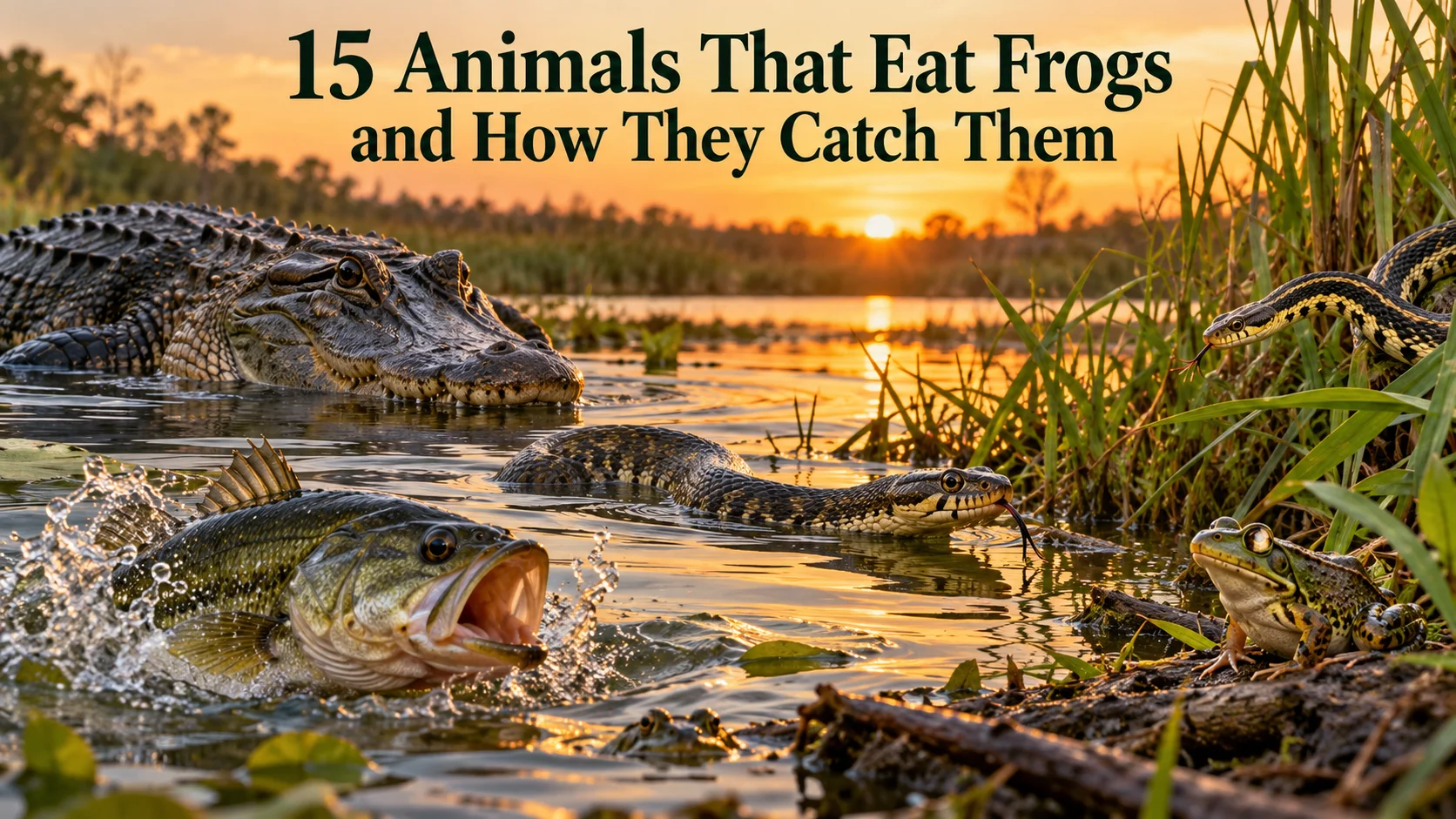
Frogs may be skilled insect hunters, but they are also important prey for many other animals. Animals that eat frogs include snakes, birds, mammals, fish, turtles, and even larger amphibians. Some predators hunt adult frogs around ponds and wetlands, while others concentrate on tadpoles or eggs in the water. Because frogs move between aquatic and terrestrial habitats during their lives, they connect several different food webs and face predators at almost every stage of development.
Animals That Eat Frogs are eaten by water snakes, herons, raccoons, alligators, river otters, mink, largemouth bass, snapping turtles, bullfrogs, catfish, crows, skunks, kingfishers, opossums, and other predators. Some capture adult frogs, while fish and aquatic hunters may also eat tadpoles. Hunting methods range from ambush strikes to active shoreline and underwater pursuit.
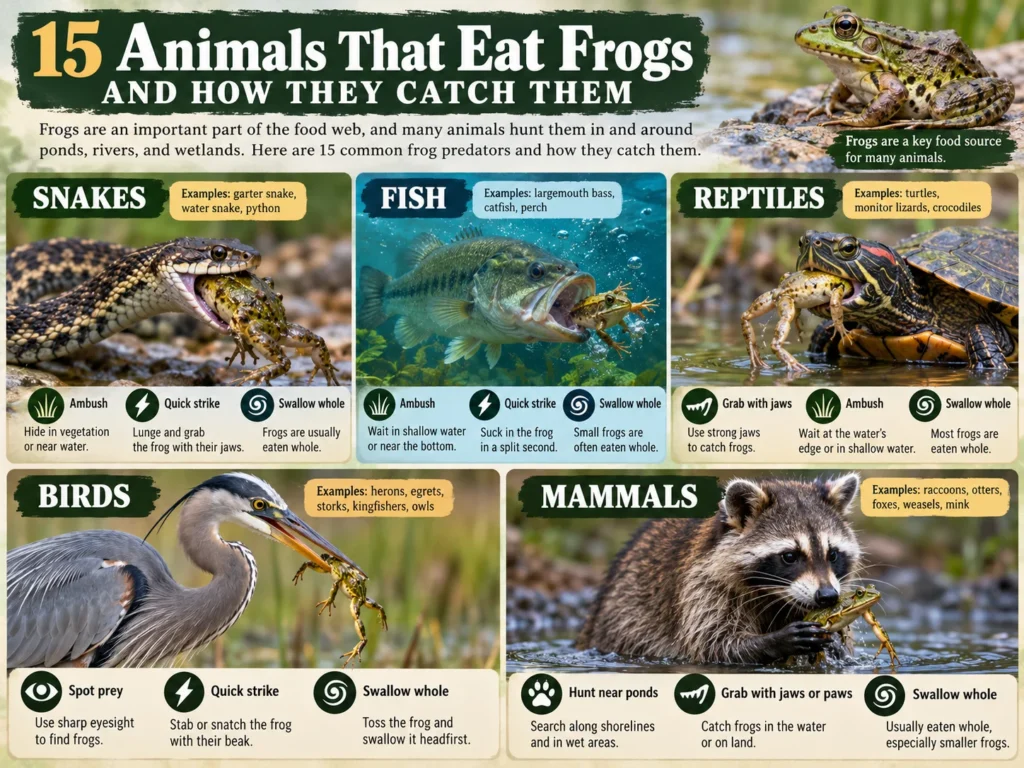
Animals That Eat Frogs at a Glance
| Animals That Eat Frogs | Frog Life Stage Eaten | Typical Hunting Method |
| Water snakes | Adults, froglets | Search and strike near water |
| Herons | Adults, tadpoles | Rapid bill strike |
| Raccoons | Adults, eggs | Shoreline foraging |
| Alligators | Adults | Aquatic ambush |
| River otters | Adults | Active aquatic pursuit |
| Mink | Adults | Fast shoreline hunting |
| Largemouth bass | Froglets, adults | Underwater ambush |
| Snapping turtles | Adults, tadpoles | Opportunistic ambush |
| Bullfrogs | Smaller frogs | Sit-and-wait attack |
| Catfish | Tadpoles, small frogs | Opportunistic feeding |
| Garter snakes | Adults, froglets | Active search and capture |
| Crows | Adults, juveniles | Opportunistic ground hunting |
| Skunks | Adults, eggs | Nocturnal ground foraging |
| Belted kingfishers | Small frogs, tadpoles | Diving or shoreline strike |
| Opossums | Adults | Opportunistic nighttime feeding |
15 Animals That Eat Frogs
1. Water Snakes
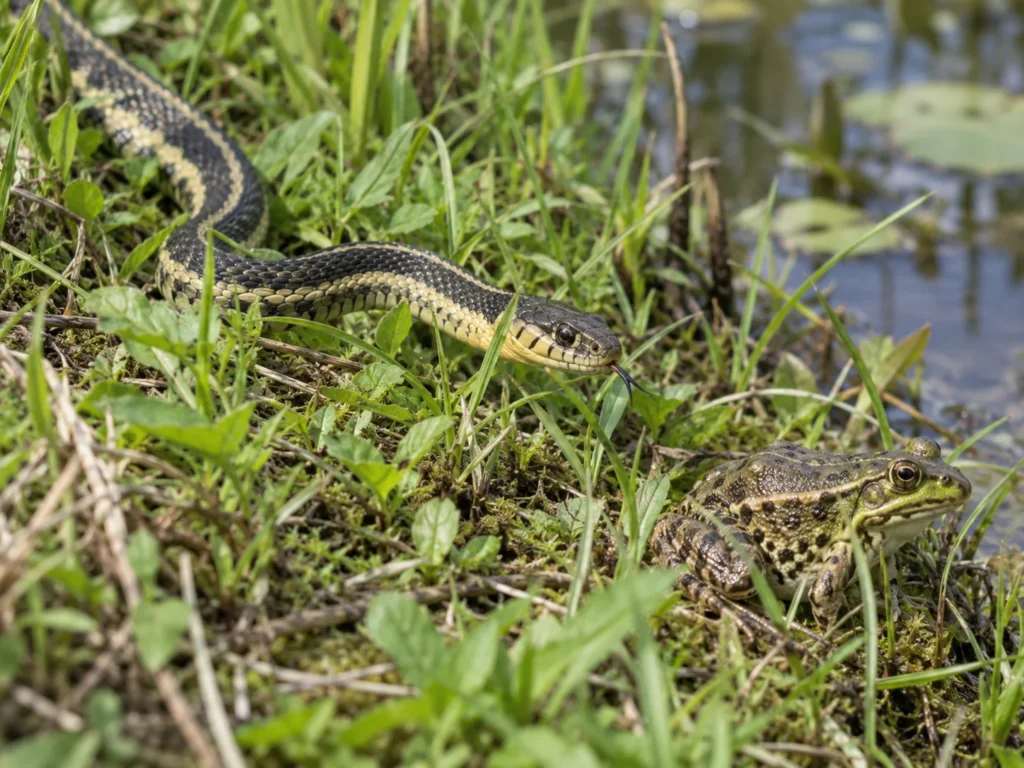
Many water snakes are among the Animals That Eat Frogs, regularly including amphibians in their diets. Their lifestyles bring them into frequent contact with frogs around ponds, streams, marshes, and shallow lake edges. Rather than using constriction, many species simply seize a frog with their jaws and swallow it whole. A frog that jumps into water to escape a land predator may therefore encounter a different threat immediately. Northern water snakes and several related species are well-known predators of amphibians.
2. Herons
Herons are among the most recognizable Animals That Eat Corns, especially in wetlands where amphibians are common. They often stand almost motionless in shallow water, watching carefully for movement before extending their long necks in a rapid strike. Fish form an important part of many herons’ diets, but frogs and tadpoles can also be taken when available. Their long legs allow them to move through shallow water with little disturbance, giving nearby frogs limited warning before an attack.
3. Raccoons
Raccoons are opportunistic omnivores that search shorelines, wetlands, and shallow water for many different kinds of food. Frogs are among the small animals they may capture during these nighttime feeding trips. Their sensitive front paws are useful for investigating mud, vegetation, and water edges where amphibians hide. Raccoons may encounter adult frogs, young amphibians, or eggs while foraging, but frogs are only one component of a much broader diet.
4. American Alligators
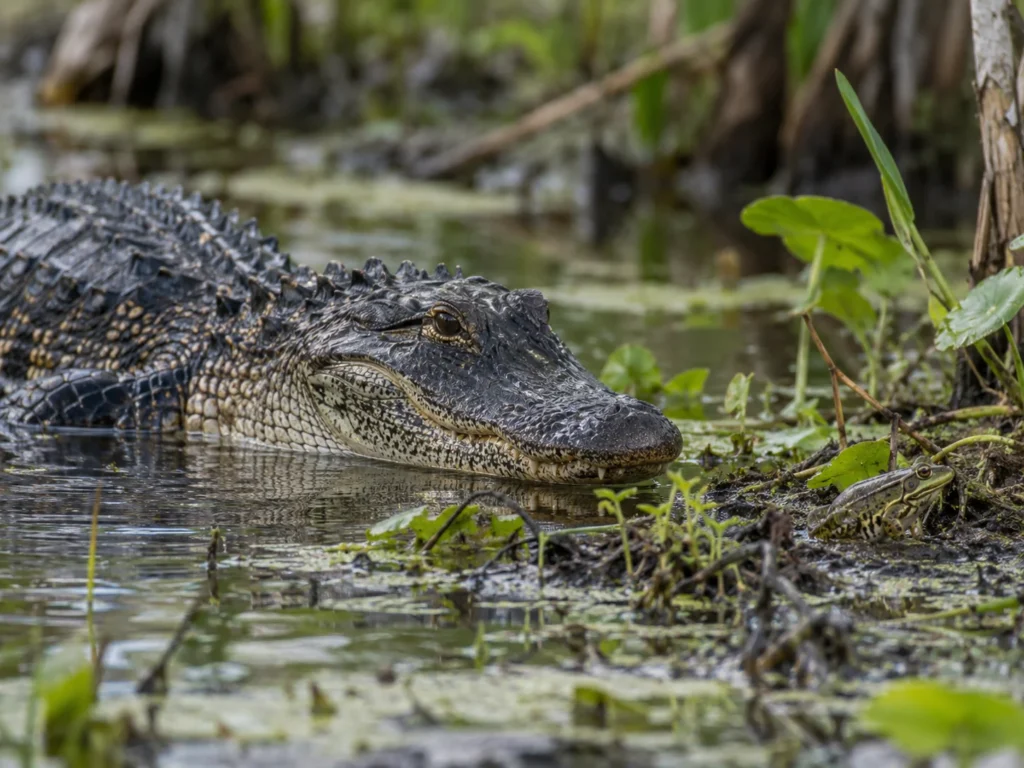
American alligators will eat frogs when the opportunity arises, particularly in freshwater wetlands where both animals occur. Young alligators rely heavily on smaller prey because they cannot yet tackle the larger animals taken by adults. An alligator typically waits quietly before making a sudden strike. Frogs living around marshes, ponds, swamps, and slow-moving waterways may therefore become occasional prey. Even so, frogs are only a small part of the highly varied alligator diet.
5. River Otters
North American river otters are active aquatic predators that feed on fish, crayfish, amphibians, and other animals found in and around freshwater habitats. Frogs can become prey when otters encounter them in ponds, marshes, streams, or along muddy banks. Their streamlined bodies, webbed feet, and strong swimming ability allow them to chase prey underwater efficiently. Unlike a stationary ambush predator, an otter can actively search a large section of habitat while hunting.
6. Mink
Mink are smaller than river otters but are equally comfortable around water. These fast-moving carnivores commonly live beside streams, ponds, marshes, and other habitats that also support frogs. Their diet can include fish, crayfish, small mammals, birds, and frogs. Mink often investigate vegetation, banks, and shallow water while searching for prey. A frog hidden close to the shoreline may therefore encounter a predator capable of hunting both on land and in water.
7. Largemouth Bass
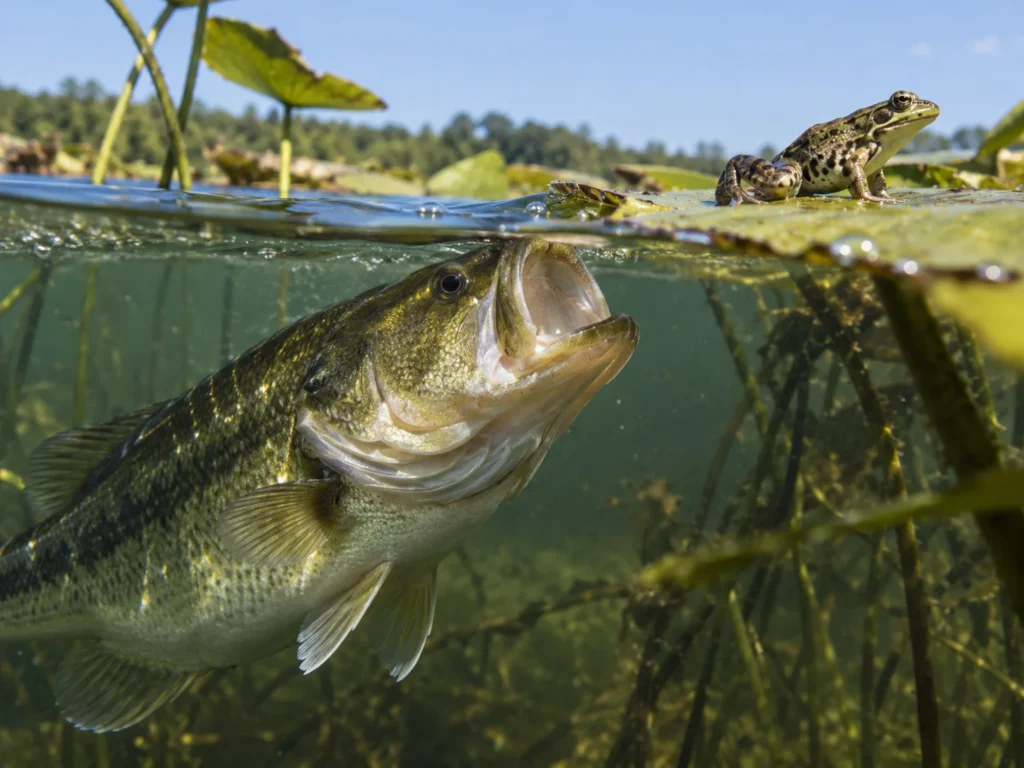
A frog sitting beside a pond may appear safe from underwater predators until it jumps. Largemouth bass are powerful freshwater hunters capable of taking frogs that enter or move across the water. Bass commonly wait near aquatic vegetation, submerged logs, and other cover before accelerating toward prey. Fish and crayfish make up much of their diet, but frogs and other surface prey can also be captured. Their large mouths allow them to engulf surprisingly substantial food items.
8. Snapping Turtles
Common snapping turtles are opportunistic predators and scavengers that live in ponds, lakes, marshes, and slow-moving waterways. Frogs and tadpoles can be among the many animals they consume. Although they spend much of their lives in aquatic habitats, they are not usually grouped with Animals That Drink a Lot of Water, because most of their water needs are closely tied to their environment rather than frequent drinking behavior. A snapping turtle often relies on remaining inconspicuous and striking when suitable prey moves within reach. Its powerful jaws make short work of small vertebrates, but it does not spend the entire day actively chasing frogs and instead eats whatever suitable food becomes available.
9. American Bullfrogs
Frogs are not always innocent victims in this food web. Large bullfrogs are themselves formidable predators and may eat smaller frogs, including members of their own species. Bullfrogs usually rely on a sit-and-wait strategy. Once suitable prey moves within striking distance, the frog lunges forward and uses its large mouth to capture it. Their diet is extraordinarily broad and can include insects, fish, snakes, small turtles, rodents, and other amphibians. This means a small frog approaching the edge of a bullfrog’s territory may be facing another frog as one of its predators.
10. Catfish
Several predatory catfish species consume amphibians when they encounter them. Tadpoles and small frogs entering deeper water can be especially vulnerable to large fish. Catfish frequently locate food using highly developed senses of smell and taste, aided by their sensitive barbels. Their diets vary significantly by species and size, so frogs should not be described as a universal or primary food for every catfish. In suitable freshwater systems, however, amphibians can become part of their opportunistic diet.
11. Garter Snakes
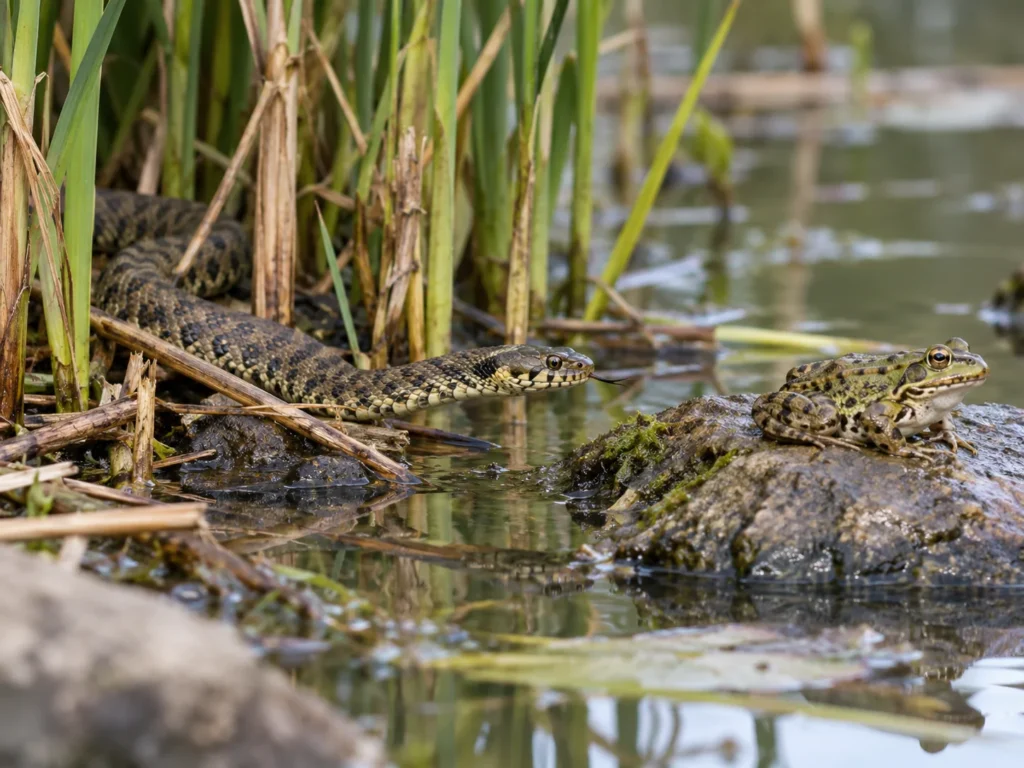
Garter snakes are another group in which amphibians can be important prey. Frogs, toads, salamanders, earthworms, and other small animals may all appear in their diets depending on the species and habitat. These snakes generally search actively rather than waiting indefinitely in one location. Once a frog is caught, it is usually swallowed whole. Their ability to forage around grassy pond margins and damp habitats creates frequent opportunities to encounter amphibians.
12. Crows
Crows are highly adaptable omnivores and opportunistic predators. Although people often associate them with seeds, insects, carrion, and human food scraps, they also take small vertebrates when the opportunity appears. Frogs and young amphibians can become prey around fields, wetlands, shallow water, and other open habitats. A crow can search from the ground or use its elevated viewpoint to notice exposed animals. Frog predation is therefore part of a much wider and extremely flexible feeding strategy.
13. Skunks
Skunks spend much of their active time searching the ground for food. Insects are particularly important, but their diet can also include rodents, eggs, reptiles, and amphibians such as frogs. Because skunks are mainly active at night, their feeding schedule overlaps with many frog species that become more active after sunset or during wet weather. A skunk moving through damp vegetation or around a pond margin may uncover frogs while investigating potential feeding sites.
14. Belted Kingfishers
Belted kingfishers are best known as fish hunters, but their diet can include other aquatic animals, including frogs. They frequently perch above rivers, ponds, and shorelines while searching the water below. When prey is detected, the bird may dive rapidly toward the surface. Small frogs and tadpoles are more manageable than large adults and can be taken where amphibians share the same shallow-water habitats. Frogs remain supplementary prey rather than the bird’s main food.
15. Opossums
Virginia opossums are generalist feeders that eat an unusually broad range of foods. Their diet can include insects, fruit, carrion, small vertebrates, and amphibians. Most feeding occurs at night, bringing opossums into contact with frogs that emerge during damp or dark conditions. They usually forage rather than specialize in pursuing frogs, so an amphibian is more likely to be taken when encountered than deliberately targeted over long distances.
Why Do So Many Animals Eat Frogs?
Frogs occupy a convenient position in many food webs. They are often abundant around ponds and wetlands, have relatively soft bodies, and can occur in concentrated numbers during breeding seasons. These traits make them accessible to many predators, including some Animals That Eat a Lot when food is readily available. Fish, reptiles, birds, and mammals may all take advantage of frogs as part of a broader diet.
Their unusual life cycle also exposes them to different predators at different stages. Eggs remain relatively stationary in water, tadpoles must survive aquatic hunters, and adults encounter both terrestrial and aquatic predators. Frogs therefore transfer energy between habitats. An adult may feed on terrestrial insects but later become food for a water snake, heron, raccoon, or fish, connecting multiple parts of the ecosystem.
What Animals Eat Tadpoles and Frog Eggs?
The animals that threaten tadpoles are not necessarily the same ones that capture adult frogs. Fish are major aquatic predators, while turtles, salamanders, crayfish, aquatic insects, and other amphibians can also feed on developing frogs.
Eggs are even less mobile. Frog spawn may be eaten by fish, insects, crustaceans, birds, reptiles, or amphibians depending on the habitat and frog species. Some tadpoles reduce risk by hiding among vegetation, becoming active at safer times, or gathering in particular areas. Others possess chemical defenses that make them less attractive to certain fish. There is therefore no single predator list that applies equally to every species of frog.
How Do Frogs Defend Themselves?
Jumping is one of the most obvious frog defenses. Powerful hind legs allow many species to disappear into water or dense vegetation almost instantly when danger approaches, helping them escape many Animals That Eat Frogs. Camouflage is equally important. Brown, green, or mottled skin can make a stationary frog difficult to distinguish from leaves, mud, bark, or aquatic plants. Remaining motionless may prevent a visual predator from noticing it in the first place.
Some species rely on chemistry instead. Skin secretions can taste unpleasant, irritate a predator, or contain potent toxins. Bright warning colors in certain frogs advertise these defenses before an attack occurs. Other frogs inflate their bodies, release distress calls, hide underground, or adopt defensive postures. No strategy works against every predator, which helps explain why frogs remain important prey despite having numerous defenses.
Are Frogs Important in the Food Chain?
Yes. Frogs occupy both predator and prey roles, making them important links within aquatic and terrestrial ecosystems. Adult frogs consume insects, spiders, worms, and other small animals, while tadpoles may feed on algae, plant material, detritus, or tiny organisms depending on the species. In turn, frogs support many Animals That Eat Frogs, including snakes, birds, mammals, fish, and reptiles.
Their movement between water and land makes this role particularly valuable. Nutrients acquired in aquatic habitats can pass into terrestrial predators, including many Animals That Eat Frogs, while energy gathered from land-based insects may return to aquatic food webs when frogs are eaten by fish or turtles. This movement of nutrients helps connect aquatic and terrestrial ecosystems.
Do All Frog Predators Hunt Them the Same Way?
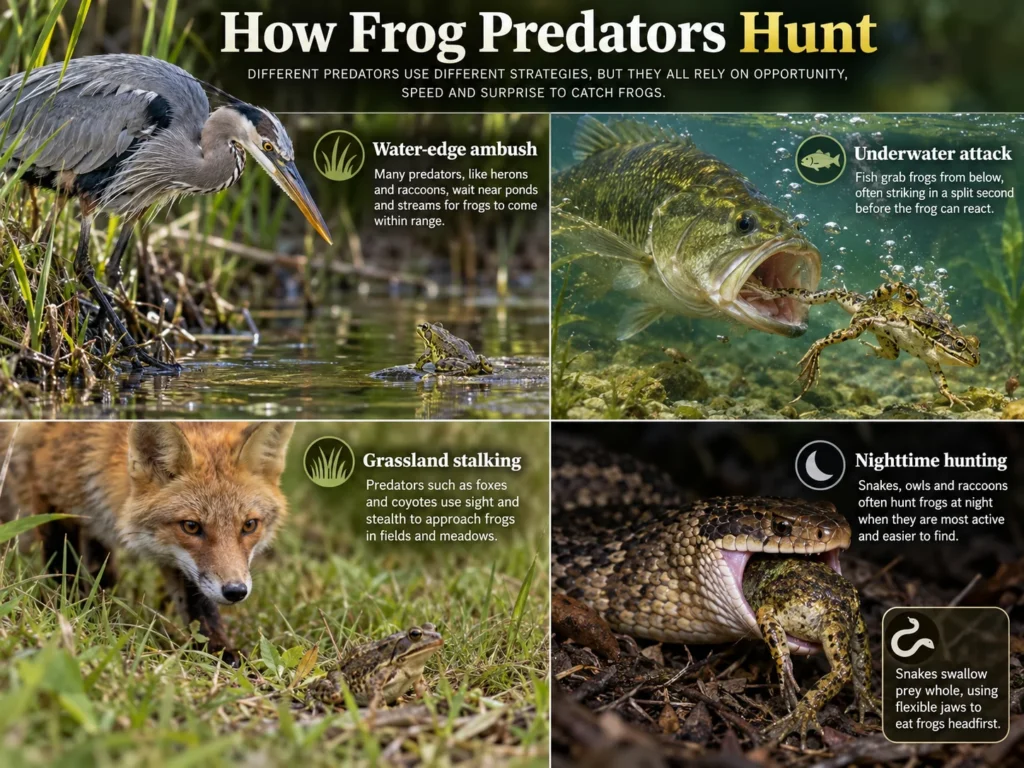
No. Hunting methods vary considerably among Animals That Eat Frogs. Herons use rapid precision strikes, while bass attack from underwater cover. Snakes may search along shorelines, and raccoons and skunks investigate potential hiding places. Bullfrogs, meanwhile, often wait until smaller prey comes within range.
This diversity is one reason frogs face such intense predation. Escaping one type of hunter does not necessarily remove the danger. A frog jumping away from a mammal may enter water occupied by fish, snakes, or turtles.
FAQs
What animals eat frogs?
Animals That Eat Frogs are eaten by many animals, including water snakes, herons, raccoons, river otters, mink, alligators, largemouth bass, snapping turtles, bullfrogs, catfish, crows, skunks, kingfishers, and opossums. The exact predators vary according to frog species, size, habitat, and life stage.
Do snakes eat frogs?
Yes, many snake species eat frogs. Water snakes, garter snakes, ribbon snakes, cottonmouths, and several other snakes may prey on amphibians. However, frogs are not part of every snake species’ diet.
Do birds eat frogs?
Yes. Herons are particularly well-known frog predators, while other birds such as crows, egrets, ibises, and kingfishers may also take frogs or tadpoles when suitable opportunities occur.
What animals eat tadpoles?
Tadpoles can be eaten by fish, turtles, salamanders, aquatic insects, crayfish, birds, snakes, and other amphibians. Because tadpoles remain in water until metamorphosis, their predator community differs considerably from that of adult frogs.
Do frogs eat other frogs?
Yes. Large predatory frogs can eat smaller frogs. American bullfrogs are particularly well-known for taking other amphibians and may even cannibalize smaller members of their own species.
What is the biggest predator of frogs?
There is no single biggest or most important frog predator worldwide. Predation differs dramatically by habitat and species. A wetland frog might frequently encounter snakes and herons, while tadpoles in a lake may face much greater pressure from fish and aquatic invertebrates.
Final Thoughts
Animals That Eat Frogs are eaten by an exceptionally diverse group of predators because their life cycle places them in both aquatic and terrestrial food webs. From herons striking in shallow water to snakes, fish, mammals, turtles, and even larger frogs, the predators they face depend heavily on habitat, size, species, and life stage.

2 Comments