
Animals That Eat a Lot: 15 Remarkable Big Eaters
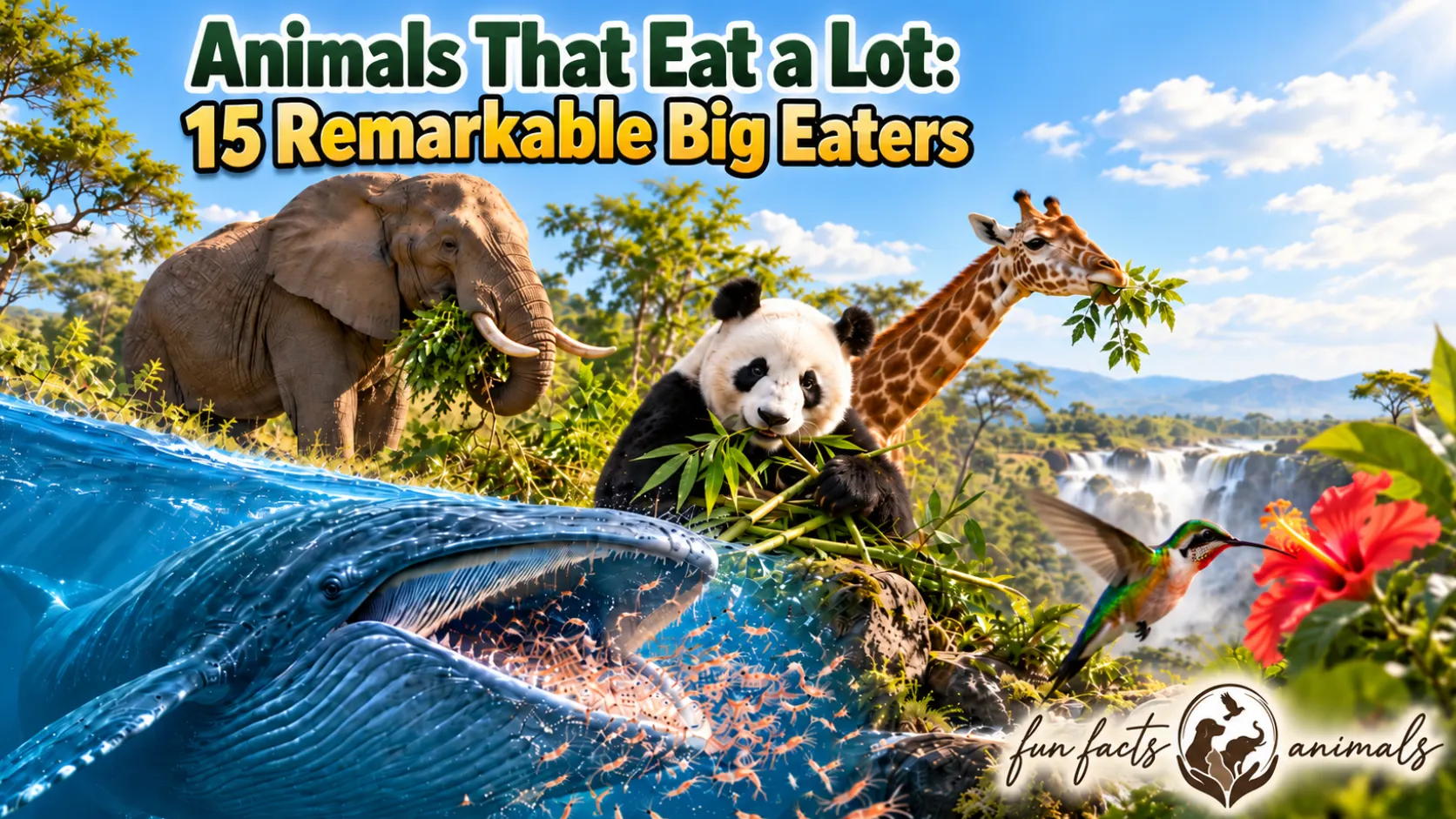
Animals that eat a lot are not always the biggest animals on Earth. Blue whales and elephants consume enormous amounts of food by total weight, while tiny hummingbirds and shrews can eat surprisingly large amounts compared with their own body size. Diet quality, metabolism, digestion, body size, and feeding strategy all influence appetite. Some animals graze for hours every day, while others consume one huge meal and may not feed again for days or even weeks.
Animals that eat a lot include blue whales, African elephants, giant pandas, giraffes, hummingbirds, and shrews. However, there is no single “biggest eater” without defining how you measure food intake. Large animals dominate total food consumption, while small animals with fast metabolisms can consume much more relative to their body weight.
What Does “Eating a Lot” Actually Mean?
Comparing animal appetites is not as simple as measuring kilograms of food. A blue whale obviously consumes far more food than a hummingbird, but its body is also millions of times heavier. Scientists and wildlife researchers can look at food intake in several ways. One measure is the total mass consumed in a day. Another compares intake with body weight, which often makes small, high-metabolism animals stand out.
Feeding time also matters. Giant pandas and grazing herbivores may spend many hours searching for and consuming food. Predators such as large snakes follow a different strategy, eating enormous meals at once and then fasting for long periods. These differences explain why several very different animals can reasonably be described as big eaters.
Animals That Eat Huge Amounts of Food
1. Blue Whale
Blue whales are among the strongest contenders for the title of biggest eater by total food mass. They mainly feed on tiny crustaceans called krill, engulfing enormous volumes of krill-rich water before filtering the prey through their baleen plates.
During productive feeding periods, a large blue whale can consume several tons of krill in a day. This enormous intake helps support the energy requirements of the largest animal known to have lived on Earth.
2. African Elephant
African elephants spend much of their day feeding on grasses, leaves, bark, roots, twigs, and fruit. Their exact diet changes with habitat, season, and local food availability.
An adult elephant can consume well over 100 kilograms of plant material in a day, although amounts vary considerably between individuals and environments. Because much of their diet is fibrous vegetation, elephants must process large volumes of food to obtain enough energy and nutrients.
3. Giant Panda
Giant pandas are famous for eating bamboo for many hours each day. Adults may consume roughly 32–45 kilograms, or about 70–100 pounds, of bamboo daily depending on the type of bamboo and other conditions. Their digestive system is relatively inefficient at extracting nutrients from this fibrous food. Bamboo is also not especially energy-rich, so pandas compensate by eating large quantities and spending a substantial portion of their waking hours feeding and foraging.
4. Giraffe
Giraffes are browsers that feed mainly on leaves, shoots, flowers, and other vegetation growing on trees and shrubs. Their long necks help them reach food that many other large herbivores cannot easily access. A large giraffe may consume around 30 kilograms or more of vegetation during a day under suitable conditions. Their considerable body size creates high energy demands, while their plant-based diet requires regular feeding to provide enough nutrients.
5. Hippopotamus
Hippos spend much of the day resting in water and usually leave after dark to graze. Despite their enormous size, their intake relative to body weight is not as extreme as many people expect. An adult hippo may consume around 40 kilograms, or roughly 88 pounds, of grass during a night’s feeding. That is a large amount in absolute terms but represents only a small percentage of the animal’s total body mass.
6. Rhinoceros
Rhinoceroses also consume large amounts of vegetation, but their feeding habits differ between species. White rhinos are mainly grazers that feed heavily on grasses, while black rhinos browse on leaves, shoots, and woody plants. Their large bodies require substantial energy, so they can spend much of the day feeding and searching for suitable vegetation. Exact daily intake varies with species, body size, habitat, season, and food quality.
Animals That Eat a Lot for Their Body Size
7. Hummingbird
Hummingbirds are tiny, but their energy demands are enormous. Hovering flight requires extremely rapid wing movements, and their high metabolism means they need frequent access to food throughout the day. They obtain much of their energy from flower nectar and also eat small arthropods for protein and other nutrients. Some hummingbirds may consume nectar equal to a very large proportion of their body weight in a day, making them exceptional eaters relative to size.
8. Shrew
Shrews are another example of small animals with high metabolic demands. Their tiny bodies lose heat quickly, while their active lifestyles require a steady energy supply. Many species feed repeatedly on insects, worms, spiders, and other small prey. Some shrews may consume a substantial fraction of their own body weight in food each day. For certain species and conditions, daily intake can approach or even exceed their body mass.
9. Star-Nosed Mole
The star-nosed mole is a small mammal known for its unusual nose, which contains highly sensitive structures used to locate prey. It feeds on worms, insects, aquatic invertebrates, and other small animals. Its active lifestyle and relatively small body create significant energy demands. Star-nosed moles are remarkably fast at detecting and handling prey, allowing them to capture many small food items efficiently in wet soil and shallow-water habitats.
Large Herbivores That Spend Hours Feeding
10. Gorilla
Gorilla diets vary by species and habitat but often include leaves, stems, shoots, fruit, and other plant materials. Some adult males can consume around 18 kilograms, or 40 pounds, of vegetation and other foods in a day. Large body size contributes to this substantial intake. Gorillas may spend several hours feeding and moving between food sources, particularly where plant foods are widely scattered or change with the seasons.
11. Horse
Horses are naturally adapted to eating relatively small amounts of fibrous plant material throughout much of the day. In natural conditions, they may spend many hours grazing while moving across an area in search of suitable grasses. Their digestive system works best with frequent forage intake rather than occasional enormous meals. This makes horses a good example of animals that can spend long periods eating even when individual mouthfuls are relatively small.
12. Cattle
Cattle consume substantial quantities of grasses, hay, and other plant material. As ruminants, they have a specialized digestive system that allows them to ferment fibrous food and later regurgitate part of it as cud for further chewing. This process helps them extract nutrients from vegetation that many animals would find difficult to digest. Large body size and a plant-heavy diet mean considerable amounts of food may pass through the feeding and rumination cycle each day.
Predators That Can Eat Enormous Meals
13. Burmese Python
Burmese pythons do not need to eat every day, but individual meals can be enormous relative to their body size. They swallow prey whole, relying on highly mobile jaw structures and expandable tissues around the mouth and body. After eating a large animal, a python may spend a long period digesting before feeding again. Its metabolism temporarily increases dramatically during digestion, followed by another extended period of relatively low energy use.
14. Crocodile
Crocodiles are opportunistic predators that may eat fish, birds, reptiles, and mammals depending on their size and habitat. Large individuals can consume substantial meals when suitable prey becomes available. Unlike hummingbirds or shrews, crocodiles have relatively slow metabolisms and do not require constant feeding. A large meal can provide enough energy to support the animal for an extended period, especially when temperatures and activity levels are low.
15. Komodo Dragon
Komodo dragons are powerful predators and scavengers that can consume large quantities of meat in a single feeding. Their diet can include deer, pigs, smaller reptiles, carrion, and other available animal matter. They follow a feast-and-fast strategy rather than a constant-feeding pattern. When a large food source is available, a Komodo dragon may gorge heavily and then spend considerable time digesting before another major meal is required.
Why Do Some Animals Need So Much Food?
Body size is one obvious reason. Maintaining the muscles, organs, and basic functions of an elephant or whale requires enormous total energy, even though large animals often use less energy per kilogram of body weight than tiny animals. Metabolism explains why some small animals also appear on this list. Hummingbirds and shrews burn energy rapidly, so they need frequent feeding despite consuming much less food in absolute terms than large mammals.
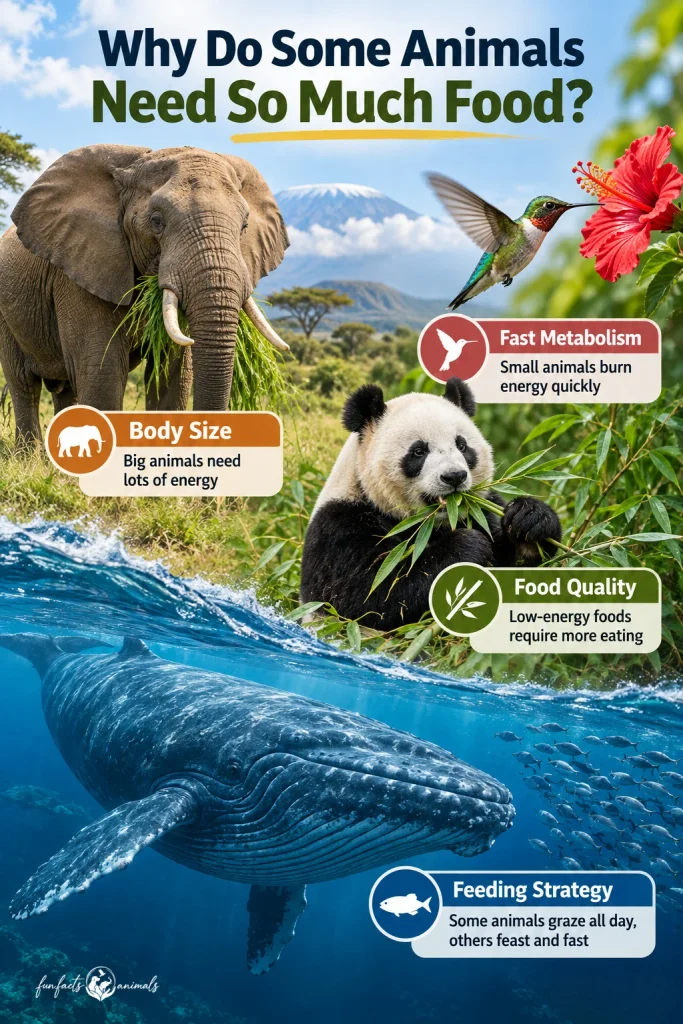
Food quality matters too. Bamboo, grass, leaves, and other fibrous plant materials may provide less readily available energy than calorie-dense animal foods. Pandas and many herbivores therefore need to consume substantial volumes. Finally, feeding strategy changes the patterns completely. Snakes and crocodilians may eat very large meals but then go through long periods with little or no food.
Which Animal Eats the Most?
There is no single answer unless you define the measurement first.
| Measurement | Strong Example | Why |
| Most food by total mass | Blue whale | Can consume several tons of krill during heavy feeding |
| Huge land-animal intake | African elephant | Large body supported by substantial plant intake |
| Long feeding periods | Giant panda | Bamboo provides relatively limited usable energy |
| High intake for body size | Hummingbird or shrew | Very fast metabolism |
| Huge occasional meal | Large python | Can swallow large prey and fast afterward |
The blue whale is a strong candidate when total food mass is considered, while hummingbirds and shrews become much more remarkable when intake is measured relative to body size.
Common Misconceptions About Animals With Big Appetites
The largest animal does not automatically eat the greatest percentage of its own body weight. Small animals can have much faster metabolisms and may therefore require far more food relative to their size. Frequent eating also does not always mean greater total intake. Hummingbirds feed repeatedly, while a large snake may consume one enormous meal and then fast for a long period. Daily intake figures should also be treated as estimates or ranges. Age, season, body size, reproductive condition, activity, temperature, habitat, and food availability can all change how much an animal consumes. Zoo feeding quantities should not automatically be presented as exact averages for wild populations either.
Frequently Asked Questions
What animal eats the most food in a day?
By total food mass, the blue whale is a strong example. During productive feeding periods, large blue whales can consume several tons of krill in a day. Actual intake varies with body size, prey availability, season, and feeding conditions.
What animal eats the most compared with its body weight?
Small animals with extremely fast metabolisms often stand out. Hummingbirds can consume very large quantities of nectar relative to their tiny body weight, while some shrew species may eat a substantial portion of their own mass in food each day.
Why do giant pandas eat so much bamboo?
Bamboo is fibrous and provides relatively limited usable energy. Giant pandas are also not especially efficient at digesting it. They compensate by consuming large amounts of bamboo and spending many hours feeding and searching for suitable plant parts.
Why do hummingbirds need to eat so often?
Hummingbirds use enormous amounts of energy during flight, especially while hovering. Their small bodies and rapid metabolism mean they use stored energy quickly, so they visit flowers frequently for nectar and also eat small arthropods for additional nutrients.
Do elephants spend most of the day eating?
Elephants can spend a large portion of their day feeding or searching for food. They require substantial quantities of grasses, leaves, bark, fruit, and other vegetation because of their huge bodies and the fibrous nature of much of their diet.
Can snakes eat more than their own body weight?
Some large snakes can swallow prey that represents a substantial percentage of their body weight, but extreme claims vary by species and individual. Rather than feeding constantly, snakes typically digest large meals slowly and may then go long periods before eating again.
Do carnivores eat less often than herbivores?
Many large carnivores eat less frequently because meat is relatively energy-dense, while herbivores often need to process larger volumes of vegetation. However, feeding patterns vary widely, so exceptions abound depending on metabolism, prey availability, body size, and lifestyle.
Final Thoughts
Animals eat a lot for very different reasons. Blue whales need huge quantities of krill to support enormous bodies, pandas process large amounts of low-energy bamboo, and hummingbirds must replace energy almost constantly because of their rapid metabolism. Body size alone therefore cannot define the biggest appetite. Food quality, digestion, metabolism, activity, and feeding strategy all shape how much an animal needs, making a tiny shrew and a giant whale remarkable eaters in completely different ways.

3 Comments