
Animals That Drink a Lot of Water: 15 Heavy Drinkers
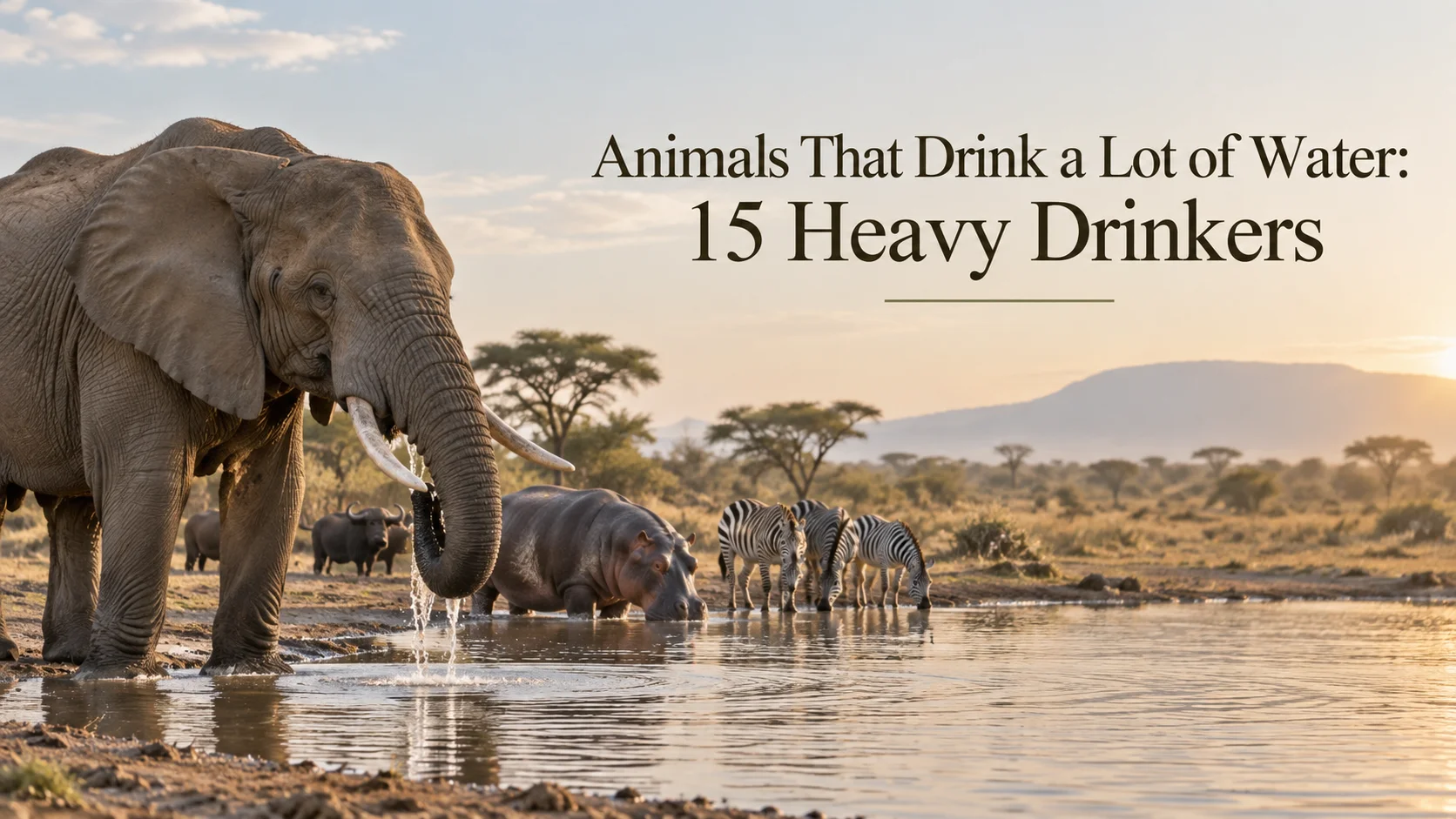
Animals that drink a lot of water are not always the ones people expect. Large body size matters, but so do heat, activity, diet, milk production, and the amount of moisture an animal gets from food. Elephants and dairy cows may consume huge quantities every day, while camels are better known for rapid rehydration after dehydration. These 15 animals show how differently mammals meet their water needs across farms, grasslands, forests, and deserts.
Animals with high water needs include elephants, dairy cattle, water buffalo, horses, rhinos, and other large herbivores. Their intake varies with body size, temperature, activity, diet, and reproduction. Camels are unusual because they can drink large amounts quickly after dehydration, while some other animals require substantial water more regularly.
Animals That Drink a Lot of Water at a Glance
| Animal | Approximate Water Intake | Main Context |
| Elephant | Often 150–300 L daily | Large body size, heat, diet |
| Dairy cow | About 114–189 L daily | Especially high during lactation |
| Beef cattle | Often 30–75+ L daily | Heat, body size, dry feed |
| Water buffalo | Around 90–110 L in warm conditions | Heat and thermoregulation |
| Horse | Around 38–45 L daily | More with exercise and heat |
| Camel | Can drink 100+ L during rehydration | Large one-time intake |
| Donkey | Variable | Heat and dehydration influence intake |
| White rhinoceros | Can approach 70 L daily | Large grazing body |
| Black rhinoceros | Often lower than white rhinos | Can drink less frequently |
| African buffalo | Around 40–50 L daily | Strong dependence on water |
| American bison | Highly variable | Heat, body size, forage |
| Giraffe | Around 38 L when drinking regularly | Gets moisture from leaves |
| Pig/sow | Can exceed 25 L daily | Heat and lactation |
| Goat | Several liters daily | More during lactation and heat |
| Sheep | Several liters daily | More during heat and lactation |
These figures are approximate rather than universal. An animal’s actual water intake can change substantially depending on temperature, body weight, feed moisture, activity, pregnancy, lactation, and access to water.
Why Do Some Animals Need So Much Water?
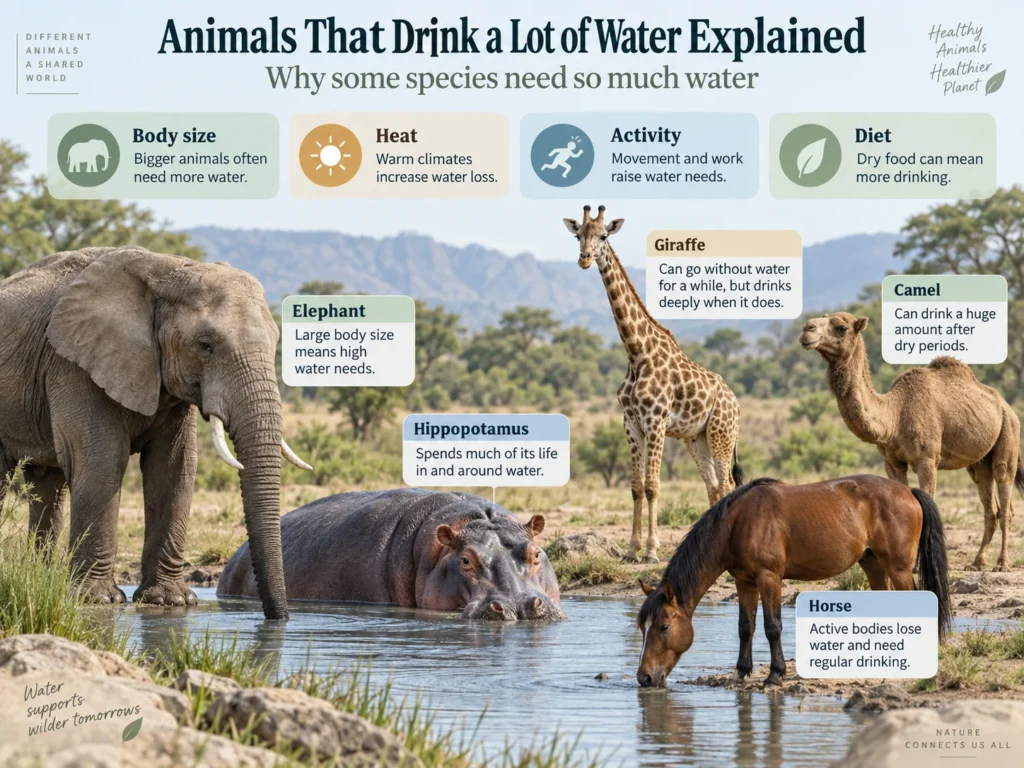
Water is essential for digestion, circulation, temperature regulation, waste removal, and normal cellular activity. Larger animals generally need more total water simply because they have more body tissue to maintain. Body size is only part of the picture. A lactating cow may drink much more than a non-lactating animal of similar size because milk contains a large amount of water. Likewise, a working horse on a hot day can lose substantial fluid through sweat. Food also matters. Animals eating dry hay or dry forage usually need more drinking water than animals feeding on moisture-rich vegetation.
1. Elephants
Elephants are among the clearest examples of animals with very high daily water intake. Adult elephants may consume roughly 150 to 300 liters of water per day, although actual requirements vary with species, temperature, activity, and food. Their enormous body mass creates high total fluid requirements. Elephants also use water for more than drinking, frequently bathing, spraying themselves, or coating their skin with mud to help manage heat and protect the skin. Because their daily intake can be consistently high, elephants are different from animals such as camels that may drink extraordinary amounts mainly during rehydration.
2. Dairy Cows
A productive dairy cow can drink an impressive amount of water. Lactating cows may consume roughly 114 to 189 liters, or 30 to 50 gallons, per day under some conditions. Milk production is one major reason. Producing large quantities of milk increases the animal’s water requirement, while warm weather and dry feed can push intake even higher. This makes dairy cattle one of the strongest examples of animals that drink large amounts routinely rather than only during occasional rehydration.
3. Beef Cattle
Beef cattle also require substantial amounts of water, although they generally consume less than high-producing dairy cows. Their intake changes with body weight, temperature, pregnancy, forage moisture, and whether the animal is eating dry or green feed. During hot weather, large cattle may drink several times more than they would under mild conditions. Fresh, easily accessible water is therefore essential for maintaining feeding, digestion, growth, and normal body temperature.
4. Water Buffalo
Water buffalo are strongly associated with wet environments, but their high water needs are not simply because they enjoy wallowing. Large buffalo can drink around 90 liters or more per day under warm conditions, with intake rising as heat stress increases. Their dark skin and relatively limited ability to dissipate heat make access to water and cooling particularly important. Wallowing helps with thermoregulation, while drinking replaces fluid required for normal metabolism and body function.
5. Horses
An average adult horse commonly drinks about 38 to 45 liters, or 10 to 12 gallons, of water per day. The requirement can rise substantially when a horse exercises, sweats heavily, eats dry hay, or experiences hot weather. Lactating mares may also need considerably more water than inactive adult horses. Horses illustrate why a single daily figure should never be treated as an exact biological requirement for every individual.
6. Camels
Camels are famous for water, but their reputation is often misunderstood. They do not store water in their humps; the humps primarily contain fat. What makes camels remarkable is their ability to tolerate substantial dehydration and then rehydrate rapidly. A severely dehydrated camel may consume more than 100 liters of water in a relatively short drinking period. This does not mean a camel drinks more every day than an elephant or dairy cow. Its standout adaptation is the ability to cope with water scarcity and replace lost fluid quickly when water becomes available.
7. Donkeys
Donkeys evolved from ancestors adapted to dry environments, so they can tolerate water shortages better than many domestic livestock species. When water is available, however, they still require regular hydration and can drink quickly after periods of restriction. Heat, workload, feed type, and body size all affect how much water an individual donkey consumes. Their desert adaptations reduce vulnerability to temporary shortage, but they do not eliminate the need for clean drinking water.
8. White Rhinoceroses
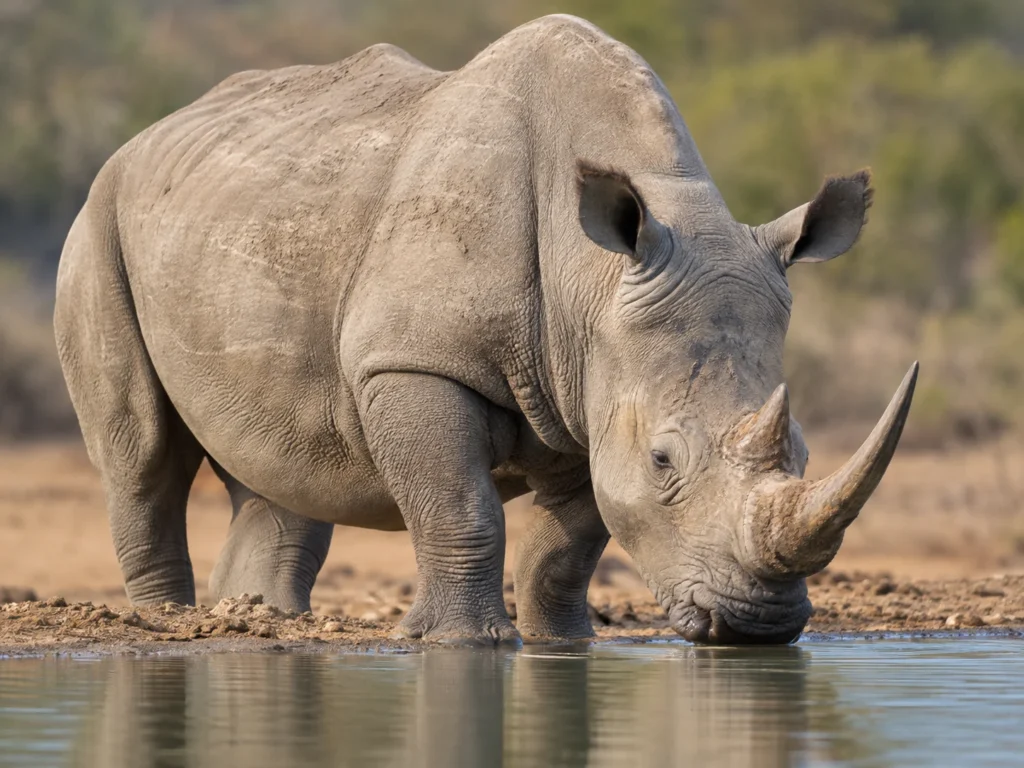
White rhinos are enormous grazing mammals, so their total water requirements can be substantial. Under suitable conditions, an adult may drink tens of liters per day, with some estimates approaching 70 liters. They tend to remain relatively closely connected to reliable water sources compared with some more drought-tolerant browsers. Drinking patterns also depend on heat, rainfall, vegetation moisture, and movement, which means wild rhino intake is not fixed from day to day.
9. Black Rhinoceroses
Black rhinos provide an interesting contrast with white rhinos. They can consume considerable amounts when water is available but may drink less frequently in dry environments. Their browsing diet can provide some moisture, and individuals may travel significant distances between drinking sites. This comparison shows why even closely related large mammals can have different water-use strategies based on feeding behavior and habitat.
10. African Buffalo
African buffalo are strongly dependent on access to water and usually drink regularly. Large adults may consume around 40 to 50 liters per day under suitable conditions. They often remain within practical travelling distance of permanent water, especially during dry periods. Herd size can also create major pressure on watering sites because dozens or hundreds of buffalo may drink from the same source. Their dependence on water has an important influence on where herds move and feed.
11. American Bison
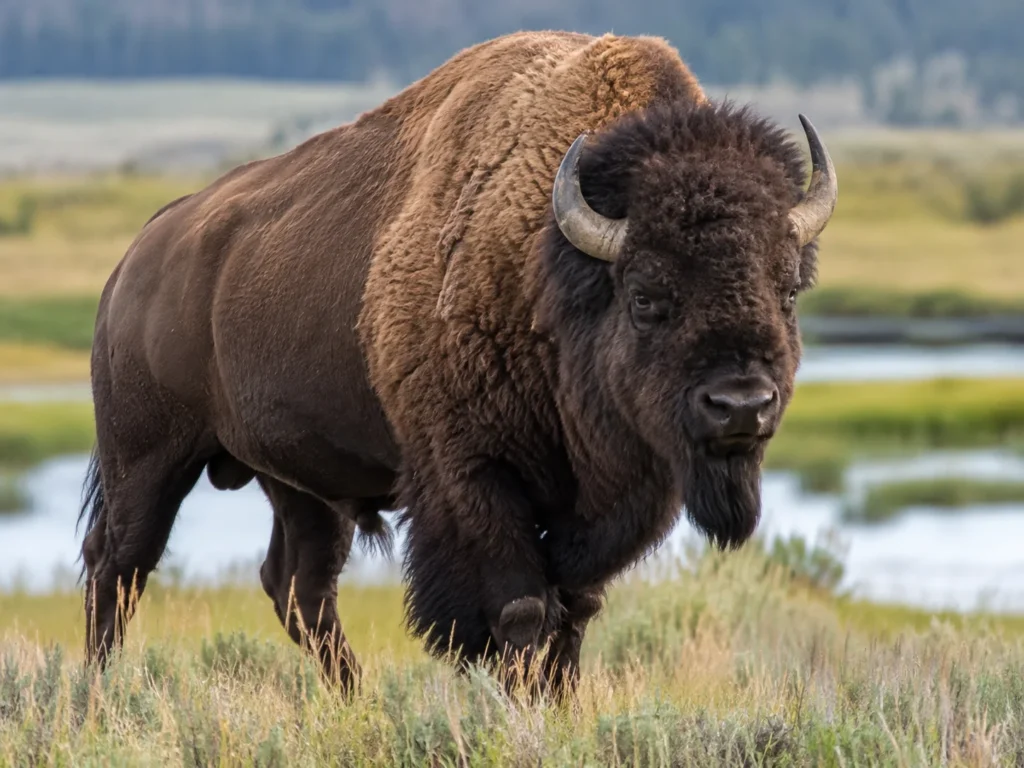
American bison are huge grazing mammals whose water needs vary strongly with weather, forage quality, and body size. During hot summer conditions, managed herds can consume hundreds of gallons collectively each day. Individual requirements rise when grass becomes dry, and moisture intake from vegetation falls. Bison can travel to reach water, but reliable access becomes particularly important during prolonged heat and drought.
12. Giraffes
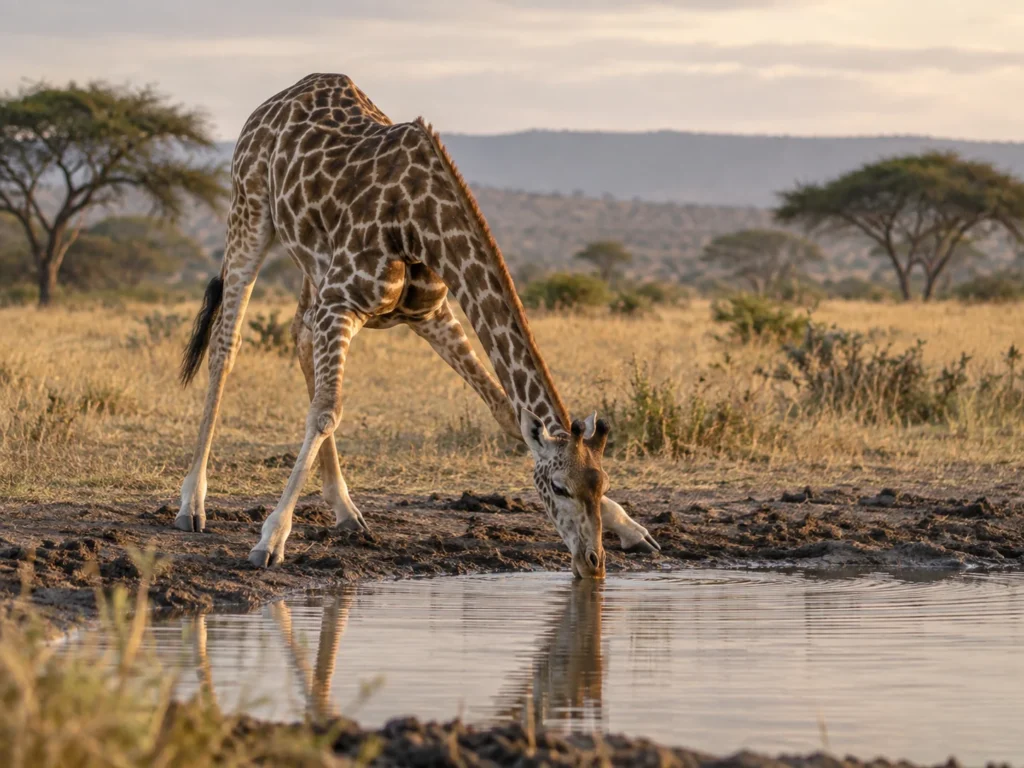
Giraffes are large animals, yet their drinking behavior is surprisingly different from that of elephants or buffalo. When water is readily available, a giraffe may consume around 38 liters, or about 10 gallons, in a day. However, giraffes obtain considerable moisture from fresh leaves and may sometimes go extended periods without directly drinking. Their height also makes drinking physically awkward. A giraffe must spread its front legs and lower its long neck toward the water, leaving it temporarily more vulnerable.
13. Pigs and Lactating Sows
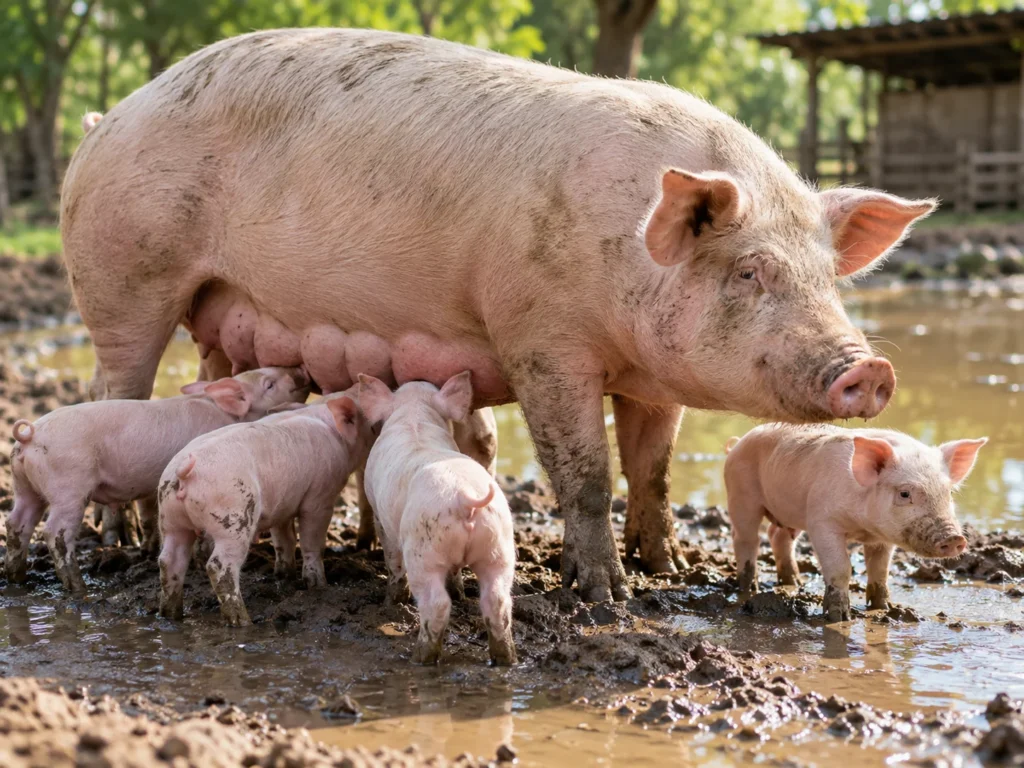
Pigs require reliable water access for digestion, growth, temperature control, and normal feeding behavior. Large pigs may drink several liters per day, but lactating sows can require much more because milk production removes substantial water from the body. Hot weather can increase intake further because pigs do not cool themselves through sweating as effectively as humans or horses. Poor water access can quickly reduce feed consumption and productivity in managed pigs.
14. Goats
Goats do not match elephants or cattle in absolute water volume, but their requirements can rise sharply during lactation, heat, and periods of dry feeding. A goat eating fresh vegetation may obtain substantial moisture from food. The same animal consuming dry hay in hot weather will usually depend much more heavily on drinking water. Milk-producing does have particularly elevated requirements because water is essential for producing milk and maintaining normal metabolism.
15. Sheep
Sheep normally consume far less water than cattle or horses, but they can still drink several liters daily and considerably more under demanding conditions. Hot weather, pregnancy, lactation, salty feed, and dry forage all raise water requirements. Lactating ewes may consume roughly 8 to 12 liters or more per day depending on climate and diet. Like goats, sheep demonstrate why water intake should be judged relative to body size and physiological condition, not only by total liters consumed.
Daily Drinking vs. One-Time Water Intake
One of the biggest mistakes in comparisons is treating every water figure as the same type of measurement.
| Intake Type | What It Means | Example |
| Daily intake | Water normally consumed across a day | Elephant, dairy cow |
| Rapid rehydration | Large amount consumed after dehydration | Camel |
| Seasonal intake | Changes with temperature or rainfall | Bison, buffalo |
| Production-related intake | Increased by milk production | Dairy cow, sow, goat |
| Diet-dependent intake | Changes with food moisture | Giraffe, sheep |
A camel drinking more than 100 liters after dehydration does not automatically make it the animal with the highest everyday water requirement. Likewise, a giraffe may drink a large amount when visiting water while obtaining much of its normal hydration from leaves.
What Changes an Animal’s Water Needs?
Body Size
Large animals usually require more total water because they have larger blood volumes, digestive systems, muscles, and organs to maintain.
Temperature
Hot weather increases water loss and raises the need for cooling. Livestock often show dramatic increases in water intake during heat waves.
Activity
Running, working, or travelling generates heat and can increase fluid loss. Horses are especially affected because they can sweat heavily.
Lactation
Milk is largely water, so milk-producing females often have much higher requirements than non-lactating animals.
Diet
Dry feed increases dependence on drinking water, while fresh leaves, fruit, and green forage can supply substantial moisture.
Dehydration
Animals adapted to dry regions may temporarily tolerate considerable water loss before drinking. Camels are the classic example of this strategy.
Common Water-Drinking Myths
One common myth is that camels store water inside their humps. They do not; their humps store fat, while several physiological adaptations help them conserve body water. Another misconception is that animals living in or around water must drink extraordinary amounts. Hippos spend much of the day submerged, yet being semi-aquatic does not automatically make them the highest-volume drinkers. Finally, large animals do not all follow the same pattern. Elephants require very high regular intake, while giraffes can obtain much of their hydration from vegetation.
FAQs
Which animal drinks the most water?
There is no reliable universal ranking because studies measure animals under different conditions. Elephants are among the highest routine drinkers on land, while high-producing dairy cows can also consume exceptionally large daily quantities.
How much water can an elephant drink in a day?
Adult elephants may consume roughly 150 to 300 liters per day depending on species, temperature, activity, diet, and access to water.
How much water can a camel drink at once?
A severely dehydrated camel can consume more than 100 liters during rapid rehydration. This is an exceptional drinking event rather than a typical daily requirement.
Do cows drink more water when producing milk?
Yes. Lactation can dramatically increase water requirements because milk production requires large quantities of fluid. High-producing dairy cows may drink more than 100 liters per day.
Why can giraffes go without drinking for longer periods?
Giraffes obtain a significant amount of water from moisture-rich leaves. Their direct drinking frequency therefore depends heavily on diet, season, temperature, and water availability.
Does hot weather make animals drink more?
Usually, yes. High temperatures increase water loss and the need for thermoregulation. Horses, cattle, buffalo, pigs, sheep, and goats can all increase water intake considerably during hot weather.
Final Thoughts
Animals that drink a lot of water use very different hydration strategies. Elephants and dairy cows may consume enormous quantities routinely, while camels are specialized for tolerating dehydration and then replacing fluid rapidly. Buffalo, horses, rhinos, and other large mammals fall somewhere between these patterns depending on their environment and physiology. Water intake is therefore more complicated than simply asking which animal drinks the most. Body size, heat, activity, lactation, food moisture, and species-specific adaptations all influence how much an animal needs and how often it must drink.




One Comment