
Animals That Growl: 17 Species and Why They Do It
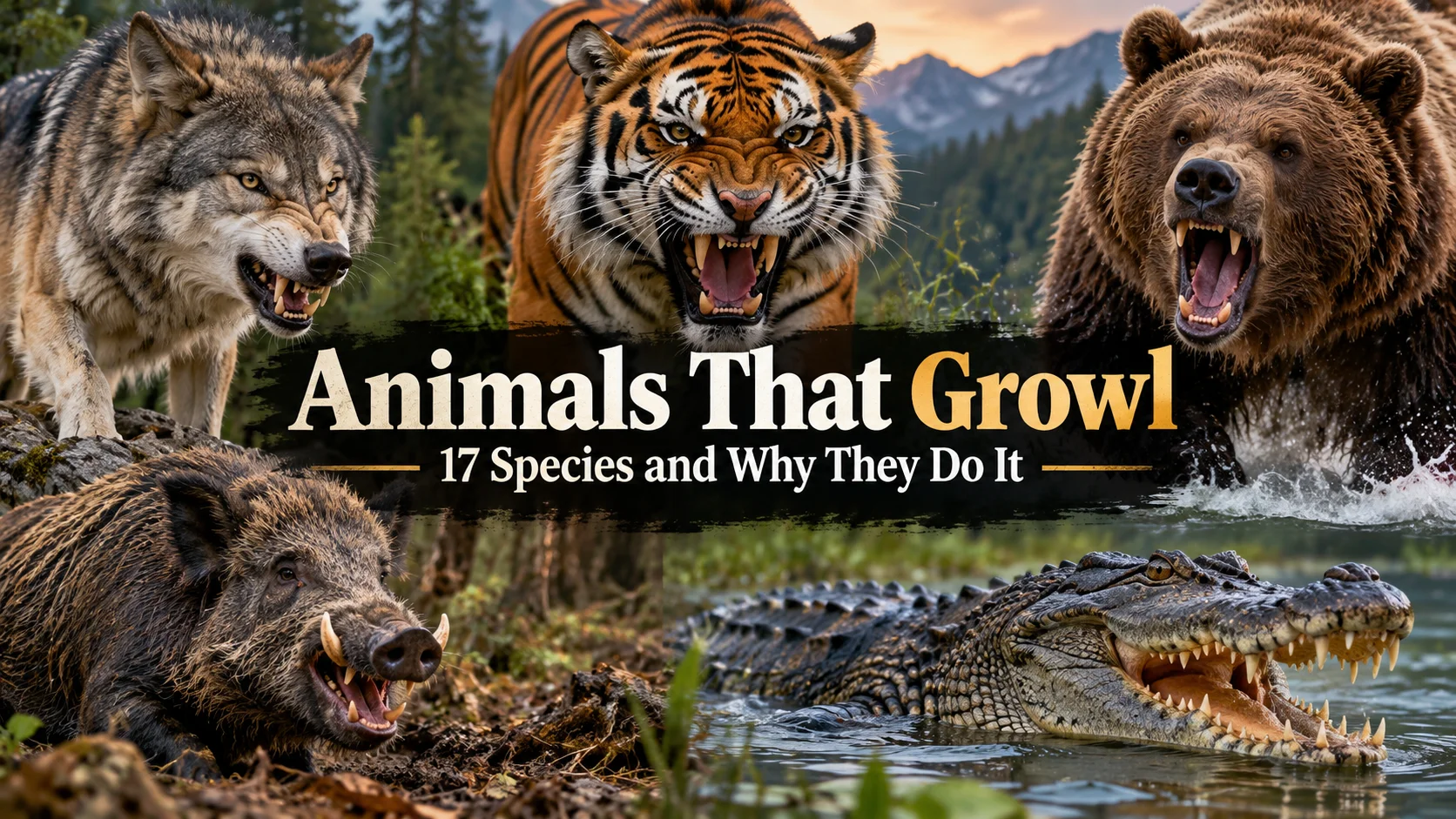
Animals that growl use these low, rough vocalizations for far more than simple aggression. A growl may warn another animal to keep its distance, express fear or discomfort, communicate during a social conflict, or even appear during play. Dogs, wolves, bears, big cats, badgers, raccoons, hyenas, and some crocodilians all produce sounds described as growls. Their meanings differ considerably, however, so understanding the surrounding behavior is just as important as hearing the sound itself.
Animals that growl include dogs, wolves, bears, lions, tigers, cats, badgers, raccoons, hyenas, and crocodilians. Growling functions commonly as a close-range warning or defensive signal, but it can also occur during play, competition, courtship, or other social situations. A growl is not automatically a sign that an animal will attack.
Animals That Growl at a Glance
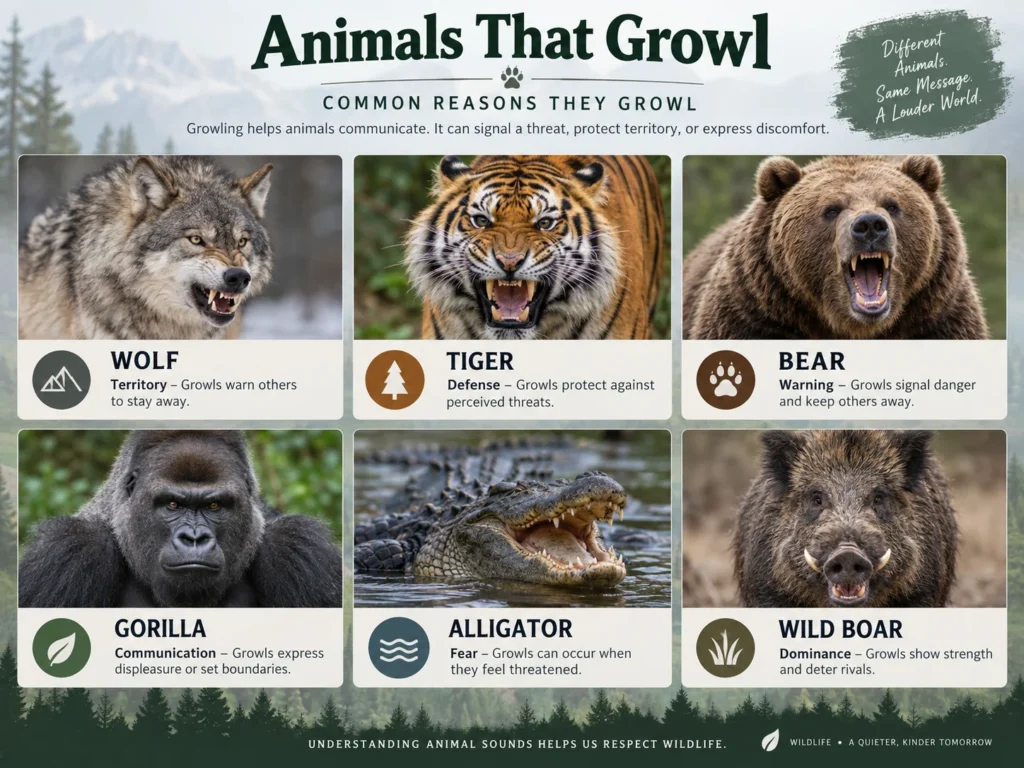
| Animal | Common Growling Context | Other Notable Sounds |
| Domestic dog | Warning, fear, guarding, play | Bark, whine, howl |
| Gray wolf | Confrontation, warning | Howl, whine, bark |
| Red fox | Defense, conflict | Bark, scream |
| Maned wolf | Social tension, warning | Roar-bark, whine |
| Bush dog | Social and agonistic interactions | Whine, bark |
| Brown bear | High tension, conflict | Huff, grunt |
| American black bear | Stress, defense | Huff, bawl |
| Lion | Close-range tension | Roar, grunt |
| Tiger | Warning and conflict | Roar, chuff, hiss |
| Leopard | Agonistic/social contexts | Sawing call, roar-like calls |
| Jaguar | Conflict and reproductive contexts | Roar, grunt |
| Domestic cat | Fear, defense, conflict | Hiss, purr, meow |
| Eurasian lynx | Threat/social interactions | Hiss, yowl |
| American badger | Defensive warning | Hiss, snarl |
| Raccoon | Conflict and social encounters | Chitter, hiss |
| Spotted hyena | Defense and tension | Whoop, giggle |
| Crocodiles | Threat, courtship, territory | Bellow, hiss, grunt |
Why Do Animals Growl?
A growl is generally a low-frequency, rough vocalization used at relatively close range. Unlike a long-distance howl or powerful territorial roar, a growl often communicates something to an individual already nearby. Its meaning depends on species and context. One animal may growl to warn a rival away from food, while another uses a similar sound when frightened or cornered. Dogs can even growl during playful interactions without showing genuine aggression. Researchers therefore interpret growling alongside posture, facial expression, movement, distance, and the social situation. The sound alone does not always reveal exactly what an animal intends to do next.
1. Domestic Dogs
Dogs are probably the most familiar growling animals. They may growl when frightened, uncomfortable, guarding food or toys, warning another individual to back away, or preparing to defend themselves. Not every dog growl is aggressive. Play growling is common during tug games or energetic interactions with other dogs, and its meaning is usually clearer when body posture and the rest of the interaction are considered. A stiff body, fixed stare, and defensive positioning may accompany a more serious warning, whereas loose movements often appear during playful situations.
2. Gray Wolves
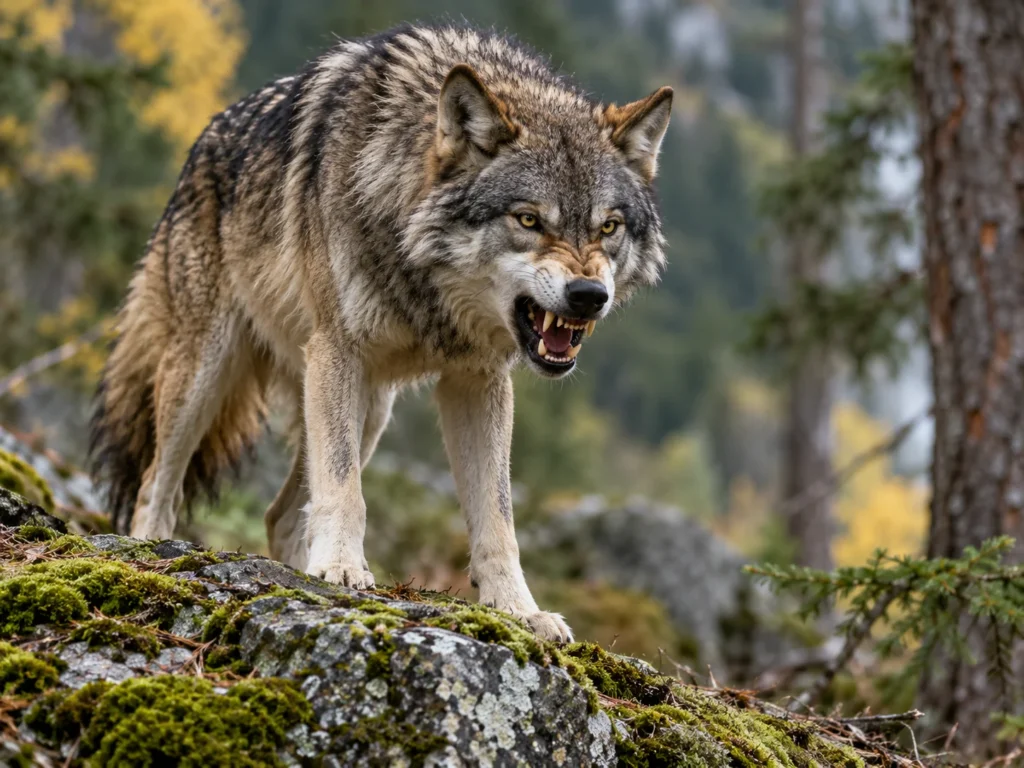
Gray wolves use growling primarily as close-range communication during tense social interactions. A wolf may growl at another wolf during competition, near food, or when trying to establish distance. This differs substantially from howling. Howls can travel across long distances and help maintain contact between pack members or advertise territory, while growls are usually directed at animals nearby. Young wolves may also produce growling sounds during play, showing that context changes the meaning of the vocalization.
3. Red Foxes
Red foxes possess a surprisingly broad vocal repertoire that includes barks, screams, whines, and growls. Growling is most associated with defensive or agonistic encounters, particularly when an animal feels challenged at close range. It can communicate tension without immediately escalating into physical contact. Because fox communication includes several harsh-sounding calls, not every rough fox vocalization should automatically be described as a growl.
4. Maned Wolves
Despite their name, maned wolves are not simply oversized gray wolves. They are distinctive South American canids with their own communication system. Growls may occur during hostile or tense interactions, helping communicate that another individual should increase distance. Maned wolves are also famous for a deep, far-carrying call sometimes called a roar-bark. The two sounds serve different purposes, making the species a useful example of why growls and louder territorial calls should not be confused.
5. Bush Dogs
Bush dogs are small, highly social wild canids native to Central and South America. They communicate using a range of vocalizations suited to maintaining contact within groups. Growls have been documented during social tension and agonistic interactions. Their communication also includes higher-pitched calls that help group members remain connected in dense vegetation. This combination demonstrates how a social animal can use different sounds depending on distance and emotional context.
6. Brown Bears
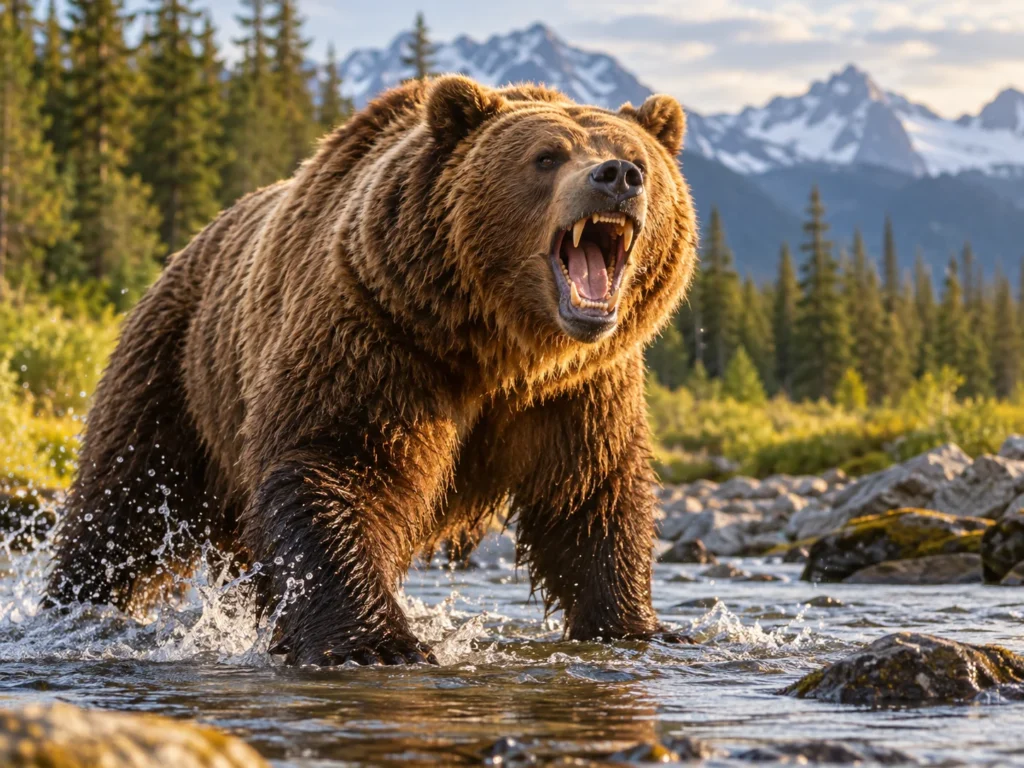
Brown bears can produce deep growls during high-tension situations, but they do not spend their lives constantly growling, as popular media sometimes suggests. A growl may occur during serious conflict or when an animal feels intensely threatened. Bears also use huffs, grunts, jaw sounds, and other signals that can communicate discomfort or warning. Because bear behavior varies with circumstances, hearing one sound should never be treated as a perfect prediction of what the animal will do next.
7. American Black Bears
American black bears also have a varied vocal repertoire. Growling can occur during defensive or highly stressful encounters, although other sounds such as huffs, bawls, and grunts are common as well. Black bears frequently rely on body language and distance-changing behavior rather than immediately escalating a confrontation. Their vocalizations should therefore be interpreted as part of a broader communication system. A deep growl may signal tension, but it does not mean every nearby bear is about to attack.
8. Lions
Lions are famous for roaring, but they can also growl. These vocalizations are different in both function and scale. A roar is a powerful long-distance signal that can advertise presence, territory, or group identity. Growling is generally more useful during close interactions involving tension, social conflict, or warning. Lions also grunt and produce other calls, so describing every low lion sound as a growl would oversimplify their communication.
9. Tigers
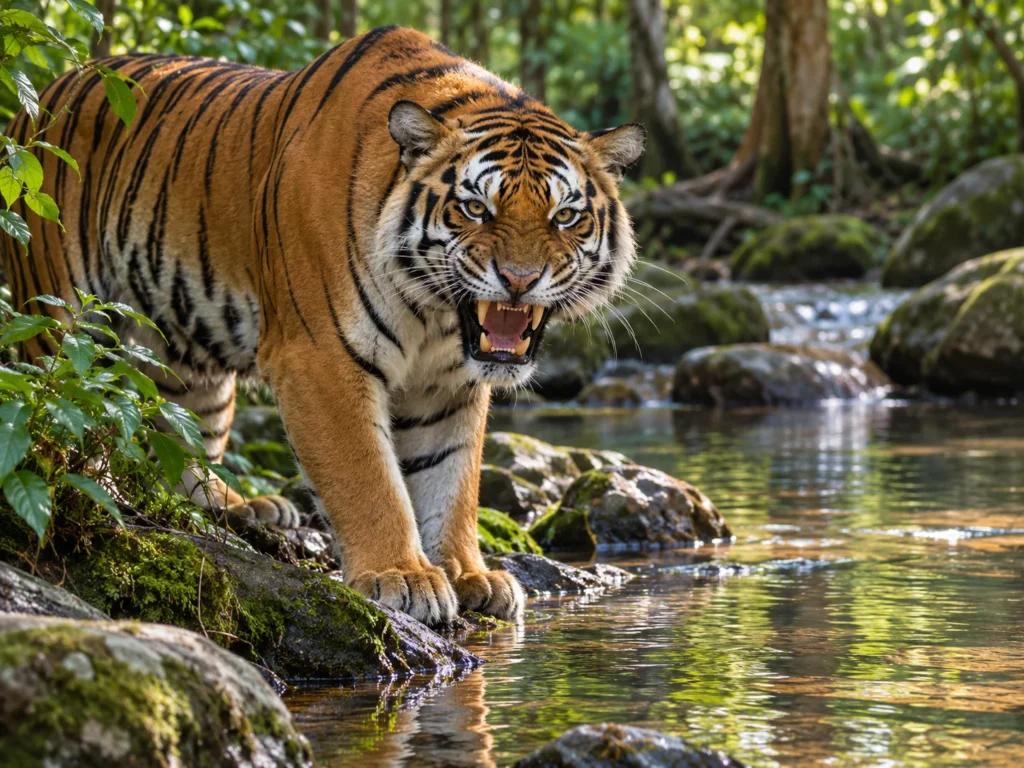
Tiger communication includes growls, roars, hisses, moans, and the friendly or neutral chuff often heard during close interactions. Growling tends to occur in more tense situations and can function as a warning. Unlike a roar, it is usually a lower, close-range signal rather than a far-reaching advertisement. The tiger provides one of the clearest examples of why animal sounds should be identified separately instead of treating every deep vocalization as a roar.
10. Leopards
Leopards use multiple vocalizations, including growls and their distinctive repetitive “sawing” call. Growling can appear during conflict or other close social interactions. Reproductive communication may also include low, rough calls that differ from ordinary defensive sounds. Because leopard vocalizations can blend in quality, the behavioral context is particularly useful when interpreting what a specific sound is communicating.
11. Jaguars
Jaguars can growl during tense encounters, but low growl-like calls have also been observed in reproductive situations. This is important because it challenges the idea that growling always equals anger. A similar type of low vocal sound may carry different meanings depending on whether animals are competing, defending themselves, or interacting during courtship. Jaguars also roar and grunt, giving them a more diverse vocal repertoire than their intimidating growl alone suggests.
12. Domestic Cats
Domestic cats commonly growl when frightened, defensive, uncomfortable, or involved in conflict over space or resources. A growling cat may combine the sound with flattened ears, a tense posture, staring, or other defensive signals. Hissing often occurs in similar situations, but a hiss and a growl are acoustically different sounds. Cats can also vocalize because of pain or stress, so growling should always be interpreted according to the surrounding situation.
13. Eurasian Lynx
Eurasian lynx are generally quiet and elusive, but their vocal repertoire includes growls, hisses, yowls, and other calls. Growling can occur during close-range tension or aggressive social interactions. During the breeding season, lynx may become considerably more vocal and use calls different from ordinary warning sounds. Their behavior shows that even solitary wild cats maintain a surprisingly varied system of acoustic communication.
14. American Badgers
American badgers are powerful burrowing mammals that may growl when threatened or cornered. A badger can combine a low growl with hissing, snarling, defensive posture, or attempts to retreat. These signals help communicate that the animal wants the threat to maintain distance. Growling in this situation is best viewed as a warning rather than proof that the badger intends to initiate an attack.
15. Raccoons
Raccoons produce a wide variety of sounds, including growls, hisses, chitters, screams, and other short calls. Growling can occur during disagreements over food, defensive encounters, or other tense social situations. Because raccoons can be highly vocal, their sounds often change with age, motivation, and the individuals involved. They are a useful reminder that growling is not restricted to large predators such as wolves, bears, or big cats.
16. Spotted Hyenas
Spotted hyenas are best known for their loud whoops and laugh-like giggles, but they produce many additional vocalizations. Low growls can occur in defensive or tense close-range situations, sometimes when an individual is being threatened or challenged. The famous hyena giggle, by contrast, is a different call with its own social meaning. Hyena communication is exceptionally complex, so describing all of their unusual vocalizations as “laughing” misses much of their behavioral repertoire.
17. Crocodiles
Crocodilians are among the most vocal reptiles, producing growls, bellows, hisses, grunts, and other sounds. Low growling sounds may appear in threatening, social, or reproductive contexts depending on the species. Large males are especially known for powerful low-frequency displays during breeding and territorial interactions. Crocodilian growls are produced by a very different vocal system from mammalian growls, so the shared label describes a similar sound quality rather than identical anatomy or behavior.
Growl vs. Roar vs. Snarl vs. Hiss
Animal sounds can overlap, but several broad distinctions help make sense of them.
| Sound | General Character | Typical Function |
| Growl | Low, rough, sustained | Warning, tension, play, social interaction |
| Roar | Powerful, louder, often far-carrying | Territory, advertisement, group contact |
| Snarl | Threat sound often paired with facial display | Strong warning or aggression |
| Hiss | Sharp sound produced by expelled air | Defensive warning |
| Howl | Long, sustained call | Long-distance contact or territory |
| Grunt | Short, low sound | Varies greatly by species |
These definitions are useful guides rather than rigid biological categories. Researchers may describe similar sounds differently depending on the animal and acoustic structure.
Does Growling Always Mean Aggression?
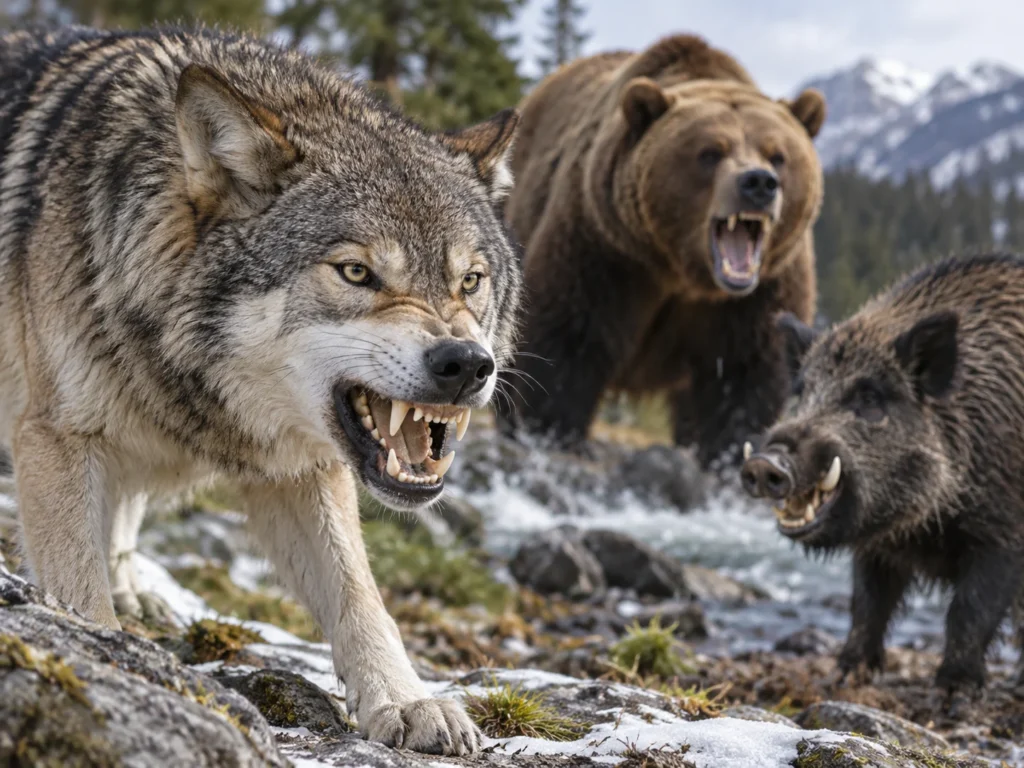
No. Aggression is one possible context, but growling can communicate several different states. Dogs offer the clearest example because playful growling is common. Other species may use low growls during fear, defensive interactions, competition, reproductive behavior, or social tension. The safest interpretation is that a growl usually carries information about the animal’s current state and the interaction around it. Posture, facial expression, distance, and movement all help determine whether the situation is playful, defensive, or genuinely aggressive.
Why Are Growls Usually Low-Pitched?
Low-frequency sounds can create an impression of larger body size and are well suited to close-range threat communication in many mammals. Large vocal tracts can naturally produce deeper sounds, but body size is not the only factor controlling pitch. Species anatomy, motivation, and the structure of individual calls also matter. This is why a growl should be identified by the animal’s actual vocal repertoire rather than simply labeling every deep sound a growl.
FAQs
Why do animals growl?
Animals may growl to warn others, defend resources, communicate fear or discomfort, manage social conflict, or signal tension. Some animals, particularly dogs, can also growl during play.
Do animals only growl when they are angry?
No. Growling can occur during fear, defense, play, courtship, competition, and other social situations. Its meaning depends on species, body language, and context.
What animals growl besides dogs?
Wolves, foxes, bears, lions, tigers, leopards, jaguars, domestic cats, lynx, badgers, raccoons, hyenas, and some crocodilians can all produce vocalizations described as growls.
Do lions and tigers growl?
Yes. Both lions and tigers produce growls, but they also have separate vocalizations such as roars. A growl is generally a lower, more close-range signal than a full roar.
Can crocodiles growl?
Yes. Crocodilians have diverse vocal repertoires that can include low growling sounds as well as bellows, hisses, and grunts. The exact sounds and contexts vary among species.
What is the difference between a growl and a roar?
A growl is generally lower and used at relatively close range, while a roar is usually louder and can function over greater distances. The precise distinction varies among animal groups.
Final Thoughts
Animals that growl use these sounds as part of complex communication systems rather than as simple expressions of anger. Dogs may growl during play, wolves during close social conflict, big cats during tension or reproductive interactions, and crocodilians during territorial or social displays. The most useful way to understand a growl is to consider the animal, the surrounding behavior, and the other sounds it can produce. Growling often signals that something important is happening, but its meaning can range from playful excitement to a serious defensive warning.




2 Comments