Animals That Eat Rabbits: 15 Predators and How They Hunt
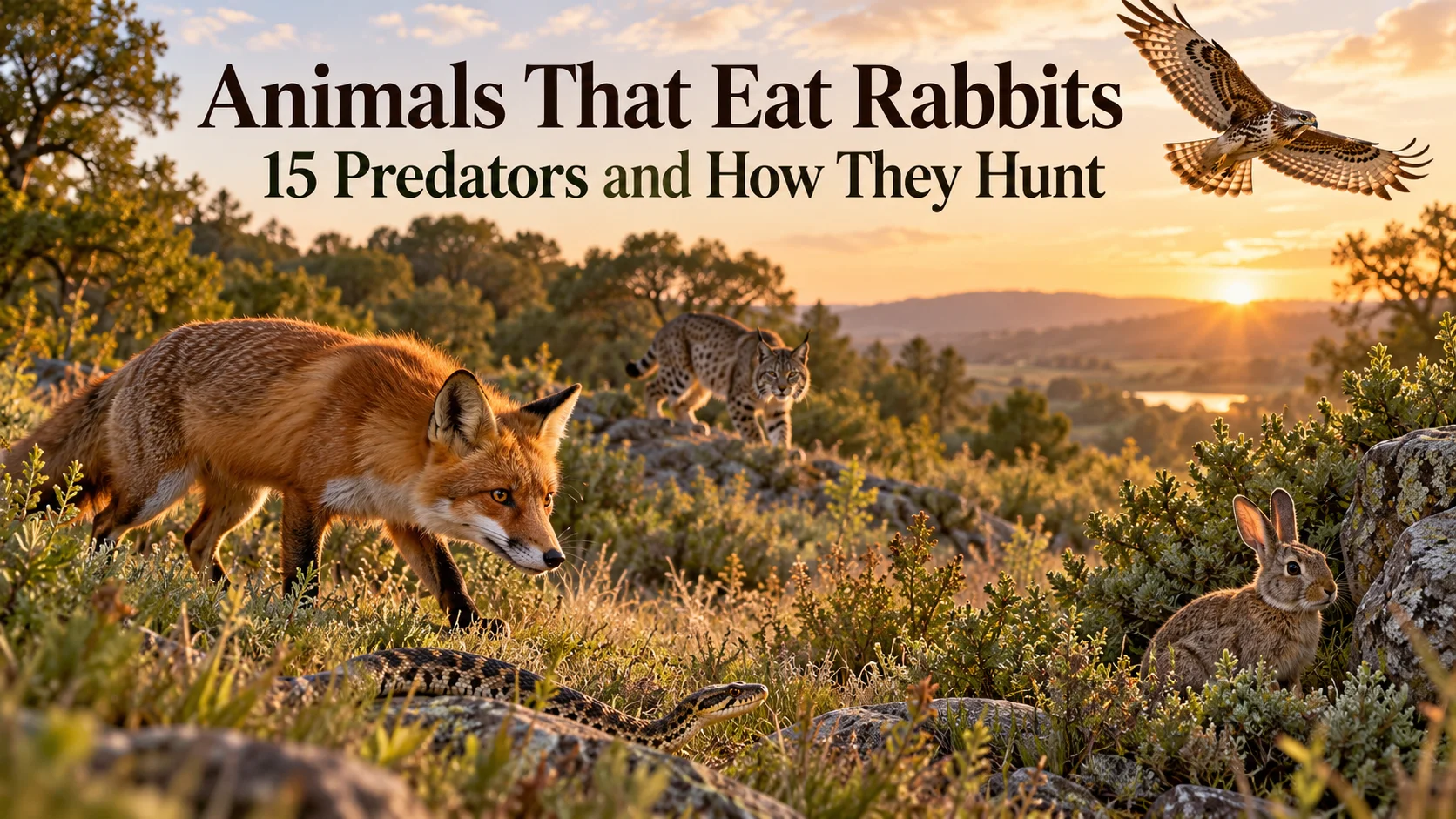
Animals that eat rabbits include many predators around the world, including wild cats, foxes, coyotes, birds of prey, mustelids, and some snakes. However, not every predator depends on rabbits to the same degree. The Iberian Lynx relies heavily on European Rabbits, while generalists such as Red Foxes and Coyotes include them within much broader diets. These predators also use very different hunting methods, ranging from quiet ambushes and rapid pursuit to aerial attacks and constriction.
Animals that eat rabbits include Iberian Lynx, foxes, Coyotes, Bobcats, Stoats, eagles, owls, hawks, and some snakes. Some predators rely heavily on rabbits, while others hunt them opportunistically. Hunting strategies include stalking, pursuit, nocturnal ambush, aerial attacks, and constriction, depending on the predator and prey size.
Why Are Rabbits Common Prey?
Rabbits live in grasslands, farmland, scrub, woodland edges, deserts, and many other habitats. For animals that eat rabbits, this wide distribution creates frequent opportunities to encounter them. They are also substantial enough to provide more food than many smaller rodents.
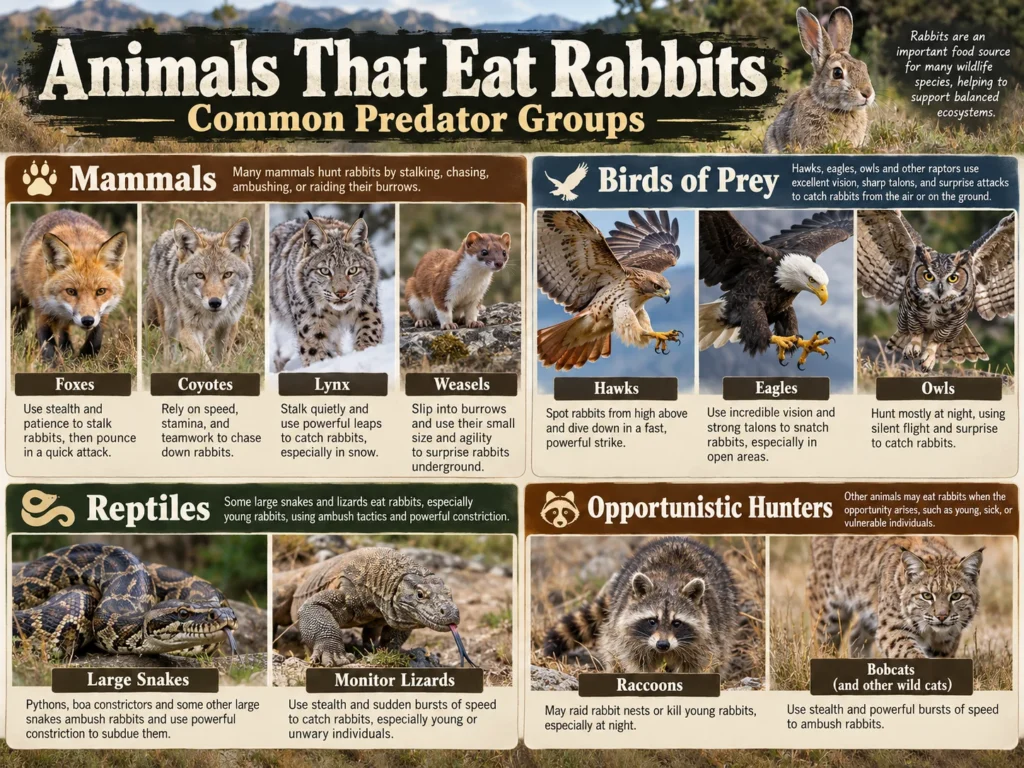
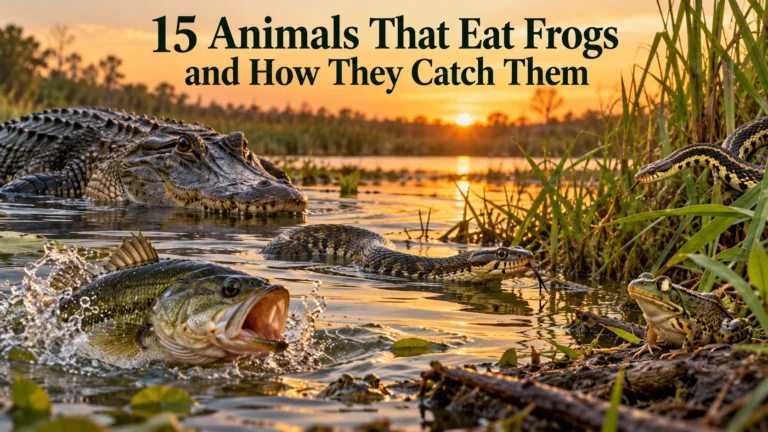
Young rabbits are vulnerable to an even wider range of hunters because their smaller size makes them manageable for predators that may struggle with full-grown adults. Some of these predators may also overlap with Animals That Eat Frogs, especially in habitats where both rabbits and amphibians are available. Predator diets can change according to season, habitat, and local prey abundance. Rabbits are far from defenseless, however. Speed, rapid direction changes, camouflage, dense vegetation, sharp hearing, and access to burrows all improve their chances of escaping an attack.
Quick Comparison of Animals That Eat Rabbits
| Predator | Rabbit Importance | Main Hunting Method |
| Iberian Lynx | Highly dependent | Stalk and ambush |
| Red Fox | Regular prey | Stalk and pounce |
| Coyote | Regular/generalist | Search and pursuit |
| Bobcat | Regular prey | Ambush |
| Kit Fox | Regular small-mammal prey | Night hunting |
| Stoat | Important prey | Close pursuit |
| Long-Tailed Weasel | Opportunistic/regular | Pursuit in cover |
| American Mink | Opportunistic | Ground hunting |
| Golden Eagle | Important rabbit/hare prey | Aerial attack |
| Great Horned Owl | Regular prey | Nocturnal ambush |
| Red-Tailed Hawk | Regular/opportunistic | Perch attack |
| Wedge-Tailed Eagle | Major regional prey | Aerial attack |
| Eastern Imperial Eagle | Regional prey | Aerial hunting |
| Gopher Snake | Young rabbits | Constriction |
| Eastern Racer | Small rabbits | Active pursuit |
15 Animals That Eat Rabbits
1. Iberian Lynx
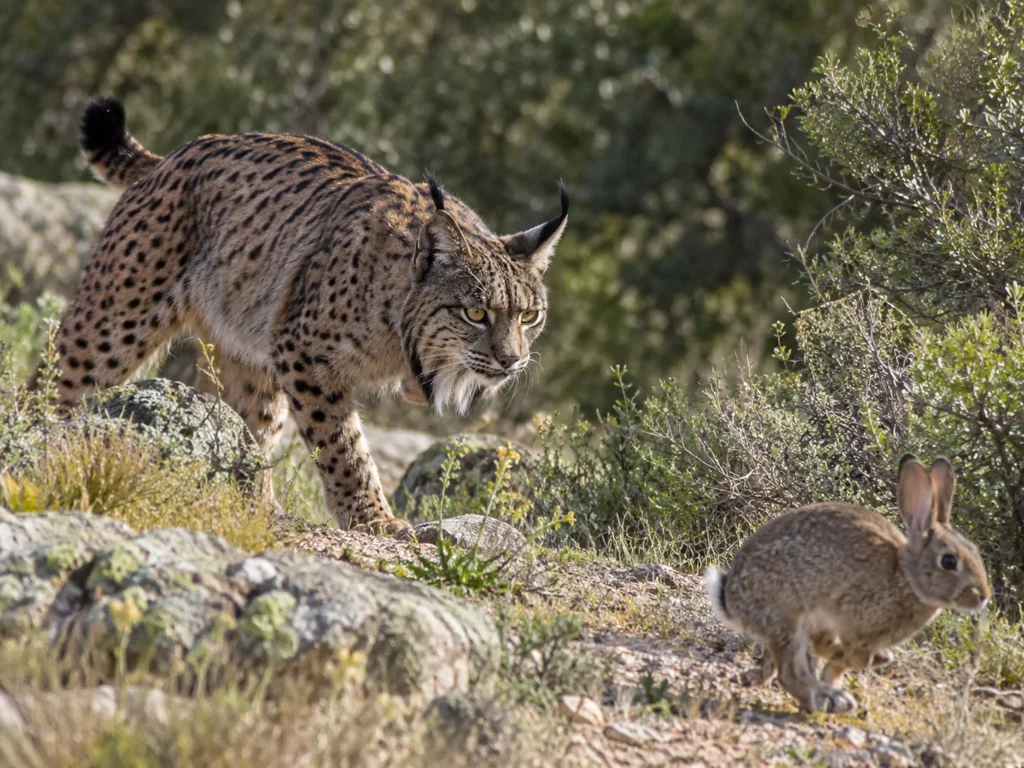
Among animals that eat rabbits, the Iberian Lynx is the clearest rabbit specialist on this list. European Rabbits make up a very large proportion of its natural diet, making rabbit availability especially important to this wild cat. It typically hunts using stealth, moving through cover before approaching closely enough for a short ambush. Unlike many generalist predators, the Iberian Lynx has an unusually strong ecological dependence on rabbits.
2. Red Fox
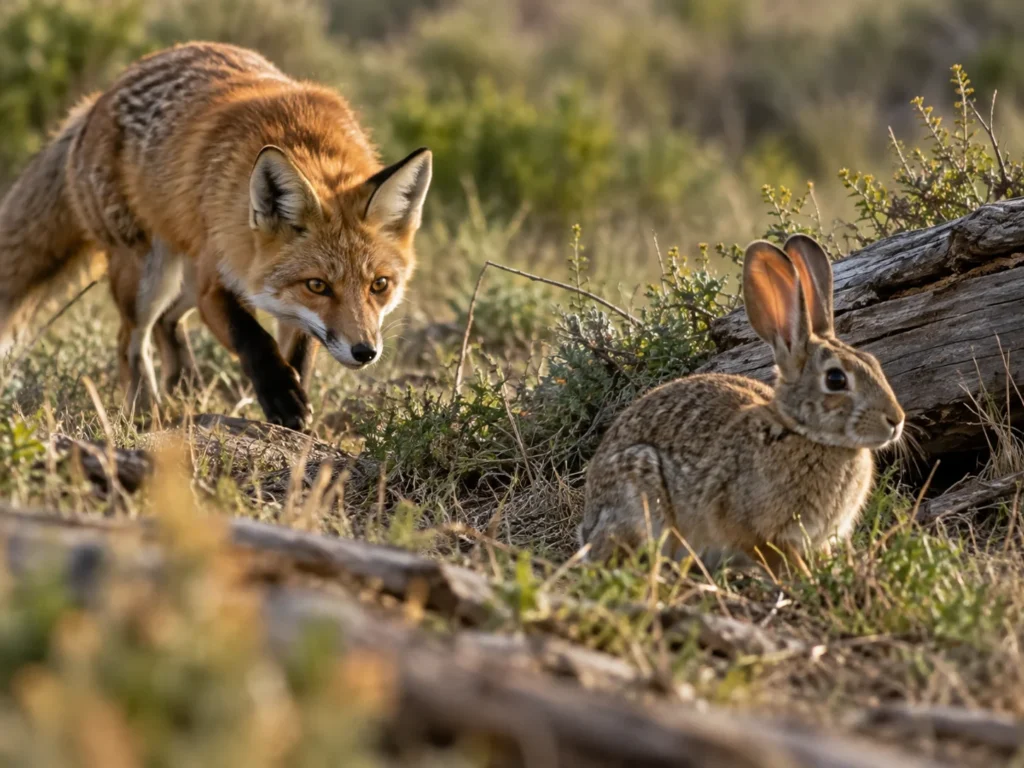
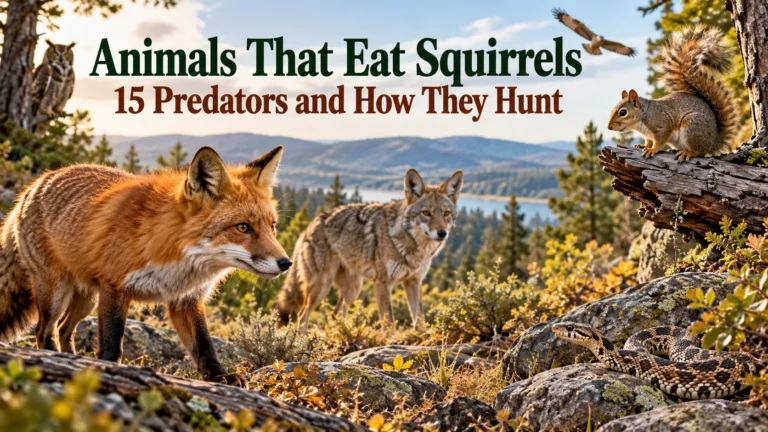
Red foxes are among the animals that eat rabbits regularly, but they have highly varied diets. They also consume rodents, birds, insects, fruit, eggs, and carrion depending on what is available. This broad diet can also place them among Animals That Eat Squirrels in areas where squirrels are common prey. When hunting rabbits, a fox may quietly approach using scent and hearing before making a sudden pounce or short chase. Rabbit importance varies between habitats, so the red fox is better described as a generalist predator than a rabbit specialist.
3. Coyote
Coyotes are adaptable animals that eat rabbits, including cottontails, and other small mammals across many parts of North America. Their diet can also include rodents, birds, insects, fruit, carrion, and larger prey. Coyotes use hearing and smell to locate prey and may stalk, chase, or pounce depending on the situation. Rabbits can be common food, but their importance varies considerably among regions and seasons.
4. Bobcat
Bobcats are stealthy carnivores that regularly hunt rabbits in many parts of their range. Their diet also includes rodents, birds, reptiles, and other mammals. A Bobcat usually relies on cover to approach prey quietly. Once close enough, it launches a short, powerful rush or pounce. This ambush strategy works particularly well in brushy environments where rabbits have less time to detect the approaching cat.
5. Kit Fox
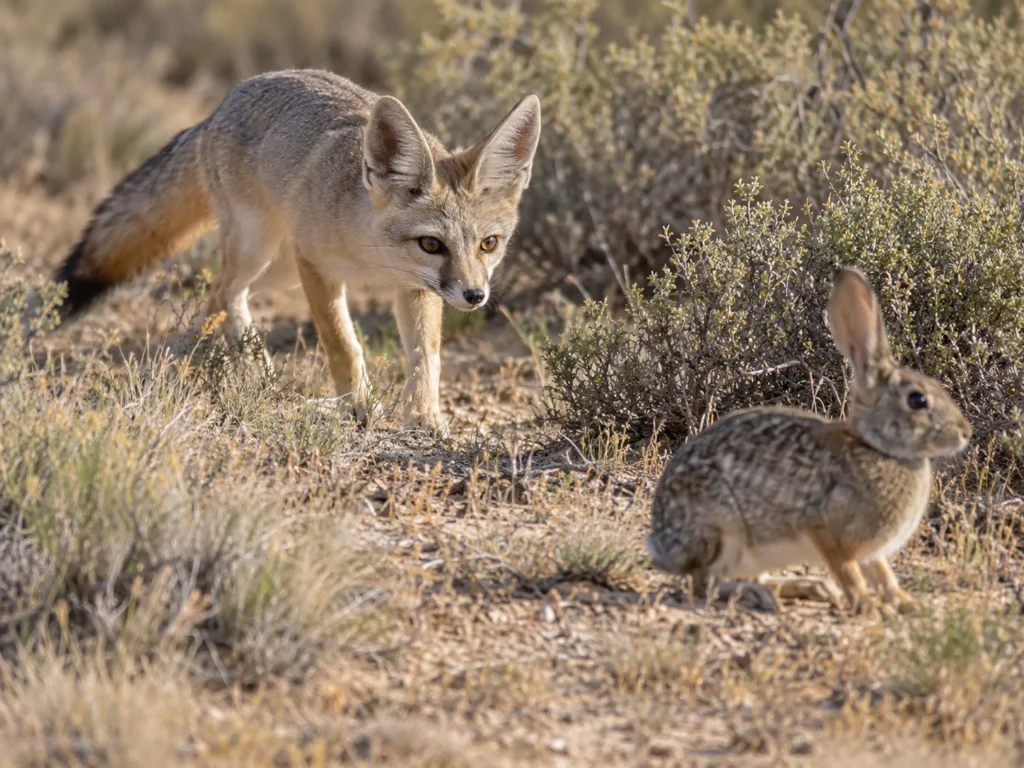
Kit Foxes live mainly in dry, open environments of western North America. Small mammals form much of their diet, and cottontail rabbits can be taken when available. They are primarily active at night, using their sharp hearing and sense of smell to locate prey. Kit Foxes may also consume jackrabbits, although jackrabbits are technically hares, not true rabbits.
6. Stoat
The Stoat is one of the smaller animals that eat rabbits, but its size does not prevent it from tackling surprisingly large prey. Rabbits can be important food, particularly where rabbit populations are abundant. Stoats use speed, agility, and persistence to pursue prey through vegetation and around burrows. Their elongated bodies also allow them to enter narrow spaces. Despite their small size, they can overpower rabbits considerably heavier than themselves.
7. Long-Tailed Weasel
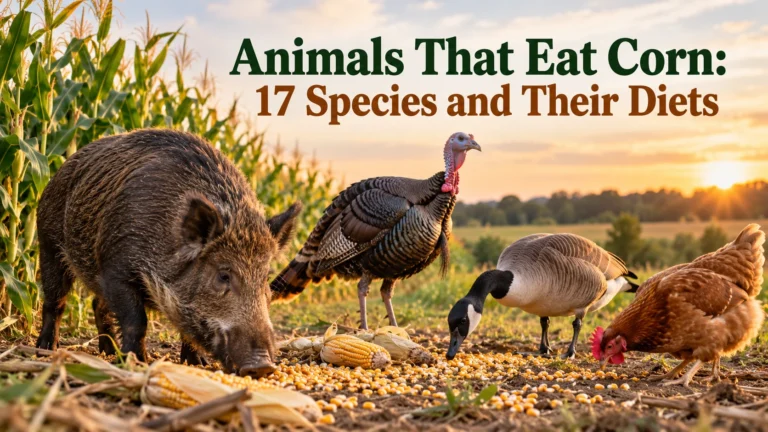
Long-tailed weasels are energetic mustelids that mainly hunt rodents and other small vertebrates. They can also take young or suitably sized rabbits. Unlike many Animals That Eat Corn, long-tailed weasels rely primarily on animal prey rather than plant-based foods. Their slim bodies allow them to move through dense vegetation and investigate burrows where potential prey may hide. Rabbits are not necessarily their primary food everywhere, so they are best described as opportunistic or regional rabbit predators.
8. American Mink
American Mink are versatile carnivores often associated with waterways, wetlands, and nearby vegetation. Their diet may include fish, frogs, crustaceans, birds, rodents, and occasionally rabbits. They search actively through shoreline vegetation and terrestrial cover for prey. Rabbits are not central to the diet in the way they are for the Iberian Lynx, but mink can take them when the opportunity and prey size are suitable.
9. Golden Eagle
Golden Eagles are among the animals that eat rabbits from the air and are powerful predators capable of taking rabbits and hares across open landscapes. These mammals can form an important part of the eagle’s diet in suitable regions. The eagle searches from the air or an elevated position before making a fast attack. Strong feet and sharp talons seize the prey. Open country is particularly suitable because it allows the eagle to detect moving rabbits from considerable distances.
10. Great Horned Owl
Great Horned Owls are nocturnal animals that eat rabbits as part of an exceptionally broad diet. Rabbits and hares are among the larger mammals they can successfully capture. They combine strong hearing, excellent low-light vision, and relatively quiet flight to approach prey at night. The owl typically attacks from above and grasps the animal with powerful talons. Rabbits are important prey in many areas, but they are only part of the owl’s diverse diet.
11. Red-Tailed Hawk
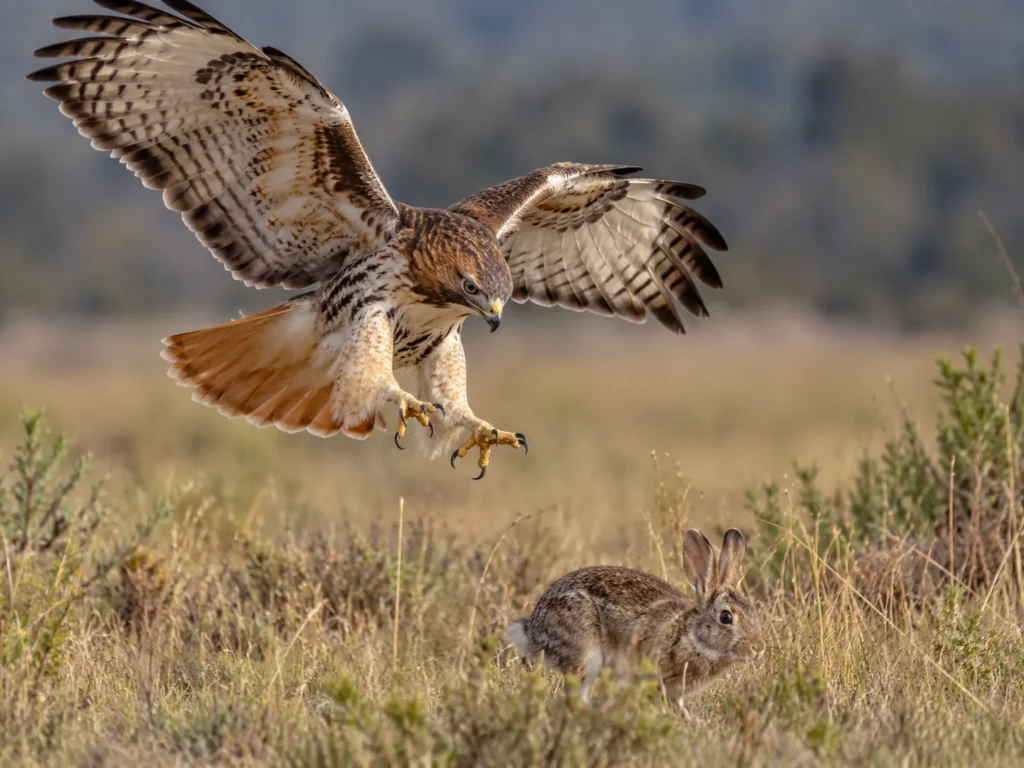
Red-Tailed Hawks commonly hunt mammals in open country, along roadsides, and around fields. Rabbits can be taken alongside rodents and other vertebrate prey. These hawks often watch from trees, poles, or other elevated perches before dropping rapidly toward an animal below. They may also search while soaring. Rabbit importance depends on prey abundance and the size of both the hawk and rabbit.
12. Wedge-Tailed Eagle
The Wedge-Tailed Eagle is Australia’s largest bird of prey. Introduced European Rabbits can become important food, particularly where rabbit populations are abundant. These eagles hunt from the air and use their powerful talons to capture live prey. They are also frequent scavengers, so finding one feeding on a rabbit does not automatically mean it made the kill. Hunting and scavenging should be treated as separate behaviors.
13. Eastern Imperial Eagle
Eastern Imperial Eagles are large raptors that hunt mammals and birds across parts of Europe and Asia. Rabbits can form part of their diet in areas where suitable populations occur. Although they are not typically grouped with Animals That Eat a Lot in the sense of constant bulk feeding, their energy needs can still be substantial because of their large body size and active hunting lifestyle. They hunt mainly in relatively open landscapes, searching for prey from the air or elevated positions before attacking with their talons. Their diet varies geographically, so they should be considered regional rabbit predators rather than specialists.
14. Gopher Snake
Gopher Snakes mainly eat rodents, but larger individuals can also take young cottontail rabbits. Their ability to consume rabbits depends strongly on the size of both predator and prey. These snakes investigate rodent burrows and other hiding places before seizing suitable mammals. They subdue prey through constriction. Full-grown rabbits are generally too large for many individuals, making young rabbits the more realistic prey.
15. Eastern Racer
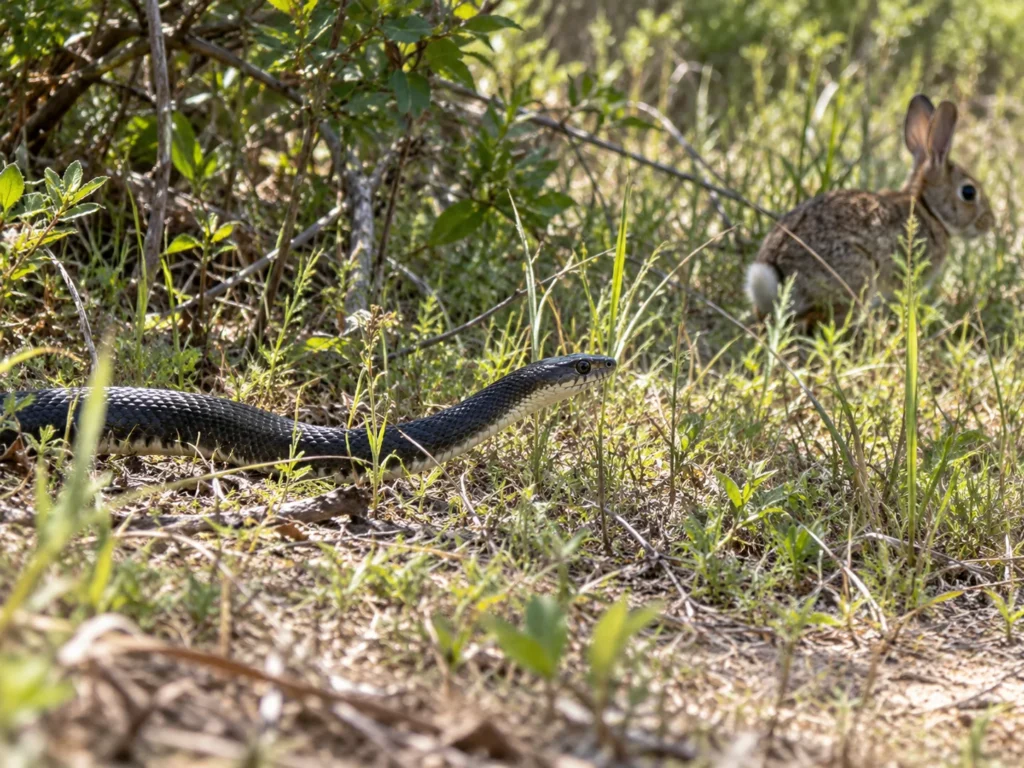
Eastern Racers are fast, active snakes that hunt a wide variety of vertebrate prey. Larger individuals can sometimes take small cottontail rabbits. Unlike Gopher Snakes, racers do not rely on constriction. They actively pursue and overpower suitable prey before swallowing it. Their broad diet includes rodents, frogs, lizards, birds, and other animals, so rabbits represent an opportunistic food rather than a dietary specialization.
How Do Predators Hunt Rabbits?
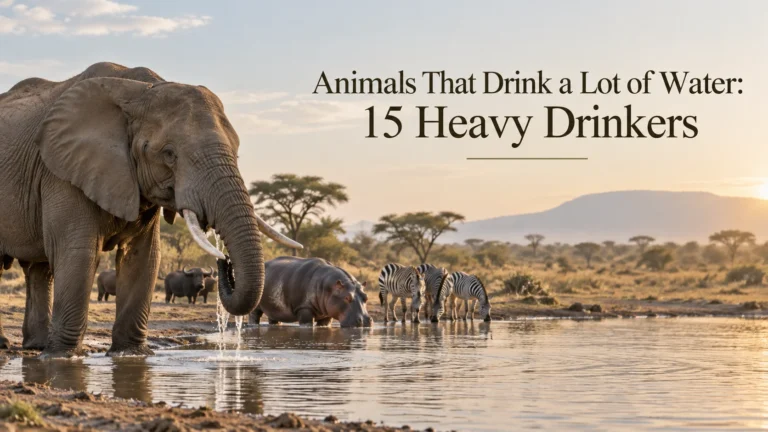
Animals that eat rabbits solve the challenge of catching this fast, alert prey in very different ways. Ambush predators such as Iberian lynx and bobcats rely on stealth, approaching through vegetation before making a short attack. Red foxes can also stalk before pouncing. Pursuit hunters such as coyotes, stoats, and weasels are more likely to chase prey once detected. Unlike many Animals That Drink Alot of Water, these predators are defined more by their hunting strategies than by unusually high water consumption. Their speed and agility help them respond when rabbits change direction suddenly.
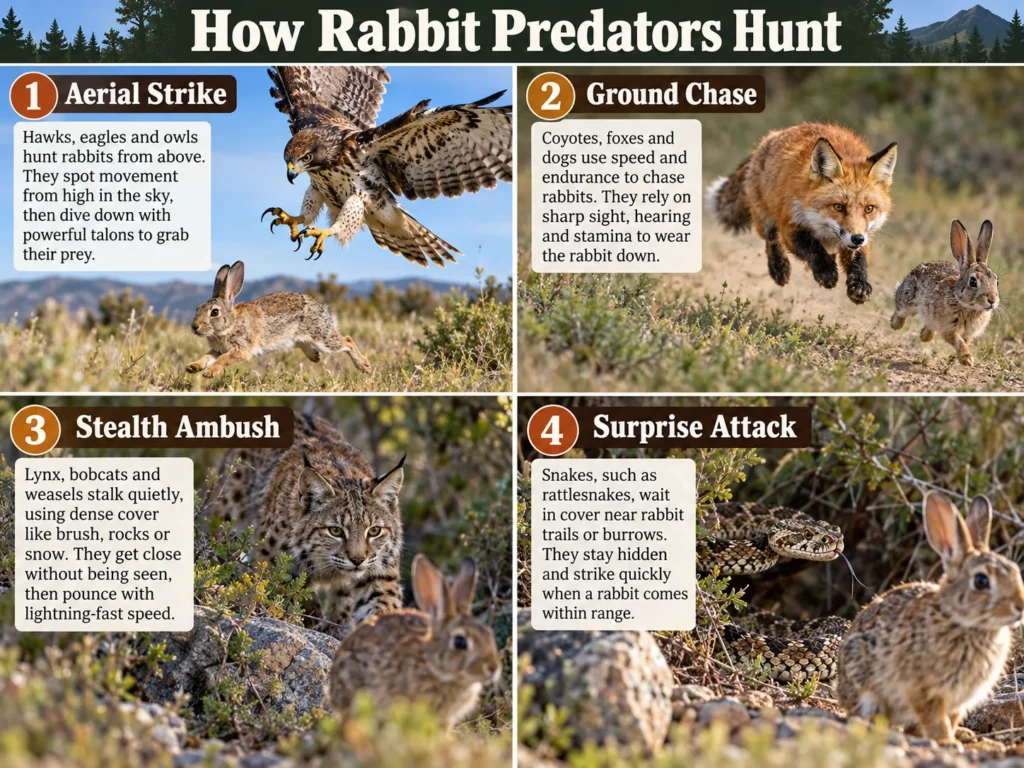
Raptors attack from above. Golden Eagles, Red-Tailed Hawks, and Wedge-Tailed Eagles use sharp eyesight to locate prey before descending with powerful talons. Great Horned Owls perform a similar role at night, relying heavily on hearing and low-light vision. Snakes use completely different strategies. Gopher Snakes constrict suitably sized prey, while Eastern Racers rely on active pursuit and physical restraint.
Rabbits vs Hares: What Is the Difference?
Rabbits and hares both belong to the family Leporidae, but they are not the same animals. European Rabbits and cottontails are true rabbits. Jackrabbits, despite their name, are actually hares. Snowshoe Hares are also hares rather than rabbits.
This distinction matters when describing animals that eat rabbits and their diets. A Golden Eagle may hunt both rabbits and hares, while an Iberian Lynx is particularly associated with the European Rabbit. When both groups are documented as prey, the most accurate wording is “rabbits and hares” instead of treating every leporid as a rabbit.
How Do Rabbits Escape Predators?
Rabbits survive despite facing many predators because they possess several effective defenses. Their strong hind legs allow rapid acceleration, while sudden changes of direction can make pursuit difficult. Many rabbits remain close to dense vegetation or burrows that provide escape routes when danger appears.
Large ears provide excellent hearing, allowing rabbits to detect approaching predators before an attack begins. Camouflage also helps them remain unnoticed when they freeze against vegetation or soil. These defenses explain why many animals that eat rabbits rely on surprise. Once a rabbit detects danger early and reaches suitable cover, the predator’s chance of success can fall quickly.
Which Predators Depend Most on Rabbits?
Among animals that eat rabbits, dependence on this prey varies dramatically between predators. The Iberian Lynx is the strongest specialist example because European Rabbits dominate much of its natural diet. Rabbits and hares can also be important prey for Golden Eagles, Wedge-Tailed Eagles, Stoats, and Great Horned Owls. However, these predators generally maintain broader diets. Red Foxes, Coyotes, Bobcats, Kit Foxes, and Red-Tailed Hawks regularly hunt rabbits but also consume many other prey species. Mink, weasels, Gopher Snakes, and Eastern Racers are better considered opportunistic rabbit predators.
Frequently Asked Questions
What animals eat rabbits?
Rabbit predators include Iberian Lynx, foxes, Coyotes, Bobcats, Stoats, weasels, mink, eagles, owls, hawks, and some snakes. Their dependence on rabbits varies considerably.
Do foxes eat rabbits?
Yes. Red Foxes and some other fox species hunt rabbits where they are available. However, foxes are generalists and also eat rodents, birds, insects, fruit, carrion, and other foods.
What birds eat rabbits?
Golden Eagles, Great Horned Owls, Red-Tailed Hawks, Wedge-Tailed Eagles, and several other large raptors can prey on rabbits. Some also regularly hunt hares.
Do snakes eat rabbits?
Some larger snakes can eat rabbits, particularly young or small individuals. Gopher Snakes and large Eastern Racers are examples, although rabbits are not their only or necessarily primary prey.
What predator depends most heavily on rabbits?
The Iberian Lynx is one of the clearest rabbit-dependent predators. European Rabbits form the overwhelming majority of its diet in many populations, making rabbit availability particularly important to the species.
Final Thoughts
Rabbits are prey for an impressive range of mammals, birds, and reptiles, but their importance differs greatly among predators. The Iberian Lynx is unusually rabbit-dependent, while foxes, Coyotes, raptors, mustelids, and snakes generally include rabbits within broader diets. Different hunting methods—from silent ambush to aerial attack—show how predators have adapted to catching this fast and alert prey.