
Mammals That Cannot Jump: Facts, Limits and Myths
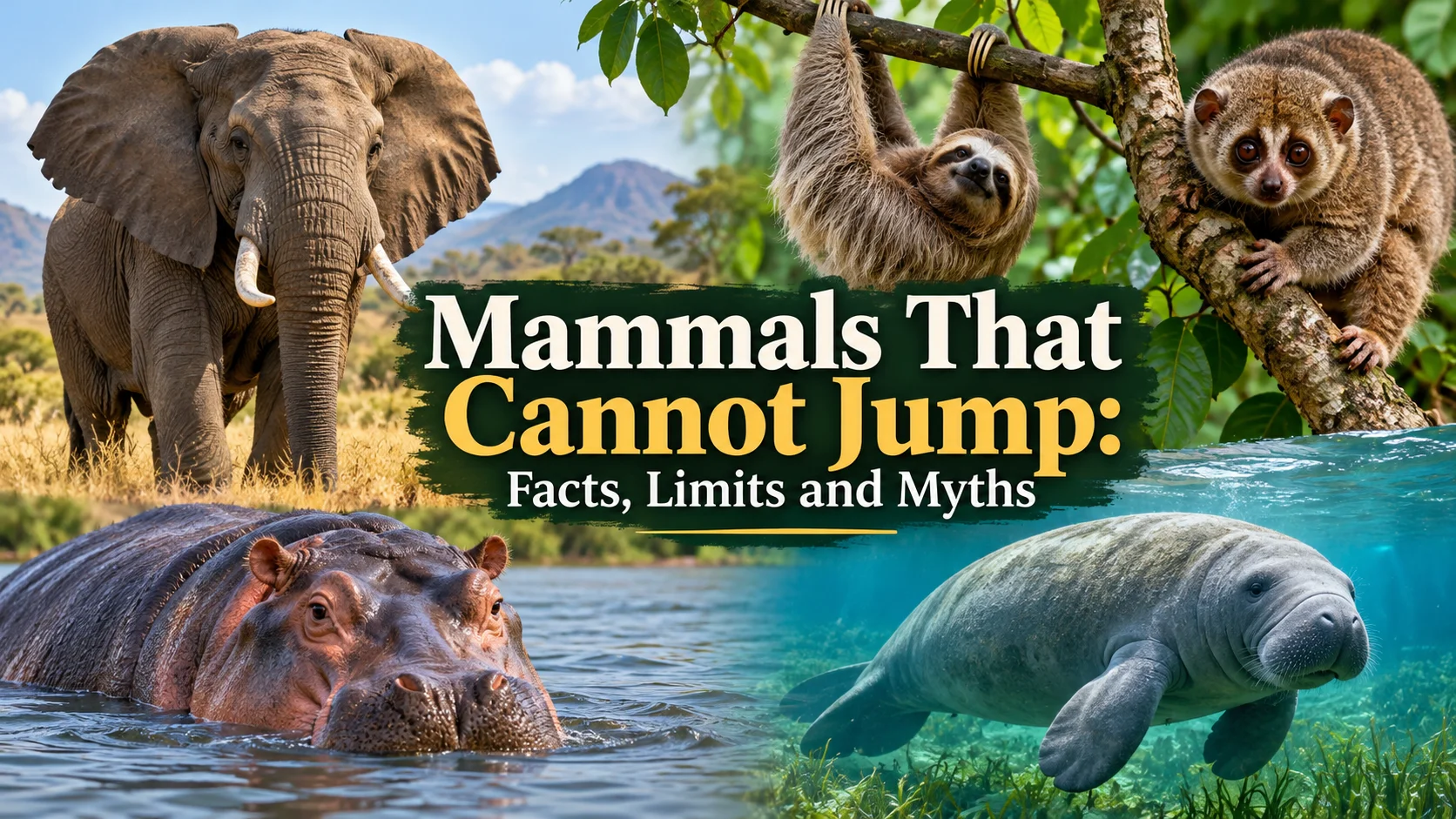
Mammals that cannot jump are more difficult to identify than many online lists suggest. Elephants are the clearest terrestrial example, while sloths and lorises rely on specialized forms of climbing that normally exclude leaping. Fully aquatic mammals such as manatees face an entirely different situation because terrestrial jumping is irrelevant to their anatomy. Understanding the difference between a true jump, an aerial running phase, and simply being a poor jumper helps separate genuine locomotor limitations from popular animal myths.
Some mammals cannot perform a typical terrestrial jump, while others simply do not normally leap. Elephants provide the strongest land-based example; sloths and lorises have specialized non-leaping locomotion, and sirenians are fully aquatic. Hippos complicate the picture because they can become briefly airborne while running without performing a deliberate jump.
What Counts as a True Jump?
A true terrestrial jump involves an animal actively using its limbs to propel its body away from the ground or another supporting surface. It normally requires a takeoff phase, time in the air, and a controlled landing. For discussions of mammals that cannot jump, that definition matters because having all four feet off the ground does not automatically mean an animal has jumped. This distinction is very different from feeding adaptations seen in Animals That Eat Cactus, where survival depends more on handling spines, tough plant tissues, and dry environments than on jumping ability.
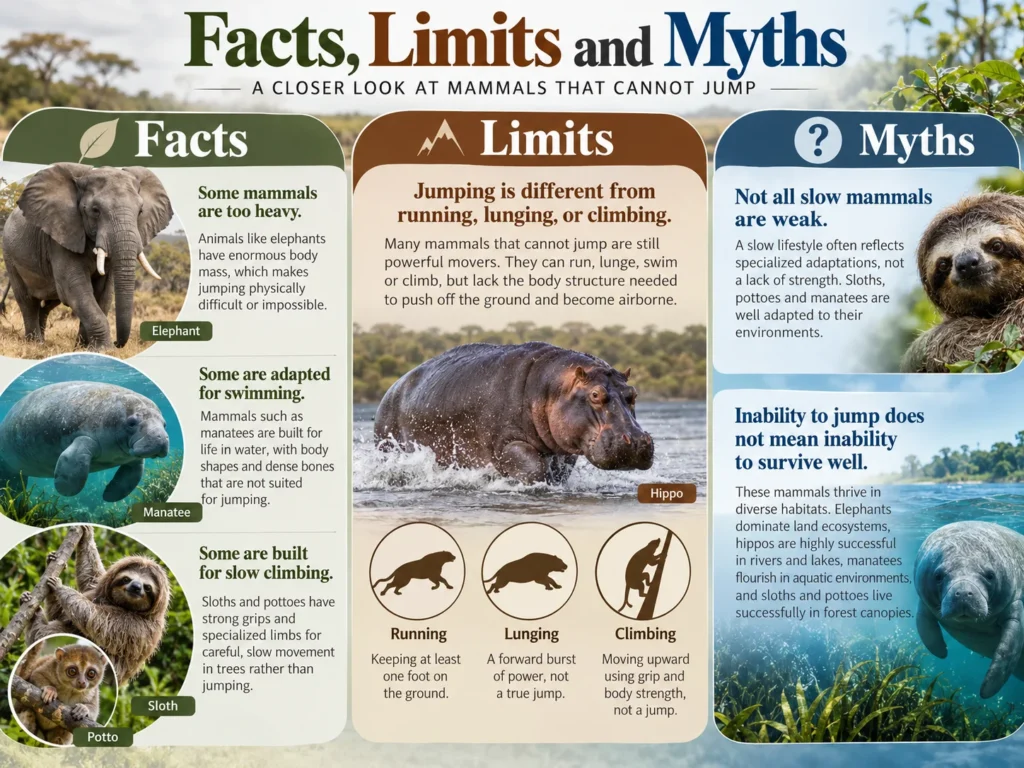
Many mammals briefly enter an aerial phase while running or galloping, but the motion is part of their gait rather than a deliberate leap over an obstacle. Falling from a branch is also not jumping, and neither is breaching from water. For aquatic mammals, launching above the water surface uses very different mechanics from pushing the body away from solid ground.
Mammals That Cannot or Do Not Normally Jump
The safest way to discuss mammals that cannot jump is to separate strong examples from mammals that simply have locomotor systems in which jumping is absent or largely irrelevant.
| Mammal or Group | Jumping Status | Main Locomotor Explanation |
| Elephants | Strongest terrestrial non-jumping example | Limb mechanics favor stability over explosive takeoff |
| Three-toed sloths | Do not normally leap | Suspensory climbing specialization |
| Two-toed sloths | Do not normally leap | Long limbs adapted for hanging and climbing |
| Slow lorises | Leaping absent from normal locomotion | Deliberate, controlled arboreal climbing |
| Pottos | Non-leaping arboreal locomotion | Slow bridging and climbing |
| Angwantibos | Non-leaping locomotion | Careful branch-to-branch movement |
| Manatees | No terrestrial jump | Fully aquatic body plan with no hind limbs |
| Dugongs | No terrestrial jump | Fully aquatic propulsion |
| Hippopotamus | Not a typical deliberate jumper | Fast trot can include an aerial phase |
1. African Bush Elephant
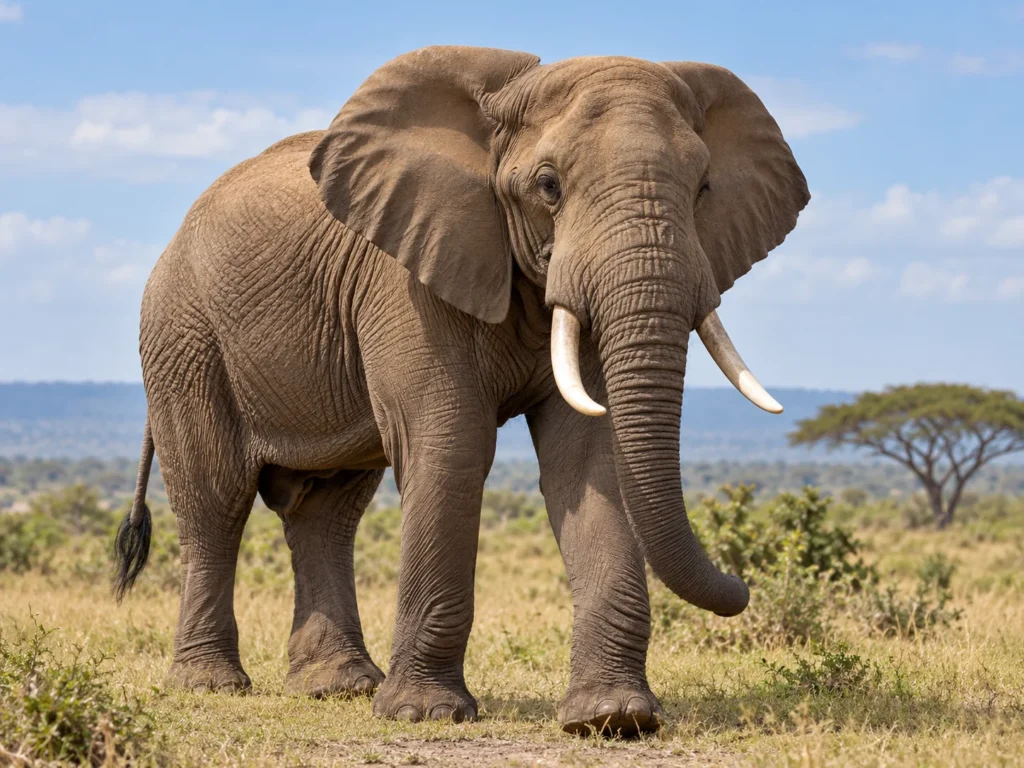
African bush elephants are among the clearest terrestrial examples of mammals that cannot jump in the ordinary sense. Even when moving rapidly, they keep their locomotion unusually stable compared with mammals that run using a pronounced aerial phase. Their limbs are large, relatively column-like, and built to support enormous body mass efficiently. Producing the rapid joint flexion and explosive vertical force needed for a jump would place very different demands on their skeleton and muscles. Elephants can move surprisingly quickly, but speed does not require jumping. Their fast locomotion combines elements that differ from both a typical walk and a conventional running gait.
2. African Forest Elephant
African forest elephants are also relevant when discussing mammals that cannot jump, although they are smaller than African bush elephants and share the same fundamental elephant body plan. Their locomotion prioritizes stability, weight support, and efficient forward movement rather than explosive takeoff. This makes them part of the same broader non-jumping elephant pattern. It is therefore misleading to explain elephant jumping limitations using body weight alone. Anatomy, joint mechanics, posture, and how elephant limbs handle forces all contribute to the picture.
3. Asian Elephant
Asian elephants are another important example among mammals that cannot jump, and they have been studied closely in locomotion research to explain why elephants do not jump. When they increase speed, their legs can use spring-like mechanics in certain parts of the stride, yet the body does not enter the type of full aerial phase associated with ordinary mammalian running or jumping. Their movement demonstrates that an animal can travel quickly without adopting the same gait mechanics used by horses, dogs, deer, or other mammals capable of clear aerial strides.
4. Three-Toed Sloths
In discussions of mammals that cannot jump, three-toed sloths require careful wording because they are highly specialized for life suspended beneath branches and do not normally leap. Their long limbs and strongly curved claws also make them a good example of Animals With Sharp Claws, although those claws are used mainly for gripping and climbing rather than hunting. They do not normally leap across gaps like many monkeys or squirrels. Instead, they rely on deliberate climbing and branch connections, sometimes descending to the ground when a canopy route is unavailable. Their inability to leap should not simply be blamed on weakness. Their entire locomotor system is specialized for a different style of movement.
5. Two-Toed Sloths
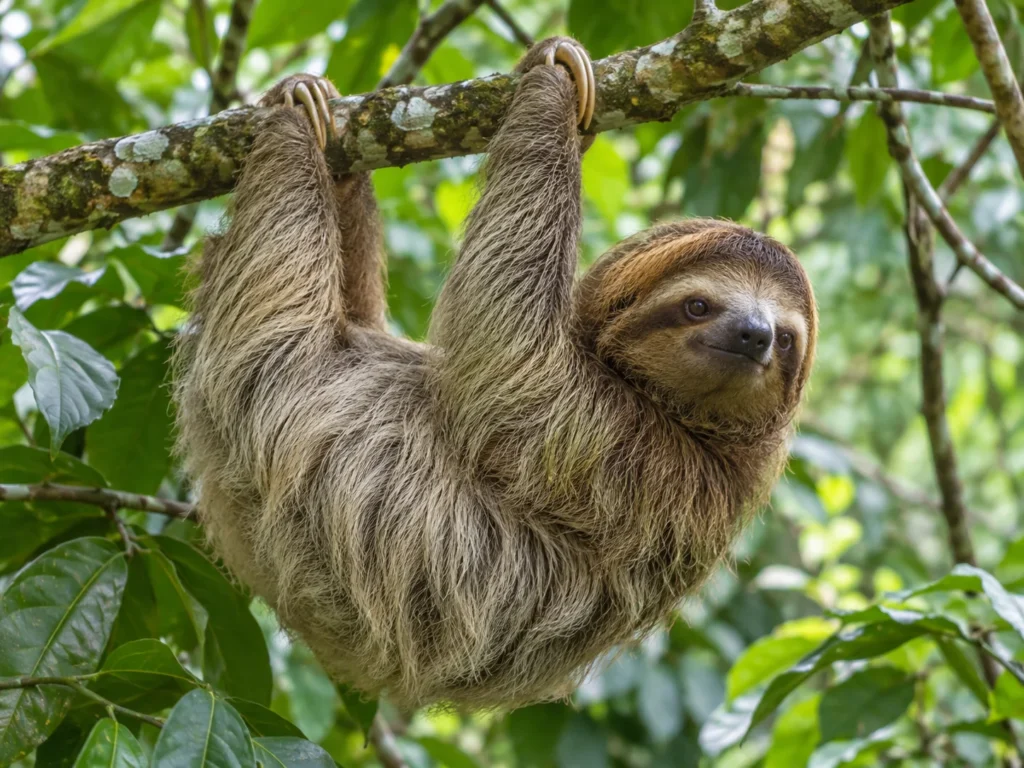
Two-toed sloths are generally somewhat more active than three-toed sloths, but their locomotion is still based on hanging and climbing rather than jumping. Their limbs and claws allow them to maintain a secure grip while moving below branches. Generating an explosive launch and then landing on another branch would require a very different balance of speed, power, and control. For sloths, slow suspensory movement is not a failure of locomotion. It is the movement strategy for which their bodies are adapted.
6. Slow Lorises
Lists of mammals that cannot jump often include slow lorises, which provide an important counterexample to the idea that only extremely large mammals lack normal leaping behavior. These relatively small primates move deliberately through trees and typically keep several limbs in contact with branches. Leaping is absent from their normal locomotor repertoire. Instead of launching themselves through open space, slow lorises often bridge gaps by stretching between supports. Their powerful grip and controlled climbing help them move through vegetation without depending on rapid jumps.
7. Pottos
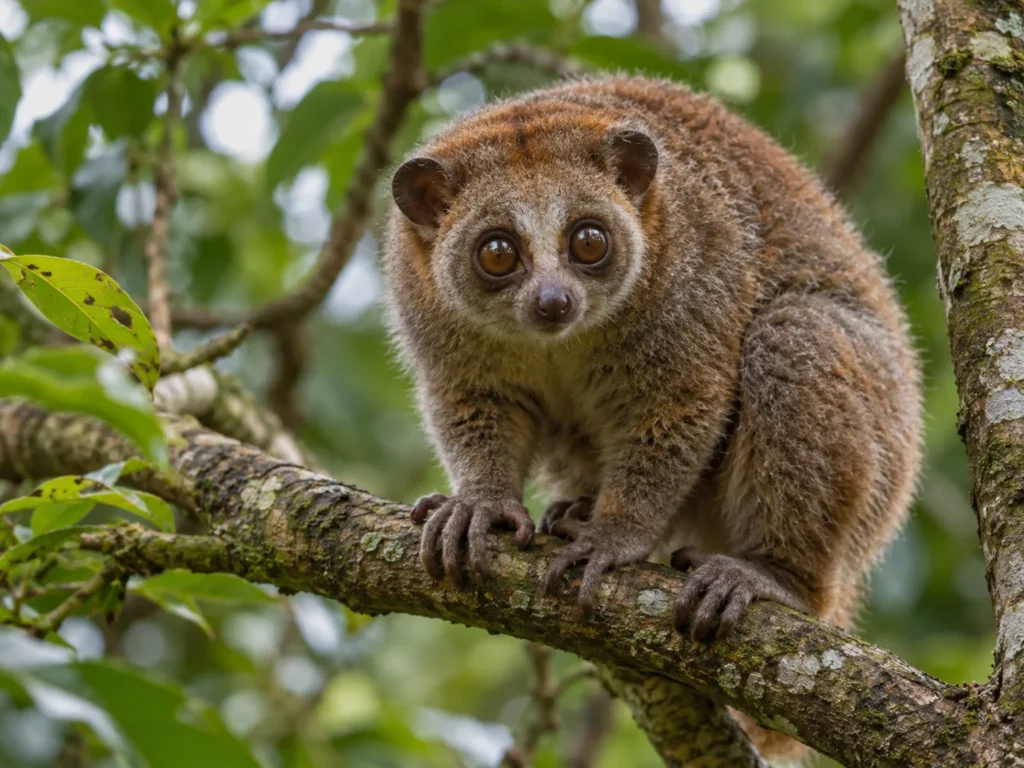
Pottos are close relatives of slow lorises and use a similarly cautious style of arboreal locomotion. Rather than making long leaps, they climb slowly, grasp branches securely, and bridge nearby gaps using their limbs. This reduces the need for the explosive hind-limb propulsion seen in highly leaping primates.
Their example shows that jumping ability reflects evolutionary specialization, not merely overall strength or body size.
8. Angwantibos
Angwantibos are small African loris relatives that also rely on careful climbing rather than dramatic leaps. They move through branches with controlled, deliberate motions and strong gripping hands and feet. Their locomotion is suited to stability in dense vegetation. Like slow lorises and pottos, they help demonstrate that mammals can evolve effective arboreal lifestyles in which leaping plays little or no role.
9. West Indian Manatee
Among mammals that cannot jump on land, West Indian manatees belong to an entirely different category because they are fully aquatic mammals. They have front flippers but no functional hind limbs for walking, running, or jumping on land. Their flattened tail provides the main propulsion needed to move through water. Calling a manatee a “bad jumper” would therefore be misleading. A terrestrial jump is simply outside the locomotor system for which its body is built.
10. African Manatee
African manatees share the same basic sirenian body plan. They spend their lives in aquatic environments and move by swimming rather than using weight-bearing hind limbs. Their bodies are streamlined for water, and terrestrial jumping is not part of their natural movement repertoire. They are useful examples when discussing mammals that cannot jump, provided the article makes clear that aquatic specialization is very different from the terrestrial limitation seen in elephants.
11. Amazonian Manatee
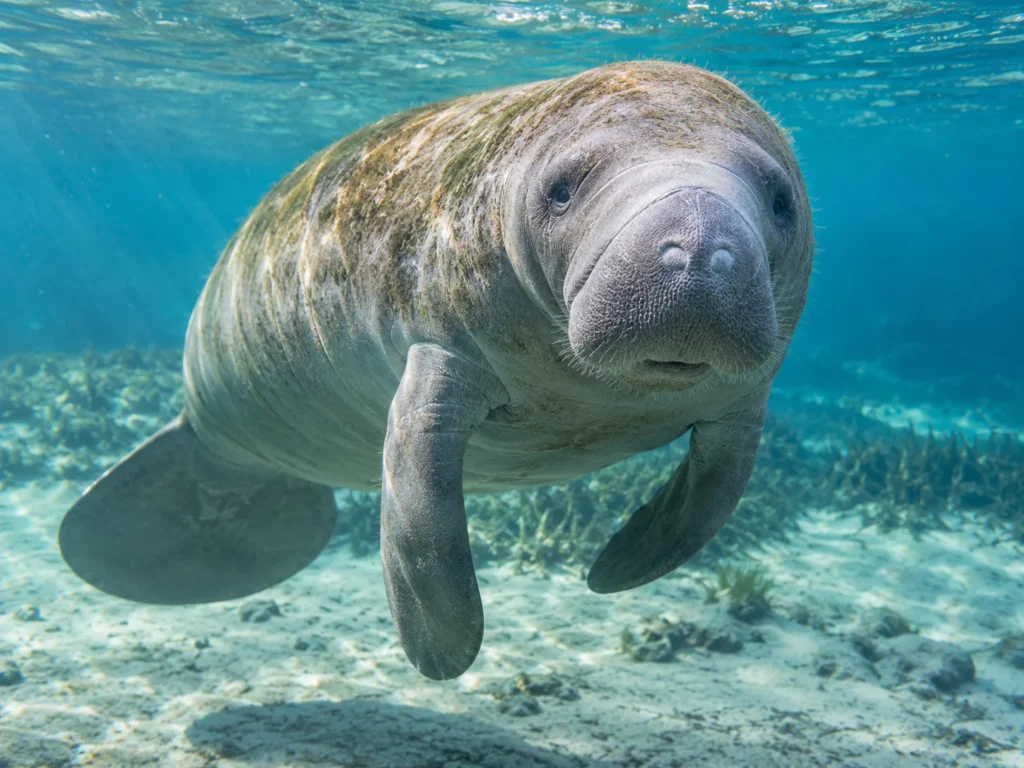
Amazonian manatees are freshwater sirenians found in the Amazon basin. Unlike many Animals With Long Tails that use their tails for balance, communication, or movement on land, manatees rely on a broad, paddle-like tail for swimming. They lack hind limbs and depend on tail-powered propulsion, allowing them to maneuver vertically or turn quickly in water. Those movements should not be confused with a terrestrial jump. Their inclusion reinforces an important distinction: some mammals do not jump because their entire evolutionary history has shifted locomotion away from land.
12. Dugong
Dugongs are another aquatic example often discussed among mammals that cannot jump on land because they are marine relatives of manatees and completely adapted to aquatic life.
They possess flippers and a powerful tail fluke rather than weight-bearing hind legs. Their anatomy allows efficient swimming but provides no mechanism for standing and launching the body from solid ground. Dugongs therefore qualify only when “jumping” is specifically defined as a terrestrial movement.
13. Common Hippopotamus
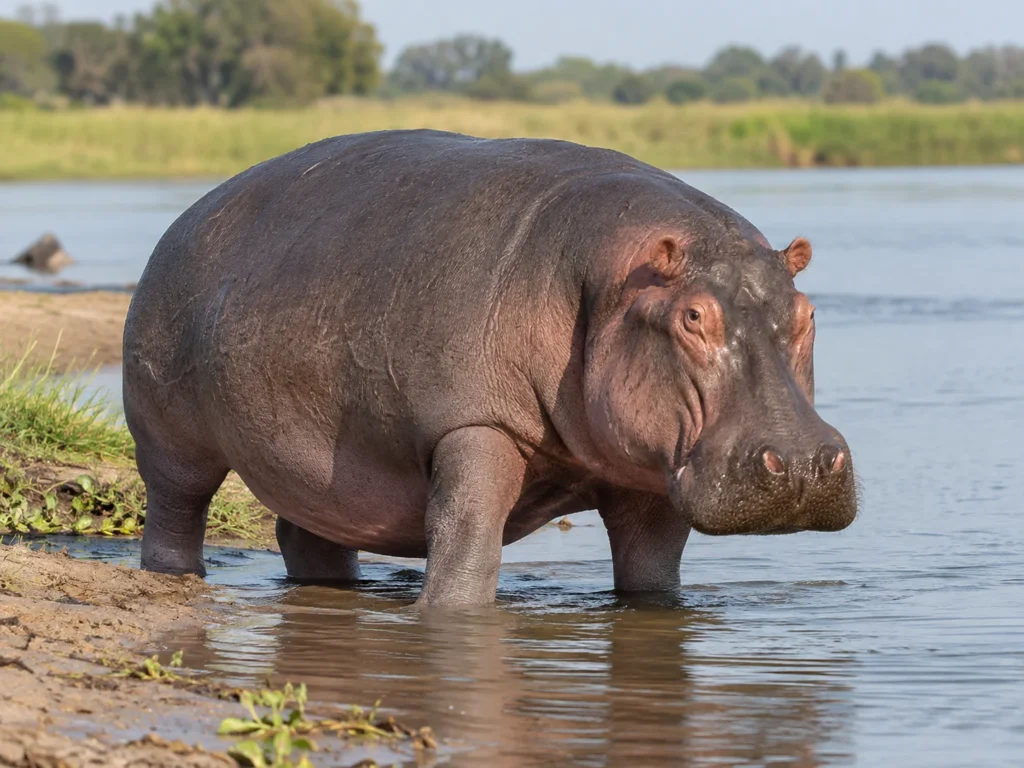
Hippos are one of the most interesting borderline cases in lists of mammals that cannot jump. Unlike many Animals With Long Horns, hippos rely on massive body size, powerful jaws, and short but strong limbs rather than horns for defense or competition. Older popular lists often claim that hippos cannot get all four feet off the ground. Modern locomotion research has shown that this is incorrect: fast-moving hippos can enter a brief aerial phase while trotting. That still does not mean hippos routinely perform deliberate jumps over obstacles. The correct conclusion is that they can become airborne during fast terrestrial locomotion, so describing them simply as mammals that “never leave the ground” is inaccurate.
How These Mammals Move Instead
Mammals that cannot jump, or do not normally jump, have not simply lost movement ability. Their bodies usually emphasize a different form of locomotion.
| Mammal Group | Main Movement | Key Adaptation |
| Elephants | Walking and fast bouncing gait | Stable, weight-bearing limbs |
| Sloths | Hanging and climbing | Long limbs and curved claws |
| Lorises | Slow climbing and bridging | Powerful grip and controlled movement |
| Manatees and dugongs | Swimming | Flippers and tail propulsion |
| Hippos | Walking and trotting | Heavy terrestrial body with specialized gait |
This variety shows why mammals that cannot jump do not share one single anatomical explanation. The movement limitation may result from body size, limb posture, joint mechanics, evolutionary specialization, or a complete transition to aquatic life.
Why Elephants Cannot Perform a True Jump
Among mammals that cannot jump, elephants receive the most attention because they are large terrestrial mammals with fully functional legs, yet they still do not jump in the ordinary sense.
Their legs are built to support tremendous loads while limiting unnecessary vertical movement. A typical jump requires rapid bending and extension of joints, powerful muscular propulsion, and enough control to absorb the forces created during landing. Elephants instead keep much of their movement directed forward. Their fast gait can have spring-like characteristics, but the entire body does not launch into a conventional airborne jump. Body mass clearly matters because jumping a multi-ton body would generate enormous forces. Still, saying elephants are “too heavy” oversimplifies a much more interesting combination of anatomy and biomechanics.
Does Body Weight Stop Mammals From Jumping?
Heavy animals are not automatically unable to jump. Horses, large antelope, big cats, and some other sizeable mammals can generate substantial jumping forces, while many small monkey breeds rely on much lighter bodies, flexible limbs, and agility to move quickly between branches. What matters is how body mass interacts with the structure of the limbs, joints, muscles, tendons, and overall gait. Animals specialized for jumping often store and release elastic energy efficiently, particularly through the hind limbs.
A mammal specialized for stability, slow climbing, or aquatic propulsion does not need the same mechanical system. Evolution shapes movement according to the challenges an animal regularly encounters. That is why both enormous elephants and comparatively small slow lorises can belong in a discussion about mammals that do not normally jump for completely different reasons.
Common Myths and Borderline Cases
Rhinoceroses
Rhinos frequently appear on lists of mammals that cannot jump. However, rhinos use several terrestrial gaits, including faster forms of locomotion, and the evidence does not justify treating every rhinoceros as a confirmed non-jumper in the same way as an elephant. It is safer to describe rhinos as animals not commonly observed making deliberate jumps unless stronger species-specific evidence is available.
Porcupines
Porcupines are also commonly listed, perhaps because their body shape and cautious movement make jumping seem unlikely. However, an unusual body form is not proof of physical inability. Without strong biomechanical evidence, it is better not to make an absolute statement that all porcupines cannot jump.
Opossums
Opossums should not automatically be classified as non-jumpers either. Their locomotion can include more dynamic movements than simplistic lists suggest. A species should not be placed in a “cannot jump” category merely because it usually walks or climbs rather than making conspicuous leaps.
Walruses
Walruses are poorly suited to jumping on land because their bodies are primarily adapted to swimming. They can nevertheless move terrestrially using their limbs and body. As with manatees, their movement needs to be discussed in the context of aquatic specialization rather than treated as a straightforward terrestrial jumping comparison.
FAQs
What mammals cannot jump?
Elephants are the strongest terrestrial example. Sloths and lorises generally rely on non-leaping climbing, while manatees and dugongs cannot perform terrestrial jumps because their bodies are fully adapted to aquatic locomotion.
Why can’t elephants jump?
Elephant limbs emphasize stability and weight support rather than the rapid joint movement and explosive force required for jumping. Their large body mass increases the mechanical demands, but weight alone is not the complete explanation.
Are elephants the only mammals that cannot jump?
No. Other mammals have movement systems in which jumping is absent or not applicable. Sloths and lorises do not normally leap, while fully aquatic sirenians lack the limbs required for terrestrial jumping.
Can hippos jump?
Hippos are not known for deliberate jumping, but they can briefly become airborne while moving quickly. This aerial phase occurs during their fast trot and should not be confused with a deliberate leap.
Can rhinos jump?
Rhinos are frequently described as unable to jump, but the evidence is less clear than it is for elephants. Because rhinos can move using several fast terrestrial gaits, an absolute “cannot jump” claim should be treated cautiously.
Does being heavy stop an animal from jumping?
Not by itself. Jumping ability depends on body mass together with joint structure, muscle power, limb mechanics, balance, and evolutionary specialization. Some large mammals jump well, while some much smaller mammals rarely or never leap.
Final Thoughts
Mammals that cannot jump are not united by one simple physical limitation. Elephants emphasize stable weight-bearing locomotion, sloths and lorises specialize in controlled climbing, while manatees and dugongs have body plans devoted entirely to swimming. The most important distinction is between cannot jump, does not normally jump, and becomes airborne during another type of movement. Treating those categories separately produces a much more accurate picture of mammalian locomotion than repeating a generic list of supposedly non-jumping animals.



One Comment