
Animals with Sharp Claws: 17 Remarkable Species

Animals with sharp claws use them for far more than hunting. Big cats rely on curved claws to grip prey; eagles and owls use specialized talons to seize animals, while anteaters, badgers, and pangolins depend on powerful foreclaws for digging. Other species use sharp claws mainly for climbing or maintaining traction. These 17 animals show how claw shape, length, curvature, and retractability can evolve for very different jobs across predators, climbers, and burrowing specialists.
Animals with sharp claws include tigers, lions, leopards, jaguars, eagles, owls, anteaters, badgers, pangolins, and several climbing mammals. Some claws are retractable, while others remain exposed. Raptors have specialized predatory claws called talons. Sharpness, length, and strength are different traits, so the longest claws are not automatically the sharpest.
Animals with Sharp Claws at a Glance
| Animal | Claw Type | Main Function |
| Tiger | Retractable, curved claws | Gripping prey and traction |
| Lion | Retractable, curved claws | Holding prey |
| Leopard | Retractable claws | Hunting and climbing |
| Jaguar | Curved retractable claws | Prey restraint and climbing |
| Domestic cat | Retractable claws | Climbing, gripping, defense |
| Snow leopard | Curved claws | Traction and prey capture |
| Harpy eagle | Large hooked talons | Gripping prey |
| Golden eagle | Strong curved talons | Prey capture |
| Great horned owl | Hooked talons | Seizing small animals |
| Giant anteater | Long foreclaws | Digging into insect nests |
| Wolverine | Strong curved claws | Digging, climbing, traction |
| American badger | Long foreclaws | Excavation |
| Giant pangolin | Heavy curved claws | Breaking termite and ant nests |
| Armadillo | Digging claws | Burrowing and feeding |
| American marten | Curved claws | Tree climbing |
| Sun bear | Long curved claws | Climbing and tearing |
| Koala | Sharp climbing claws | Gripping bark and branches |
What Makes an Animal Claw Sharp?
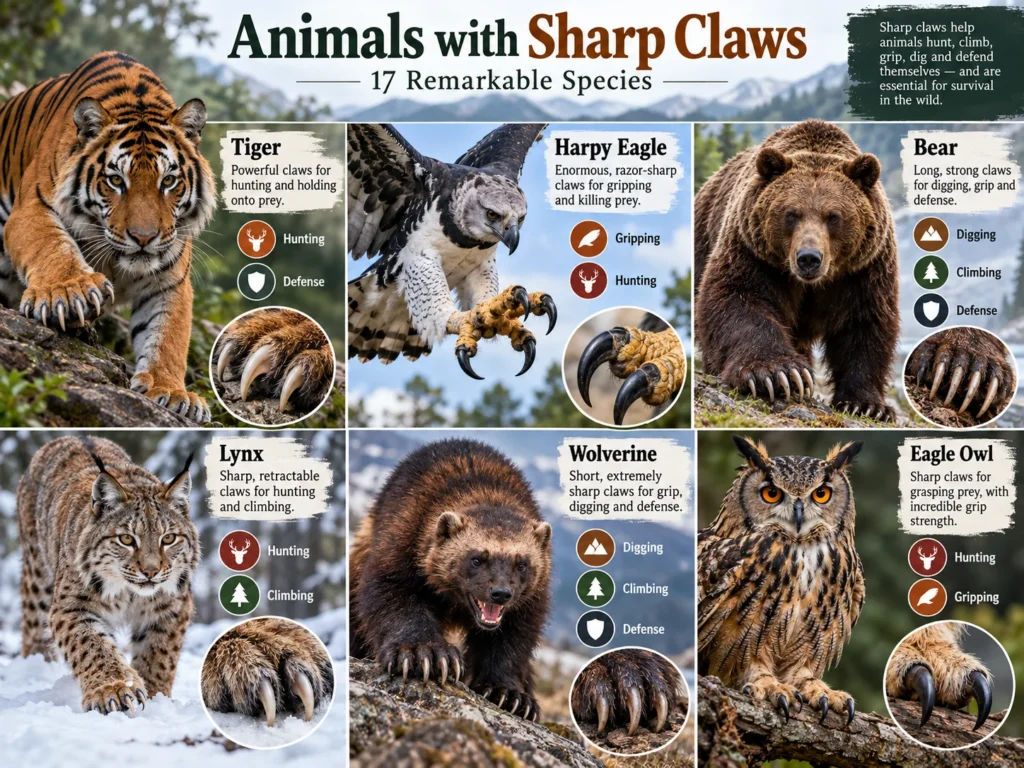
A claw is a keratin structure growing from the end of a digit, and its exact shape depends on the animal’s lifestyle. When comparing animals with sharp claws, predators often have strongly curved claws that help hold struggling prey, while digging animals tend to have long, robust foreclaws capable of moving soil or tearing open nests. Sharpness is only one part of claw performance. Length, thickness, curvature, toe strength, limb power, and whether the claw is retractable all influence what the animal can do with it. That is why a tiger claw and a giant anteater claw should not be judged by the same standard. Both are impressive, but each is specialized for a different function.
1. Tiger
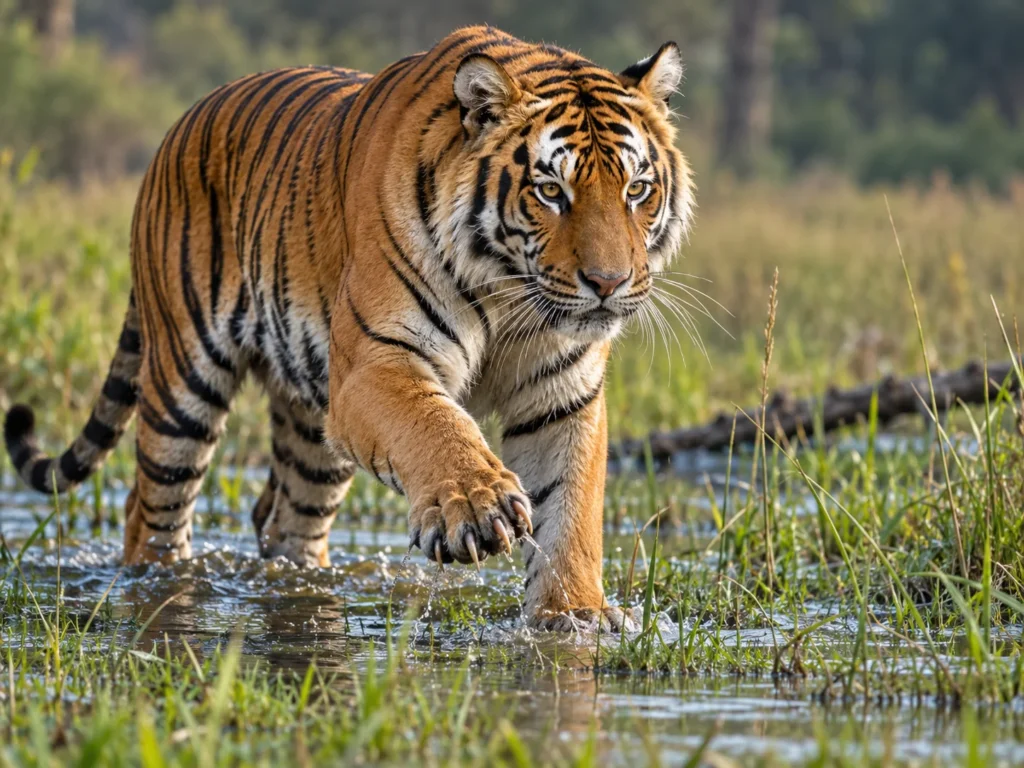
Tigers have curved claws that are normally kept retracted when they are not in use. Protecting the claw tips during ordinary walking helps preserve their effectiveness for gripping. During a hunt, a tiger extends its claws to seize and hold prey while powerful forelimbs pull the animal close. The claws also provide traction when climbing or maneuvering across uneven ground. Tiger claws are therefore best understood as a combination of sharpness, curvature, and muscular control rather than simply as long weapons.
2. Lion
Lions also possess retractable claws adapted for prey capture. Their claws help the forelimbs maintain contact with animals that may be considerably heavier than a single lion. Females perform much of the pride’s coordinated hunting, using their paws and claws to grab, trip, or restrain prey at close range. Males have the same basic claw design and can use it during hunting or conflict. Although lion claws are formidable, there is no reliable scientific basis for ranking them as sharper or stronger than those of every other big cat.
3. Leopard
Leopards combine predatory claws with exceptional climbing ability. Their curved claws help hold prey, but they also give the animal secure purchase on bark while moving through trees. This is particularly valuable because leopards often rest above ground and may carry food into trees. Their claws therefore support both hunting and an arboreal component of their lifestyle. The leopard is a useful example of one claw design serving several closely related functions.
4. Jaguar
Jaguars use strong curved claws when restraining prey and moving through dense forest environments. Like other big cats, they can extend the claws when additional grip is needed. Their compact, muscular bodies provide the force, while the claws help maintain contact during close-range movement. Jaguar claws should not be confused with the species’ famous bite strength. Bite performance and claw performance are separate adaptations, even though both contribute to predation.
5. Domestic Cat
Domestic cats provide one of the clearest examples of retractable claws. When a cat is relaxed, its claws are held back rather than constantly scraping against the ground. Tendons and muscles allow the animal to extend them for climbing, scratching, gripping, or defense. This mechanism protects the claw tips and helps keep them functional. It also explains why cat claws can remain noticeably sharp despite regular movement.
6. Snow Leopard
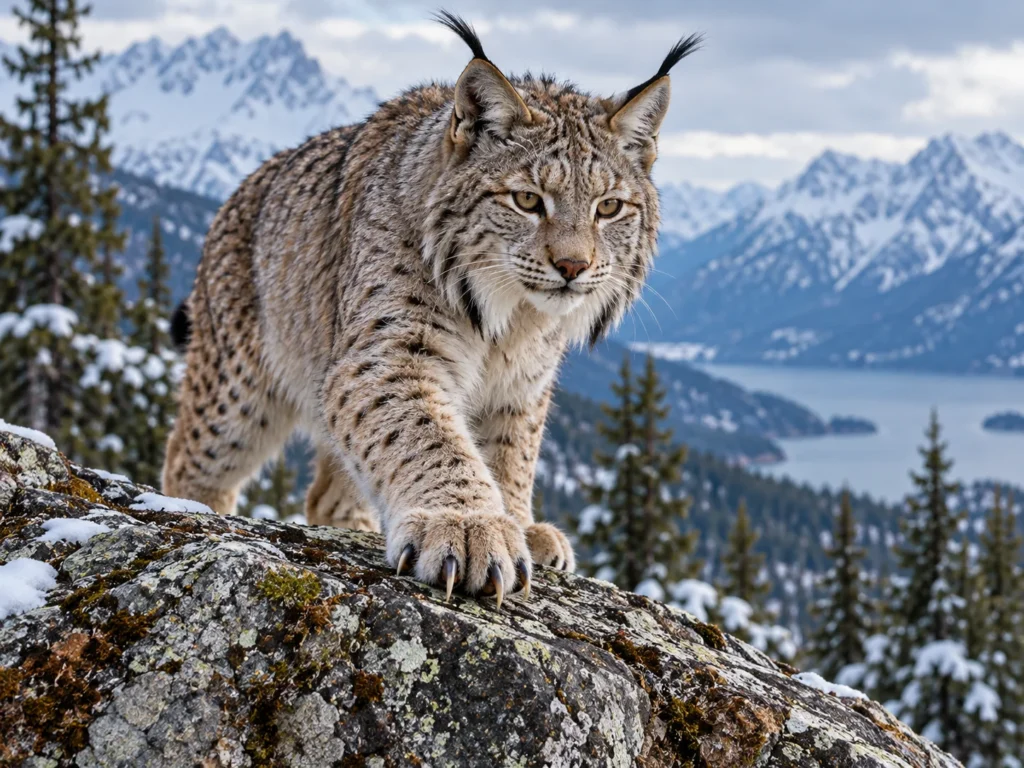
Snow leopards live in steep mountain environments where grip and balance are essential.
Their claws help them maintain traction on rocky surfaces while also contributing to prey capture. Broad paws distribute body weight, while the claws provide extra purchase when the terrain becomes difficult. This combination makes snow leopard claws useful both as hunting tools and as part of a larger mountain-movement adaptation.
7. Harpy Eagle
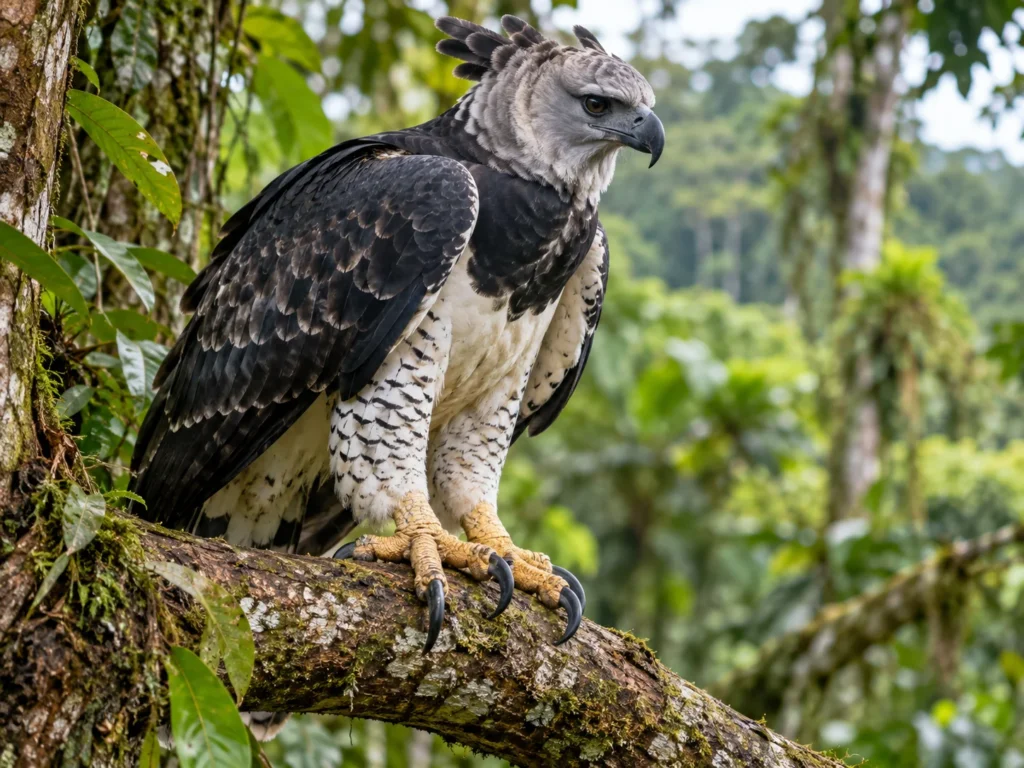
Harpy eagles have enormous hooked talons designed to grasp relatively large prey. They hunt animals such as sloths and monkeys in tropical forests, including some small monkey breeds, using powerful toes and strongly curved talons to secure prey among branches. The claws are commonly called talons because they are specialized predatory claws of a raptor. Their effectiveness comes from both the shape of the talons and the force generated by the feet.
8. Golden Eagle
Golden eagles use sharply curved talons to capture mammals and birds. The talons penetrate and hold prey while the toes maintain a strong grip. Their shape allows the eagle to restrain animals while flying or feeding. Golden eagle talons are excellent examples of how bird claws can become highly specialized for predation without being structurally identical to mammalian hunting claws.
9. Great Horned Owl
Great horned owls possess strongly hooked talons that help them seize a wide range of prey. Owls rely heavily on their feet during hunting, often striking quickly and gripping before prey can escape. The curved talons help maintain contact once the feet close around the target. Their hunting adaptations are very different from those seen in Animals with Long Horns, where horns are more commonly associated with defense, display, competition, and social signaling rather than capturing prey.
10. Giant Anteater
The giant anteater has some of the most dramatic foreclaws among mammals, making it a striking example when discussing animals with sharp claws. However, these claws are primarily specialized for digging and feeding rather than conventional predation. The large foreclaws tear open ant and termite nests so the animal can reach the insects inside. Because the claws are so prominent, giant anteaters walk with them curled away from direct contact with the ground. They can also use their powerful forelimbs defensively when threatened, but feeding remains the claws’ main specialization.
11. Wolverine
Wolverines have sturdy, curved claws that support several different activities. They can use them for digging through soil or snow, climbing, maintaining traction, and handling food. Their claws match the wolverine’s highly mobile lifestyle across forests, mountains, and snowy habitats. This makes them a strong example of multipurpose claws rather than a structure specialized for only one task.
12. American Badger
American badgers are powerful diggers with long foreclaws and muscular front limbs. They excavate rapidly while pursuing burrowing animals and can also create shelters in the soil. The claws are shaped more for moving earth than for gripping prey in the manner of a cat. Their anatomy shows that long claws can be highly effective even when sharpness is not the animal’s most important advantage.
13. Giant Pangolin
Giant pangolins use strongly developed foreclaws to open ant and termite nests. Their claws are curved and robust enough to break into compact soil and insect structures. Once a nest is opened, the animal uses its long tongue to collect the insects inside. These claws are feeding tools first, illustrating how powerful claw adaptations can evolve in animals that do not hunt large prey.
14. Armadillo
Armadillos rely heavily on claws for digging, making them another useful example among animals with sharp claws. Different species use their claws to uncover insects, loosen soil, and create burrows. The forelimbs are particularly well suited to excavation, while the claws provide the leverage needed to break through compact ground. Although their claws may look formidable, their primary value lies in burrowing and food access rather than predatory gripping.
15. American Marten
American martens are agile forest mammals with curved claws that help them climb trees. Their claws grip bark as they move through branches or escape threats. This arboreal ability also expands the range of places where they can search for food. Marten claws are therefore a good example of sharp, curved structures used mainly for mobility rather than for digging or subduing large prey.
16. Sun Bear
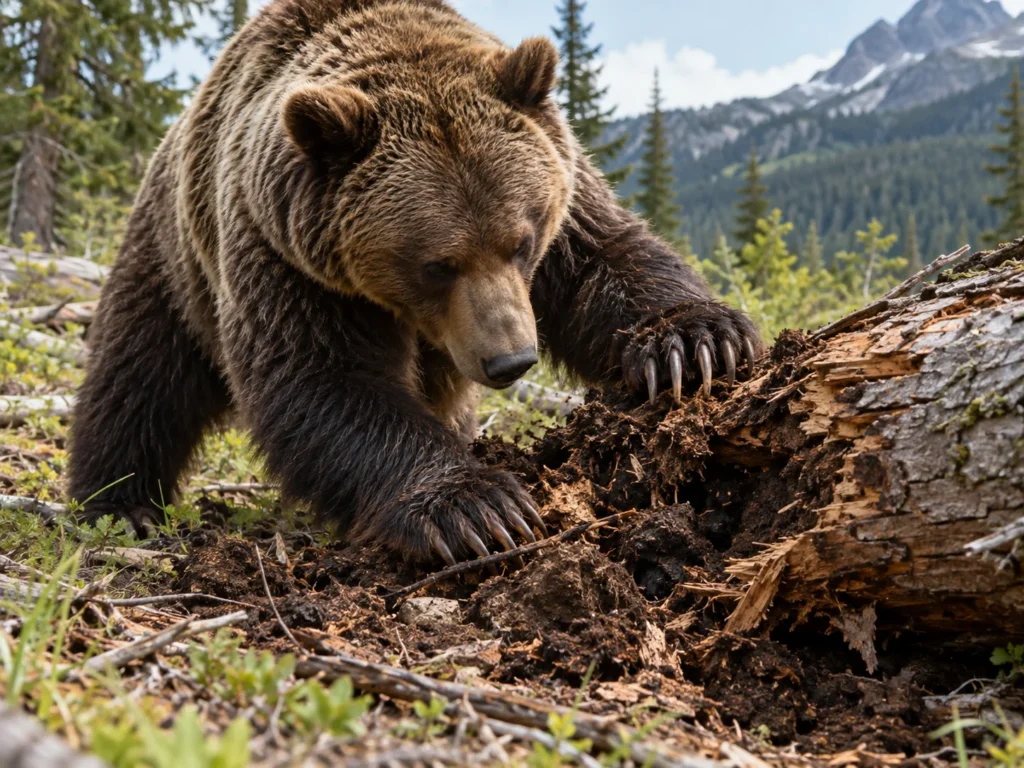
Sun bears have noticeably long, curved claws that support their climbing lifestyle. They use them to grip tree trunks, tear into wood, and access insects or other foods. Their compact bodies and strong forelimbs make the claws especially useful when moving vertically. The sun bear demonstrates how bear claws can serve feeding and climbing functions rather than being defined only as defensive weapons.
17. Koala
Koalas possess sharply curved claws adapted for life in trees. Their front and hind feet grip trunks and branches as they climb, rest, and move between feeding locations. Several digits work together to create a secure grasp on bark. Unlike the claws of big cats or raptors, koala claws are not primarily hunting tools. They are essential components of an arboreal locomotion system.
Retractable vs. Non-Retractable Claws
Claw position changes how the structure wears and what it is best suited for.
| Claw Type | Examples | Main Advantage |
| Retractable | Tiger, lion, leopard, domestic cat | Protects claw tips and aids prey gripping |
| Raptor talons | Harpy eagle, golden eagle, owl | Strong hooked grip on prey |
| Digging claws | Anteater, badger, pangolin, armadillo | Excavation and food access |
| Climbing claws | Koala, marten, sun bear | Grip bark and branches |
| Multipurpose claws | Wolverine | Digging, climbing, traction |
Retractable claws are especially associated with cats, although claw mechanics can vary among felids. Other animals keep claws exposed because constant contact with soil, bark, snow, or other surfaces is part of their normal lifestyle.
Claws vs. Talons
A talon is a specialized predatory claw found on birds of prey such as eagles, hawks, and owls. Talons are usually strongly curved and work together with powerful toes to seize and restrain prey. This distinction is useful when discussing animals with sharp claws, because the term “talon” specifically emphasizes a bird’s predatory function rather than describing a completely separate anatomical structure. Mammalian claws, by comparison, can serve many roles, including digging, climbing, scratching, gripping, and defense.
Why Do Animals Have Sharp Claws?
Hunting and Prey Capture
Cats and raptors use curved claws to grab and hold prey. The claw helps prevent escape while the limbs and feet supply much of the force.
Digging
Anteaters, badgers, pangolins, and armadillos rely on specialized foreclaws to break soil, open insect nests, or excavate shelter.
Climbing
Koalas, martens, leopards, and sun bears use curved claws to grip bark and branches.
Traction
Claws can improve stability on loose, rocky, snowy, or steep surfaces. Snow leopards and wolverines benefit from this function.
Defense
Many animals can use their claws defensively when threatened, even when defense is not the main reason the claws evolved.
Sharpest vs. Longest Claws
The animal with the longest claw is not automatically the animal with the sharpest claw. Among animals with sharp claws, giant anteaters have extremely long foreclaws suited to excavation, while cats have narrower, curved claws optimized for gripping. Raptors combine pointed talons with powerful feet, producing another completely different form of performance. Because scientists do not use one universal test for claw sharpness across all animals, claims about the single “sharpest claws in the world” should be treated cautiously.
FAQs
What animals have the sharpest claws?
Big cats and birds of prey are commonly associated with very sharp predatory claws, making them some of the best-known animals with sharp claws. Other species, however, have claws specialized for digging, climbing, or defense rather than hunting. Because there is no universally accepted scientific ranking of claw sharpness across species, comparisons should consider function and anatomy instead of relying on a single “sharpest” label.
Why do cats retract their claws?
Retracting the claws helps protect their tips from unnecessary wear. Cats extend them when climbing, scratching, gripping prey, or defending themselves.
Are talons the same as claws?
Talons are specialized predatory claws found in raptors such as eagles and owls. They are strongly curved and work with powerful toes to seize prey.
Which animals have long digging claws?
Giant anteaters, American badgers, pangolins, and many armadillos have especially developed foreclaws used for excavation and accessing food.
Do bears have sharp claws?
Yes, bears have strong claws, but their shape and main functions vary among species. Sun bears, for example, use long curved claws extensively for climbing and accessing food.
Why do animals have sharp claws?
Sharp or specialized claws can help animals hunt, climb, dig, maintain traction, access food, or defend themselves. Their exact function depends on the species and lifestyle.
Final Thoughts
Animals with sharp claws reveal how one basic body structure can be adapted for completely different jobs. Tigers and leopards grip prey, eagles and owls use hooked talons, anteaters and badgers excavate soil, while koalas rely on curved claws to remain secure in trees. The most useful comparisons therefore look beyond simple sharpness. Claw length, curvature, retractability, limb strength, and the animal’s lifestyle all matter, which is why the longest or most powerful-looking claws are not automatically the sharpest or most effective in every situation.

4 Comments