
Animals With 3 Toes: 15 Species and How Their Feet Work
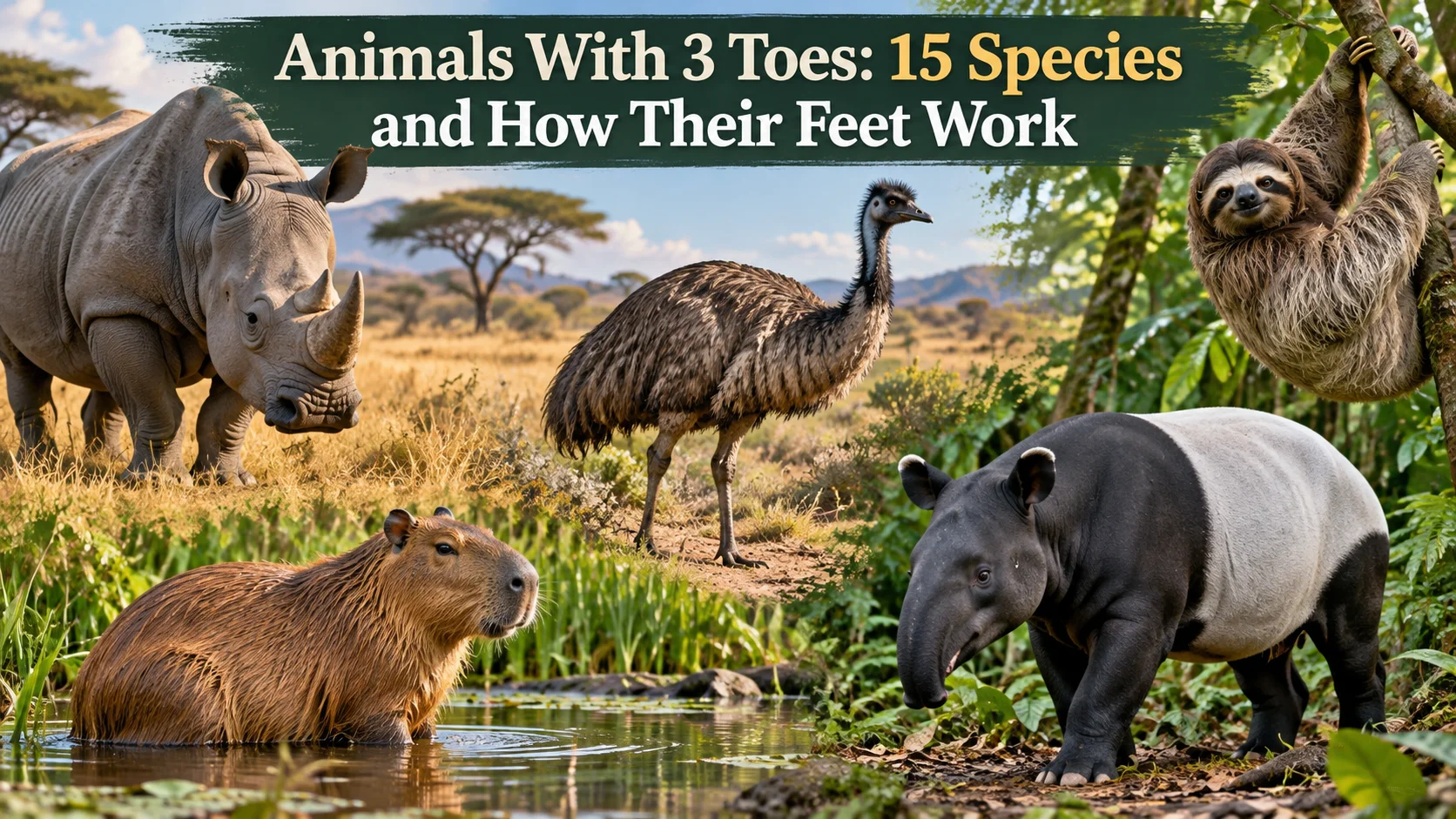
Animals with 3 toes are more varied than they first appear. Some genuinely have three toes on every foot, while others have three only on the hind feet. A few species have specialized claw-bearing digits, reduced limbs, or feet that merely leave three-toed-looking tracks. These differences matter because similar toe counts can support very different lifestyles, from running and climbing to swimming and carrying enormous body weight.
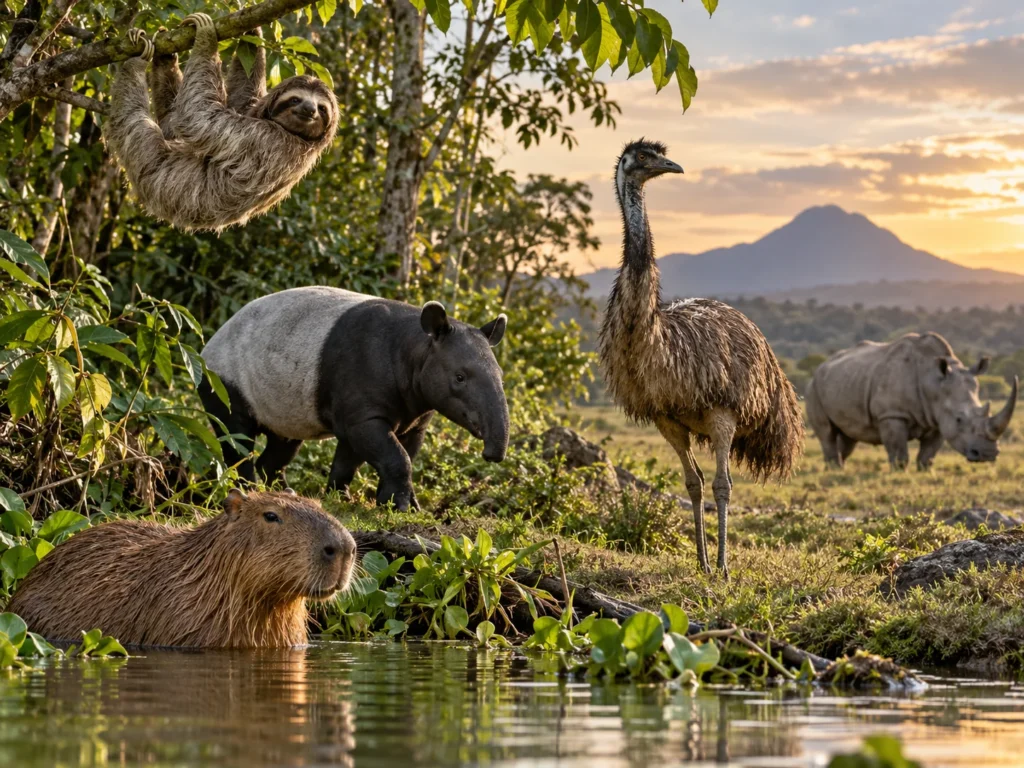
Animals with 3 toes include rhinoceroses, emus, cassowaries, rheas, several woodpeckers, sanderlings, Kori bustards, tapirs, capybaras, maras, three-toed sloths, box turtles, and three-toed snake skinks. However, not all have three toes on every foot, so the exact anatomical arrangement is important.
What Counts as an Animal With 3 Toes?
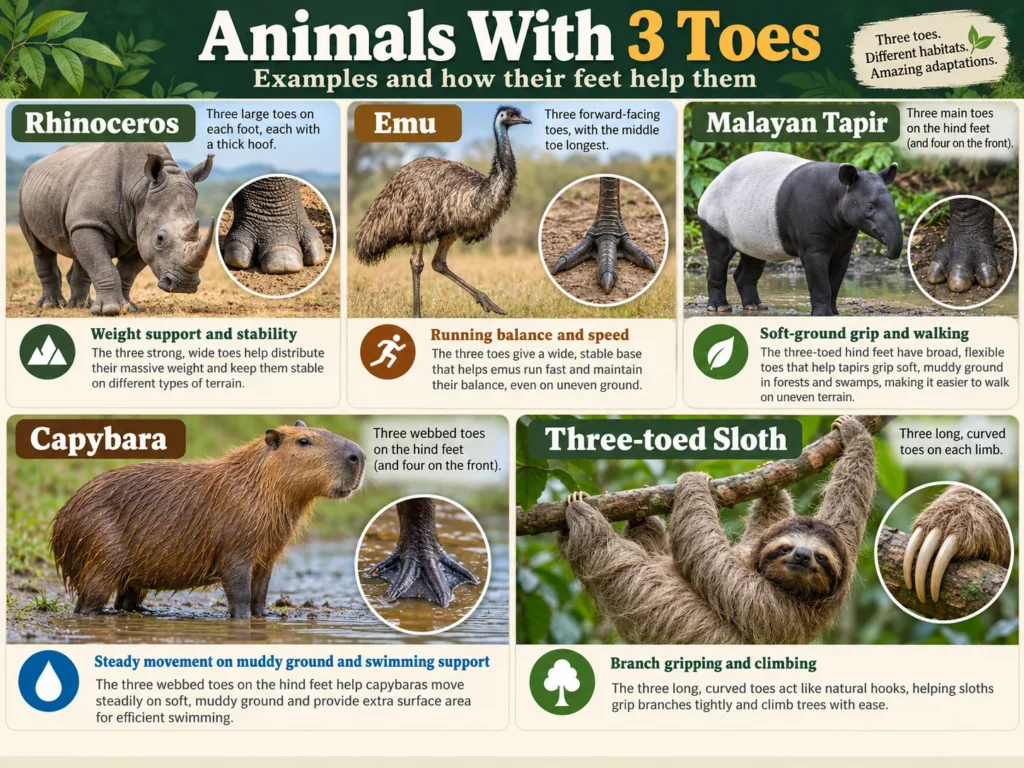
In anatomy, a toe is a type of digit. The term tridactyl generally refers to having three digits on a foot or limb, but not every animal described as three-toed has the same arrangement. Some animals, such as emus and rhinoceroses, genuinely have three toes on each foot. Others, including tapirs and capybaras, have three toes only on the hind feet and four on the front.
Three-toed sloths have three highly specialized claw-bearing digits used for suspension rather than ordinary walking. Footprints can make things even more confusing. A smaller or raised digit may fail to touch the ground, so a track can show only three marks even when the animal has four anatomical toes. Toe count is therefore best understood from actual anatomy rather than footprints or common names alone.
15 Animals With 3 Toes
The animals with 3 toes below represent several different forms of three-toed anatomy, from powerful running birds to climbing mammals and reduced-limbed reptiles. Some of these species also differ greatly from Mammals That Cannot Jump, showing how foot structure can influence running, climbing, balance, and other forms of movement.
1. Rhinoceros
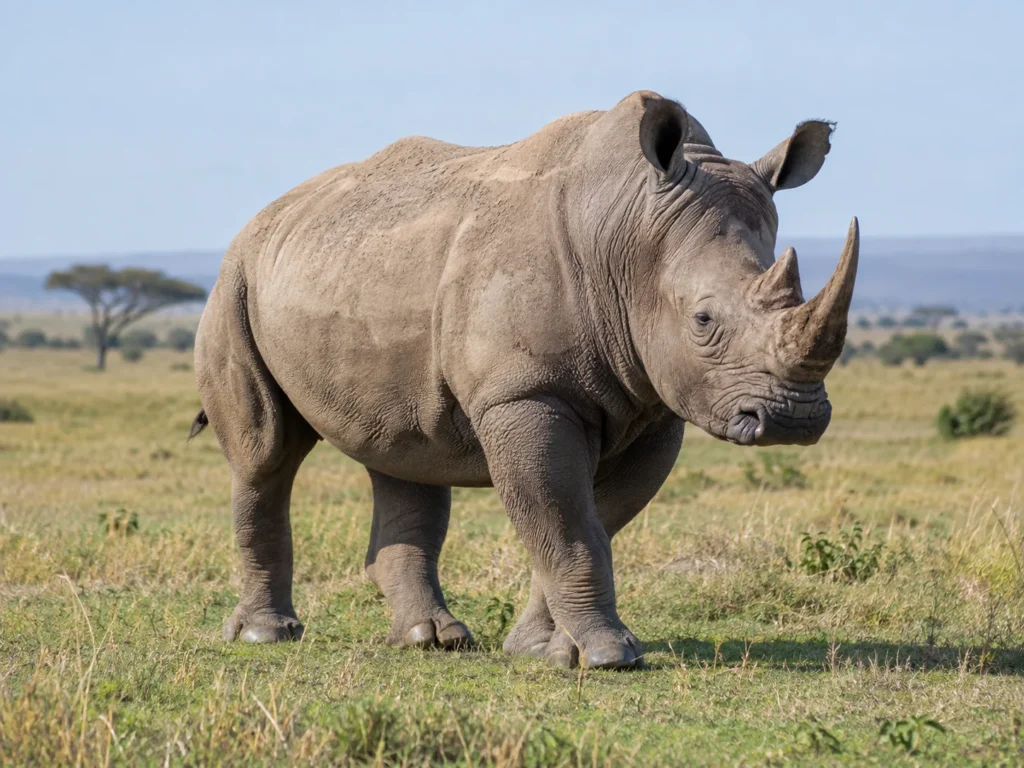
Rhinoceroses are among the clearest mammal examples of animals with 3 toes because they have three toes on each foot. Each digit ends in a hoof-like structure, while a broad padded area underneath the foot helps spread the animal’s enormous weight. The central toe is especially important for support. This three-digit arrangement is part of the reason rhinos belong to the odd-toed ungulate group, alongside animals such as horses and tapirs.
2. Emu
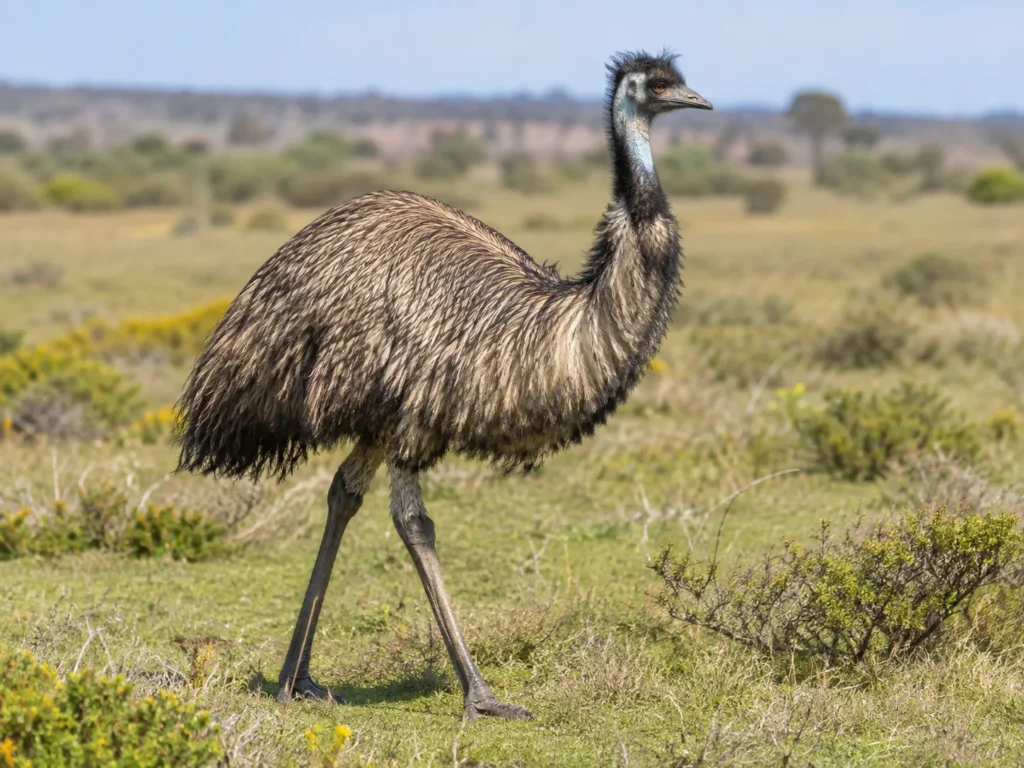
Emus are well-known animals with 3 toes, having three forward-facing toes on each foot. These large flightless birds spend their lives on the ground, and their long, powerful legs are well suited to walking and running across open Australian landscapes. Their three-toed arrangement contrasts sharply with the ostrich, which has only two toes per foot. This makes the emu a useful example of how closely related-looking flightless birds can have very different foot anatomy.
3. Southern Cassowary
Southern cassowaries are also animals with 3 toes, with three toes on each foot. Their most distinctive feature is the enlarged claw on the innermost toe, which is much longer and more specialized than the other claws. Although cassowaries are often discussed because of this impressive claw, their feet are also well suited to strong terrestrial movement through dense rainforest environments. The key three-toed trait is therefore both structural and functional.
4. Greater Rhea
Greater rheas are large flightless birds from South America and are another clear example of animals with 3 toes, with each foot having three toes. Like emus, they are built for life on the ground and can move quickly across grasslands and open habitats. Their three-toed feet provide a useful contrast with two-toed ostriches. Even among large running birds, toe number can differ considerably while still supporting efficient terrestrial movement.
5. American Three-Toed Woodpecker
The American three-toed woodpecker is one of the unusual animals with 3 toes, having only three toes on each foot instead of the four found in many other woodpeckers. This reduced arrangement is unusual within the group. Its feet help it brace against tree trunks while searching for insects beneath bark. Scientists have suggested that the missing fourth toe may influence how the bird positions itself against wood, although the exact functional advantage should not be treated as completely settled.
6. Eurasian Three-Toed Woodpecker
The Eurasian three-toed woodpecker also belongs among animals with 3 toes, with three toes per foot. It lives across northern forests in Europe and Asia, where it spends much of its time climbing trunks and removing bark in search of insects. Its reduced toe count does not prevent effective gripping. Instead, its feet work together with stiff tail feathers and strong legs to maintain stability while moving vertically along trees.
7. Black-Backed Woodpecker
The black-backed woodpecker is an especially interesting example because its common name does not mention its toe count at all. Despite that, it also has only three toes on each foot. Like other three-toed woodpeckers, it is strongly associated with tree-trunk foraging. Its anatomy shows that common names do not always reveal the most unusual physical traits of an animal.
8. Sanderling
Sanderlings are small shorebirds and notable animals with 3 toes, commonly seen racing along beaches after retreating waves. They have three forward-pointing toes and lack the rear toe, or hallux, found in many other birds. Unlike many Animals That Eat Cactus, sanderlings are coastal feeders that search for small invertebrates rather than desert plants. Their simplified foot structure suits a ground-based lifestyle, allowing them to run rapidly across wet sand while following moving water.
9. Kori Bustard
Kori bustards are another example of animals with 3 toes, having three forward-facing toes and no hind toe. These large African birds spend most of their time walking on the ground rather than perching in trees. The absence of a rear toe fits their strongly terrestrial lifestyle. Their feet are designed primarily for supporting body weight and moving across open grasslands, rather than gripping branches.
10. Malayan Tapir
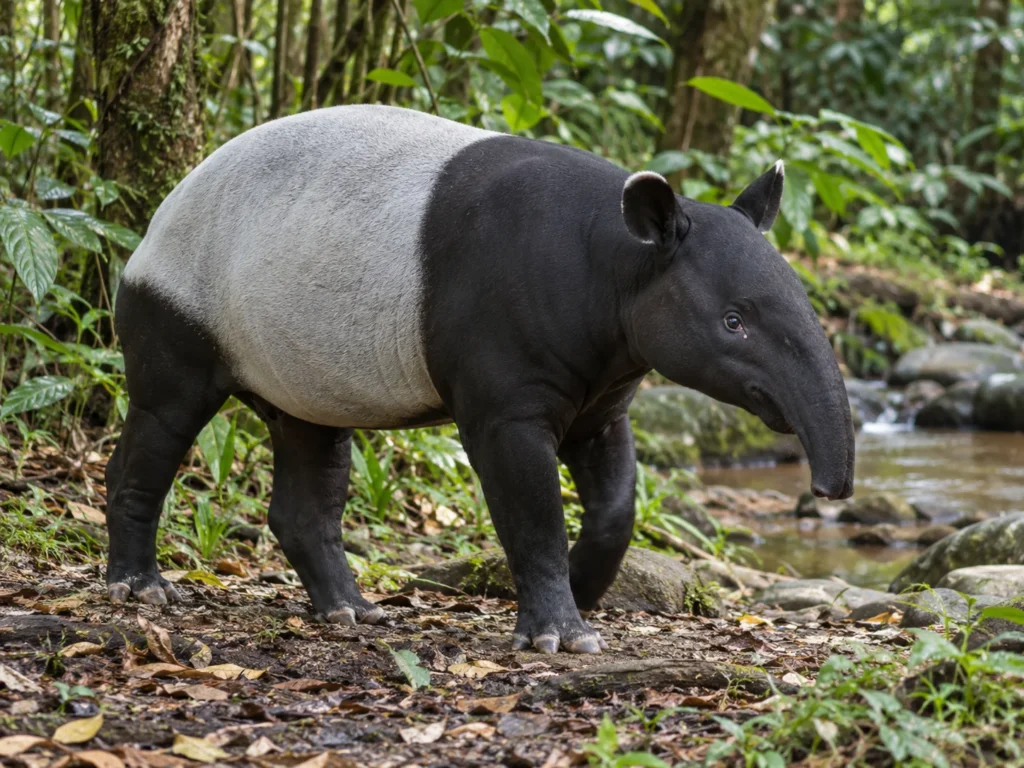
Among animals with 3 toes on at least some feet, the Malayan tapir is one of the easiest to miscount. It has four toes on each front foot but only three on each hind foot. The extra front toe is smaller and may not always touch the ground, which means some tapir tracks can appear three-toed. The species is also notable among Animals With Big Noses because of its flexible, trunk-like snout, which helps it grasp vegetation and explore its surroundings. This makes the tapir a good example of how both foot structure and facial adaptations can be highly specialized.
11. Capybara
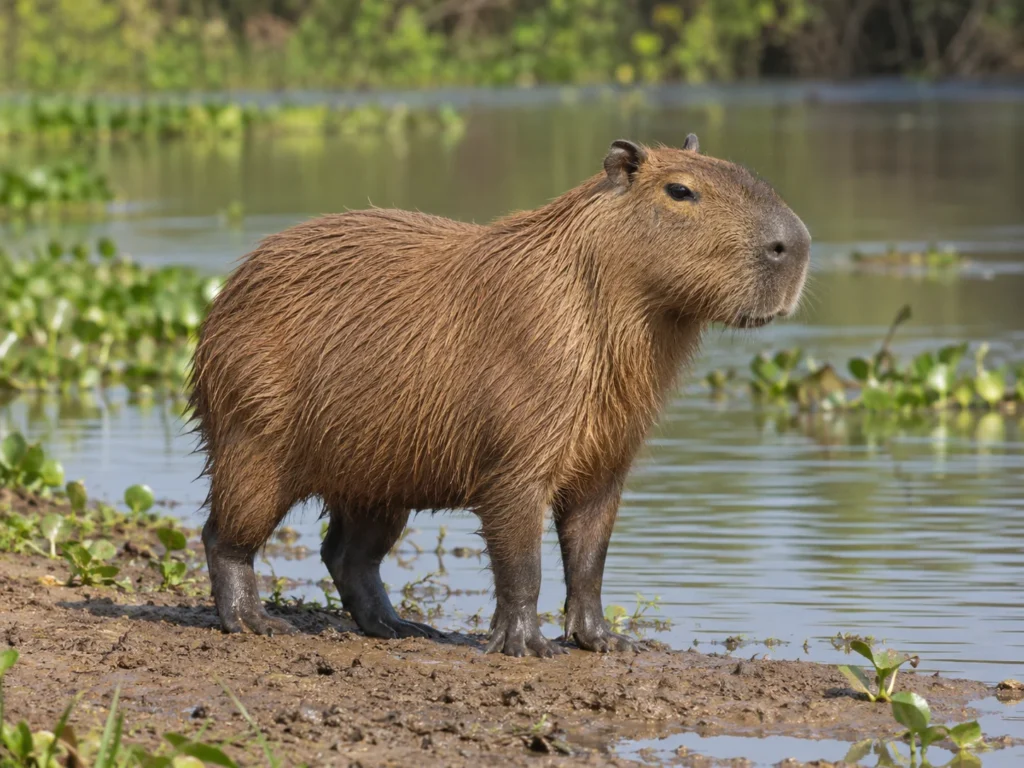
Capybaras are also included among animals with 3 toes because they have four toes on their front feet and three on their hind feet. Their digits are also partially webbed, which suits their semi-aquatic lifestyle. These enormous rodents are strong swimmers and frequently enter rivers, ponds, and wetlands. Their feet therefore combine a reduced hind-toe count with webbing that helps them move efficiently through both water and soft ground.
12. Patagonian Mara
Patagonian maras have four toes on the front feet and three on the hind feet. These long-legged South American rodents look somewhat rabbit-like but are actually close relatives of guinea pigs and capybaras. Their hind feet are adapted for rapid terrestrial movement. The three-toed arrangement forms part of a specialized running body plan that allows maras to move quickly across open environments.
13. Brown-Throated Three-Toed Sloth
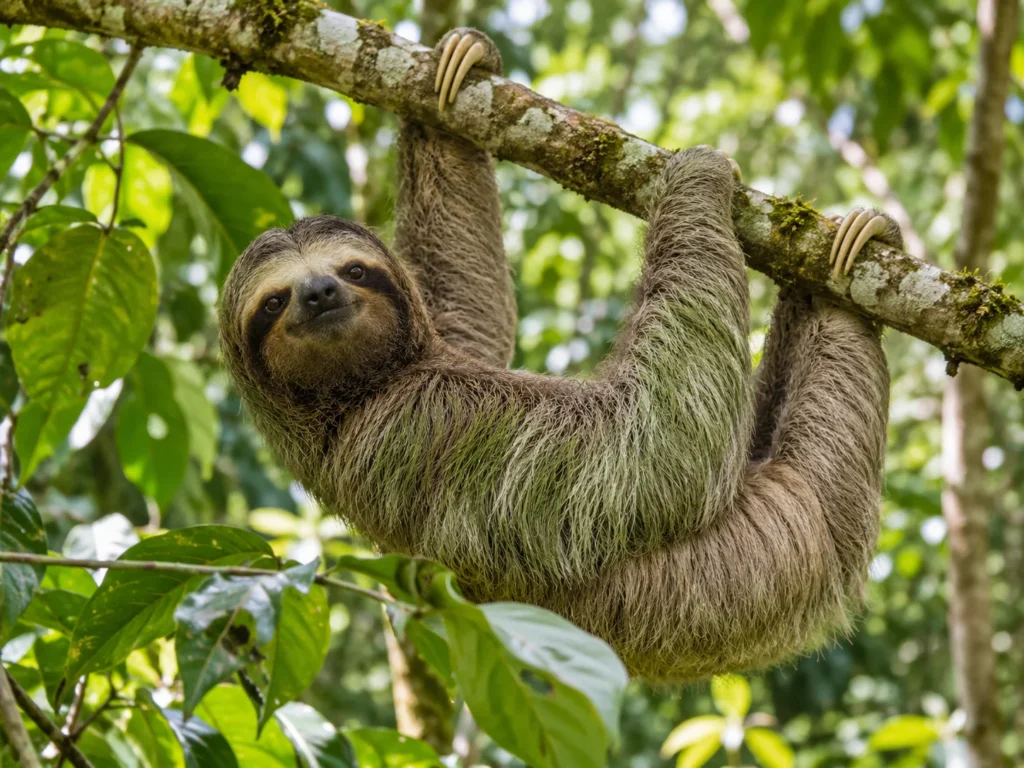
The brown-throated three-toed sloth has three specialized claw-bearing digits on each limb. These structures are very different from the separate walking toes of a rhino, bird, or tapir. While sloths are not usually grouped among Animals With Big Eyes, their vision still supports life in the forest canopy alongside other senses. The long, curved claws help the sloth hang beneath branches and maintain a secure grip while moving slowly through the trees. Calling them simply “three toes” is convenient, but their highly modified climbing anatomy is much more specialized than that phrase suggests.
14. Three-Toed Box Turtle
The three-toed box turtle gets its name mainly from the hind feet. Most individuals have three toes on each hind foot, while the front feet usually have four. However, the name is not an absolute rule. Some individuals can have four toes on the hind feet as well. This natural variation is a useful reminder that animal common names often describe typical traits rather than something that applies perfectly to every individual.
15. Three-Toed Snake Skink
The three-toed snake skink has an elongated body and tiny reduced limbs, each retaining only three digits. Its scientific name, Ophiomorus tridactylus, reflects this unusual anatomy.
Unlike running birds or large mammals, this reptile illustrates digit reduction associated with a more elongated, partly burrowing body form. Its small limbs show how three-toed anatomy can develop in a completely different evolutionary context.
Why Do Some Animals Have Only Three Toes?
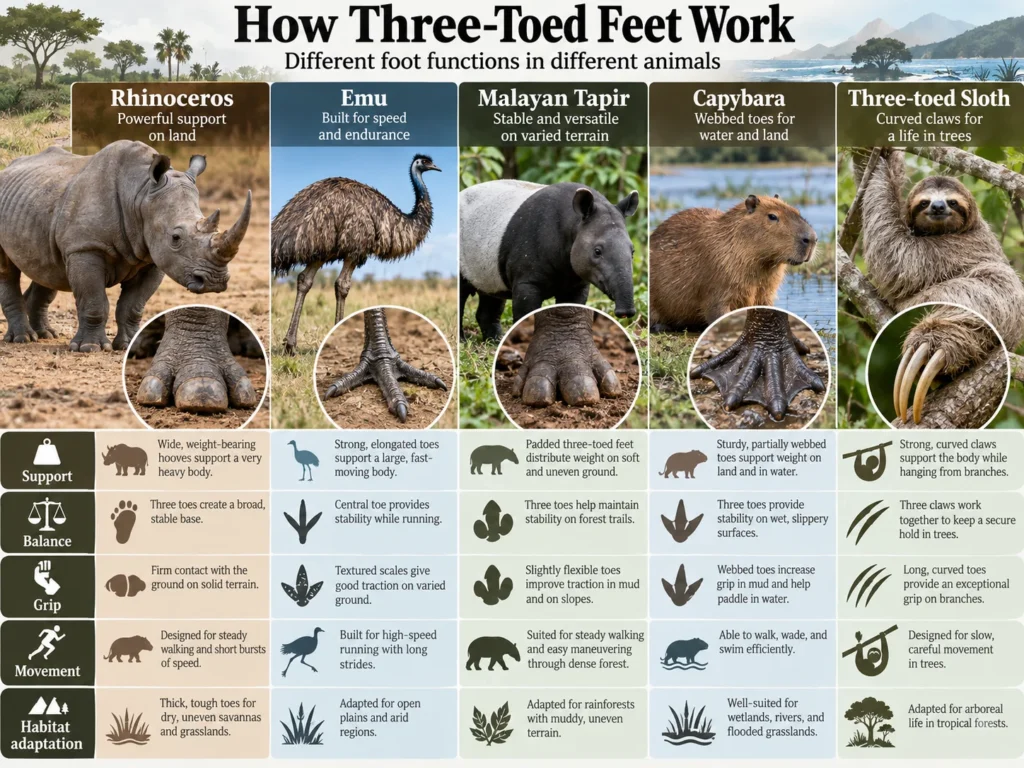
There is no single reason why animals with 3 toes end up with this digit arrangement. Digit number has changed many times during vertebrate evolution, and the functional result depends on the species. In large running birds such as emus and rheas, simplified feet fit a strongly terrestrial lifestyle. Woodpeckers use their three-toed arrangement while gripping vertical bark, while sanderlings lack a hind toe and move rapidly across beaches.
Other animals show three toes only on the hind feet. Tapirs, capybaras, and maras all retain four digits in front but have three behind. Their different lifestyles show that identical toe counts do not necessarily indicate identical functions. Three toes are therefore not automatically better than four or five. They are simply one of many anatomical solutions shaped by an animal’s evolutionary history and way of life.
Three-Toed Animals Compared
Among animals with 3 toes, the same basic toe count can serve very different purposes.
| Animal | Toe Arrangement | Main Foot Role |
|---|---|---|
| Rhinoceros | 3 on each foot | Weight support |
| Emu | 3 per foot | Running |
| Sanderling | 3, no hind toe | Shoreline movement |
| Malayan tapir | 4 front / 3 hind | Ground support |
| Capybara | 4 front / 3 hind | Semi-aquatic movement |
| Three-toed sloth | 3 clawed digits | Hanging and gripping |
This comparison shows why simply counting toes tells only part of the story. The shape, size, claws, pads, webbing, and position of the digits are often just as important as their number.
Do Three-Toed Footprints Always Mean Three-Toed Animals?
No. A footprint only records the parts of the foot that actually contacted the ground. The Malayan tapir is a good example. It has four toes on the front foot, but the smaller outer digit may not leave a strong impression. A track can therefore look as though it came from a genuinely three-toed foot.
Bird tracks can also be misleading when a small rear toe does not register clearly in soft or uneven ground. For accurate identification, tracks should be considered alongside stride pattern, size, habitat, and known foot anatomy rather than toe marks alone.
Three-Toed Animals vs Two-Toed Animals
Large flightless birds provide one of the easiest comparisons. Emus, rheas, and cassowaries each have three toes per foot. The ostrich, however, is different. It has only two toes on each foot and should not be included on a list of three-toed animals. This difference is useful because people often group all ratites anatomically. They share many broad traits, but their feet reveal important differences in how their limbs have evolved.
Key Takeaways
- Not every three-toed animal has three toes on all four feet.
- Rhinoceroses, emus, rheas, cassowaries, and several woodpeckers have genuine three-toed feet.
- Tapirs, capybaras, and Patagonian maras have four front toes but three hind toes.
- Sanderlings and Kori bustards lack a typical rear toe.
- Three-toed sloths have specialized claw-bearing digits for hanging.
- Footprints can show fewer toes than the animal actually possesses.
Frequently Asked Questions
What Animals Have Three Toes on Each Foot?
Animals with three toes on each foot include rhinoceroses, emus, southern cassowaries, greater rheas, American three-toed woodpeckers, Eurasian three-toed woodpeckers, black-backed woodpeckers, sanderlings, and Kori bustards. The exact shape and function of those toes vary greatly between species.
Do Rhinos Have Three Toes?
Yes. Rhinoceroses have three toes on each foot. The middle digit plays a major role in supporting body weight, while the broad padded underside of the foot helps distribute pressure across the ground.
How Many Toes Does a Tapir Have?
Tapirs typically have four toes on the front feet and three on the hind feet. The smaller fourth front digit may not always contact the ground, which can make some tracks appear to have only three toe impressions.
Are Three-Toed Sloths Really Three-Toed?
Yes, but their anatomy is highly specialized. Three-toed sloths have three claw-bearing digits on each limb, with long curved claws used for gripping and hanging from branches. These are very different from the ordinary walking toes of many terrestrial animals.
Do Ostriches Have Three Toes?
No. Ostriches have only two toes on each foot. This distinguishes them from other large flightless birds such as emus, rheas, and cassowaries, which have three toes.
Final Thoughts
Animals with three toes show how the same basic anatomical trait can serve very different purposes. A rhino uses three weight-bearing digits, an emu runs on a three-toed foot, a sloth hangs from three hooked digits, and a tapir has three toes only behind. The exact arrangement matters far more than the label alone.






One Comment