Cleanest Animals: 15 Species and How They Stay Clean
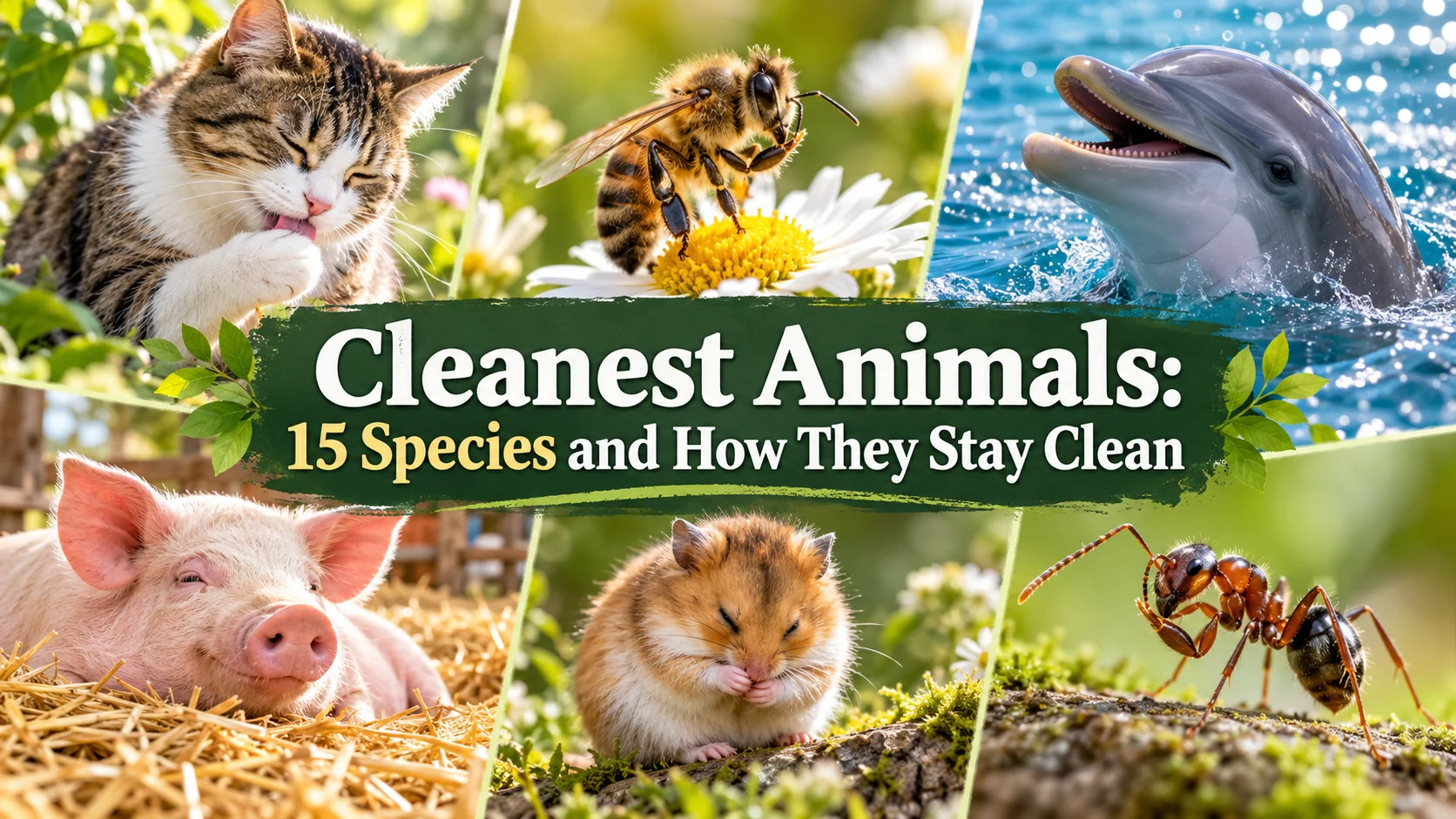
Cleanest Animals do not use soap, showers, or disinfectants, yet many species devote surprising effort to staying clean. Some groom their fur, others preen feathers, remove parasites, bathe in dust or water, or keep waste away from resting areas. These behaviors are not about cleanliness in the human sense; they often help maintain healthy skin, insulation, feathers, social bonds, or safer living spaces. Here are 15 animals known for especially notable hygiene habits.
There is no scientifically established single “cleanest animal” because cleanliness can be measured in different ways. Cats, pigs, rabbits, rats, birds, sea otters, ants, bees, and other animals show impressive hygiene behaviors, including self-grooming, preening, bathing, parasite removal, social grooming, and keeping waste separate from important living areas.
What Makes an Animal “Clean”?
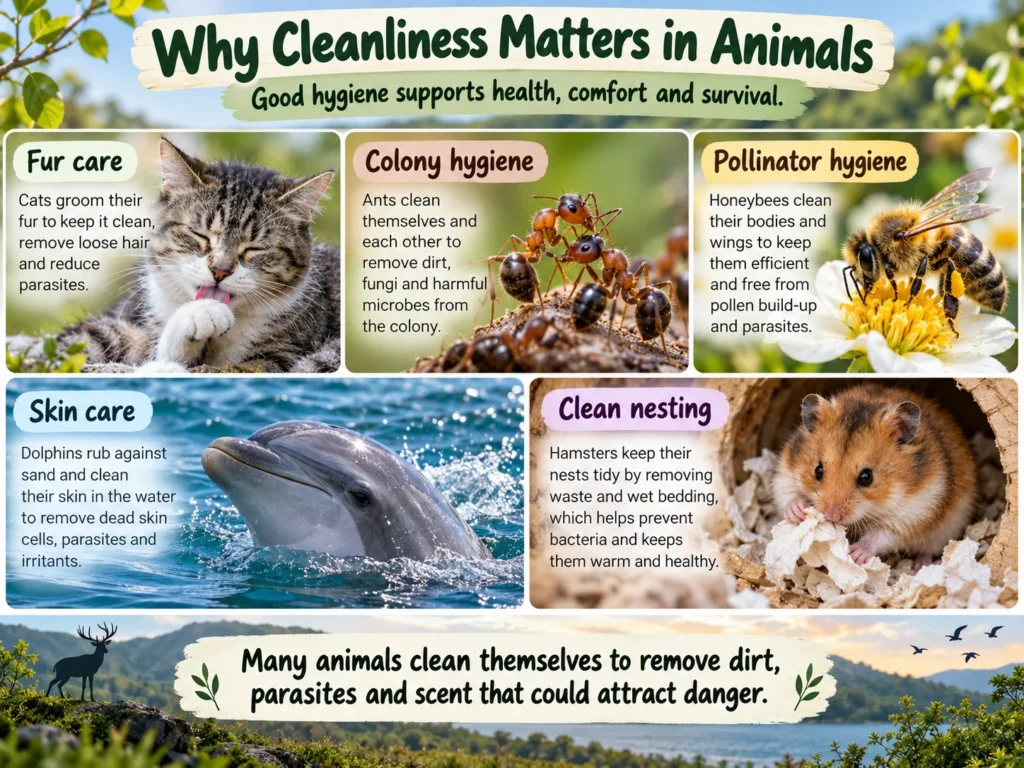
Animal cleanliness is better understood as a set of behaviors than as a simple ranking. A species may seem especially hygienic because it grooms its body, maintains fur or feathers, removes parasites, or keeps its nest, den, or colony relatively free of waste. Different animals also clean themselves in very different ways. Birds preen with their bills, cats and rabbits lick their coats, elephants use water, mud, or dust, and social insects may groom nestmates or move waste away from key areas.
Because these behaviors serve different purposes, there is no objective scientific scale that identifies one universally cleanest species. An animal that grooms frequently is not necessarily sterile or free of parasites, bacteria, or disease. The same caution applies to labels such as Shy Animals, because visible behavior does not always reveal an animal’s full biology or health status. “Clean” here refers to observable maintenance and sanitation behaviors, not a guarantee that an animal is safe to touch or that its body carries fewer microorganisms than another species.
15 of the Cleanest Animals
1. Cats
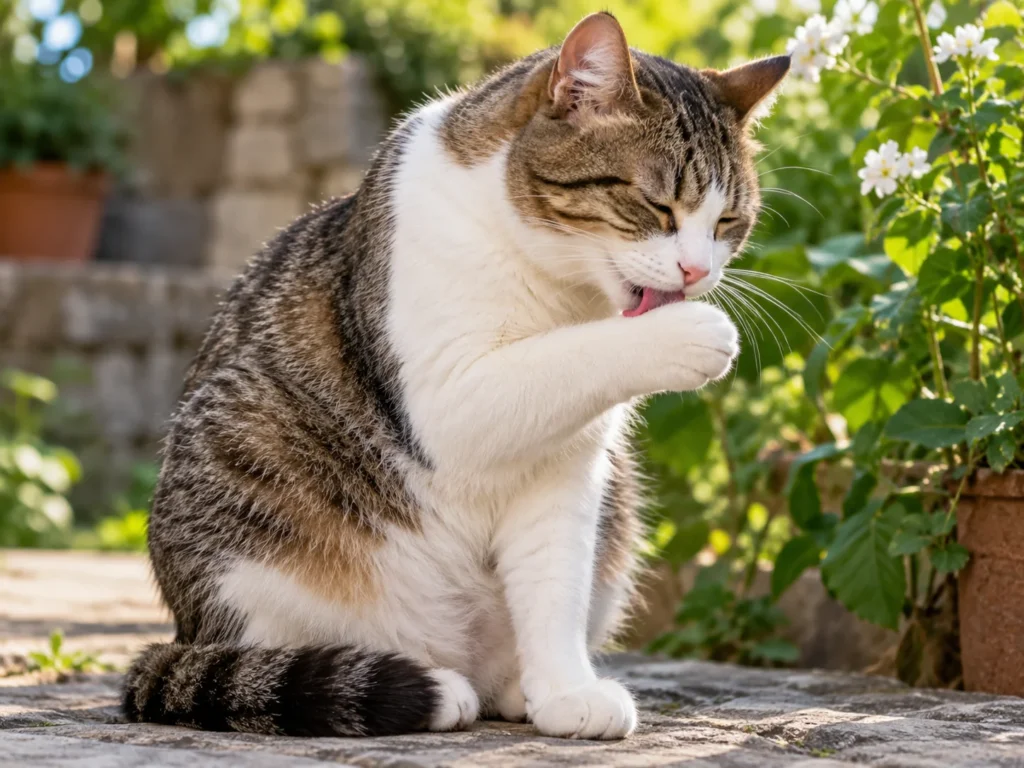
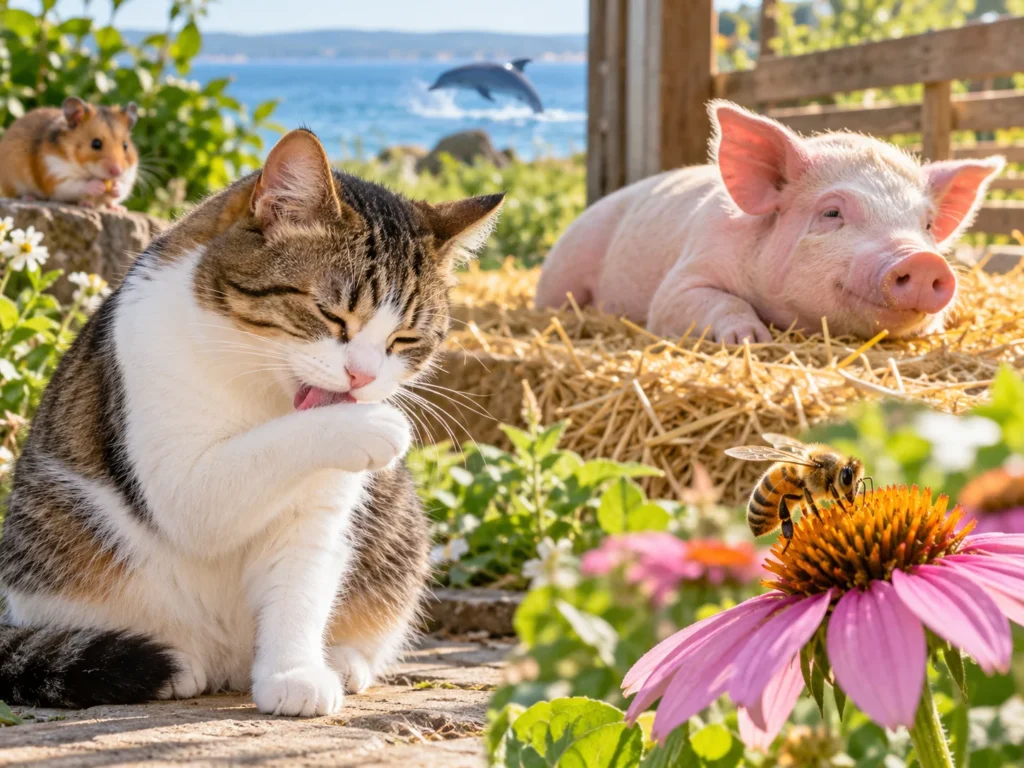
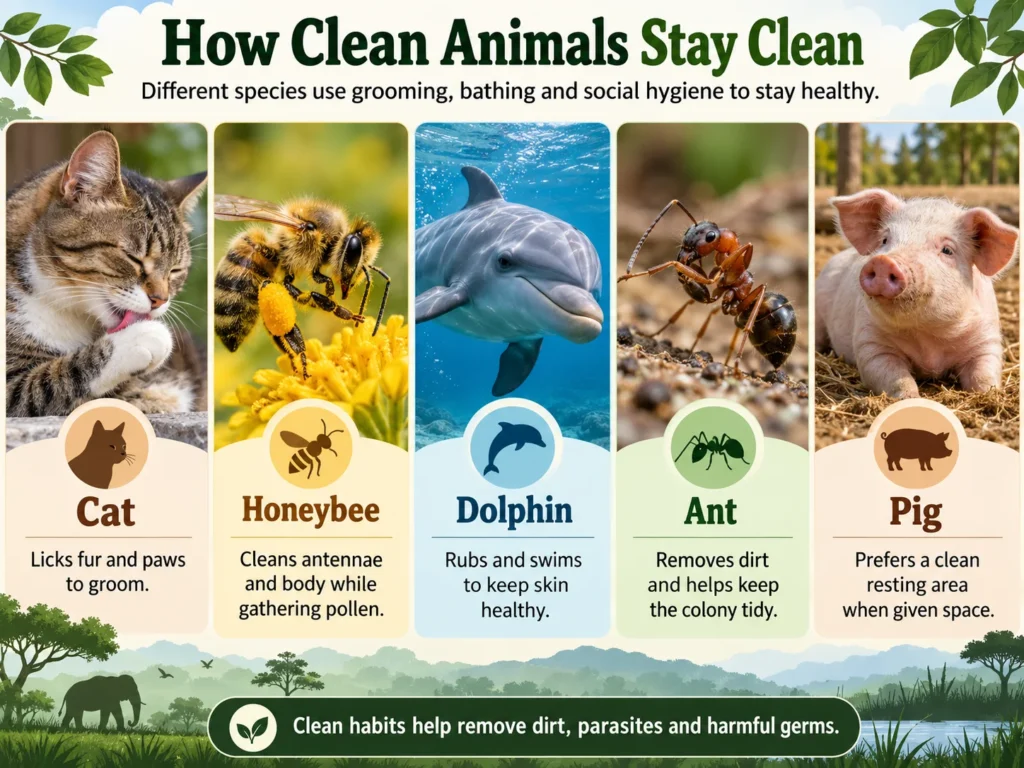
Cats are among the cleanest animals in terms of regular self-grooming behavior. Their rough tongues help remove loose hair, dirt, and small pieces of debris while keeping the coat in good condition. Cats may groom after eating, resting, or encountering unfamiliar smells, and socially bonded cats sometimes groom one another around the head and neck.
2. Pigs
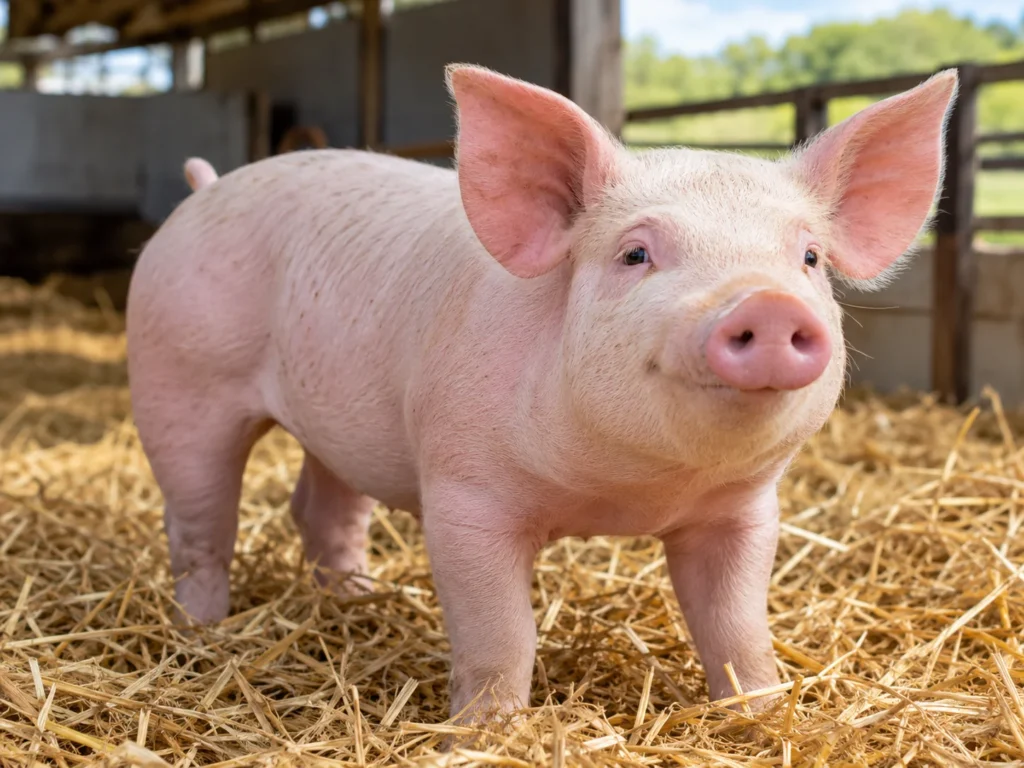
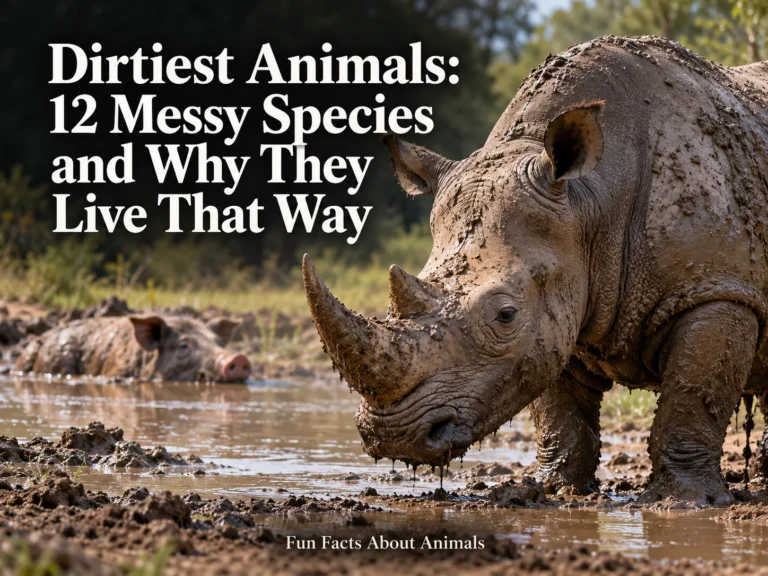
Pigs are often overlooked in discussions of the cleanest animals because they have an unfair reputation for being dirty. Given enough space, they commonly avoid eliminating waste where they sleep or rest. Unlike many Animals That Sleep a Lot, pigs are better known for their active foraging and social behavior than for unusually long sleep periods. Their mud wallowing is not evidence of poor hygiene either. Because pigs have limited ability to cool themselves through sweating, mud can help with temperature control and may also protect their skin from sunlight and biting insects.
3. Rabbits
Rabbits are often included among the cleanest animals because they are meticulous self-groomers. They lick their fur and use their front paws to clean the face and other areas, helping remove loose hair and debris. Rabbits may also groom companions. Healthy rabbits generally maintain themselves without routine water baths, which can be stressful and unnecessary unless specific care is required.
4. Rats
Rats are another example among the cleanest animals, frequently using their paws and tongue to groom the face, head, body, and coat. They may also groom one another. Their ability to survive around human waste has contributed to a dirty reputation, but that should not be confused with a lack of personal grooming behavior.
5. Sea Otters
Sea otters are among the cleanest animals in terms of intensive fur maintenance, because grooming is essential to their survival. Unlike many marine mammals, they do not rely on a thick blubber layer for insulation. Instead, their extremely dense fur traps air close to the body. Regular cleaning, rubbing, and arranging of the coat helps preserve this insulating layer, making fur maintenance crucial in cold water.
6. Birds
Birds are also represented among the cleanest animals because they maintain their feathers through preening. With their bills, they straighten feathers, remove debris, and keep the plumage in working condition. Many species also bathe in water or dust. Well-maintained feathers matter for insulation, flight, display, and, in many waterbirds, keeping the plumage functional around water.
7. Ants
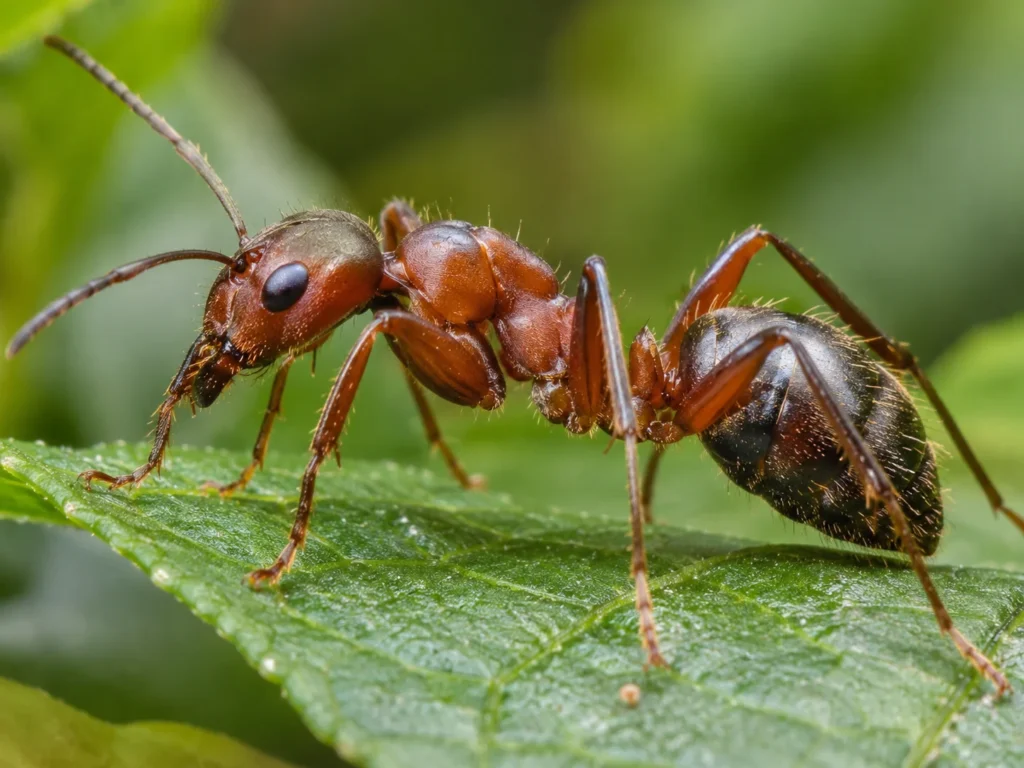
Ants are among the cleanest animals at the colony level, grooming themselves and often cleaning nestmates as well. In many species, sanitation extends to the colony: waste, dead individuals, or contaminated material may be moved away from sensitive nest areas. This makes ants a strong example of cleanliness operating at both an individual and social level.
8. Honeybees
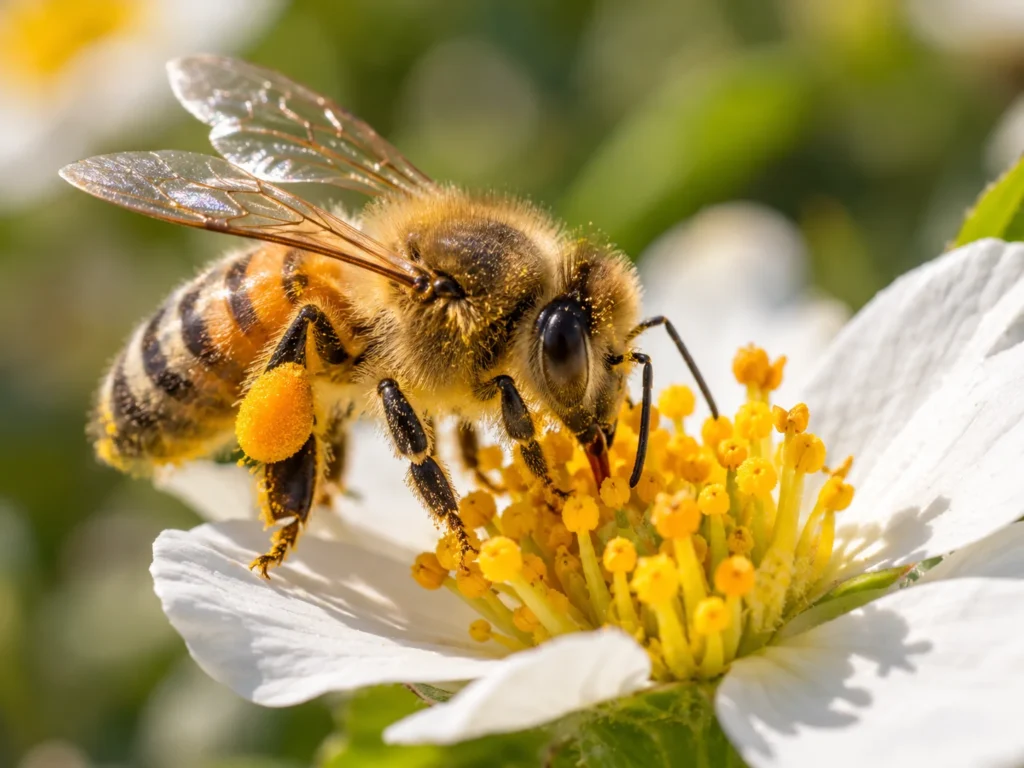
Honeybees are another example among the cleanest animals, using self-grooming and social grooming to remove unwanted material from their bodies. Some colonies also show hygienic behavior in which workers detect and remove unhealthy or dead brood from cells. Such behavior can help limit certain diseases and parasites, showing how colony cleanliness can contribute to collective health.
9. Elephants
Elephants often bathe in water and then cover themselves with mud or dust. Although this can make them look dirty, the coating can protect the skin from strong sunlight and irritating insects. Elephants also rub against trees, rocks, and other surfaces, so their body-care routine looks very different from licking or preening.
10. Horses
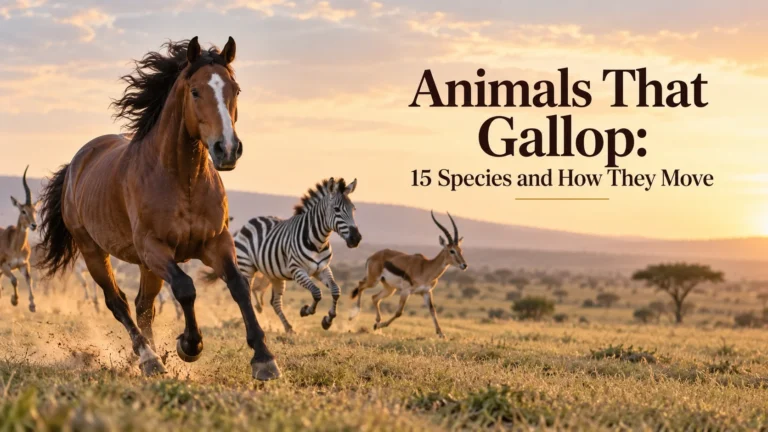
Horses maintain their coats by rolling, rubbing, shaking, and scratching. They also practice mutual grooming: two horses may use their teeth or lips on areas such as the neck, withers, and back. Although horses are sometimes described alongside Stubborn Animals, behaviors such as hesitation or resistance often reflect caution, discomfort, or uncertainty rather than a fixed personality trait. Mutual grooming can remove loose material, relieve irritation, and reinforce social relationships between familiar animals.
11. Squirrels
Squirrels regularly use their paws and teeth to groom the face, body, and fur. For animals that climb trees, move through vegetation, and rest in nests or dens, regular coat maintenance helps remove loose material and keeps the fur functional. Their grooming is easy to overlook because it happens in short, frequent sessions.
12. Hamsters
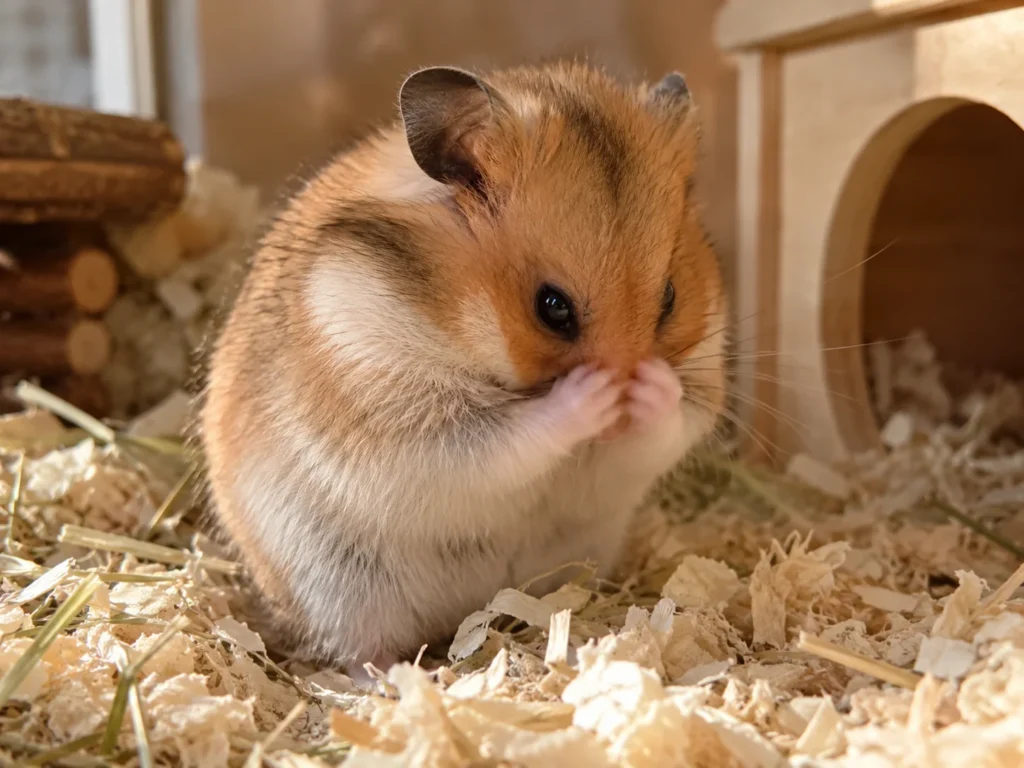
Hamsters are frequent self-groomers and often pause to clean their face and coat with their paws and tongue. They may also organize different parts of their living space for sleeping, storing food, and eliminating waste. The exact pattern varies, but their regular grooming makes them naturally tidy small mammals.
13. Raccoons
Raccoons groom their fur, but their famous “food washing” behavior is often misunderstood. Dipping or handling food in water does not necessarily mean a raccoon is trying to sanitize it. The behavior is more closely linked with tactile exploration and food handling, so it should not be treated as evidence of human-like hygiene.
14. Dolphins
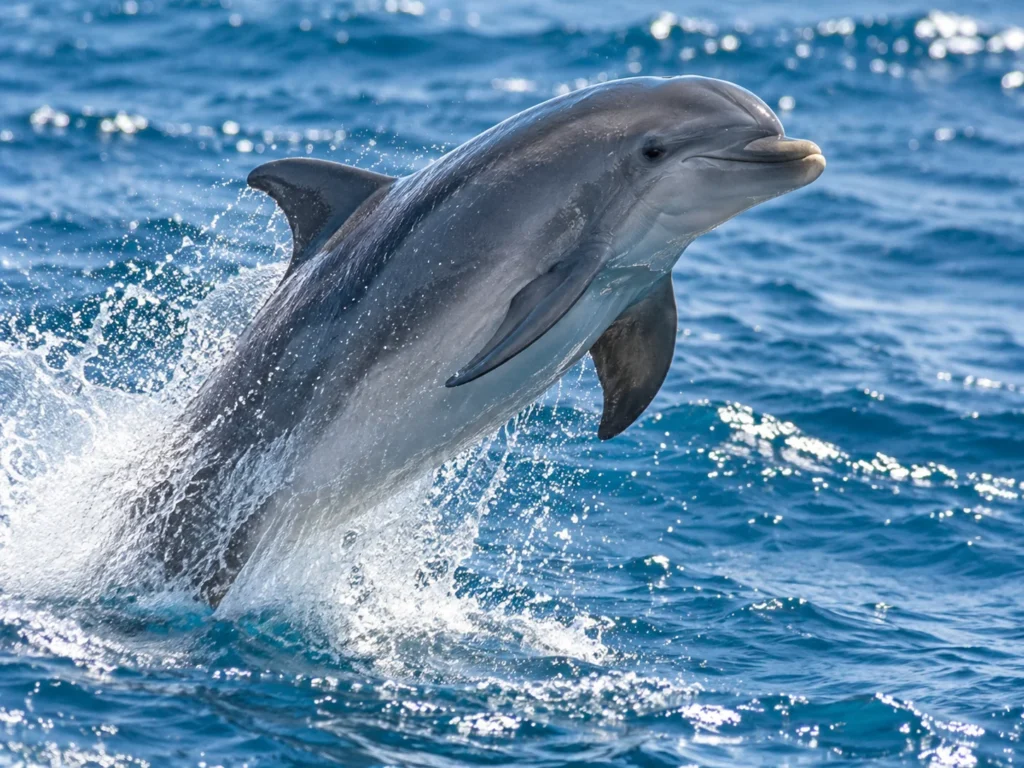
Dolphins have no fur to groom, but maintaining healthy skin is still important. They continually shed the outermost skin layers, which helps keep the body surface smooth. Some populations also rub against natural surfaces or materials. These behaviors can contribute to skin maintenance, although they should not be described as deliberate washing in the human sense.
15. Primates
Many primates are included among the cleanest animals because they are well known for social grooming. Monkeys and apes inspect the fur and skin of companions, removing debris and sometimes external parasites. Unlike Animals That Waddle, whose distinctive movement is mainly shaped by anatomy and locomotion, primates are better known for flexible climbing, grasping, and social behavior. Grooming also has an important social role: it can strengthen relationships, reduce tension, and reinforce bonds within a group, making it much more than simple cleaning.
Cleanest Animals at a Glance
| Animal | Notable Cleanliness Behavior |
| Cat | Licking and self-grooming |
| Pig | Separating resting and waste areas |
| Rabbit | Frequent fur and face grooming |
| Rat | Face and body grooming |
| Sea otter | Intensive fur maintenance |
| Bird | Preening and bathing |
| Ant | Grooming and colony sanitation |
| Honeybee | Social grooming and hygienic brood removal |
| Elephant | Water, mud, and dust bathing |
| Horse | Self-grooming and mutual grooming |
| Squirrel | Regular fur grooming |
| Hamster | Self-grooming and space organization |
| Raccoon | Fur grooming and tactile food handling |
| Dolphin | Skin shedding and rubbing behaviors |
| Primate | Self-grooming and social grooming |
Why Do Animals Spend So Much Time Grooming?
Grooming provides practical benefits. Removing dirt, loose hair, damaged feathers, or debris helps keep body coverings functional. In some species, grooming can also remove or reduce external parasites. For animals that depend on fur or feathers for insulation, maintenance can be especially important. Cleaning can also serve a social function. Horses, primates, birds, rodents, and many social insects may groom companions as well as themselves. These interactions can help maintain relationships, while sanitation in ant and bee colonies can reduce contact with waste, diseased material, or other potential sources of contamination.
Are Pigs Actually Clean Animals?
Pigs can be quite clean when their surroundings give them enough room to separate activities. They commonly avoid using their main sleeping or resting area as a toilet, contradicting the stereotype that pigs prefer filthy conditions. Mud creates much of that image, but wallowing serves practical purposes. Because pigs do not cool themselves efficiently through sweating, mud can help manage body heat. It can also provide some protection from sun and insects. Calling pigs clean does not mean they follow human hygiene standards; it means their natural behavior includes organized sanitation and body-care habits.
What Is the Cleanest Animal in the World?
There is no universally accepted scientific winner. Different animals excel at different forms of hygiene, so putting them on one scale would be misleading. Cats and rabbits are impressive self-groomers. Birds maintain complex feather systems through preening. Sea otters depend heavily on fur care for insulation. Pigs can keep waste away from resting spaces, while ants and bees perform sanitation behaviors that benefit whole colonies. For that reason, it is more accurate to call these species some of the cleanest animals rather than declaring one absolute champion.
FAQs
What Animal Is Considered the Cleanest?
There is no officially recognized cleanest animal. Cats are often mentioned because of their frequent self-grooming, while pigs, rabbits, sea otters, birds, ants, and other species demonstrate different kinds of hygiene. The answer depends on whether cleanliness means body grooming, habitat sanitation, parasite removal, or another behavior.
Are Cats One of the Cleanest Animals?
Yes. Cats are notable for regular self-grooming. Their tongues help remove loose fur and debris and keep the coat in good condition. However, their grooming habits do not establish them as objectively cleaner than every other animal.
Are Pigs Cleaner Than Dogs?
There is no reliable universal ranking that makes pigs cleaner than dogs. Pigs can show strong sanitation behavior by keeping waste away from resting areas when they have enough space. Dogs also groom themselves and may keep sleeping areas relatively clean. The species simply express cleanliness differently.
Why Do Animals Groom Themselves?
Animals groom to remove debris, maintain fur or feathers, manage some external parasites, protect the skin, and keep insulating body coverings functional. In social species, grooming can also strengthen relationships and reduce tension between group members.
What Animals Clean Each Other?
Many social animals practice mutual or social grooming. Primates, horses, rats, some birds, ants, and other group-living species may groom companions. Depending on the species, this can remove debris or parasites while also supporting social bonds.
Do Wild Animals Keep Their Homes Clean?
Some wild animals show clear nest, den, or colony sanitation. Social insects may remove waste or dead individuals, while certain birds remove unwanted material from nests. Many mammals also avoid eliminating waste directly in important sleeping or resting areas when their environment allows it.
Final Thoughts
The cleanest animals are not necessarily the ones that look spotless. Cleanliness in nature can mean grooming fur, preening feathers, shedding skin, removing parasites, or keeping waste away from important living spaces. From cats and sea otters to pigs, birds, ants, and primates, each species uses hygiene behaviors suited to its body, habitat, and way of life.