
Animals That Eat Corn: 17 Species and Their Diets
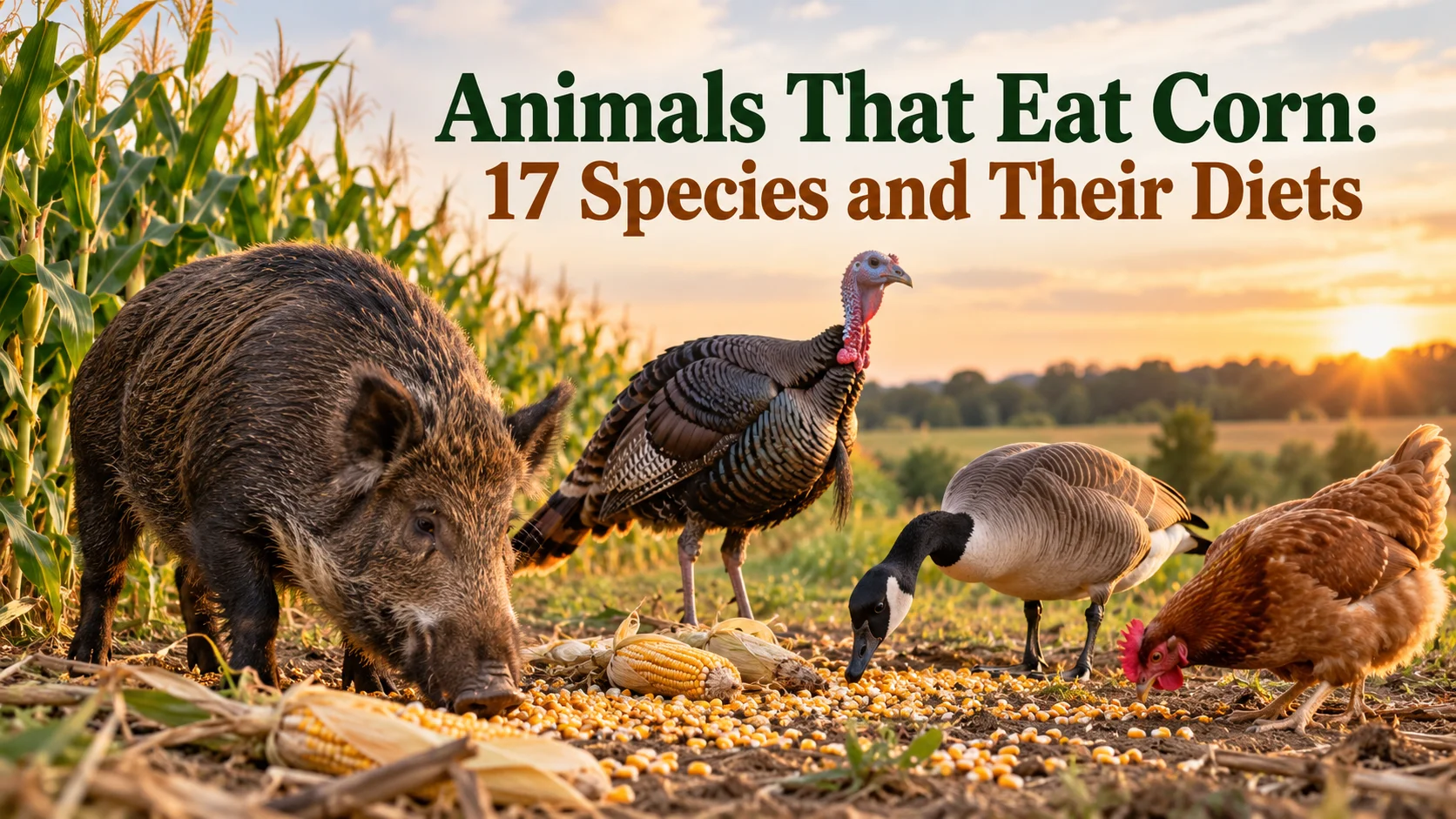
Animals that eat corn range from deer and raccoons to turkeys, squirrels, pigs, and cattle. In agricultural areas, corn offers a concentrated source of carbohydrates and energy, so many adaptable species take advantage of standing crops, fallen kernels, or leftover grain after harvest. Domestic animals may also receive corn as part of managed feed. However, eating corn does not mean an animal naturally depends on it or should live on corn alone.
Animals that eat corn include white-tailed deer, raccoons, black bears, feral hogs, squirrels, mice, wild turkeys, crows, pheasants, geese, chickens, pigs, and cattle. Wild species usually treat corn as an opportunistic food, while domestic animals may receive it as part of a balanced ration rather than as a complete diet.
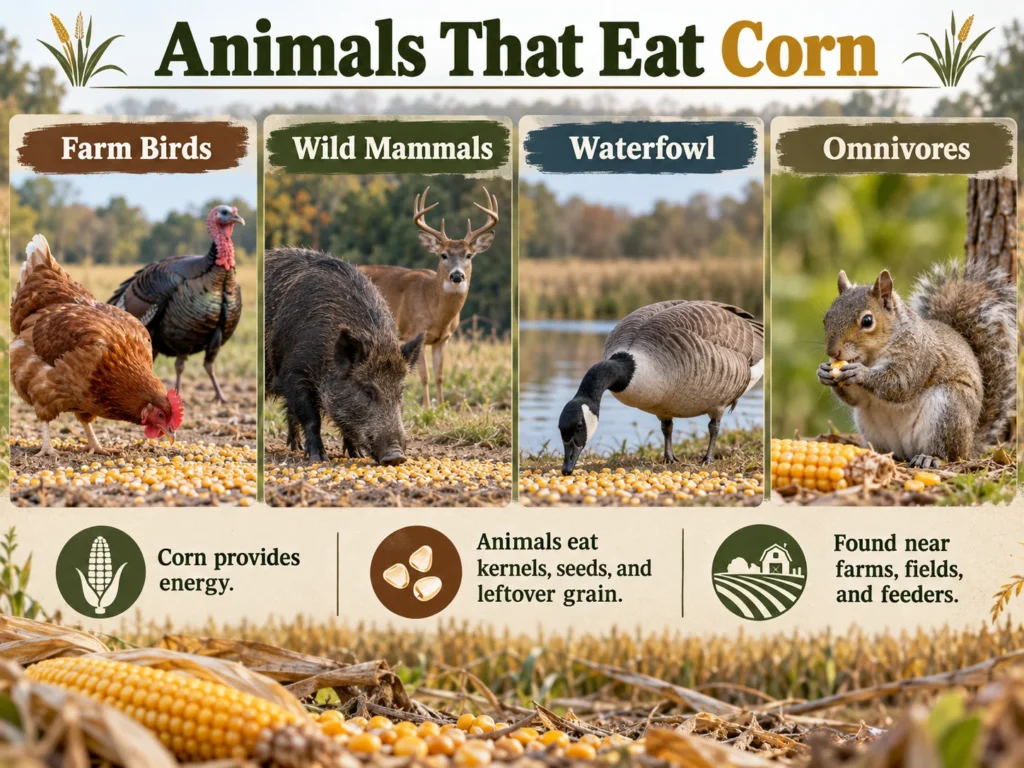
Animals That Eat Corn at a Glance
| Animals That Eat Corn | Common Corn Form | Feeding Context |
| White-tailed deer | Ears, kernels, leftover grain | Crop raiding and post-harvest feeding |
| Raccoon | Kernels from ears | Opportunistic crop feeding |
| American black bear | Standing corn | Seasonal high-energy food |
| Feral hog | Kernels, ears, planted grain | Crop feeding and rooting |
| Woodchuck | Growing corn and field vegetation | Agricultural foraging |
| Eastern gray squirrel | Kernels and fallen grain | Opportunistic feeding |
| Ground squirrel | Seeds and kernels | Field foraging |
| Deer mouse | Fallen kernels | Seed feeding |
| Wild turkey | Whole kernels and waste grain | Seasonal foraging |
| American crow | Kernels and exposed grain | Flexible omnivorous feeding |
| Ring-necked pheasant | Waste grain | Post-harvest feeding |
| Northern bobwhite | Seeds and kernels | Agricultural feeding |
| Canada goose | Leftover grain | Post-harvest fields |
| Red-winged blackbird | Developing kernels | Crop feeding |
| Domestic chicken | Grain/feed corn | Managed diet |
| Domestic pig | Ground or processed corn | Managed ration |
| Cattle | Grain or silage | Managed livestock feeding |
Why Do Animals Eat Corn?
Corn is rich in carbohydrates and can provide a substantial amount of energy in a relatively small amount of food. Agricultural fields also concentrate thousands of plants in one place, making corn much easier to find than many naturally scattered foods. This can attract Animals That A Eat Alot, especially species that take advantage of abundant seasonal food. Wild animals usually eat corn because it is available, not because they evolved to depend on it. Deer still browse on leaves and woody plants, raccoons remain broad omnivores, and turkeys eat seeds, insects, nuts, and vegetation. Domestic animals are different, as corn may be deliberately included in formulated feed for its energy content, although other nutrients are still required for a balanced diet.
1. White-Tailed Deer
White-tailed deer readily enter cornfields where crops are accessible. They may eat developing ears, mature kernels, and grain left behind after harvest. Corn can become an attractive seasonal food because it is energy-rich and concentrated. However, deer are naturally flexible herbivores that also eat leaves, shoots, buds, fruits, nuts, and other vegetation. A deer feeding heavily in a cornfield should therefore be described as exploiting an abundant agricultural resource rather than relying on corn as its natural staple.
2. Raccoons
Raccoons are well-known cornfield visitors and are among the many Animals That Eat Corn when it becomes seasonally abundant. They can pull ears downward, open the husks, and eat the kernels inside, while their dexterous forepaws make them especially effective at handling corn. Because raccoons are omnivores, they also eat insects, fruits, eggs, aquatic prey, and many other available foods. Corn can be particularly useful in late summer, but its importance varies with habitat and season.
3. American Black Bears
American black bears can feed heavily in cornfields when ripe crops are available. Animals That Eat Corn supplies abundant calories, which can make agricultural areas attractive to bears preparing for periods when energy reserves are especially important. A bear may consume large quantities while a field remains productive. Despite this, black bears have highly varied diets. Fruits, nuts, insects, vegetation, and animal foods can all contribute, so corn remains an opportunistic seasonal resource.
4. Feral Hogs
Feral hogs are among the many Animals That Eat Corn because they are broad omnivores capable of exploiting agricultural crops whenever they are available. They may consume kernels, whole ears, planted seed, or grain found while rooting through fields. Their feeding can also damage plants and disturb soil beyond what they actually eat. Because feral hogs also consume roots, fruits, vegetation, invertebrates, carrion, and many other foods, corn is best viewed as one energy-rich option within a remarkably flexible diet.
5. Woodchucks
Woodchucks, also called groundhogs, can enter agricultural areas and feed on crops, including corn. They are primarily herbivorous and usually eat grasses, leaves, clover, garden plants, and other vegetation. Young corn plants and accessible ears may be taken when fields overlap with their home ranges. Their presence on a cornfield does not make corn essential to them; it simply adds another food source to a broad plant-based diet.
6. Eastern Gray Squirrels
Eastern gray squirrels readily eat corn kernels when they encounter them in fields, gardens, feeders, or post-harvest areas. Corn provides energy, but natural squirrel diets are much more strongly associated with nuts, seeds, buds, fruits, fungi, and other plant foods. Their feeding and hydration needs also differ from those of Animals that Drink Alot of Water, since squirrels obtain part of their moisture from food and available water sources. They may also occasionally consume animal material, making them opportunistic corn consumers rather than dietary corn specialists.
7. Thirteen-Lined Ground Squirrels
Ground squirrels commonly feed on seeds and grain, making fallen corn kernels an easy food source in agricultural landscapes. They may forage along field edges or in areas where grain has been dropped during planting or harvesting. Their diet can also include grasses, other seeds, and insects. This combination of plant and animal foods allows them to exploit corn without depending on it throughout the year.
8. Deer Mice
Deer mice are small seed-eating mammals frequently found around farms and fields. Fallen corn kernels can provide a calorie-rich food source, particularly after harvest. Because the mice are small, even individual kernels represent a substantial amount of food. Their natural diet is still much broader and may include many types of seeds, fruits, fungi, and invertebrates depending on season and habitat.
9. Wild Turkeys
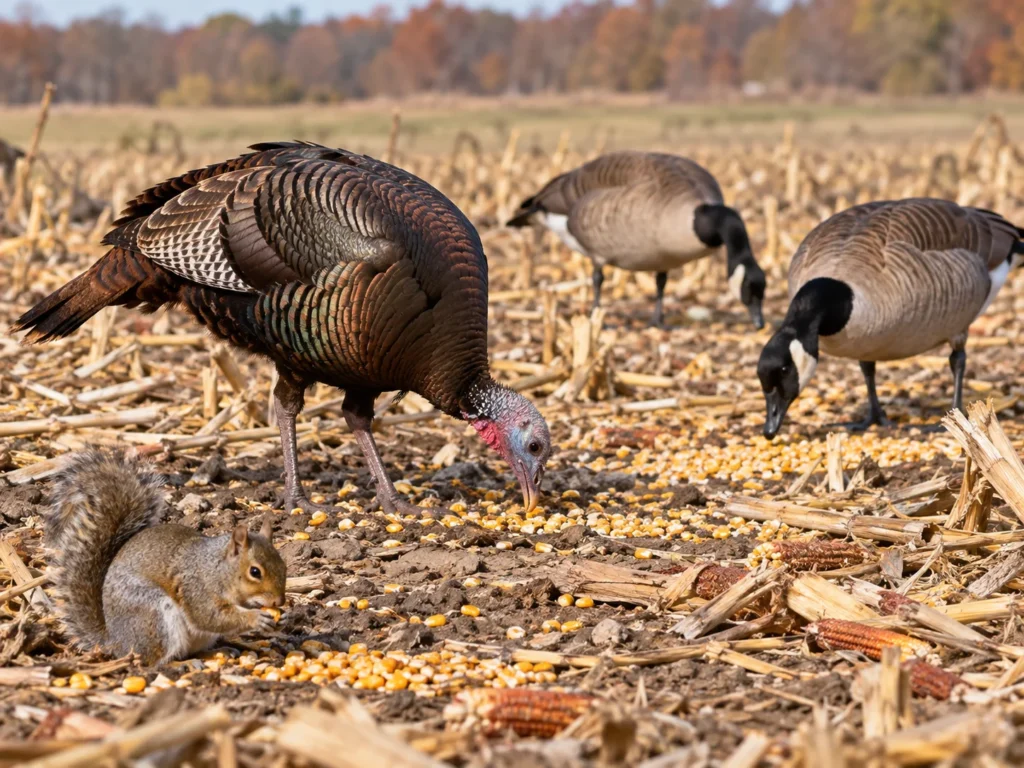
Wild turkeys readily eat whole corn kernels and grain left in agricultural fields. Post-harvest corn can be particularly valuable because combines often leave some kernels or broken grain behind. Turkeys may forage through these areas alongside other birds and mammals. Corn is only one part of their diet. Wild turkeys also consume acorns, seeds, berries, green vegetation, and numerous insects, especially during warmer months.
10. American Crows
American crows are flexible omnivores that can take advantage of corn at several stages of crop production. They may eat planted seeds, exposed kernels, damaged ears, or leftover grain. Their intelligence and adaptability make agricultural landscapes particularly easy for them to exploit. Crows also eat insects, carrion, fruits, nuts, eggs, small animals, and human-associated foods, so corn fits naturally into a very diverse feeding strategy.
11. Ring-Necked Pheasants
Ring-necked pheasants frequently forage for grain in farmland, especially after crops have been harvested. Animals That Eat Corn,kernels left on the ground can provide important energy during colder periods when insects and fresh vegetation become less abundant. Their broader diet includes seeds, shoots, berries, leaves, and invertebrates. Young pheasants rely especially heavily on insects before gradually shifting toward more plant material.
12. Northern Bobwhite
Northern bobwhite quail feed heavily on seeds and can use corn grain where agricultural fields provide it. Dropped kernels and waste grain are more practical for these small birds than feeding directly from a large intact ear. They usually forage on or close to the ground. Bobwhite diets also include native seeds, leaves, and insects, making agricultural corn only one of many possible foods.
13. Canada Geese
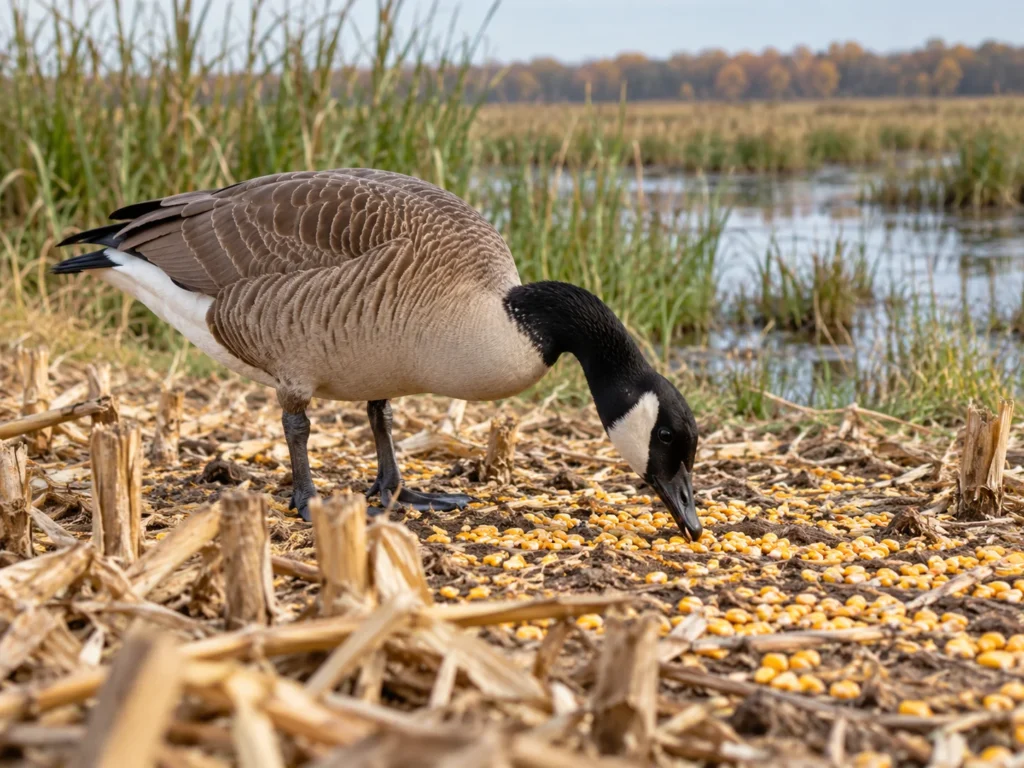
Canada geese often gather in harvested cornfields to feed on grain left behind after farming equipment has passed. These fields can provide a concentrated food source for large flocks, particularly during migration and colder seasons. Unlike Animals That Eat Honey, Canada geese are primarily plant-focused feeders, picking corn kernels directly from the ground while also eating grasses, aquatic plants, sedges, and other vegetation. Post-harvest corn therefore supplements rather than defines their diet.
14. Red-Winged Blackbirds
Red-winged blackbirds can feed on corn while it is still growing. They may land on ears and consume exposed or developing kernels, sometimes causing noticeable crop damage when many birds gather together. Agricultural grain can therefore become an important seasonal resource. Outside cornfields, these birds consume seeds and invertebrates and feed in wetlands, grasslands, and other open habitats.
15. Domestic Chickens
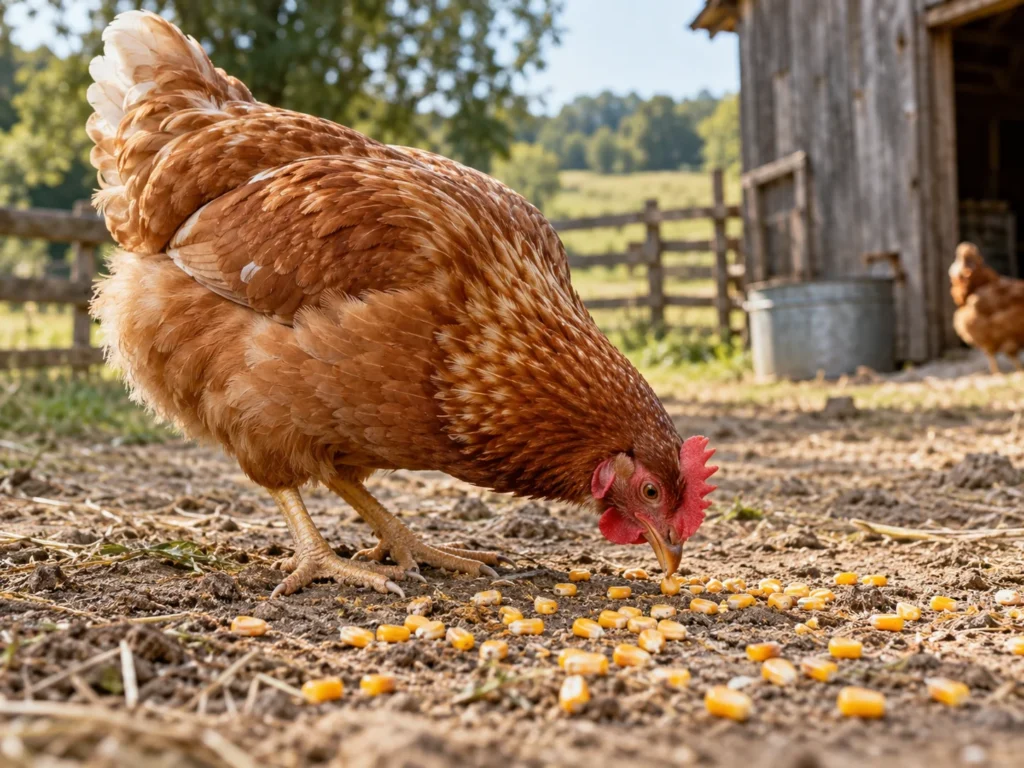
Domestic chickens commonly eat corn because it is widely used as an energy-rich ingredient in poultry feed. Whole or cracked corn may also be offered in some managed feeding systems, but corn alone does not provide all the protein, amino acids, vitamins, and minerals chickens require. A complete poultry diet therefore contains multiple ingredients rather than relying exclusively on corn.
16. Domestic Pigs
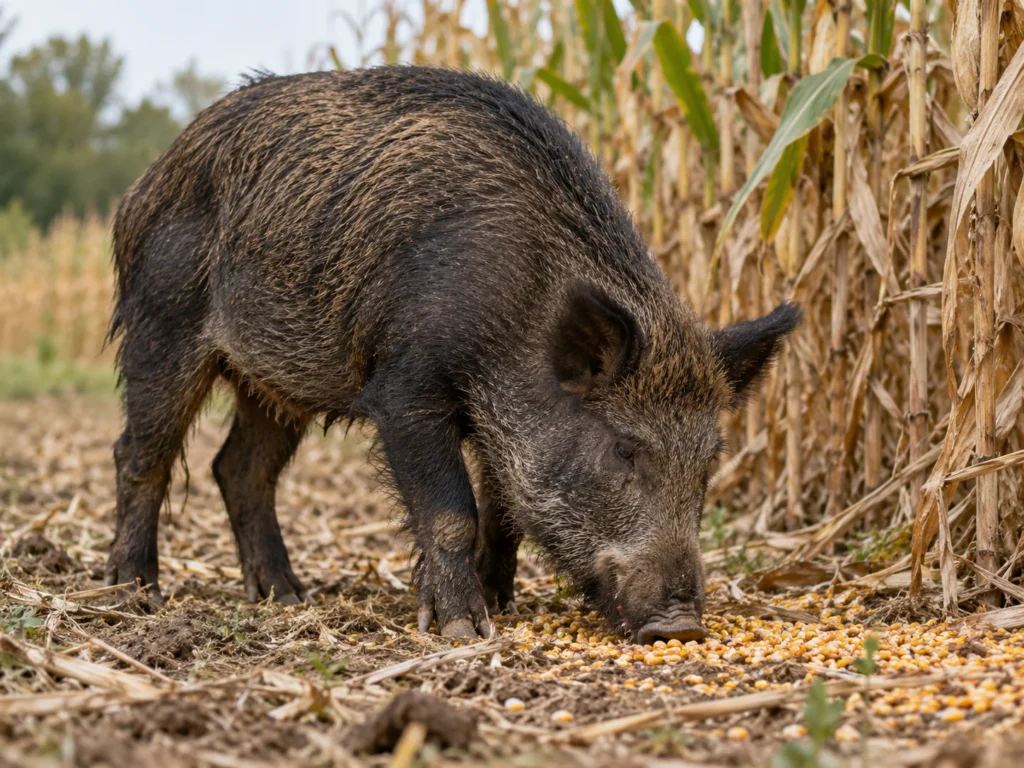
Corn is commonly used in pig diets because it supplies large amounts of digestible energy. In managed systems, it is usually ground or processed and combined with ingredients that provide protein, minerals, vitamins, and other nutrients. The exact composition changes with the animal’s age and production stage. Pigs certainly eat corn readily, but describing corn as a complete pig diet would be inaccurate.
17. Cattle
Cattle can consume corn in several forms, including grain and corn silage. In managed beef and dairy production, corn may provide substantial dietary energy. Silage also contains chopped portions of the corn plant rather than simply dry kernels. Because cattle are ruminants, feeding practices must account for the way their digestive system handles concentrates and forage. Corn is therefore best understood as one component of a managed ration rather than the species’ natural dietary foundation.
Wild Animals vs. Domestic Animals Eating Corn
The same food can have very different roles depending on how an animal encounters it.
| Feeding Context | Examples | Role of Corn |
| Crop raiding | Deer, raccoons, bears, hogs | Abundant seasonal food |
| Post-harvest feeding | Geese, turkeys, pheasants | Leftover grain |
| Seed and kernel feeding | Squirrels, mice, crows | Opportunistic grain source |
| Managed feed | Chickens, pigs, cattle | Controlled diet ingredient |
Wild animals generally encounter corn because farms create large patches of concentrated food. Domestic species may instead receive it intentionally as part of a planned diet.
What Parts of Corn Do Animals Eat?
Different animals use different portions of the crop. Large mammals such as deer and raccoons can access kernels directly from ears. Birds may pick exposed kernels or feed on grain left on the soil after harvest. Rodents frequently use fallen seeds and stored grain. Domestic cattle may eat corn silage containing stems, leaves, ears, and grain, while chickens and pigs more commonly consume grain that has been incorporated into feed. This is why simply saying an animal “eats corn” can hide considerable dietary variation.
Is Corn a Natural or Complete Animal Diet?
For most wild animals on this list, corn is not a natural dietary foundation. Modern agricultural cornfields provide an unusually concentrated resource that adaptable animals can exploit. Likewise, Animals That Eat Corn does not become nutritionally complete simply because a domestic animal readily consumes it. Chickens, pigs, and cattle all require additional nutrients supplied through other feed ingredients or forage. The most accurate conclusion is that corn is an energy-rich food used in different ways by different species, not a universal complete diet.
FAQs
What wild animals eat corn?
Animals That Eat Corn White-tailed deer, raccoons, black bears, feral hogs, woodchucks, squirrels, mice, wild turkeys, crows, pheasants, quail, geese, and several other wildlife species may consume corn when it is available.
Do deer eat corn?
Yes. Deer may feed on standing corn, ears, kernels, and grain left after harvest. Corn is an opportunistic agricultural food rather than the natural foundation of a deer’s diet.
Do raccoons eat corn?
Yes. Raccoons commonly feed on ears of corn and use their dexterous forepaws to expose the kernels. They remain broad omnivores that consume many other foods.
What birds eat corn?
Wild turkeys, crows, pheasants, quail, Canada geese, blackbirds, and several other seed- and grain-eating birds may feed on corn or leftover kernels.
Can farm animals eat corn?
Yes. Chickens, pigs, and cattle commonly consume corn in managed diets. However, corn is generally only one ingredient and does not provide every nutrient required by itself.
Is corn a complete diet for animals?
No. Most wild animals naturally eat varied diets, and domestic animals require balanced nutrition containing nutrients that corn alone cannot supply.
Final Thoughts
Animals that eat corn do so in very different circumstances. Deer and raccoons may raid growing fields, geese and turkeys collect grain after harvest, small mammals use fallen kernels, while chickens, pigs, and cattle may receive corn as a deliberately managed feed ingredient. The key distinction is that eating corn does not mean depending on corn. For most wild species, it is an opportunistic, energy-rich food, while domestic animals require balanced diets in which corn may play only one nutritional role.

2 Comments