
Animals Like Skunks: 12 Look-Alikes and Key Differences
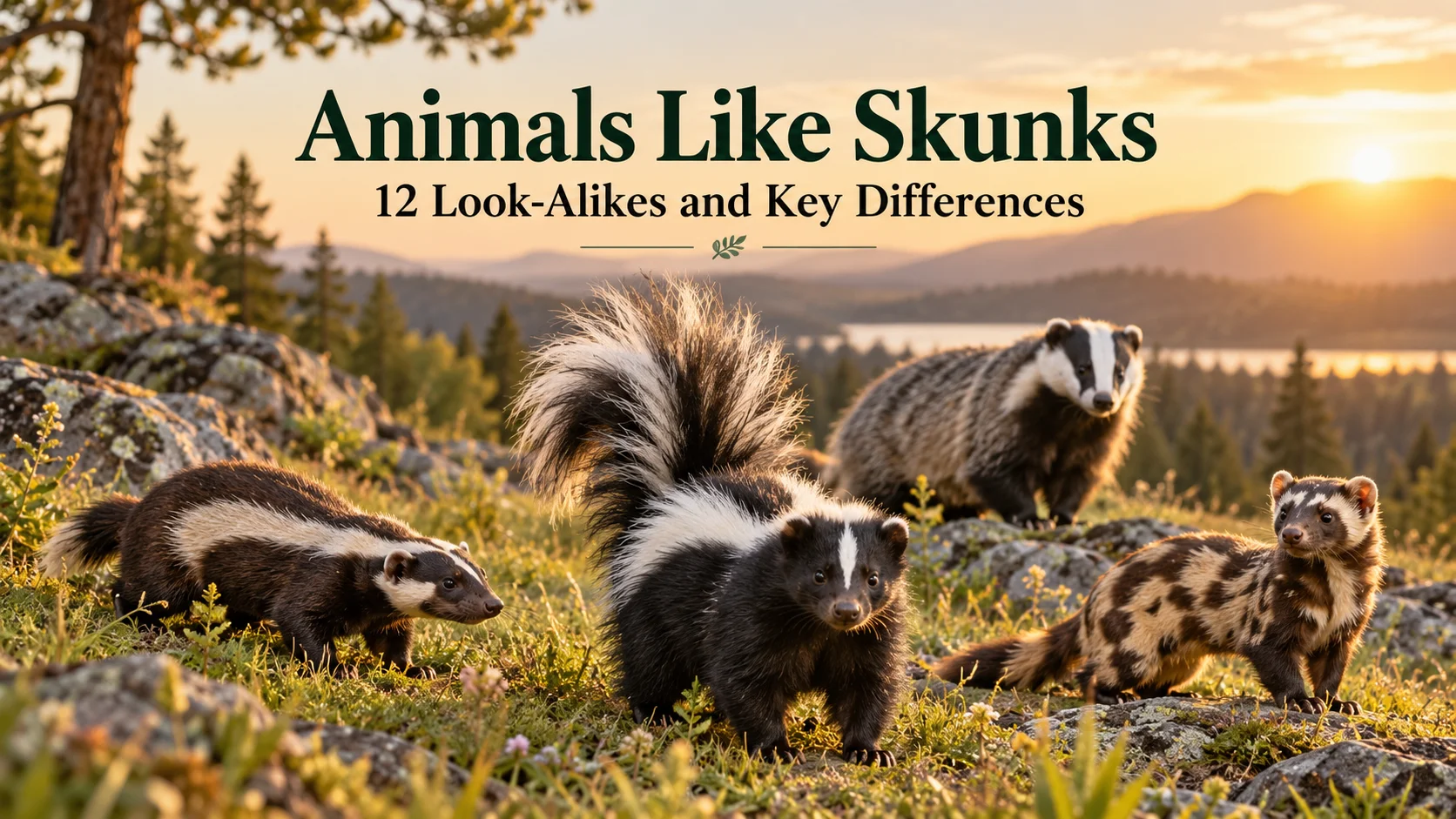
Animals like skunks can resemble them for very different reasons. Some share black-and-white markings, some produce powerful odors, and a few are genuine members of the skunk family. Others only look similar from a distance. The key is separating appearance from ancestry. Skunks belong to Mephitidae, while many of their best-known look-alikes are mustelids, civets, or other carnivores. These 12 comparisons show which animals are truly related to skunks and which simply evolved similar features.
Animals like skunks include stink badgers, zorillas, striped weasels, polecats, honey badgers, badgers, ferret-badgers, and African civets. Stink badgers are genuine members of the skunk family, Mephitidae. Most other look-alikes belong to Mustelidae or other carnivore families and resemble skunks through coloration, body shape, digging behavior, or scent-based defense.
What Makes an Animal “Like a Skunk”?
There is more than one way for an animal to seemAnimals Like Skunks. The most obvious is appearance: dark fur, white stripes, a bushy tail, or bold facial markings can create an immediate resemblance. A second similarity is chemical defense. Several mammals possess anal scent glands and can release strong-smelling secretions when threatened.
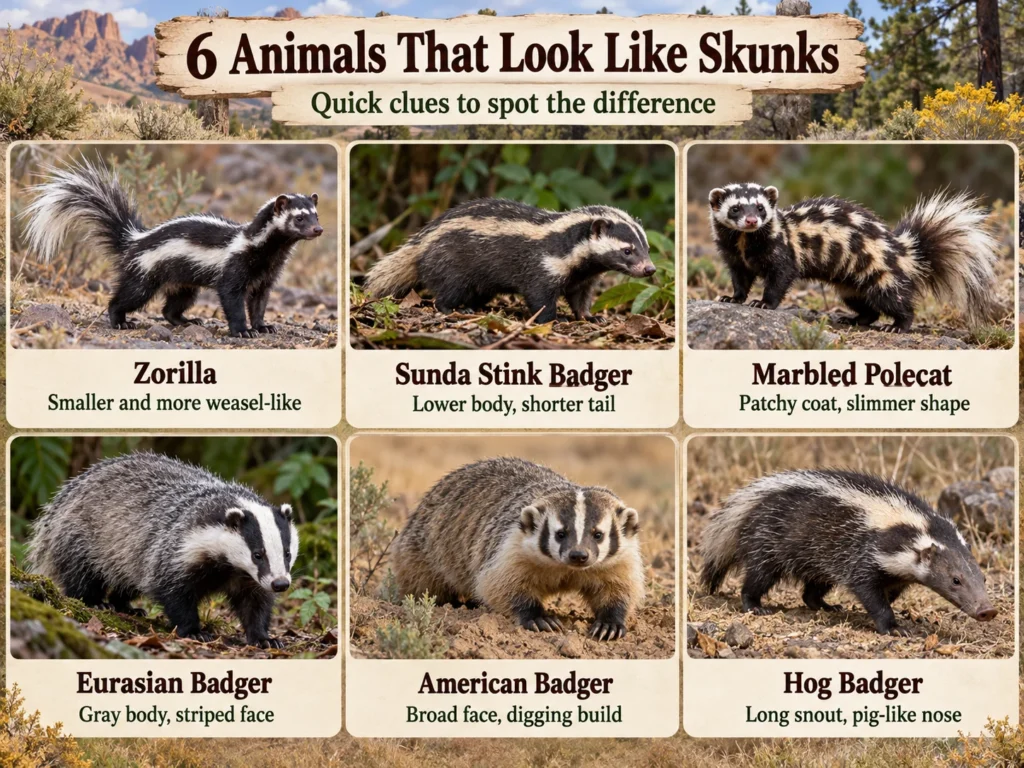
The strongest comparison, however, is evolutionary relationship. Modern classification places true skunks and stink badgers in Mephitidae. Many familiar badgers, polecats, and weasels belong instead to Mustelidae. Two animals can therefore look almost identical and use similar defensive odors while still belonging to different families.
Skunk Family vs Weasel Family
Skunks were historically grouped with mustelids, but modern molecular evidence supports a separate family, Mephitidae. This family includes familiar American skunks as well as the Asian stink badgers in the genus Mydaus.
Mustelidae is a different family containing animals such as weasels, polecats, badgers, otters, wolverines, and related species. Many mustelids have strong scent glands, so similar odor defenses evolved within a broader group of carnivores. This explains why names can be misleading: a stink badger is actually in the skunk family, while a honey badger, European badger, and striped polecat are mustelids.
Closest Relatives of Skunks
1. Sunda Stink Badger
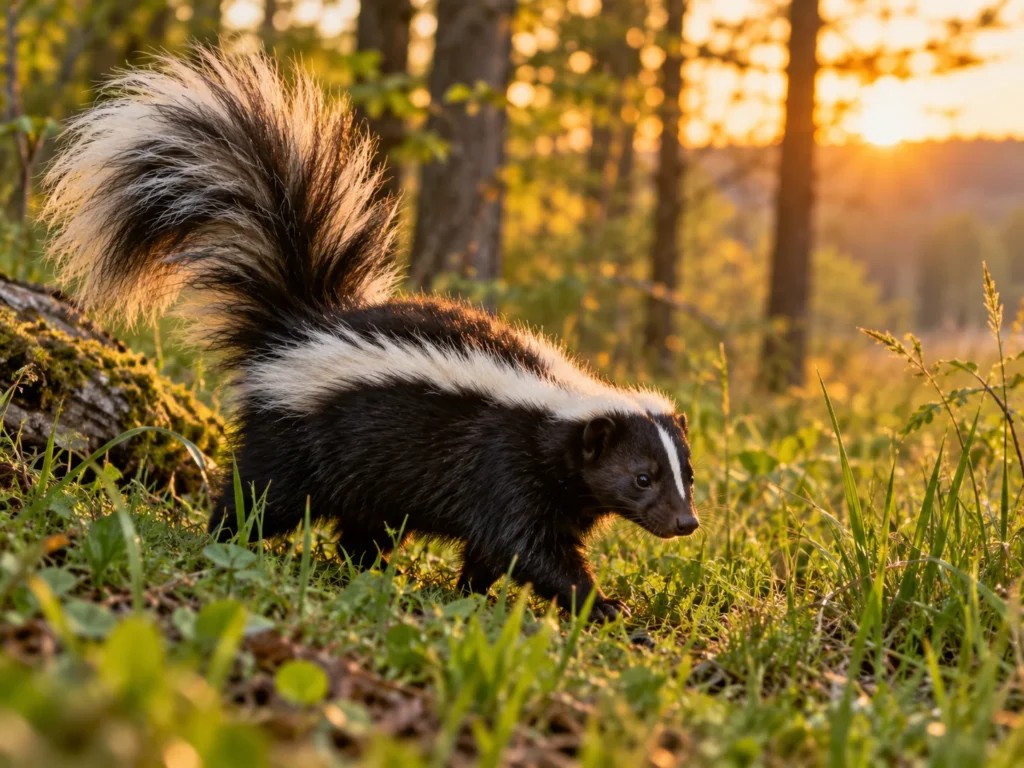
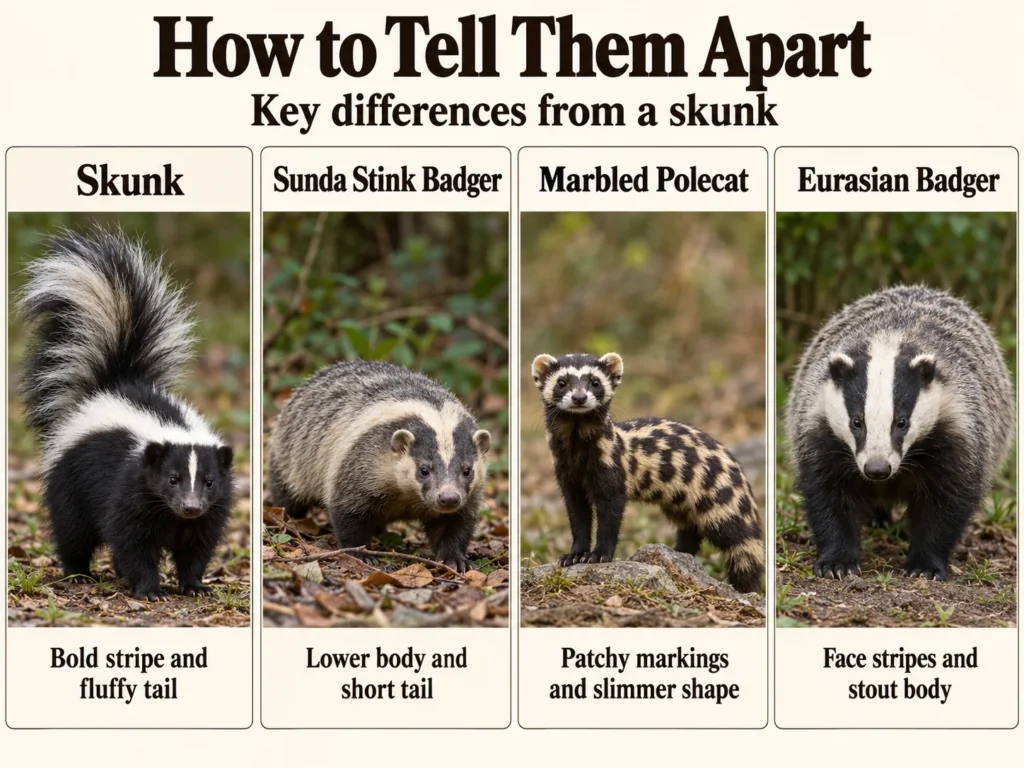
The Sunda stink badger is one of the strongest answers to “what animals are related to skunks?” because it belongs to Mephitidae. It is a squat Southeast Asian mammal with dark fur, a pale patch on the head, and often a light stripe along the back. When threatened, it can eject an extremely pungent secretion from well-developed scent glands.
2. Palawan Stink Badger
The Palawan stink badger is another genuine skunk-family member. It lives on Palawan and nearby islands in the Philippines and has a compact body, short tail, and pale marking over the head and shoulders. Its anal glands can squirt an oily, strong-smelling secretion, although its odor is described as milder than that of the Sunda stink badger.
Strongest Skunk Look-Alikes
3. Striped Polecat (Zorilla)
Few animals resemble a NorthAnimals Like Skunks as closely as the striped polecat, or zorilla. It has glossy black fur, bold white facial markings, and broad white stripes extending along the body and tail. It can also release a powerful anal-gland secretion when threatened. Despite these similarities, the zorilla is an African mustelid, not a true skunk.
4. Saharan Striped Polecat
The Saharan striped polecat is another black-and-white mustelid from northern Africa. Its striped coat and close relationship to the zorilla make it an obvious skunk comparison. Taxonomists have debated its generic placement, but it remains within Mustelidae rather than Mephitidae. Its appearance shows how skunk-like warning patterns can arise outside the true skunk family.
5. African Striped Weasel
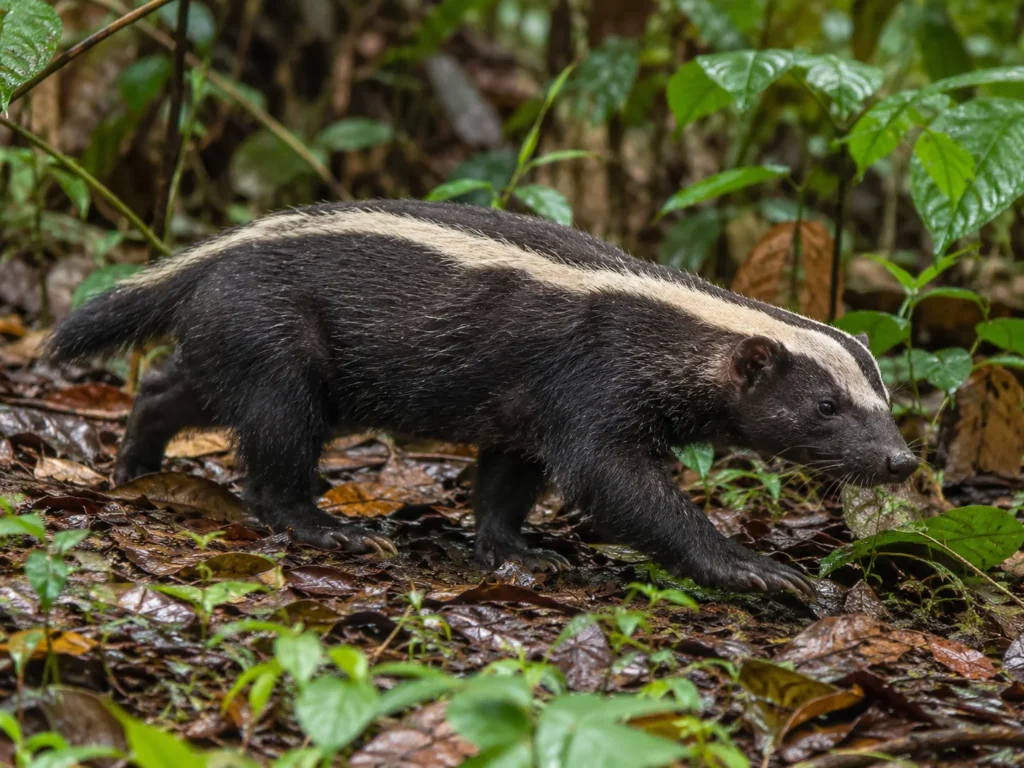
The African striped weasel has a long, slender black body, a white crown, white longitudinal stripes along the back, and a largely white tail. It is frequently confused with the zorilla. Like several mustelids, it can release odor from anal glands when stressed or attacked, giving it both a visual and defensive resemblance to skunks without being closely related to them.
6. Marbled Polecat
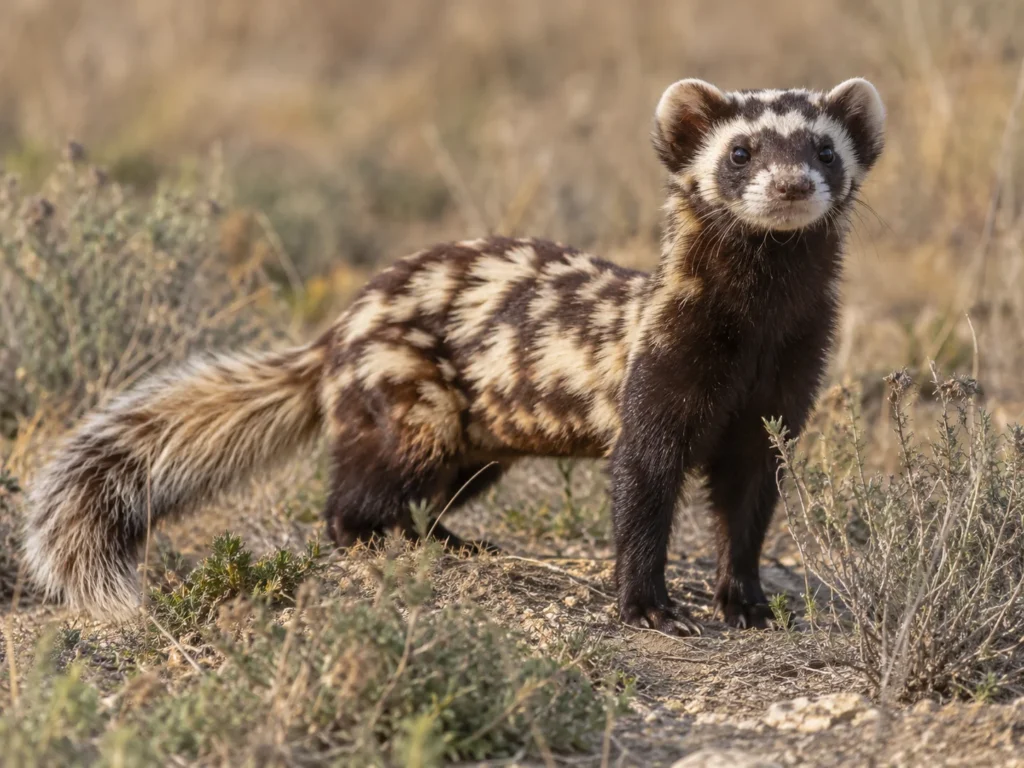
The marbled polecat looks less like a classic striped skunk but shares several useful comparison traits. It has a dark underside, pale facial markings, a black mask, and a striking marbled coat of yellowish, reddish, and dark tones. When threatened, it raises its tail and can release foul-smelling anal-gland secretions. It belongs to Mustelidae.
7. European Polecat
European polecats are dark brown mustelids with pale facial markings that create a mask-like face. Their appearance is less skunk-like than a zorilla’s, but the name “polecat” creates frequent confusion. True polecats are members of Mustelidae, not Mephitidae. They possess scent glands and can produce a strong odor, but they are zoologically distinct from skunks.
8. Honey Badger
Honey badgers offer a different type of resemblance. Their bodies are stocky and low to the ground, with a dark underside and a broad pale mantle across the back. They are mustelids with enlarged anal glands that can produce foul-smelling fluid when threatened. However, their coloration, powerful digging build, and defensive behavior should not be mistaken for evidence of close skunk ancestry.
Badgers and Other Mustelids With Skunk-Like Features
9. American Badger
American badgers resemble skunks mainly in body shape and markings. They have flattened, stocky bodies, short powerful legs, black facial patches, and a white stripe running back from the nose. Both animals are skilled diggers, but the American badger belongs to Mustelidae. Its defensive strategy relies far more on strength, claws, and burrowing than on skunk-style spraying.
10. Eurasian Badger
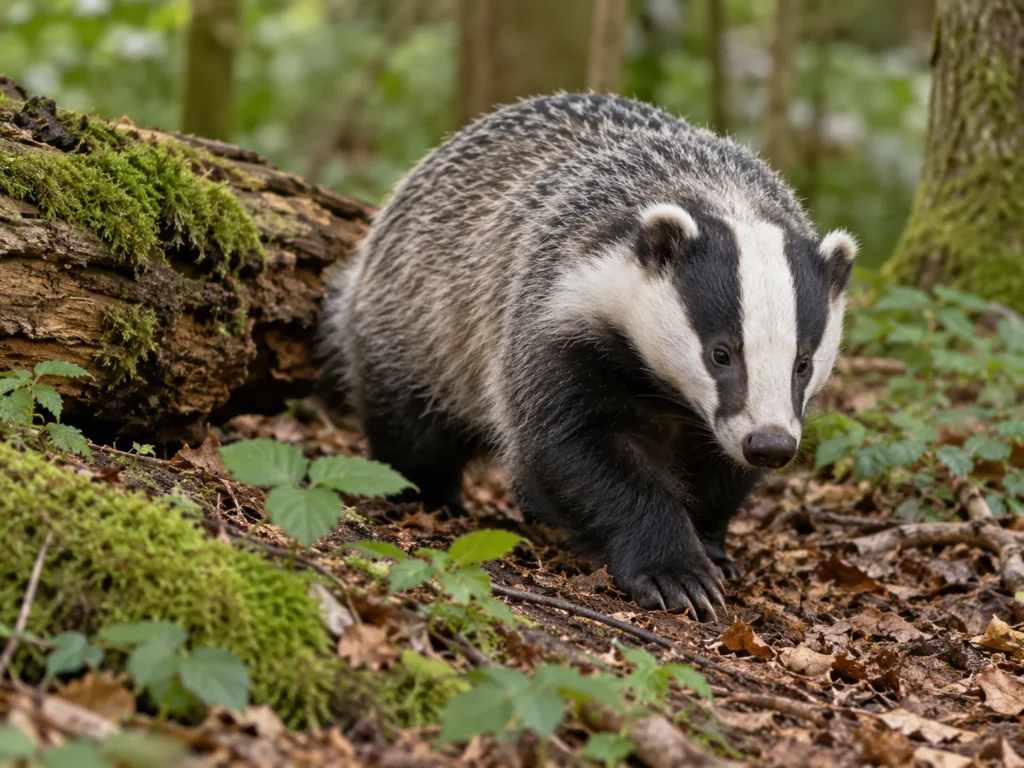
The Eurasian badger has a stocky frame and one of the most recognizable black-and-white faces among mammals. Dark stripes run from the nose through the eyes toward the ears, separated by pale fur. It belongs to Mustelidae and is not a skunk relative in the family-level sense. Its resemblance is mainly coloration and overall robust body form.
11. Chinese Ferret-Badger
The Animals Like Skunks Chinese ferret-badger combines a slender mustelid body with a white forehead, dark facial mask, and often a pale stripe along the back. It also possesses anal glands that can emit a strong odor when the animal defends itself. These features make it a useful skunk comparison, although it is firmly part of Mustelidae rather than Mephitidae.
Broader Skunk-Like Mammals
12. African Civet
African civets belong to Viverridae, so they are even more distantly related to skunks than mustelid look-alikes are. Their cream or silvery coats carry dark markings, a mask-like face, and contrasting neck stripes. Civets are also famous for specialized scent glands, though these secretions play important roles in chemical communication rather than functioning exactly like a skunk’s directed defensive spray.
Which Animals Are Actually Related to Skunks?
The easiest way to separate Animals Like Skunks true relatives from look-alikes is to compare their families and defensive traits.
| Animals Like Skunks | Family | True Skunk Relative? | Strong Scent Defense? | Main Similarity |
| Sunda stink badger | Mephitidae | Yes | Yes | Same family + odor |
| Palawan stink badger | Mephitidae | Yes | Yes | Same family + odor |
| Zorilla | Mustelidae | No | Yes | Stripes + odor |
| African striped weasel | Mustelidae | No | Yes | Color pattern + odor |
| European polecat | Mustelidae | No | Yes | Scent glands |
| Honey badger | Mustelidae | No | Yes | Stocky body + odor |
| African civet | Viverridae | No | Different scent use | Markings + scent glands |
The most visually convincing look-alike is therefore not necessarily the closest relative. A zorilla can look more like a familiar striped skunk than a stink badger does, yet the stink badger shares the skunk family.
Zorilla vs Skunk: What’s the Difference?
A zorilla and a striped skunk can be surprisingly difficult to separate by appearance alone. Both have conspicuous black-and-white coats, bushy-looking tails, and powerful scent defenses. Their taxonomy and geography provide the clearest distinction.
True skunks belong to Mephitidae and occur naturally in the Americas. The zorilla belongs to Mustelidae and is native to Africa. It also has a more elongated mustelid build. The resemblance is a striking example of similar defensive coloration and odor strategies appearing in animals from different evolutionary lineages.
Stink Badger vs Skunk
Stink badgers reverse the zorilla situation. They may look less like the familiar striped skunk, yet they are genuine members of Mephitidae. Both Sunda and Palawan stink badgers possess strong scent glands and can use pungent secretions defensively.
Their ranges are also very different. True American Animals Like Skunks occur across parts of North, Central, and South America, while stink badgers live in Southeast Asia. The common name “badger” is therefore misleading if it is interpreted as a statement about their modern family classification.
Are Polecats and Skunks the Same Animal?
No. In zoological classification, true polecats belong to Mustelidae, whereas skunks belong to Mephitidae. European polecats, striped polecats, Saharan striped polecats, and marbled polecats are all mustelids rather than true skunks.
Confusion persists because “polecat” has sometimes been used informally as a name for skunks in North America. That everyday usage does not make the animals taxonomically identical. The striped polecat’s nickname “African skunk” is similarly descriptive rather than scientific.
Which Animals Can Spray or Smell Like Skunks?
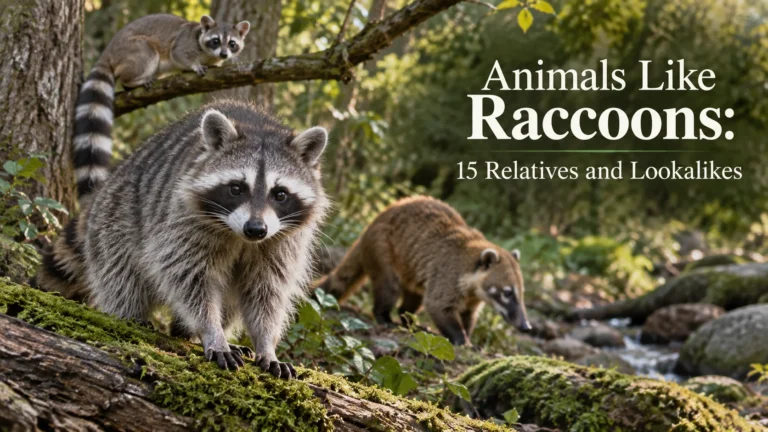
Skunks are especially famous because they can project foul-smelling secretions defensively with considerable control. Stink badgers also possess projectile scent glands, while zorillas can discharge powerful anal-gland secretions when threatened. Unlike many Animals Like Raccoons, which may depend more on climbing ability, agility, or opportunistic behavior, these species use strong chemical defenses as a major way to discourage predators.
Other species differ. African striped weasels, European polecats, marbled polecats, ferret-badgers, and honey badgers can produce strong odors from anal glands, but their defensive behavior should not automatically be described as identical to skunk spraying. African civets use glandular secretions prominently in scent communication. Releasing an odor, scent marking, and directing a defensive spray are different behaviors.
Common Misconceptions About Skunk Look-Alikes
The biggest misconception is that Animals Like Skunks are simply unusual weasels. Modern taxonomy instead recognizes Mephitidae as a separate family containing skunks and stink badgers. Another common mistake is calling zorillas “African skunks” as though they were true members of Mephitidae; they are mustelids.
Common names create additional confusion. Stink badgers are genuine skunk-family animals, while honey badgers and Eurasian badgers are not. Black-and-white coloration also does not prove relationship, and possessing scent glands does not mean an animal can accurately spray a threat in the same way as a skunk.
Frequently Asked Questions
What animal looks most like a skunk?
The striped polecat, or zorilla, is one of the strongest skunk look-alikes. It has bold black-and-white stripes, a bushy-looking tail, and a powerful scent defense. However, it is an African mustelid rather than a true member of the skunk family.
What animals are actually related to skunks?
Stink badgers are the most important non-American examples because modern classification places them in Mephitidae alongside true skunks. The Sunda stink badger and Palawan stink badger therefore share a closer family relationship with skunks than polecats, weasels, or ordinary badgers do.
Is a zorilla a skunk?
No. The zorilla is another name for the striped polecat, a member of Mustelidae. Its black-and-white coloration and powerful odor defense make it look remarkably skunk-like, but it evolved within a different carnivore family and occurs naturally in Africa.
Are polecats and skunks the same animal?
No. True polecats belong to Mustelidae, while skunks belong to Mephitidae. The confusion partly comes from “polecat” being used informally for skunks in some North American contexts and from striped polecats being extremely skunk-like in appearance.
What animals can release a smell like a skunk?
Stink badgers and zorillas are especially strong examples. Several other mustelids, including polecats, striped weasels, ferret-badgers, marbled polecats, and honey badgers, have strong anal-gland secretions. However, not all use these secretions as the same kind of directed defensive spray.
Final Thoughts
Animals like skunks range from genuine relatives to remarkable cases of superficial resemblance. Stink badgers belong to the same family as skunks, while zorillas, polecats, striped weasels, and honey badgers are mustelids that share selected features such as contrasting coats or strong scent glands. The key is identifying what kind of similarity is involved. Appearance, odor, body shape, and ancestry can point in different directions, so taxonomy and defensive behavior provide a much clearer comparison than black-and-white fur alone.
One Comment