
Animals With Big Noses: 15 Species and Why They Have Them
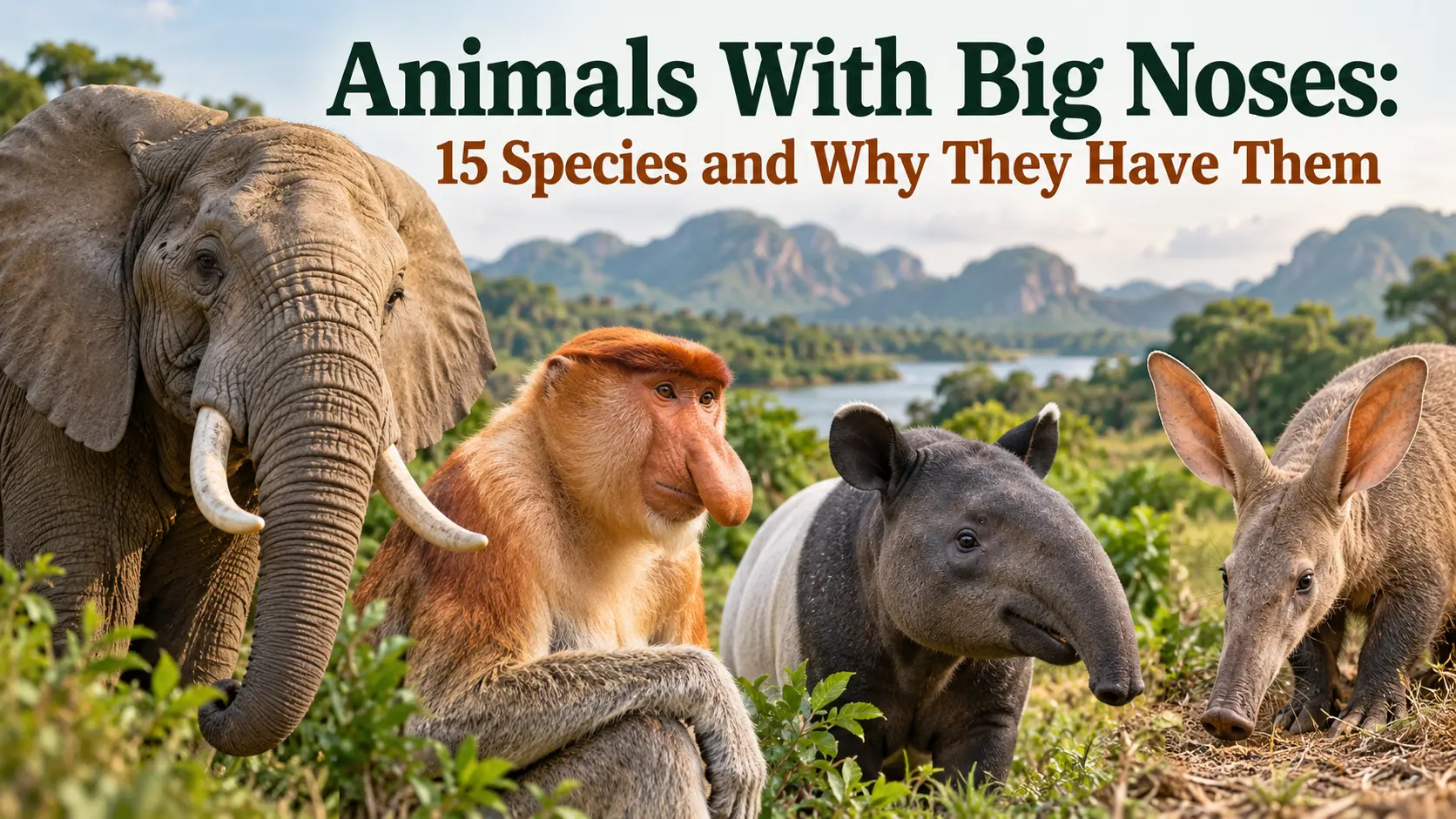
Animals with big noses are found in forests, deserts, oceans, wetlands, and even underground. Some, like elephants, have obvious trunk-like noses, while others have inflatable nasal structures, flexible snouts, or highly specialized sensory organs. These unusual features are not just for appearance. They can help animals smell food, grasp vegetation, filter air, sense movement, communicate, or attract mates. Here are 15 remarkable animals whose noses and snouts perform surprisingly different jobs.
Animals with big noses include elephants, proboscis monkeys, saiga antelopes, tapirs, elephant seals, aardvarks, star-nosed moles, sengis, coatis, and other mammals. Their enlarged noses or elongated snouts can help with smelling, feeding, touch, air filtration, communication, sexual display, and even underwater foraging.
What Counts as a Big Nose in Animals?
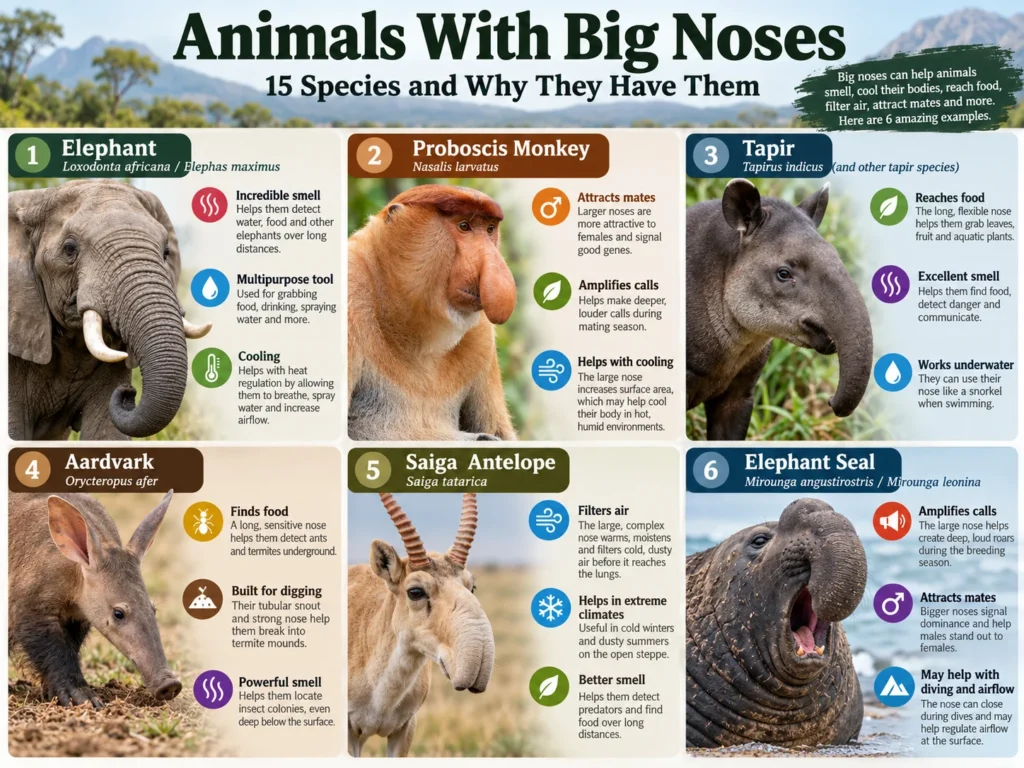
“Big nose” is a useful everyday description, but animal anatomy is more complicated. In some species, the actual nose is greatly enlarged. In others, what looks like a huge nose is really a longer snout that includes the nose, jaws, and mouth. A proboscis is an elongated or highly modified structure associated with the nose or mouth region. Elephant trunks and tapir proboscises involve both the nose and upper lip. A snout, meanwhile, is the projecting part of an animal’s face and may contain several structures besides the nose. This distinction matters because not every long object on an animal’s face is a nose. A sawfish’s saw is a rostrum, for example, while a swordfish’s bill is an elongated upper jaw. The animals below have genuinely prominent nasal structures or unusually elongated snouts that fit the search for animals with big noses.
15 Animals With Big Noses
1. Elephant — The Ultimate Trunk Nose
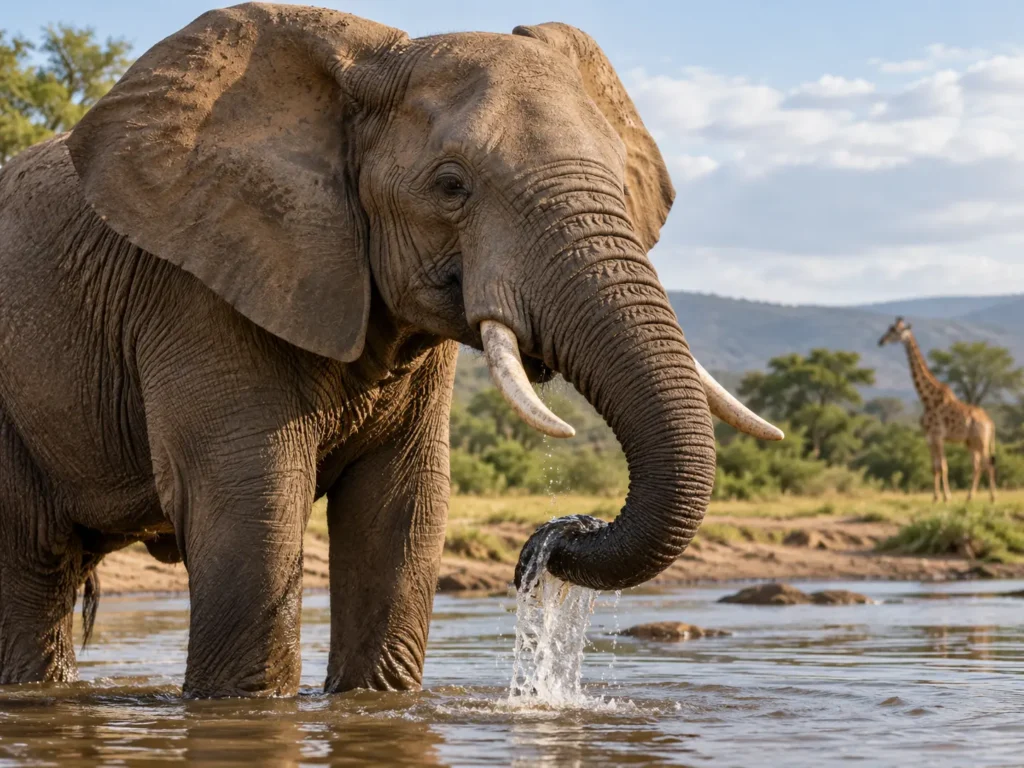
No animal represents the idea of a big nose better than an elephant. Its trunk is formed from the nose and upper lip, creating an extremely muscular and flexible structure with nostrils at the tip. Elephants breathe and smell through their trunks, but they also use them to grasp vegetation, drink water, touch other elephants, move objects, and investigate their surroundings. The trunk is therefore much more than an oversized nose; it is one of the most versatile anatomical structures found in any land mammal.
2. Proboscis Monkey — A Nose Built for Signalling
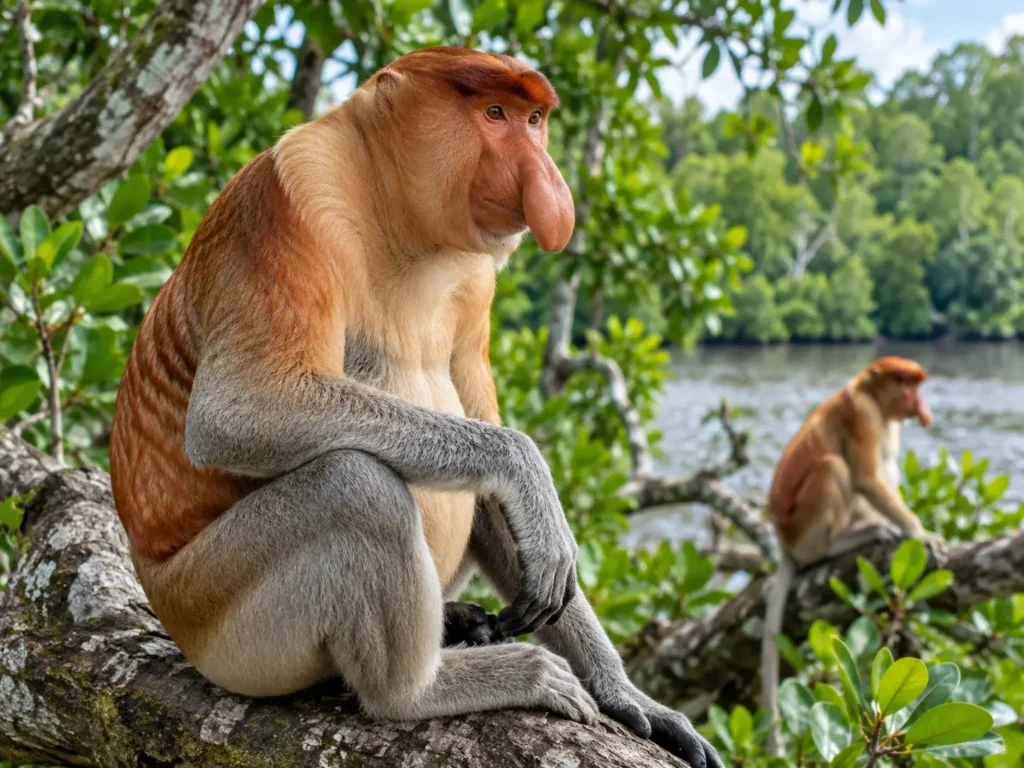
Adult male proboscis monkeys are famous for their large, pendulous noses, which can hang over the mouth. Females also have prominent noses, but the male’s is considerably larger, making this one of the clearest examples of sexual dimorphism in facial anatomy. Research suggests that nose size contributes to both visual and acoustic signalling. The enlarged structure can influence the sounds males produce, while its conspicuous appearance may also communicate information during social and reproductive interactions.
3. Saiga Antelope — A Nose That Conditions the Air
The saiga antelope has one of the most distinctive noses in the mammal world. Its oversized, flexible nasal structure hangs over the mouth and contains unusually developed internal passages. This strange-looking nose is highly functional. It can help filter dust from the air and condition inhaled air during the extreme seasonal conditions of the Eurasian steppe. In cold weather, the nasal passages help warm incoming air before it reaches the lungs, making the saiga’s nose an important environmental adaptation.
4. Tapir — A Short, Flexible Proboscis
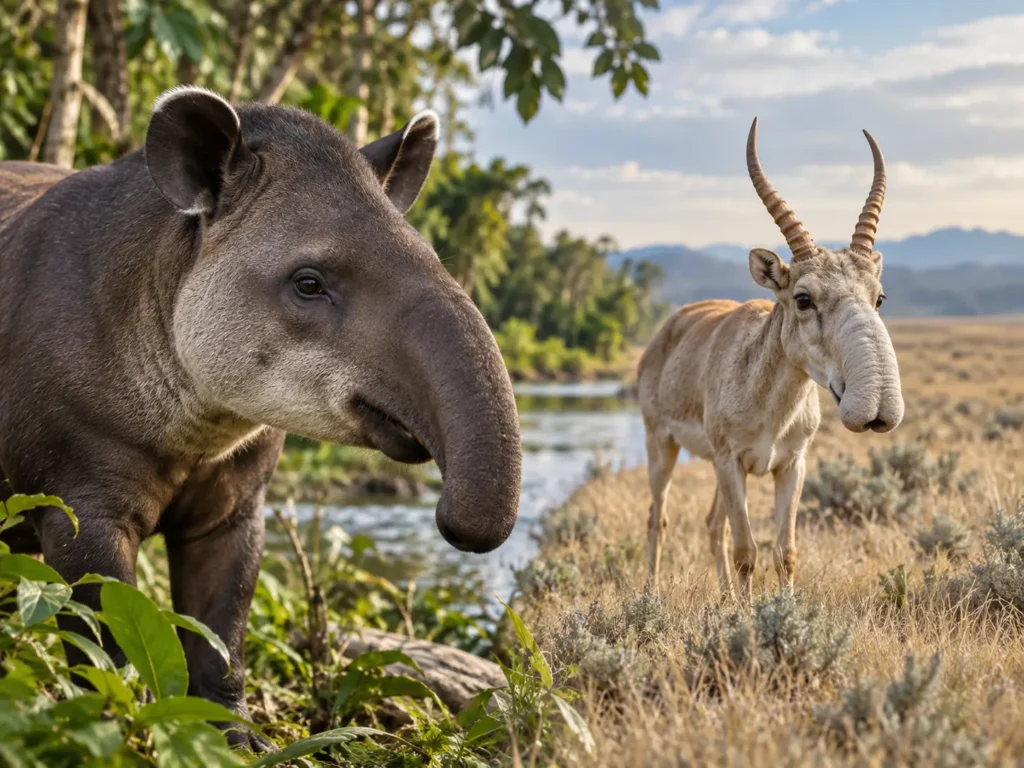
Tapirs have a flexible, trunk-like structure created by the nose and upper lip. It is far shorter than an elephant’s trunk, but it is still mobile enough to bend, explore, and manipulate vegetation. A tapir can use this short proboscis to pull leaves, shoots, and fruit toward its mouth while also investigating scents in its surroundings. This makes the tapir a particularly good example of a big nose that combines feeding and sensory functions in one compact structure.
5. Northern Elephant Seal — An Inflatable Male Nose
Mature male northern elephant seals develop a large hanging proboscis that gives the species its name. Females have much smaller noses, so the feature becomes especially obvious once males reach adulthood. During the breeding season, males use their enlarged noses while producing deep vocal threats directed at rivals. The proboscis helps resonate these sounds, making the nose part of a broader display system linked with competition and social communication rather than simply smell.
6. Hooded Seal — A Nose That Inflates for Display
Male hooded seals take nasal display in an even stranger direction. They have an inflatable hood formed from the nasal cavity, which can expand dramatically over the top of the head. Males can also protrude an inflatable reddish membrane from one nostril. These structures are used during visual displays and confrontations, particularly around breeding. Unlike the hanging proboscis of an elephant seal, the hooded seal’s enlarged nasal anatomy functions more like an inflatable display device.
7. Star-Nosed Mole — A Nose Designed for Touch
The star-nosed mole has one of the most recognizable noses of any small mammal. Around its nostrils are 22 fleshy rays that form a pink, star-shaped sensory organ. These rays contain thousands of specialized touch receptors, allowing the mole to inspect its surroundings with extraordinary speed. The star is therefore primarily a tactile organ rather than simply a large smelling surface. It helps the mole locate and identify prey in dark tunnels and muddy aquatic environments where vision offers limited help.
8. Aardvark — A Long Nose for Finding Insects
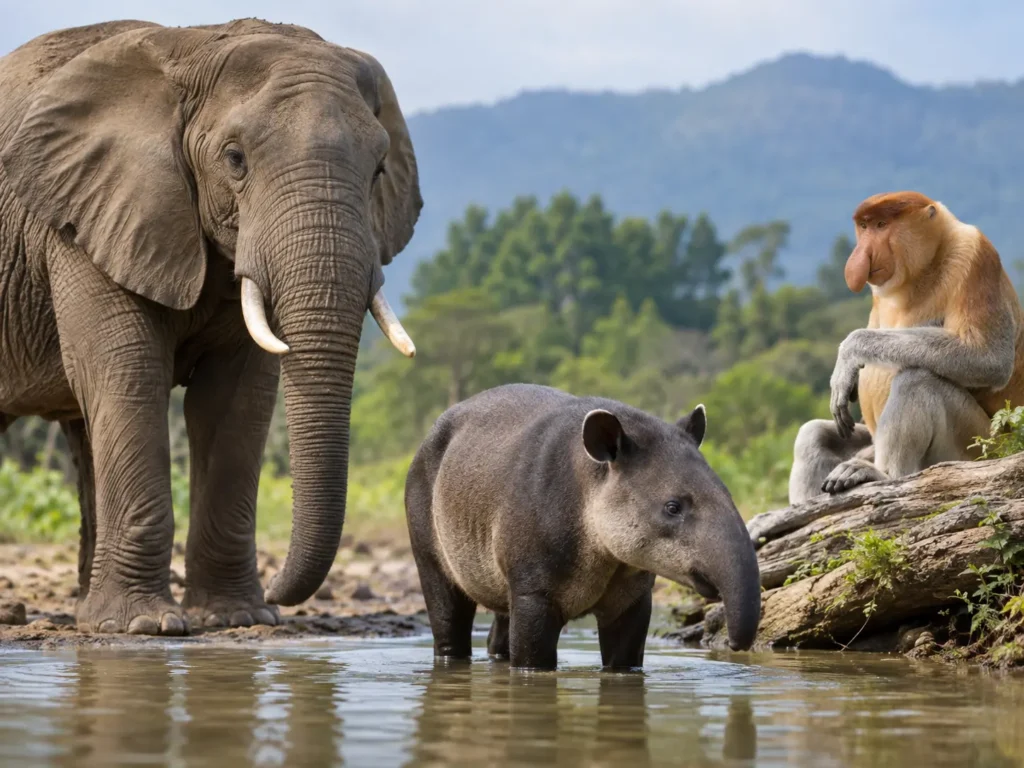
The aardvark’s long, broad-ended nose is well suited to its nocturnal search for ants and termites. Its olfactory system is highly developed, allowing it to detect food that may be hidden underground. Aardvarks also spend considerable time digging, so their nasal anatomy includes protective features that help keep soil and debris out. The combination of an elongated nose, powerful sense of smell, and digging adaptations makes the aardvark an excellent example of a nose shaped around specialized foraging.
9. Giant Anteater — An Extremely Long Snout
The giant anteater looks as though it has an enormous nose, but technically its most obvious feature is an extremely elongated snout. The nose forms part of a larger facial structure specialized for feeding on ants and termites. Its strong sense of smell helps it locate insect colonies before it uses powerful claws to open them. The long snout then supports access to narrow spaces where its exceptionally long tongue can collect prey. This is a good example of why “long snout” and “big nose” are related but not identical terms.
10. Black-and-Rufous Sengi — A Small Animal With a Long Nose
The black-and-rufous sengi, also called an elephant shrew, has a long and highly noticeable snout despite its relatively small body. The nose is flexible and constantly active while the animal searches its surroundings. Sengis rely heavily on scent while hunting insects and other small food items among leaf litter. Despite the common name “elephant shrew,” sengis are neither true shrews nor close relatives of elephants in the everyday sense. Their long noses are a distinct foraging adaptation of their own.
11. Coati — A Flexible Foraging Snout
Coatis have long, mobile snouts that make them easy to recognize. Their noses are remarkably active during feeding, moving from side to side as the animals investigate leaves, soil, logs, and crevices. A strong sense of smell helps coatis locate insects, small animals, fruit, and other food. The flexible snout can also be pushed into narrow spaces, giving these adaptable omnivores an effective tool for exploring environments where food is often hidden from view.
12. Long-Nosed Bandicoot — A Sensitive Ground-Probing Nose
As its name suggests, the long-nosed bandicoot has an elongated and sensitive snout. This Australian marsupial frequently digs small holes while searching for insects, worms, and other invertebrates beneath the soil. The animal can bring its nose close to these openings and use its sensory abilities to investigate potential food. Its pointed snout is therefore not merely a distinctive facial feature; it works together with digging behavior to support an active, ground-based foraging strategy.
13. Western Long-Beaked Echidna — A Sensory Snout
The western long-beaked echidna has a narrow, downward-curving snout that is sometimes called a “beak.” Unlike a bird’s beak, however, this is an elongated mammalian facial structure containing important sensory tissues. The echidna pushes its snout into soil and other substrates while searching for prey. Touch, smell, and electroreception all contribute to its ability to detect food. This makes its long nose particularly interesting because it functions as part of a sophisticated sensory system rather than simply an extension for smelling.
14. Russian Desman — A Flexible Aquatic Snout
The Russian desman is a semi-aquatic relative of moles with a long, flexible snout. Its unusual nose is well suited to searching underwater, where visibility may be poor and other senses become especially valuable.
The snout can probe sediment and aquatic surfaces while sensory hairs help the animal detect information from its surroundings. This gives the desman a different kind of long-nose adaptation from terrestrial insect hunters such as aardvarks and sengis.
15. Moose — A Large Nose With an Aquatic Advantage
Moose have broad, heavy muzzles and unusually substantial nasal structures. Their noses may not be long like an elephant’s or anteater’s, but they are among the most prominent facial features of these enormous deer. Moose regularly feed on aquatic vegetation and can submerge their heads while foraging. Specialized tissues in the nasal region can help constrict the nostrils during underwater feeding, reducing water entry. Their large muzzle therefore provides a useful reminder that a big nose can be broad and specialized rather than simply elongated.
Why Do Some Animals Have Such Big Noses?
Large noses and long snouts have developed in different animal groups for very different functions. There is no single reason that explains every species.
| Main Function | Examples |
| Grasping and manipulation | Elephant, tapir |
| Filtering and conditioning air | Saiga antelope |
| Communication and display | Proboscis monkey, elephant seal, hooded seal |
| Touch and sensory detection | Star-nosed mole, echidna, Russian desman |
| Finding food by smell | Aardvark, sengi, coati |
| Specialized feeding | Giant anteater, bandicoot |
| Aquatic foraging support | Moose |
Some noses are primarily sensory, while others help manipulate food or influence communication. Similar-looking traits can therefore perform completely different biological jobs depending on the species.
Is a Long Snout the Same as a Big Nose?
Not exactly. The nose is only one part of an animal’s facial anatomy, while the snout can include the nose, jaws, mouth, and surrounding tissues.
An elephant trunk and tapir proboscis genuinely include highly modified nasal structures. A giant anteater, by comparison, is better described as having an extremely long snout rather than one enormous nose. For a general list of animals with big noses, both types are relevant because they create a highly prominent nasal appearance. However, separating the terms helps avoid confusing true noses with jaws, beaks, or unrelated facial extensions.
Key Takeaways
- Animals can have enlarged noses, proboscises, trunks, or elongated snouts.
- An elephant’s trunk combines the nose and upper lip.
- The saiga antelope uses its unusual nasal system to help condition inhaled air.
- Proboscis monkeys and some seals use enlarged noses in communication and display.
- The star-nosed mole’s unusual nose is highly specialized for touch.
- Long snouts can also support feeding and food detection.
Frequently Asked Questions
What Animals Have Big Noses?
Animals with noticeably large or unusual noses include elephants, proboscis monkeys, saiga antelopes, tapirs, northern elephant seals, hooded seals, aardvarks, star-nosed moles, sengis, coatis, and moose. Some have genuinely enlarged noses, while others have elongated snouts that make the nasal region especially prominent.
What Animals Have Long Noses Besides Elephants?
Tapirs, aardvarks, sengis, coatis, giant anteaters, long-nosed bandicoots, Russian desmans, and long-beaked echidnas all have noticeably elongated nasal or snout regions. Their structures serve different purposes, ranging from grasping vegetation and detecting insects to probing soil and sensing underwater environments.
Why Does the Proboscis Monkey Have Such a Big Nose?
The large male proboscis monkey nose appears to play an important role in social and reproductive signalling. It is visually conspicuous and can also influence the acoustic properties of male calls. Because males develop much larger noses than females, the feature is a clear example of sexual dimorphism.
Why Is the Saiga Antelope’s Nose So Large?
The saiga’s enlarged nasal system helps it cope with the difficult conditions of open steppe habitats. Its nose can filter airborne dust and condition inhaled air. During very cold weather, the nasal passages also help warm air before it travels deeper into the respiratory system.
Is an Animal’s Snout the Same as Its Nose?
No. The nose is part of the respiratory and olfactory system, while the snout is the projecting facial region that may include the nose, jaws, and mouth. This is why a giant anteater is more accurately described as long-snouted, while an elephant truly possesses an elongated nasal structure in the form of its trunk.
Final Thoughts
Animals with big noses show how dramatically facial anatomy can change to meet different needs. From an elephant’s grasping trunk and a saiga’s air-conditioning nose to a star-nosed mole’s touch-sensitive rays and a moose’s specialized muzzle, these structures help animals feed, sense, communicate, breathe, and interact with their environments in remarkably different ways.

One Comment