
Animals With Scales: 15 Species and How Their Scales Work
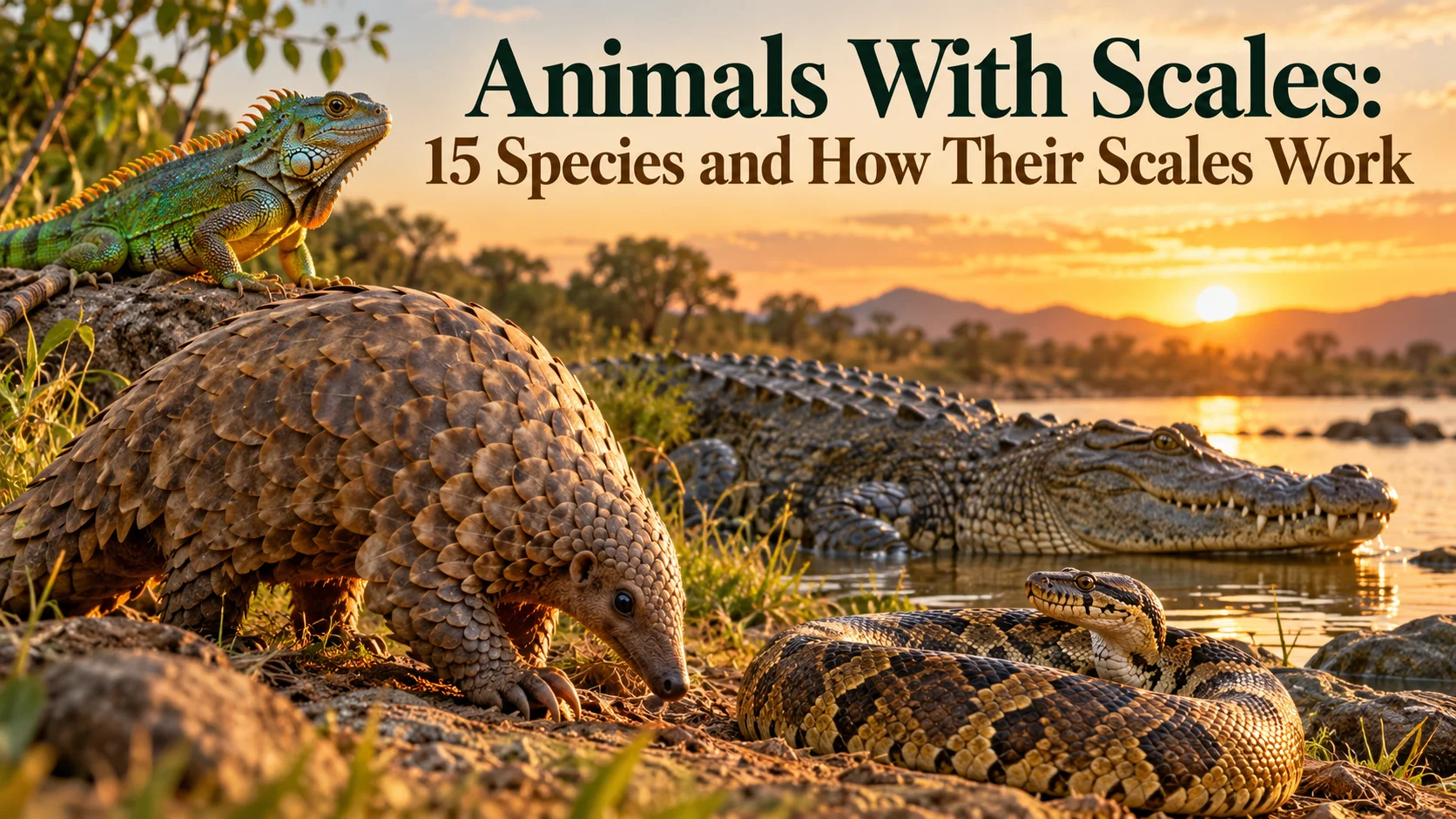
Animals with scales are far more diverse than snakes and fish. Pangolins, sharks, turtles, caecilians, butterflies, and even birds can all possess structures described as scales. However, these coverings are not built the same way or used for identical purposes. Some form tough armor, others help with movement, coloration, or specialized skin function. These 15 scaled animals show how many different biological structures can fit under one familiar word: scales.
Animals with scales include pangolins, snakes, lizards, turtles, fish, sharks, some caecilians, butterflies, and birds such as chickens. Their scales are not anatomically identical. Depending on the species, scaled structures may provide armor, aid movement, reinforce skin, influence water flow, create coloration, or cover specialized areas of the body.
What Are Animal Scales?
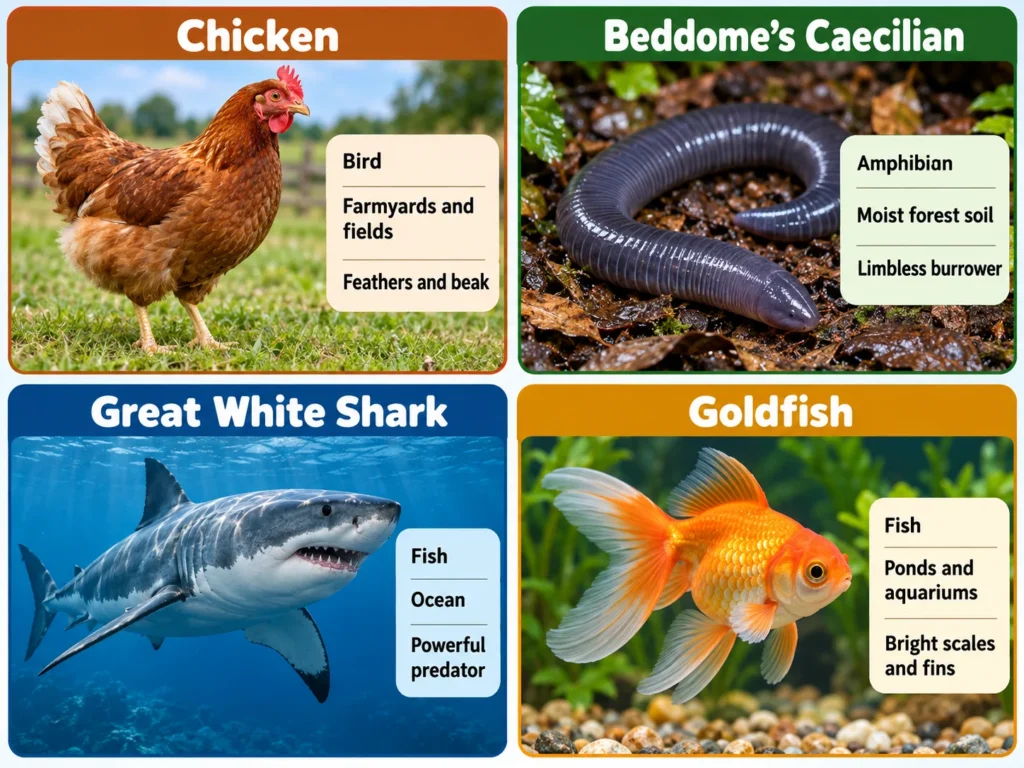
A scale is generally a small plate-like or overlapping structure that covers part of an animal’s body. The term sounds simple, but it describes several very different biological features across the animal kingdom. Reptile scales are mainly keratinized structures of the outer skin. Typical bony-fish scales develop differently and often contain mineralized tissues. Pangolin scales are tough keratin structures, while shark skin is covered by tooth-like dermal denticles. Butterflies have microscopic scales on their wings that are completely different again. This is why two animals can both be described as “scaled” without their coverings having the same anatomy or evolutionary origin.
Scales vs Scutes vs Osteoderms
These terms are related but should not be treated as interchangeable. A scale is a broad term for a small plate-like body covering. A scute is usually a larger, thicker external plate, such as those covering parts of a turtle shell. An osteoderm is a piece of bone formed within the skin itself. Sharks add another structure called a dermal denticle, a tiny tooth-like covering often referred to as a placoid scale.
15 Animals With Scales
The animals below were selected because each demonstrates a distinctive scale type, arrangement, or biological function rather than simply having a pyton
Pangolins are mammals, yet much of their bodies are covered by large overlapping scales made largely of keratin, the same broad structural protein found in hair and nails. These scales act as defensive armor. When threatened, a pangolin can curl tightly into a ball, exposing the tough scaled surface while protecting softer areas of its body. Unlike armadillo armor, which relies heavily on bony osteoderms, pangolin scales form a distinctive keratin-based covering.
2. Eastern Diamondback Rattlesnake — Keeled Snake Scales
The eastern diamondback rattlesnake is covered with overlapping reptilian scales. Many of the scales along its back are strongly keeled, meaning a raised ridge runs along their surface and gives the snake a rougher texture. Its broad belly scales are different in shape and interact with the ground as the snake moves. Snake scales therefore do more than cover the body: their arrangement also contributes to how the animal contacts and moves across different surfaces.
3. Green Iguana — Different Scales Across One Body
Green iguanas show that even a single reptile can carry several kinds of scales. Larger, more irregular scales occur around parts of the head, while smaller scales cover much of the body. The skin is keratinized and periodically shed as the animal grows. Scales help protect the surface of the body while still allowing the iguana enough flexibility to climb, walk, and move through vegetation. Their varied size also gives the iguana its distinctive textured appearance.
4. Gila Monster — Beadlike Scales With Hidden Armor
The Gila monster has a striking bead-like skin texture created by small rounded scales. Under parts of this surface lie tiny bony structures called osteoderms. These osteoderms reinforce the skin and add another layer of protection beyond the external scales. This makes the Gila monster a useful example of why the phrase “scaled armor” can hide more complicated anatomy underneath. Its surface scales and underlying bone are related parts of the covering, but they are not the same structure.
5. Tuatara — A Scaled Reptile That Is Not a Lizard
Tuatara look remarkably like lizards, and their bodies are covered in reptilian scales, but they are not true lizards. They belong to Rhynchocephalia, an ancient reptile lineage separate from snakes and lizards. Their inclusion shows that scaled skin is shared across several reptilian groups and cannot be used by itself to determine close relationships. The tuatara’s appearance therefore provides a useful reminder that similar external traits do not always mean animals belong to the same evolutionary branch.
6. American Alligator — Scutes and Bony Osteoderms
An American alligator’s back looks heavily scaled, but its armor is more complex than ordinary reptilian scales alone. Large plate-like scutes cover parts of the exterior, while bony osteoderms reinforce areas of the skin beneath them. Together they create the armored texture that makes crocodilians so recognizable. It would be inaccurate to say that every alligator scale is simply made of bone. The visible surface structures and underlying dermal bone are related but anatomically distinct.
find out Animals with Small Ears
7. Green Sea Turtle — Scales on Skin and Scutes on the Shell
Green sea turtles have scales on exposed areas such as the head and limbs, but their shells require slightly different terminology. The shell itself is a complex skeletal structure. Its exterior is covered by large keratinous plates called scutes rather than being made entirely of ordinary scales. This combination gives turtles both scaled skin and an armored shell covering. It also illustrates why shell, scute, and scale should not be treated as synonyms even though all can contribute to external protection.
8. Goldfish — Smooth Cycloid Scales
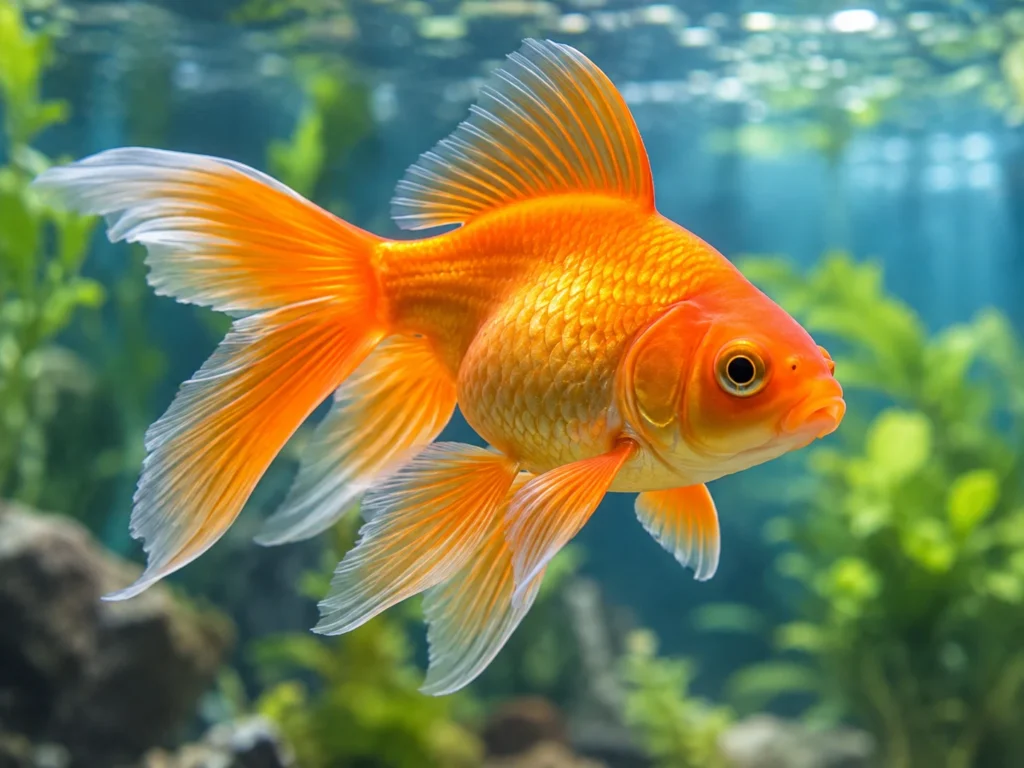
Goldfish are a familiar example of a bony fish covered with cycloid scales. Animals with scales overlap and have relatively smooth outer edges. Compared with heavily armored fish, cycloid scales provide a flexible covering that moves with the body while still helping protect the skin underneath. They create a useful baseline for understanding fish-scale diversity because other fish can have noticeably rougher, thicker, or more strongly mineralized scale types. Not all fish therefore wear the same kind of scales.
find out species with no tails
9. Yellow Perch — Rough Ctenoid Scales
Yellow perch have ctenoid scales, which differ from the smoother cycloid scales of goldfish. Ctenoid scales carry tiny comb-like projections along part of their outer edge, giving the body a rougher texture. This difference may be difficult to see from a distance, but it becomes obvious when the scale structure is examined closely. Goldfish and yellow perch are both scaled bony fish, yet their coverings show that even closely comparable fish can use different scale designs.
10. Alligator Gar — Hard Ganoid Armor
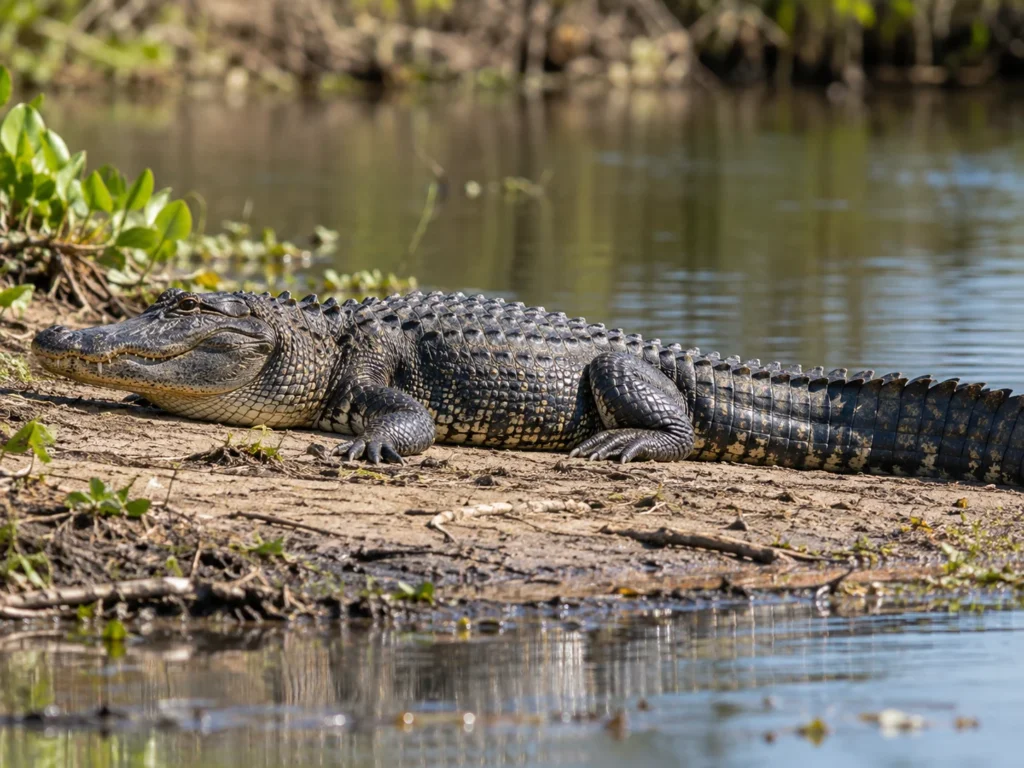
Alligator gars are covered with thick ganoid scales that form one of the toughest-looking fish coverings in the animal world. These scales are strongly mineralized and fit together in an overlapping arrangement that resembles natural armor. They are much harder and more rigid than the flexible cycloid scales of goldfish. Their body covering provides an excellent example of how fish scales can evolve toward heavy physical protection while still allowing the animal enough flexibility to swim efficiently.
11. Arapaima — Tough but Flexible Scales
The giant arapaima also has impressive protective scales, but their design differs greatly from the hard ganoid armor of an alligator gar. Arapaima scales have a tough mineralized outer surface supported by collagen-rich layers underneath. This combination Animals with scales provides strength while allowing the covering to flex rather than behave like rigid plating. The structure is especially interesting because it demonstrates how natural armor can balance toughness with movement. Strong protection does not necessarily require completely inflexible scales.
12. Great White Shark — Tooth-Like Dermal Denticles
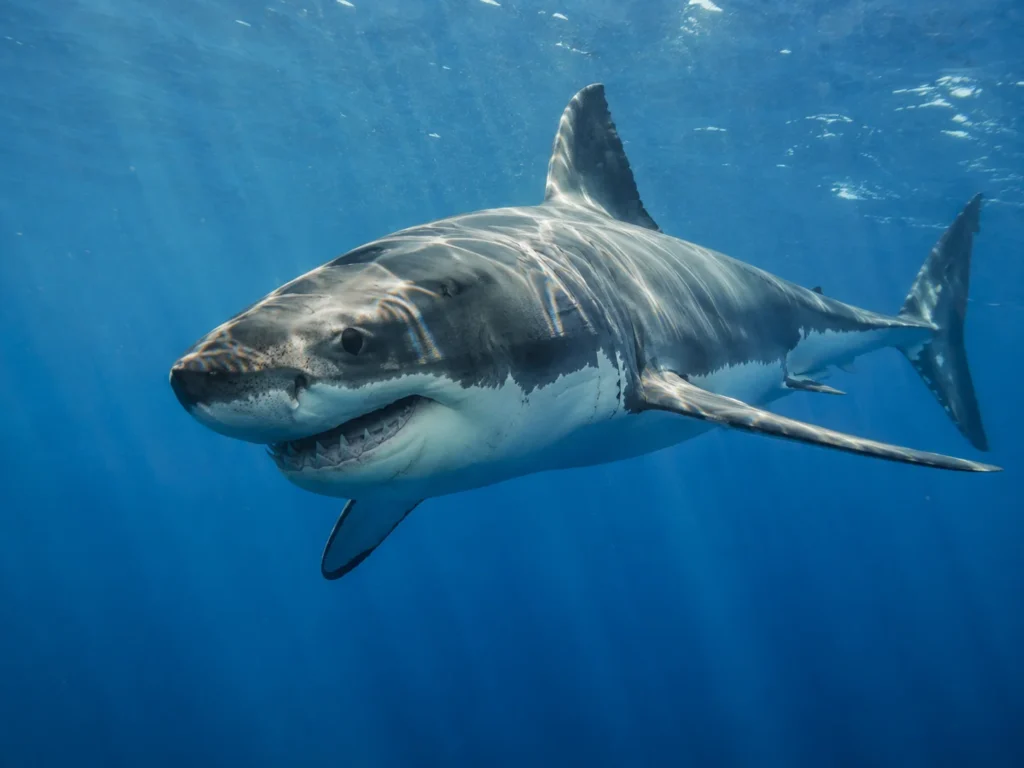
Great white sharks do have structures commonly called scales, but they are unlike the scales of most bony fish. Their skin is covered with dermal denticles, also known as placoid scales. These tiny structures are tooth-like in construction and give shark skin its characteristic rough texture.
Denticles can influence how water moves across the skin, although shark denticles vary considerably between species and body regions. Their unusual anatomy makes sharks one of the clearest examples of why the word “scale” can refer to very different structures.
13. Beddome’s Caecilian — An Amphibian With Hidden Scales
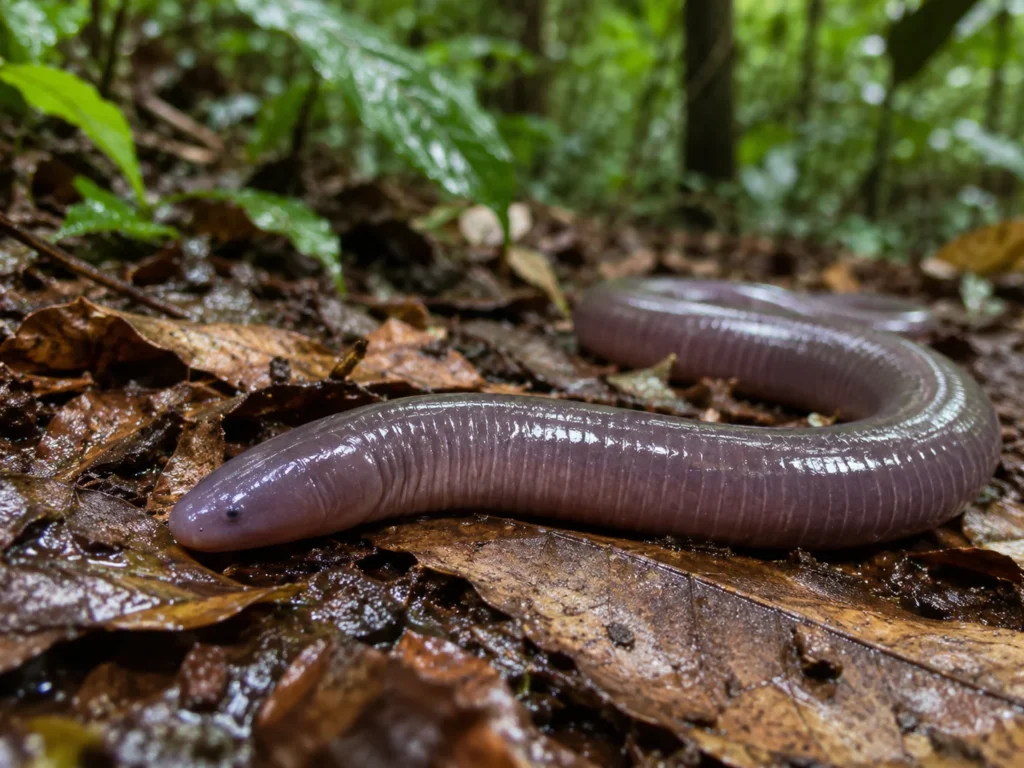
Most people associate amphibians with smooth, moist skin, but some Animals with scales caecilians challenge that expectation. Beddome’s caecilian possesses small mineralized dermal scales hidden inside pockets within its skin. They are not externally obvious like snake or fish scales, which makes them especially unusual.
This does not mean all amphibians have scales, or even that every caecilian does. Scale presence varies among caecilian groups, making these limbless amphibians an important exception to the familiar rule.
check out 16 Animals with Spots
14. Blue Morpho Butterfly — Microscopic Wing Scales
A blue morpho butterfly belongs on a list of scaled animals for a very different reason. Its wings are covered with countless microscopic scales. These structures are not related to reptile or fish scales. Instead, their fine architecture interacts with light and contributes to the brilliant blue appearance for which morpho butterflies are famous. Here, the main function is not heavy armor. The scales help create color and visual effects, showing that the term “scale” can describe delicate structures as well as tough protective coverings.
15. Chicken — A Feathered Animal With Scaled Legs
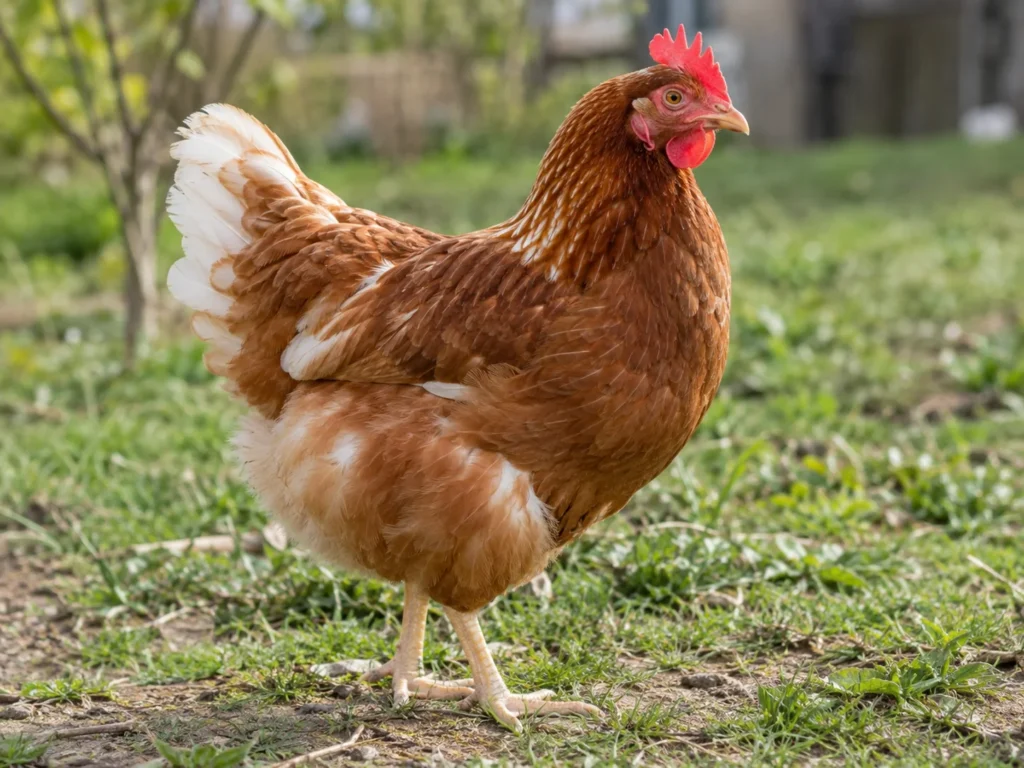
Chickens are mainly covered with feathers, but their lower legs and feet also carry genuine scale-like skin structures, including hard scutate scales. This makes birds another surprising group in which feathers and scales can appear on different parts of the same animal. The developmental relationship between bird scales, feathers, and reptilian skin structures is complex, so chicken leg scales should not simply be described as unchanged reptile scales. Their presence nevertheless shows that a feathered animal can still have clearly scaled regions.
Why Do Animals Have Scales?
Scales and related structures perform different jobs depending on the species. Some provide heavy physical protection, while others contribute to movement, coloration, or specialized body surfaces.
| Function | Examples |
| Defensive armor | Pangolin, alligator gar |
| Skin protection | Rattlesnake, iguana |
| Bony reinforcement | Gila monster, alligator |
| Flexible armor | Arapaima |
| Surface interaction | Snake belly scales |
| Specialized skin | Great white shark |
| Color production | Blue morpho butterfly |
| Regional body covering | Chicken |
There is therefore no single answer to why animals have scales. Their function depends on how the structures are built, where they occur on the body, and the environmental challenges faced by each species.
Are Fish Scales and Reptile Scales the Same?
No. Fish and reptile scales can look similar from a distance, but they develop differently and have different anatomical structures. Reptile scales are mainly keratinized structures of the epidermis, the outer layer of skin. Typical bony-fish scales develop deeper within the skin and contain mineralized tissues.
Sharks complicate the comparison even further because their dermal denticles are tooth-like rather than typical bony-fish scales. Similar external appearances therefore do not necessarily mean that body coverings share the same biological origin.
Do Mammals, Amphibians, Insects, and Birds Have Scales?
Yes, although the details vary considerably. Pangolins are mammals with extensive keratin scales. Some caecilians are amphibians with hidden dermal scales inside their skin. Butterflies and moths have microscopic scales covering their wings, while birds such as chickens have scaled regions on their feet and lower legs. These structures are not all equivalent. The important point is that animals described as “scaled” occur far beyond the familiar groups of reptiles and fish.
Key Takeaways
- Not all animal scales are anatomically the same.
- Pangolins are mammals covered with overlapping keratin scales.
- Bony fish can have cycloid, ctenoid, ganoid, and other scale types.
- Sharks have tooth-like dermal denticles rather than typical bony-fish scales.
- Some caecilians possess hidden dermal scales.
- Butterflies and birds provide surprising non-reptile examples of scaled body structures.
Frequently Asked Questions
What Animals Have Scales?
Animals with scales include snakes, lizards, turtles, many fish, sharks, pangolins, some caecilians, butterflies, moths, and birds with scaled feet or legs. However, their scales may differ greatly in structure, material, and function.
What Mammal Has Scales?
Pangolins are the best-known mammals covered extensively with scales. Their large overlapping scales are made mainly of keratin and act as protective armor. When threatened, a pangolin can curl into a ball and expose the scaled surface.
Do Sharks Have Scales?
Yes, although shark scales are usually called dermal denticles or placoid scales. They are tiny tooth-like structures embedded in the skin and differ significantly from the overlapping scales found on most bony fish.
Do Amphibians Have Scales?
Most familiar amphibians, such as frogs and salamanders, do not have conventional scales. However, some caecilians possess small dermal scales hidden within folds or pockets in their skin. The feature is not present in every caecilian species.
Are Fish Scales and Reptile Scales the Same?
No. Typical reptile scales are mainly keratinized epidermal structures, while most bony-fish scales develop differently and contain mineralized tissues. Shark denticles represent yet another distinct type of covering, so “scale” does not describe one universal structure.
Final Thoughts
Animals with scales range from familiar snakes and fish to pangolins, sharks, caecilians, butterflies, and even chickens. Their coverings can form armor, support movement, create brilliant colors, or produce specialized skin surfaces. The remarkable variety of these structures shows that the word “scale” describes several very different solutions to life in different environments.




2 Comments