
Docile Animals: 17 Gentle Species and Their Behavior
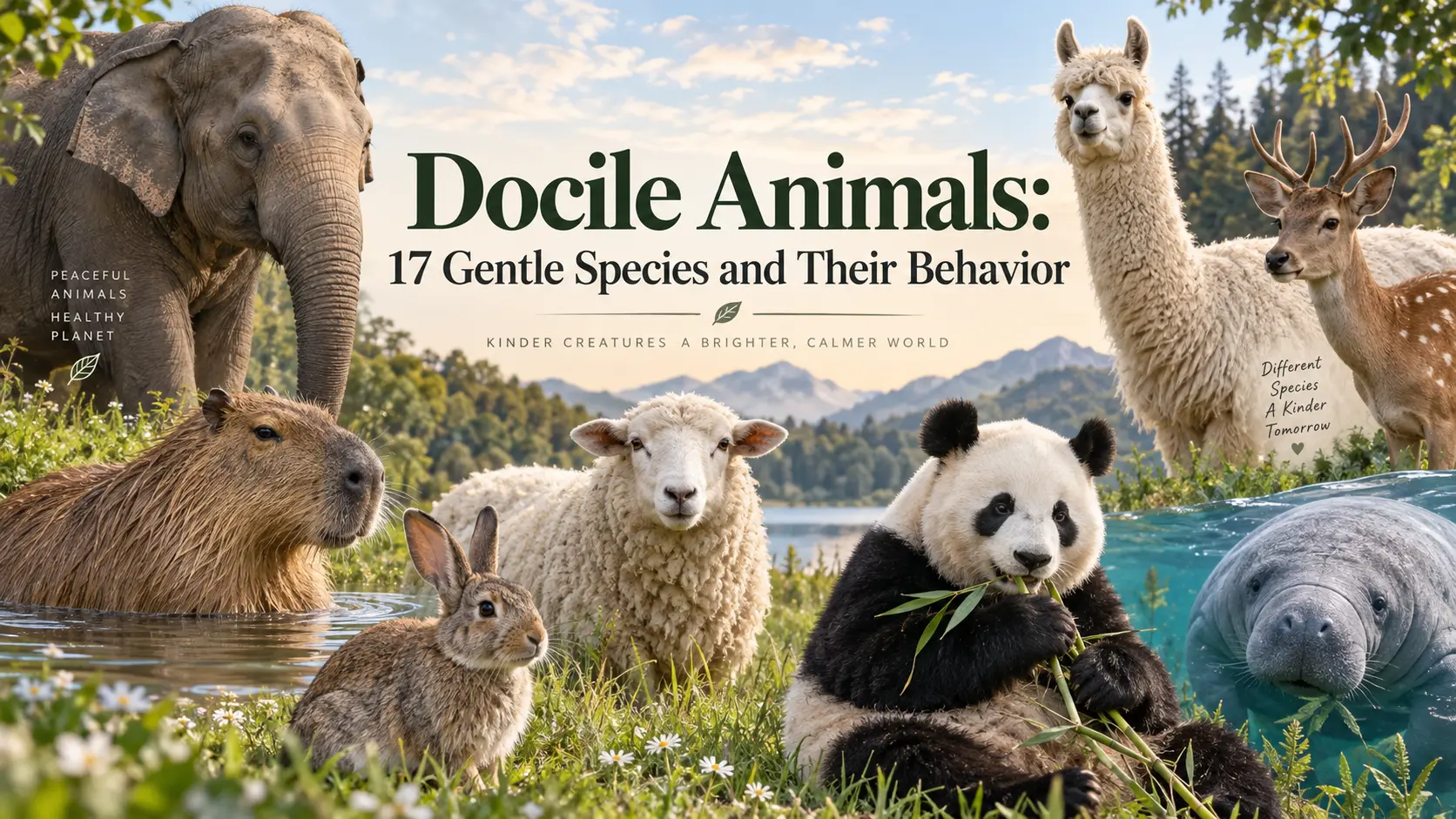
Docile animals are generally calm, manageable, and less likely to respond aggressively during normal interactions. Many domestic species have developed calmer temperaments through generations of selective breeding, while some wild animals are naturally less confrontational. Still, docile does not mean harmless. Individual personality, stress, handling, age, and environment can all change an animal’s behavior. These 17 examples show how gentleness appears across mammals and reptiles.
Docile animals include alpacas, llamas, donkeys, sheep, guinea pigs, rabbits, corn snakes, ball pythons, and several other species known for generally calm behavior. Domestication, socialization, herd behavior, and individual temperament can all influence docility. Even gentle animals may bite, kick, flee, or defend themselves when frightened, injured, stressed, or handled incorrectly.
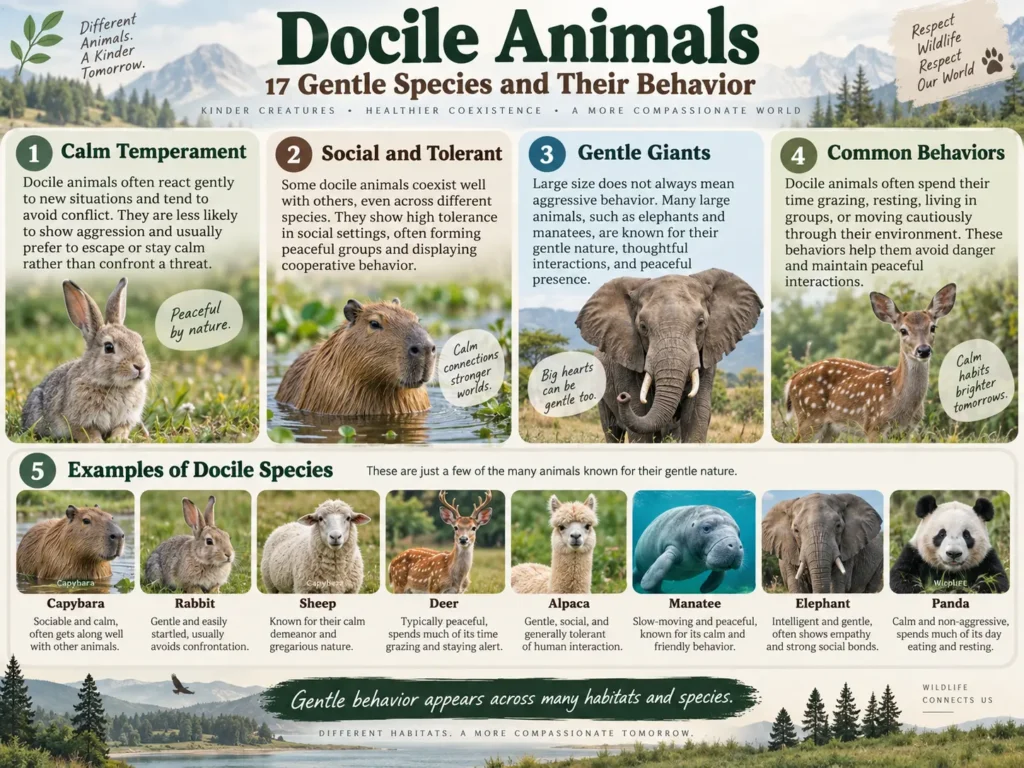
17 Docile Animals at a Glance
| Animal | Type | Typical Behavior |
| Alpaca | Domestic mammal | Gentle and herd-oriented |
| Llama | Domestic mammal | Calm when properly socialized |
| Donkey | Domestic mammal | Cautious and even-tempered |
| Horse | Domestic mammal | Trainable but easily startled |
| Sheep | Domestic mammal | Docile and flock-oriented |
| Goat | Domestic mammal | Social and manageable |
| Cattle | Domestic mammal | Often calm with good handling |
| Guinea pig | Companion mammal | Gentle and rarely aggressive |
| Rabbit | Companion mammal | Quiet and usually non-confrontational |
| Chinchilla | Companion mammal | Calm but sometimes nervous |
| Domestic rat | Companion mammal | Social and easy to handle |
| Bearded dragon | Reptile | Usually tolerant and docile |
| Corn snake | Reptile | Calm and nonvenomous |
| Ball python | Reptile | Shy and defensive rather than aggressive |
| Leopard gecko | Reptile | Generally calm in captivity |
| Blue-tongued skink | Reptile | Usually shy and docile |
| Florida manatee | Wild mammal | Generally gentle and curious |
What Does Docile Mean in Animals?
A docile animal is usually calm, manageable, and not quick to respond aggressively. The term describes a general behavioral tendency rather than a guarantee about every individual. Temperament can be influenced by genetics, socialization, previous handling, health, hormones, and environment. A normally calm animal may behave differently when frightened, protecting young, in pain, or placed in an unfamiliar situation. Domestication can also contribute to docility. Humans have selectively bred many livestock and companion species for traits that make living and working alongside people easier.
1. Alpaca
Alpacas are widely known for their gentle, calm temperament. As herd animals, they usually prefer staying near other alpacas and tend to avoid confrontation rather than actively seek conflict. They can become comfortable around people when handled quietly and consistently. An uncomfortable alpaca may move away, spit, or occasionally kick, so its docile nature should not be confused with complete passivity.
2. Llama
Llamas are generally calm, intelligent animals that can become easy to manage when properly trained and socialized. They have been used for carrying loads and guarding livestock as well as for fiber production. Like alpacas, llamas communicate discomfort through body language and may spit when annoyed or threatened. Most well-handled animals, however, are more likely to avoid unnecessary confrontation.
3. Domestic Donkey
Donkeys often have patient, cautious personalities. Their reluctance to immediately follow unfamiliar instructions is sometimes mistaken for stubbornness, but this behavior often reflects careful assessment of a situation. A donkey that trusts its handler can be cooperative and calm. Fear, rough handling, or pain can still trigger defensive responses such as kicking or biting, particularly when the animal feels trapped.
4. Domestic Horse
Many domestic horses have relatively calm and trainable temperaments, especially when they receive consistent handling from an early age. Generations of domestication have made horses highly responsive to human cues. However, horses are prey animals with a strong flight response. Even a normally docile horse may suddenly bolt, kick, or react strongly when startled, making respectful handling essential.
5. Domestic Sheep
Sheep are generally docile, social animals with a strong tendency to remain close to their flock. Rather than confront a threat, their first response is often to move away with other members of the group. This flocking instinct makes sheep easier to move collectively but can also make individuals nervous when separated. Rams and frightened sheep can still behave defensively, so calm handling remains important.
6. Domestic Goat
Domestic goats are social, curious, and often relatively easy to manage when accustomed to people. Their confidence and curiosity can make them appear more energetic than sheep, but this does not necessarily mean they are aggressive. Goats may push, head-butt, or challenge one another as part of normal social behavior. Individual temperament also varies considerably, particularly between breeds, ages, and sexes.
7. Domestic Cattle
Many domestic cattle are selected and managed for calm temperament because docile animals are easier and safer to handle. Farmers can even evaluate temperament when making breeding and management decisions. That does not mean every cow or bull is naturally gentle. Cattle may become dangerous when frightened, protecting calves, experiencing pain, or handled roughly, and bulls require particular caution because of their size and strength.
8. Guinea Pig
Guinea pigs are among the clearest examples of small docile animals. They are social, generally non-aggressive, and more likely to freeze, hide, or flee than deliberately confront a person. Regular gentle handling can help them become more comfortable with people. Because they are prey animals, sudden movement or loud noise may still cause stress, even in an otherwise calm individual.
9. Domestic Rabbit
Domestic rabbits are usually quiet and relatively gentle when they feel secure. Many learn to interact comfortably with people, particularly when humans allow them to approach voluntarily instead of constantly picking them up. A frightened rabbit may scratch, kick, or occasionally bite while trying to escape. Their calm appearance should therefore not be interpreted as unlimited tolerance for handling.
10. Chinchilla
Chinchillas are generally calm, curious rodents, although some individuals are naturally more nervous than others. Animals that become accustomed to gentle handling from a young age may tolerate human interaction well. They are agile and can become stressed by rough restraint or excessive handling. A chinchilla usually prefers escaping an uncomfortable situation rather than confronting it, but it can bite when sufficiently frightened.
11. Domestic Rat
Domestic rats are highly social and can become remarkably comfortable around people. Well-socialized individuals often explore willingly, accept handling, and form strong associations with familiar caregivers. Pet rats rarely need aggression as their first response when they feel safe. Poor socialization, pain, fear, or territorial situations can still affect behavior, so individual temperament should always be considered.
12. Bearded Dragon
Bearded dragons are popular reptiles partly because of their generally docile nature. Many individuals tolerate regular, gentle handling and remain comparatively calm around familiar people. Their relaxed reputation does not mean they lack defensive behavior. A stressed bearded dragon may darken its beard, gape, flatten its body, or attempt to escape, providing clear signs that handling should stop.
13. Corn Snake
Corn snakes are nonvenomous snakes widely known for being relatively docile and manageable in captivity. They usually rely on hiding or escaping rather than aggressive confrontation when given the opportunity. Young or frightened individuals may strike defensively, but consistent and careful handling often reduces nervous responses. Their manageable size also contributes to their popularity among experienced reptile keepers.
14. Ball Python
Ball pythons are typically shy snakes with a strong preference for defensive avoidance. Their name comes from their tendency to curl tightly into a ball when threatened, protecting the head within the coils. This behavior helps explain their docile reputation. A stressed or improperly handled ball python can still strike, but confrontation is generally not its first defensive strategy.
15. Leopard Gecko
Leopard geckos are commonly kept because they are relatively small and generally calm once accustomed to their surroundings. Many tolerate careful handling without displaying frequent defensive behavior. They can still become stressed by sudden energetic movements or excessive restraint. Young geckos may be more nervous, while established adults often become easier to handle over time.
16. Blue-Tongued Skink
Blue-tongued skinks are usually shy, calm reptiles and often adapt well to careful handling. Their distinctive blue tongue forms part of a defensive display designed to make a potential threat hesitate. When frightened, a skink may hiss, flatten its body, open its mouth, or bite. This makes the species a useful example of why a docile temperament does not remove an animal’s ability to defend itself.
17. Florida Manatee
Florida manatees are unusual on this list because they are wild rather than domesticated. They are generally described as gentle, slow-moving, and curious marine mammals that spend much of their time feeding, resting, and travelling through warm waters. Their calm nature does not make human interaction appropriate. Wild manatees should be observed without chasing, feeding, touching, or otherwise disturbing their natural behavior.
Docile vs. Tame vs. Domesticated
These words are often used as if they mean the same thing, but they describe different aspects of animal behavior and history.
| Term | Meaning | Example |
| Docile | Generally calm and manageable | Alpaca |
| Tame | Individual accustomed to humans | Hand-raised animal |
| Domesticated | Species shaped over generations by human selection | Sheep |
| Friendly | Shows positive social behavior toward another individual | Socialized rat |
| Harmless | Incapable or unlikely to cause harm | Not guaranteed by docility |
A wild animal can become tame without its species being domesticated. Similarly, a domesticated species can contain individuals that are nervous, territorial, or aggressive.
What Makes Some Animals More Docile?
Several factors can influence calm temperament. Genetics matter because selective breeding can favor animals that are easier to handle, especially in livestock and companion species. Early socialization also affects behavior. Animals that experience calm, appropriate human interaction may become less fearful, while poor handling can produce persistent nervousness or defensive responses. Species-specific behavior matters too. Herd animals, prey species, reptiles, and solitary animals use different strategies when threatened, so docility does not look exactly the same across species.
Can Docile Animals Become Aggressive?
Yes. Docile describes a tendency, not an absolute rule. Any animal capable of defending itself may respond differently when circumstances change. Common triggers include:
- fear or sudden restraint
- pain or illness
- protection of offspring
- competition over food or territory
- rough handling
- unfamiliar surroundings
- prolonged stress
Understanding these triggers prevents the common mistake of assuming that a gentle animal can be handled carelessly.
Why Domestication Often Favors Calm Temperament
Domestic animals have lived alongside humans for many generations. In numerous species, people deliberately or indirectly favored animals that were easier to manage, breed, transport, or work with. Over time, this can increase the frequency of calmer behavioral traits within a population. It does not eliminate individual differences, but it helps explain why livestock and companion animals make up many of the strongest examples of docile species.
FAQs
What are the most common docile animals?
Alpacas, sheep, guinea pigs, rabbits, donkeys, and several domestic livestock species are commonly associated with calm temperaments. Some captive reptiles, including corn snakes and bearded dragons, are also generally considered docile.
Does docile mean friendly?
Not necessarily. Docile means generally calm and manageable, while friendly describes positive social interaction. An animal can be quiet and non-aggressive without actively seeking human attention.
Are docile animals safe to handle?
Not automatically. Even generally calm animals can bite, kick, scratch, charge, or flee when frightened or stressed. Safe handling depends on the species, individual temperament, situation, and handler experience.
What is the difference between tame and docile?
A tame animal has become accustomed to human presence or handling. Docility describes a generally calm temperament. An individual wild animal can be tame without its species being domesticated.
Are reptiles docile?
Some reptile species are known for relatively calm temperaments in captivity. Bearded dragons, corn snakes, ball pythons, leopard geckos, and blue-tongued skinks are common examples, although individuals still vary.
Are wild animals ever docile?
Some wild species show generally non-confrontational behavior, but “docile” should be used carefully. A calm wild animal remains unpredictable and should not be treated like a domesticated or tame animal.
Final Thoughts
Docile animals appear across very different groups, from alpacas and guinea pigs to corn snakes and manatees. What connects them is a general tendency toward calmer, less confrontational behavior, although genetics, socialization, handling, and environment can influence every individual. The key distinction is that docile does not mean harmless. Recognizing normal temperament while respecting defensive behavior gives readers a much more accurate understanding of why certain animals earn a reputation for being gentle.

3 Comments