
Are There Porcupines in Georgia? Range, History & Facts
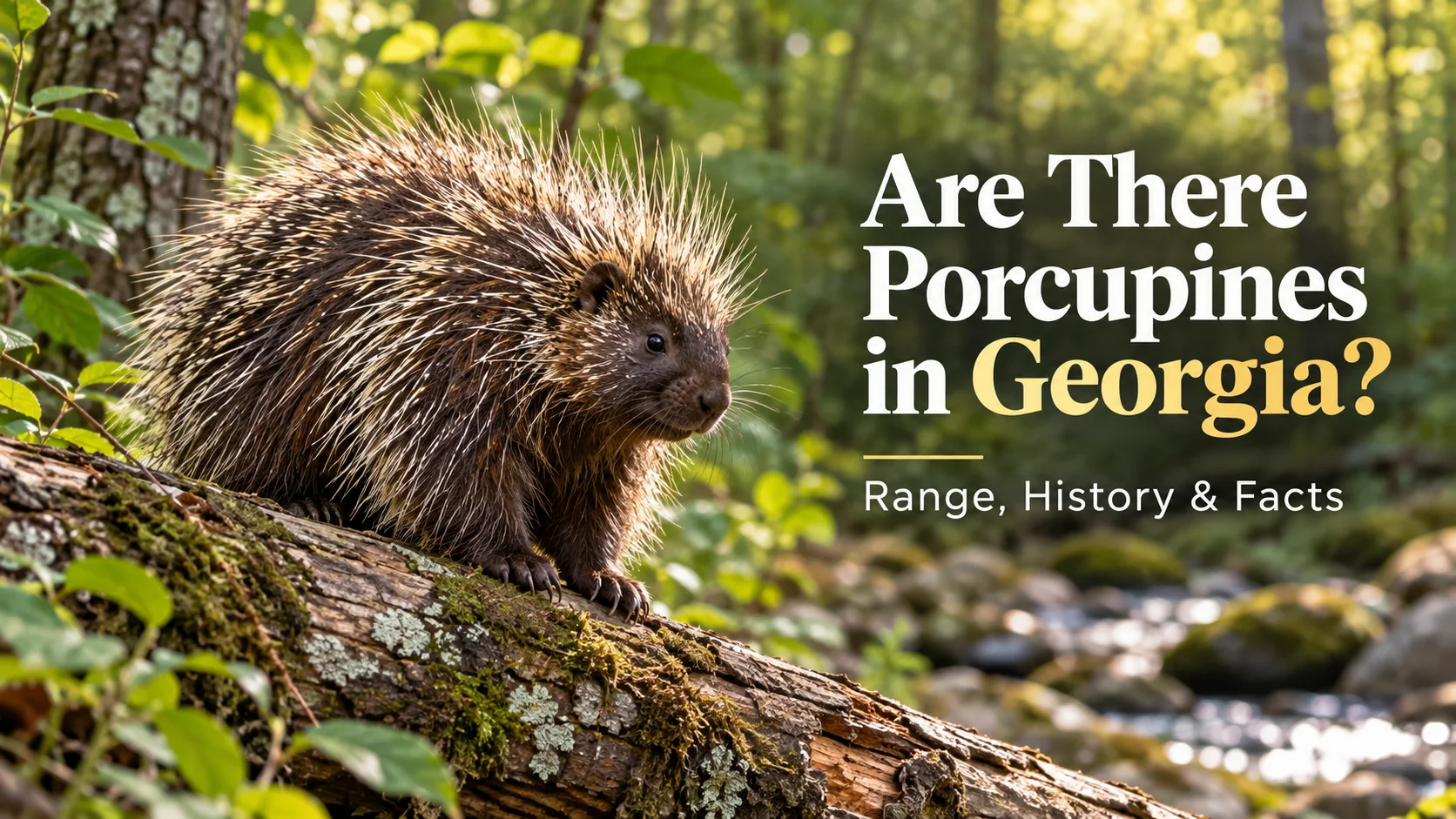
Spotting an unfamiliar, quill-covered animal in Georgia would naturally raise the question of whether porcupines live in the state. Today, the North American porcupine is not considered part of Georgia’s established wild fauna, and Georgia lies outside its usual modern range. However, the story is more interesting than a simple no. Fossil evidence shows that porcupines occurred in southeastern Georgia during the Late Pleistocene, when the region’s wildlife and environment looked considerably different from what we see today.
North American porcupines do not have a known established wild population in Georgia today. Their modern range is concentrated farther north and west, although recent records occur in parts of Virginia. Fossil evidence confirms that porcupines lived in Georgia during the Late Pleistocene, making them part of the state’s prehistoric wildlife history.
Are There Porcupines in Georgia Today?
North American porcupines are not considered established wild animals in Georgia, USA. Their present distribution covers much of Canada, Alaska, western North America, and portions of the northeastern United States, but Georgia falls outside the recognized modern range. That distinction matters when someone reports seeing a porcupine in the state.
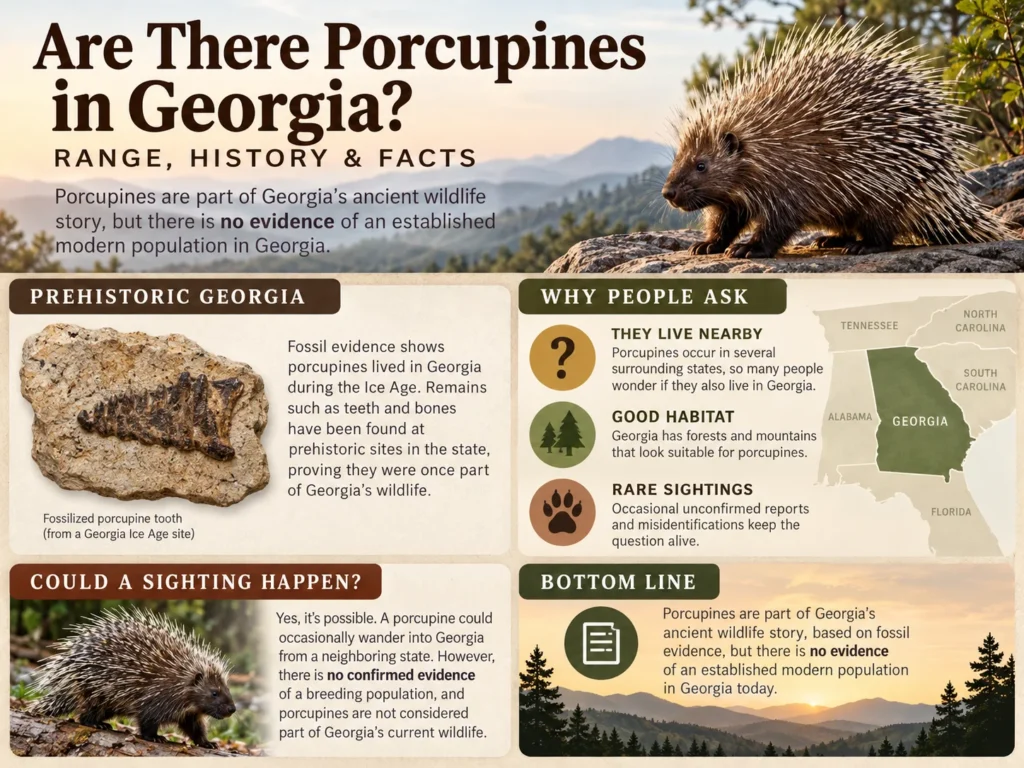
An unusual animal could be misidentified, escaped from captivity, transported accidentally, or, in an exceptional case, represent an individual outside the species’ usual range. A single sighting would not prove that Georgia has a breeding porcupine population. Wildlife ranges can also change, and some species may remain difficult to detect because of cautious or secretive behavior similar to that seen in . Porcupines have expanded into parts of Virginia in recent decades after disappearing from that state historically. For now, however, there is no evidence that a comparable established population has reached Georgia.
Where Do North American Porcupines Normally Live?
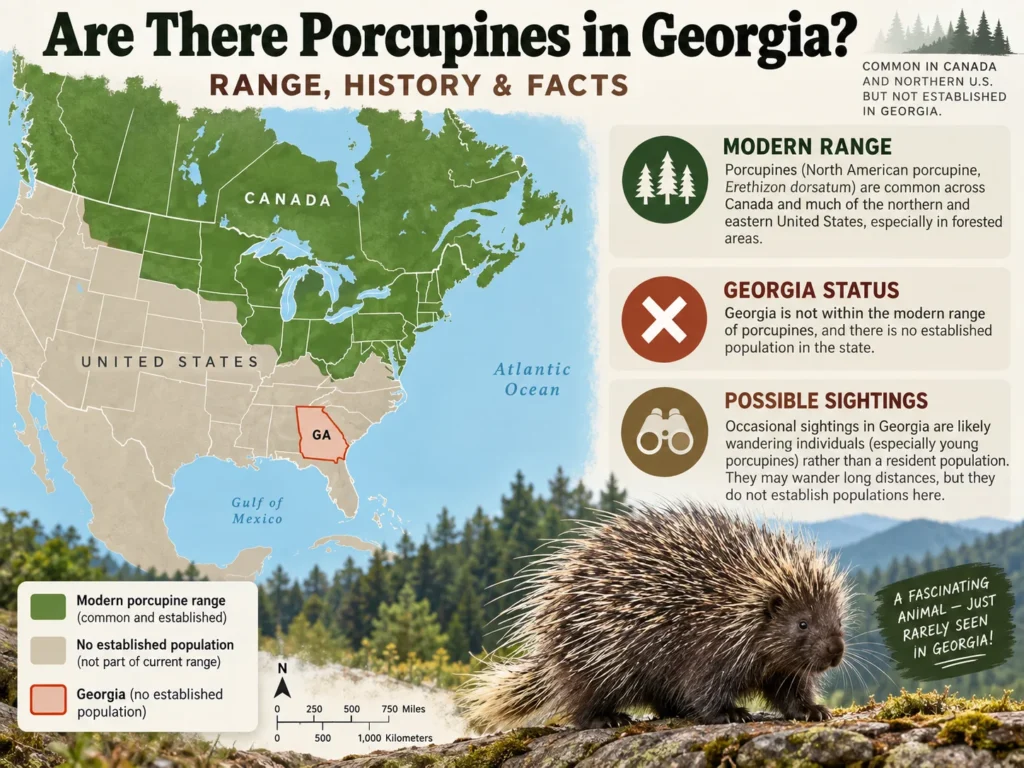
The North American Porcupines in Georgia occupies an enormous geographic range. It occurs throughout much of Canada and Alaska and extends into large portions of the western United States. Established populations are also found across parts of the Northeast. In eastern North America, porcupines are associated especially with areas such as New England, Pennsylvania, West Virginia, Maryland, and neighboring regions. Recent expansion has also produced confirmed records in parts of Virginia.
| Region | General Modern Status |
| Canada | Widespread |
| Alaska | Widespread |
| Western United States | Present across many areas |
| Northeastern United States | Established in several states |
| Appalachian Virginia | Increasing confirmed records |
| Georgia | No known established population |
Porcupines in Georgia are adaptable and do not live exclusively in cold northern forests. Depending on the region, they can occupy coniferous forests, mixed woodlands, deciduous forests, rocky areas, grasslands with tree cover, and even some relatively dry environments.
Did Porcupines Ever Live in Georgia?
Yes. This is one of the most interesting facts about porcupines in Georgia. Fossil remains identified as belonging to the North American porcupine have been recovered from Clark Quarry near Brunswick in southeastern Georgia. The fossils date to the Late Pleistocene, making them evidence of a time when porcupines occupied areas far outside their current southeastern range.
The discovery is particularly valuable because the modern North American porcupine does not naturally occur in Georgia. Its presence in the fossil record shows that animal distributions can shift dramatically as climate, vegetation, habitats, and ecological communities change. Similar regional wildlife questions, such as the distribution of Badgers in Maine, also show why location and historical range matter when describing where a species occurs. Prehistoric Georgia supported combinations of animals very different from those found there today. The porcupine therefore belongs to Georgia’s ancient wildlife story even though it is no longer considered a regular member of the state’s modern fauna.
Why Aren’t Porcupines Common in Georgia Today?
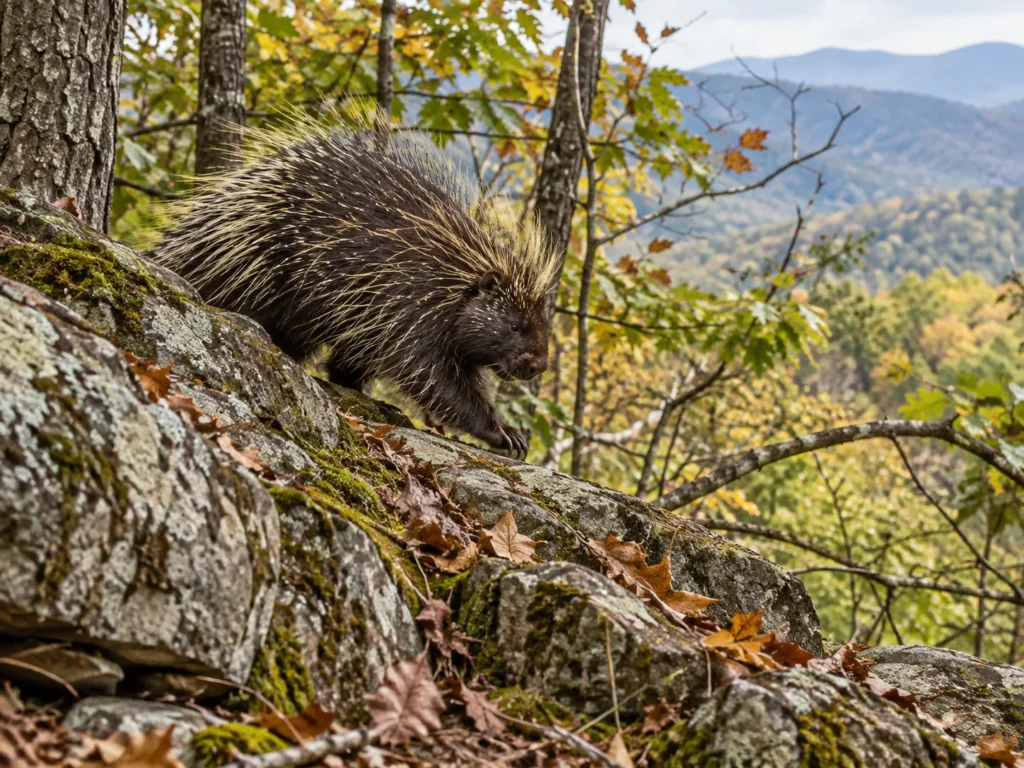
There probably is not one simple explanation for the disappearance of porcupines from much of their former southeastern range. Animal distributions can contract or expand over centuries as climate, forest composition, food availability, human activity, and other ecological pressures change. Historical and fossil evidence indicates that North American porcupines once ranged farther south in the eastern United States than they do today.
They occurred in parts of the southern Appalachian region long after the Pleistocene, but Porcupines in Georgia Porcupines in Georgiapopulations eventually disappeared from many southern areas. Interestingly, the pattern is not completely static. Porcupines have recently been documented returning to portions of Virginia, apparently through expansion from populations farther north and west. That shows why wildlife distribution should be treated as something that can change rather than as a permanently fixed boundary.
What Does a North American Porcupine Look Like?
A North American porcupine is a large, heavy-bodied rodent with short legs, a broad back, and a relatively slow walking style. Adults can appear surprisingly bulky, especially when their long guard hairs hide much of the outline of their body. Their most distinctive feature is the dense covering of quills on the back and tail. These modified hairs may be partly hidden beneath longer dark guard hairs when the animal is relaxed. When threatened, the porcupine raises its quills, making its defensive armor much more noticeable.
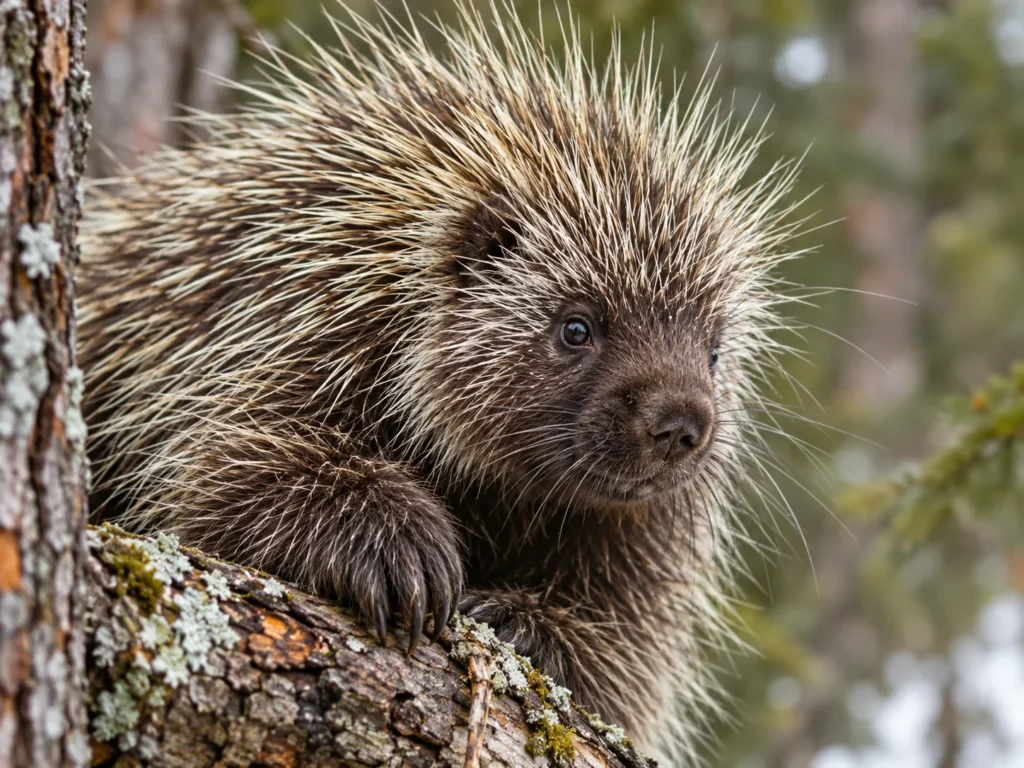
Color varies from dark brown or nearly black to lighter brown, often with pale or yellowish areas on the quills and guard hairs. Porcupines in Georgia Unlike some popular cartoon portrayals, a porcupine does not normally look like a round ball covered uniformly in long spikes. North American porcupines are also capable climbers. Their strong claws and specially adapted feet help them grip tree trunks and branches while feeding or seeking shelter.
What Animals in Georgia Could Be Mistaken for a Porcupine?
Because Porcupines in Georgia are not expected members of Georgia’s modern wildlife community, identification becomes especially important when someone reports a sighting.
Groundhog
A groundhog has a stocky body, short legs, coarse brown fur, and a rounded profile that can resemble a porcupine at a distance. Groundhogs occur primarily in northern parts of Georgia. The easiest difference is the lack of quills. Groundhogs also have a shorter, furry tail and spend significant time around burrows and open grassy areas.
Beaver
Beavers are another large North American rodent and can look bulky when seen from the wrong angle. They are strongly associated with rivers, lakes, wetlands, and ponds. A beaver’s broad, flat tail is the clearest identifying feature. Porcupines have much shorter, thick tails covered with defensive quills instead.
Raccoon
A raccoon seen at night from a distance can sometimes create confusion simply because both animals may appear dark, heavy-bodied, and active after sunset. Closer observation makes the difference obvious. Raccoons have a black facial mask and a long tail marked with distinctive rings, while porcupines have quills and a much different body shape.
Nutria
Nutria are large semi-aquatic rodents that may occur around wetlands. Their coarse brown fur and substantial body size can make them look unusual to someone unfamiliar with them. However, nutria have a long, narrow, mostly hairless tail and prominent orange incisors. They do not possess defensive quills.
Where Do Porcupines Live Within Their Normal Range?
North American Porcupines in Georgia are strongly associated with areas that provide vegetation for feeding and suitable places for shelter. Forested landscapes are particularly important because trees supply both food and opportunities for climbing. Despite their awkward-looking bodies, porcupines climb exceptionally well.
Strong curved claws, gripping feet, and a sturdy body help them move along trunks and branches. They may spend significant time in trees while feeding, especially when consuming bark, twigs, buds, or needles. Shelter can include caves, rocky crevices, hollow logs, fallen trees, or other protected locations. Their exact habitat varies substantially across their huge North American range.
What Do Porcupines Eat?
North American Porcupines in Georgia are herbivores, and their diet changes with the seasons. During warmer months, they can eat leaves, grasses, stems, roots, berries, and other available plant material. Winter often forces a shift toward woody foods because fresh vegetation becomes less abundant.
Tree bark, particularly the nutritious inner layer beneath the outer bark, can become important during colder months. Porcupines may also consume evergreen needles, buds, and twigs. Their strong, continuously growing rodent incisors are well suited for gnawing plant material. This feeding behavior is one reason porcupines frequently climb trees even though their heavy bodies do not look particularly suited to an arboreal lifestyle.
Can Porcupines Shoot Their Quills?
No. Porcupines cannot shoot or throw their quills. The misconception probably comes from how easily quills can detach. When threatened, a porcupine raises the quills on its back and tail. If a predator makes contact, the loosely attached quills can become embedded in the attacker.
Individual quills have sharp tips and tiny backward-facing barbs that make them difficult to remove once they penetrate tissue. A porcupine may also swing its tail defensively, increasing the chance that an approaching predator comes into contact with the quills. The animal does not launch them through the air. Direct contact is normally required.
Are Porcupines in Georgia Dangerous?
Porcupines are primarily defensive animals and generally have little reason to chase or attack people. Their quills exist to discourage predators rather than to help them hunt.
Problems are more likely when an animal is cornered or when an inexperienced dog approaches too closely. Dogs may investigate a porcupine with their face and end up with numerous quills embedded around the mouth or muzzle. If an unusual animal resembling a porcupine is encountered, maintaining distance is the simplest approach. There is no benefit in attempting to touch, capture, or corner it.
What Should You Do If You Think You Saw a Porcupine in Georgia?
Because a wild porcupine would be unusual in Georgia, a good photograph could be useful for confirming the identification. Take pictures only from a safe distance and avoid changing the animal’s behavior just to obtain a closer image.
Porcupines in Georgia Record the approximate location, date, time, surrounding habitat, and any distinctive characteristics you noticed. In particular, look for visible quills, the shape of the tail, body proportions, and whether the animal climbed a tree.
Compare the sighting with common Georgia mammals before assuming it was a porcupine. If photographs strongly suggest an unusual species, the observation can be shared with an appropriate state wildlife authority or qualified wildlife biologist. Most importantly, an isolated observation should be described as a possible sighting, not evidence that Georgia suddenly has an established porcupine population.
Could Porcupines Return to Georgia Naturally?
It is difficult to predict. Wildlife ranges can change gradually, and recent porcupine expansion into parts of Virginia demonstrates that the species is capable of moving into areas where it had previously disappeared. Georgia, however, remains well beyond the best-documented modern eastern populations. A natural return would require continued range expansion over considerable distance and suitable ecological conditions along the way. Therefore, it would be premature to suggest that porcupines are currently recolonizing Georgia. Future verified records could change our understanding, but the present evidence still supports treating them as absent from the state’s established modern fauna.
FAQs
Are porcupines native to Georgia?
North American porcupines are not part of Georgia’s established modern native fauna, but fossil evidence shows they lived in the region during the Late Pleistocene. Their historical distribution was therefore broader than their current range.
Are there porcupines in North Georgia?
There is no recognized established porcupine population in North Georgia. Because northern Georgia is closer to the Appalachian region, an unusual report may attract attention, but any claimed sighting should be verified rather than assumed to represent a resident population.
Did porcupines once live in Georgia?
Yes. North American porcupine fossils have been identified from Late Pleistocene deposits at Clark Quarry in southeastern Georgia. This demonstrates that the species occurred in the state thousands of years ago.
What animal in Georgia looks like a porcupine?
Groundhogs are among the more plausible animals to confuse with a porcupine because of their stocky shape and coarse coat. Beavers, raccoons, or nutria may also cause confusion under poor viewing conditions, but none has the distinctive defensive quills of a porcupine.
Can porcupines shoot their quills?
No. Porcupines cannot shoot quills through the air. Their quills are loosely attached and detach when another animal makes contact with them.
Where are porcupines found closest to Georgia?
Modern North American porcupines occur farther north in the Appalachian and eastern United States, including established populations in West Virginia and confirmed expanding populations in parts of Virginia. Georgia itself remains outside the species’ recognized established modern range.
Final Thoughts
Porcupines in Georgia are not considered established wild animals in Georgia today, but their fossil history proves that this was not always the case. Anyone who believes they have spotted one in Georgia should document the observation carefully, because a verified modern occurrence would be unusual and scientifically interesting.





2 Comments