Animals That Live in Mountains: 15 Species Built for High Places

From snow-covered Himalayan slopes to rocky Alpine cliffs and high Andean grasslands, mountains support animals that survive in very different ways. Some rely on gripping hooves, broad paws, dense insulation, or efficient movement over rock, while others cache food, hibernate, or use rising air currents. Mountain habitats also include forests, meadows, talus fields, and plateaus not just snowy peaks. Here are 15 animals that live in mountains, along with the adaptations that help them survive there.
Animals that live in mountains include snow leopards, mountain goats, Alpine ibex, Himalayan tahrs, chamois, markhors, Rocky Mountain bighorn sheep, American pikas, Alpine marmots, wild yaks, vicuñas, Andean mountain cats, white-tailed ptarmigans, Andean condors, and mountain gorillas. Their survival strategies range from specialized feet and insulation to hibernation, food caching, high-altitude physiology, and soaring flight.
What Counts as a Mountain Animal?
A mountain animal is not simply any species that occasionally crosses a mountain range. Strong examples regularly use montane, subalpine, alpine, rocky, or high-plateau habitats as an important part of their natural range. Some specialize in steep or cold environments, while others shift between mountain zones with the seasons.
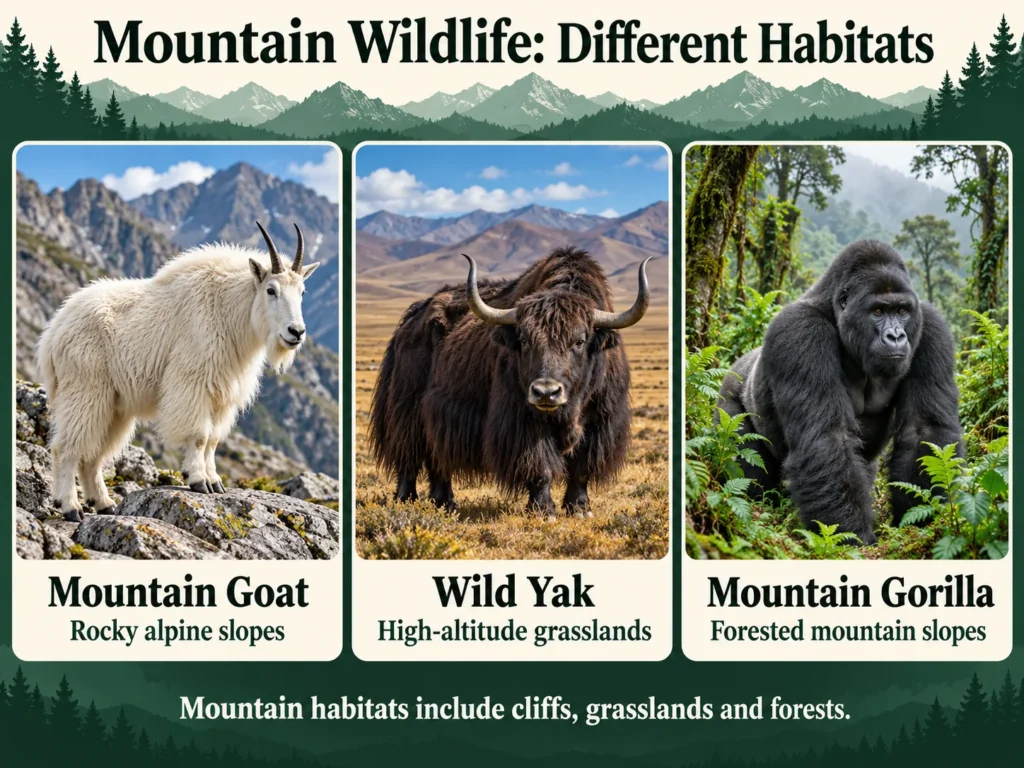
A montane forest differs greatly from an exposed alpine meadow, while a talus field presents different challenges from a high grassland. Just as Animals that live in rivers adapt to flowing water and aquatic habitats, mountain species develop traits suited to steep slopes, cold conditions, and high elevations. That variety explains why a mountain gorilla, American pika, and Andean condor can all qualify despite having dramatically different lifestyles.
| Animal | Mountain Region | Typical Habitat | Key Survival Feature |
|---|---|---|---|
| Snow leopard | Central and South Asia | Rocky slopes | Broad paws and balance |
| Mountain goat | North America | Alpine cliffs | Gripping hooves |
| American pika | North America | Talus fields | Food caching |
| Wild yak | Tibetan highlands | High plateau | Cold and low-oxygen tolerance |
| White-tailed ptarmigan | North America | Alpine zone | Seasonal plumage |
| Mountain gorilla | Central Africa | Montane forest | Forest-based highland living |
15 Animals That Live in Mountains
1. Snow Leopard
Snow leopards are animals that live in mountains across Central and South Asia, including the Himalayas. They favor rocky slopes, cliffs, and ravines where their patterned coat blends with stone and shadow. Their broad paws spread weight over snow, powerful hind limbs help on uneven ground, and a long, thick tail assists with balance and can provide extra insulation when curled around the body.
2. Mountain Goat
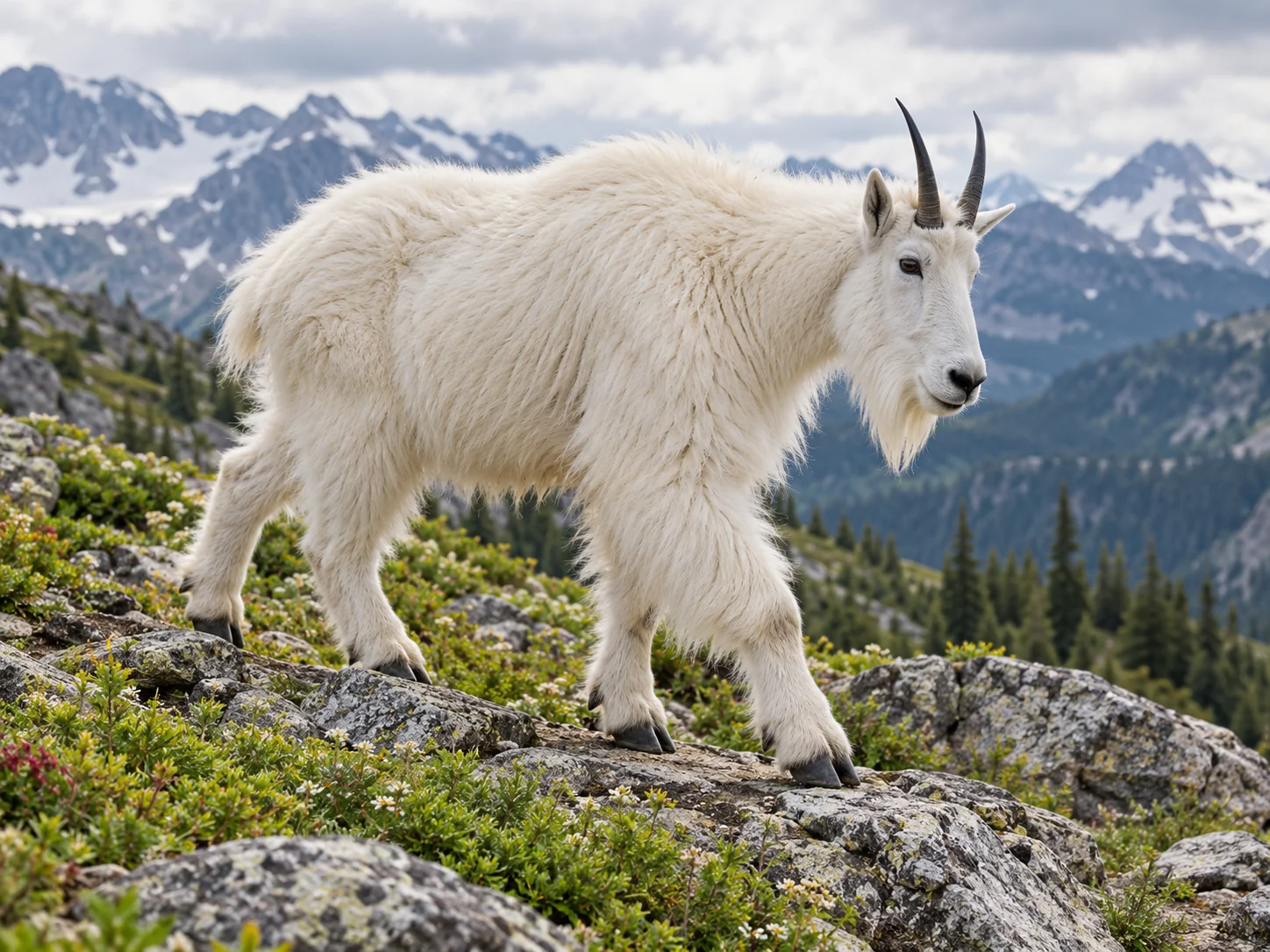
Mountain goats are animals that live in mountains across alpine and subalpine areas of northern North America. Their cloven hooves have hard outer edges and softer inner pads that improve grip on rock, while flexible toes help them adjust to irregular surfaces. Strong forequarters also help them climb and control descents across steep cliffs and narrow ledges.
3. Alpine Ibex
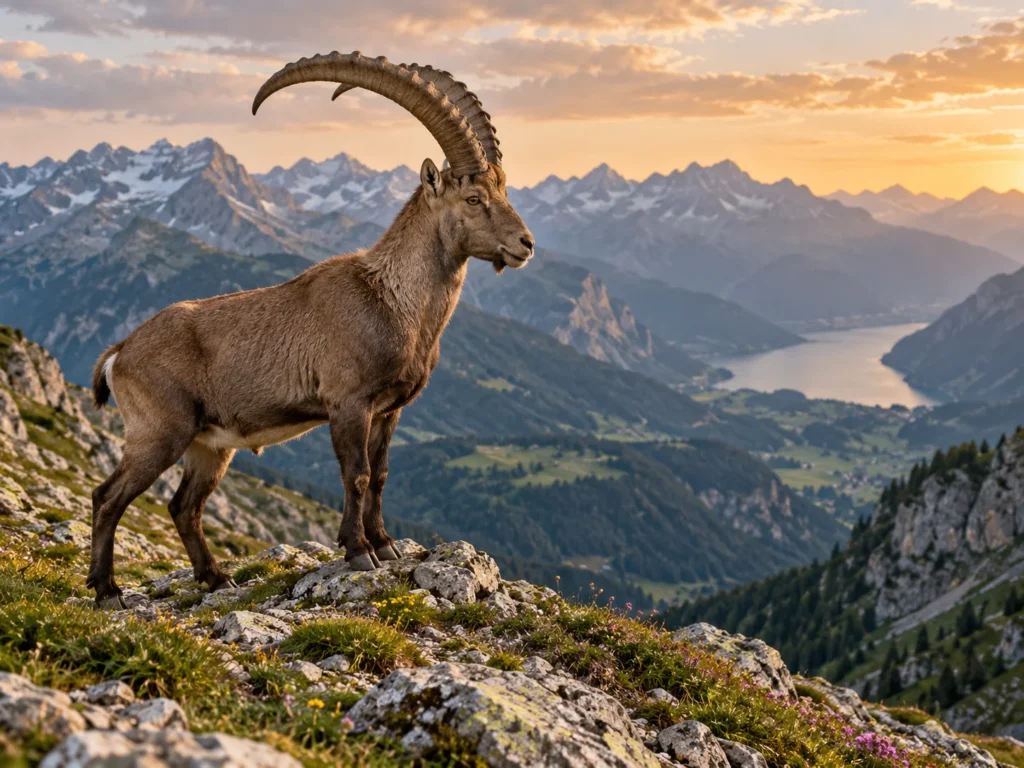
Alpine ibex are animals that live in mountains, especially rocky terrain in the European Alps. These wild goats use steep slopes, ledges, and high-elevation areas where secure footing is essential. Their hooves combine a hard rim with a softer gripping surface, providing traction on uneven rock. Seasonal changes in weather and food also influence how high or low they move.
4. Himalayan Tahr
Himalayan tahrs are animals that live in mountains, using wooded, subalpine, and alpine areas at different times of year. Strong legs and well-developed hooves help them move across steep ground, while a dense seasonal coat provides insulation. Moving between habitat zones also helps them respond to changing food and winter conditions.
5. Chamois
Chamois use alpine meadows, rocky slopes, and subalpine habitats in European mountains. Their hooves provide grip on rock, but climbing is only part of their strategy. When deep snow makes exposed alpine ground difficult, they may shift toward lower or more sheltered areas. Seasonal movement therefore plays an important role in their mountain life.
6. Markhor
Markhors are animals that live in mountains across Central and South Asia, including Pakistan. They often use dry rocky slopes, scrub, and open woodland rather than permanent snowfields. Strong legs and sure-footed movement suit steep terrain, while seasonal changes can affect elevation and habitat use. They show that mountain ecosystems can also be dry and relatively low in vegetation.
7. Rocky Mountain Bighorn Sheep
Rocky Mountain bighorn sheep use slopes, ridges, cliffs, and alpine or subalpine areas across western North America. Steep ground can provide valuable escape terrain from predators. Their muscular bodies and specialized hooves support quick movement over rock, while seasonal movements may take them between high summer ranges and lower winter areas with easier access to forage.
8. American Pika
American pikas are animals that live in mountains, especially western North American talus and boulder fields. They do not hibernate. During warmer months, they gather plants into “haypiles” that supply food through winter. Cool spaces beneath rocks also offer shelter from heat, an important advantage because pikas are unusually sensitive to high temperatures.
9. Alpine Marmot
Alpine marmots live in mountain meadows and rocky grasslands of the European Alps, where they dig burrows. Unlike many Marmots in North America, their winter strategy sharply contrasts with that of pikas. Rather than staying active with stored vegetation, Alpine marmots build body reserves and hibernate underground. Burrows provide shelter from severe weather during the long mountain winter.
10. Wild Yak
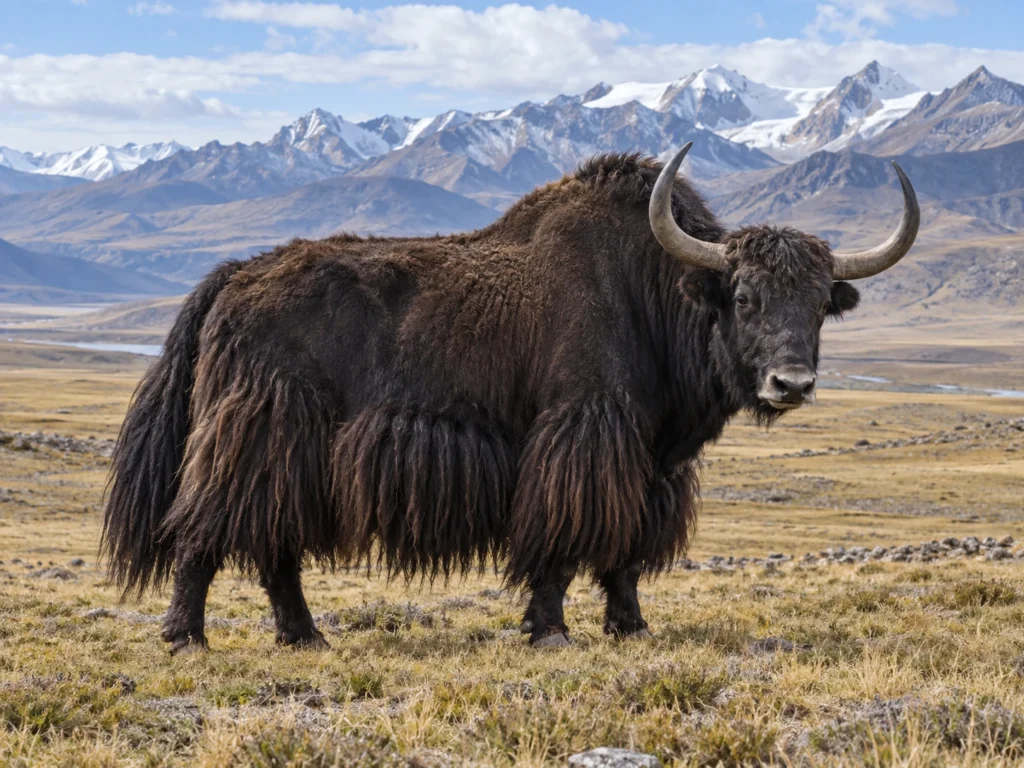
Wild yaks are animals that live in mountains and high Tibetan plateaus where cold, wind, and low oxygen create demanding conditions. Their heavy coat provides insulation, while respiratory and blood characteristics support high-altitude activity. Their large bodies also help conserve heat in open, treeless landscapes exposed to severe weather.
11. Vicuña
Vicuñas are animals that live in mountains across high, dry Andean grasslands in South America. These open plateaus can be cold, windy, and sparse in vegetation. Vicuñas graze across high-elevation landscapes while coping with thin air and large temperature changes. Their dense, fine coat provides insulation, while their light build suits movement across exposed slopes and upland plains.
12. Andean Mountain Cat
The Andean mountain cat is one of the animals that live in mountains, especially cold, arid, rocky habitats in the high Andes. It is closely linked to areas that support mountain viscachas and other small prey. Its thick fur helps in cold conditions, while its long tail can aid balance on broken terrain. Its ecology is much more tightly connected to high-Andean environments than that of the broad-ranging mountain lion.
13. White-Tailed Ptarmigan
White-tailed ptarmigans are specialized alpine birds of North America. They spend much of the year at or above treeline and remain in mountain environments through winter. Their plumage changes from mottled brown and gray in warmer months to white in winter for camouflage. Feathered feet add insulation and increase surface area when moving over snow.
14. Andean Condor
Andean condors use cliffs and open mountain landscapes along the Andes while searching for carrion. Instead of climbing steep terrain, they exploit the air above it. Thermals and rising currents along slopes allow these huge birds to soar with limited flapping, while cliffs provide elevated roosting and nesting sites.
15. Mountain Gorilla
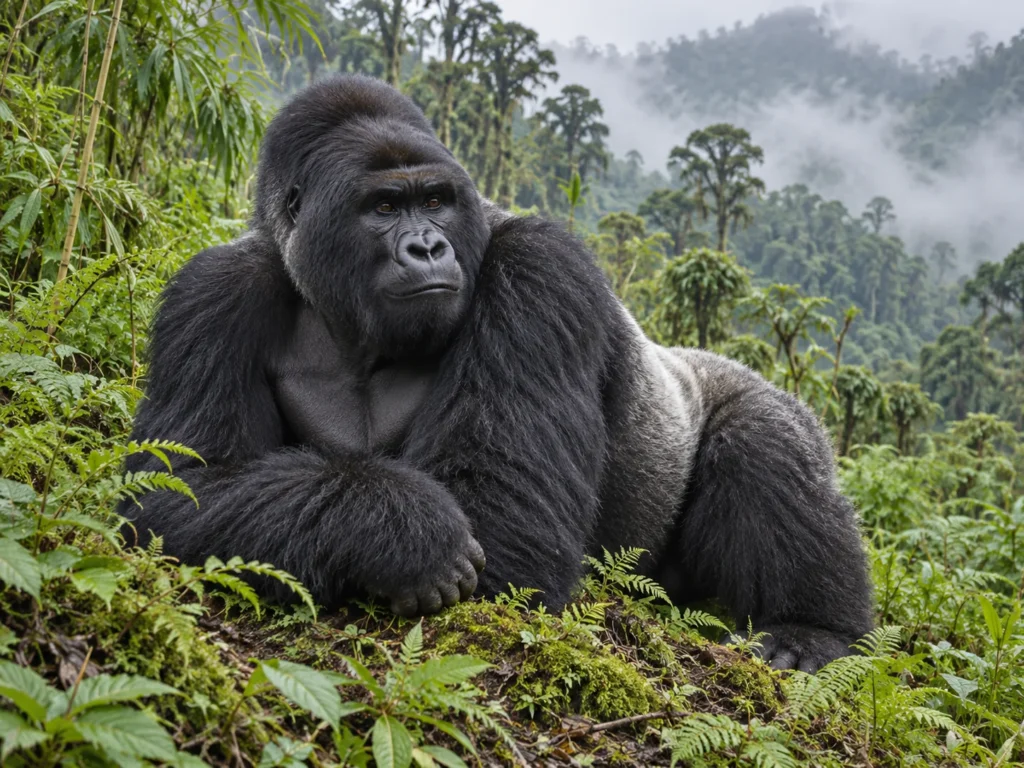
Mountain gorillas show why animals that live in mountains are not limited to snow and bare rock. They live in highland forests of Rwanda, Uganda, and the Democratic Republic of the Congo, including the Virunga region. These cool, wet montane environments provide dense vegetation and abundant terrestrial plants, so the gorillas spend their lives on forested slopes rather than exposed alpine peaks.
How Mountain Animals Survive Steep Terrain
For hoofed mountain mammals, traction can be crucial. Mountain goats, ibex, chamois, markhors, and bighorn sheep all have feet suited to uneven terrain, although their exact hoof structure and habitat use differ. By comparison, topics such as Badgers in Maine focus on animals adapted to very different landscapes and movement needs. Strong limbs, balance, and careful foot placement are especially important for species living on steep mountain terrain.
Other animals solve the terrain problem differently. Snow leopards combine broad paws with powerful movement and long tails, while Andean condors use mountain air currents instead of climbing. Pikas stay close to rock networks that provide shelter and movement routes.
How Do Mountain Animals Survive Cold and Winter?
There is no single winter strategy. Snow leopards and wild yaks rely heavily on insulation, while white-tailed ptarmigans combine feather coverage with seasonal plumage. Chamois and some hoofed mammals may move toward more sheltered terrain when snow conditions change.
Small mammals provide an especially clear contrast. American pikas remain active and depend partly on stored vegetation, while Alpine marmots hibernate underground. Mountain species can therefore solve similar seasonal problems in very different ways.
How Do Animals Live in Thin Mountain Air?
At high elevations, reduced oxygen makes sustained activity more difficult. Species that spend generations in these environments may have physiological traits that support oxygen uptake and transport. Wild yaks are a strong example, with respiratory and blood characteristics suited to high-altitude conditions.
However, not every mountain animal lives at extreme elevations. Mountain gorillas occupy highland forests, while chamois and markhors can use broad elevation ranges. “Mountain animal” describes habitat association rather than one universal physiological type.
Do All Mountain Animals Live in Snow?
No. Mountain environments include dry scrub, forests, grasslands, cliffs, talus fields, high plateaus, and snowfields. Markhors may occupy dry mountain scrub, mountain gorillas live in wet montane forests, and vicuñas graze open Andean grasslands.
Snow matters for many species, but elevation, slope, vegetation, temperature, rainfall, and seasonal conditions all help determine which animals can occupy a particular mountain zone.
Frequently Asked Questions
What Animals Live in Mountains?
Examples include snow leopards, mountain goats, Alpine ibex, Himalayan tahr, chamois, markhors, pikas, Alpine marmots, wild yaks, vicuñas, Andean mountain cats, white-tailed ptarmigans, Andean condors, and mountain gorillas. Different species occupy habitats ranging from montane forests to exposed alpine terrain.
How Do Animals Survive in Mountains?
Mountain animals use strategies including gripping hooves, broad paws, dense insulation, hibernation, food caching, seasonal movement, camouflage, and high-altitude physiology. The exact strategy depends on whether the species lives on cliffs, in talus, in alpine meadows, on high plateaus, or in mountain forests.
Which Animals Live at Very High Elevations?
Wild yaks, vicuñas, snow leopards, Himalayan tahrs, Andean mountain cats, and several alpine birds use high-elevation habitats. Exact altitude ranges vary by region, season, and population, so assigning one universal elevation to an entire species can be misleading.
Do Mountain Animals Hibernate?
Some do, but many do not. Alpine marmots hibernate through much of winter, while American pikas stay active and rely partly on vegetation stored in haypiles. Other mountain species move to lower elevations, change activity patterns, or depend on insulation instead of hibernation.
Are Mountain Goats Really Goats?
Despite their common name, mountain goats are not true goats of the genus Capra. They belong to the genus Oreamnos and are related to other goat-antelopes. True goats such as the Alpine ibex belong to Capra, even though both are highly capable on steep mountain terrain.
Final Thoughts
Animals that live in mountains survive through very different strategies. Some grip cliffs with specialized feet, others store food or hibernate, wild yaks cope with thin air, and condors use mountain winds to travel. Together, they show that mountain habitats are far more diverse than snow-covered peaks.