
Dangerous Animals in Puerto Rico: 7 Wildlife Risks to Know
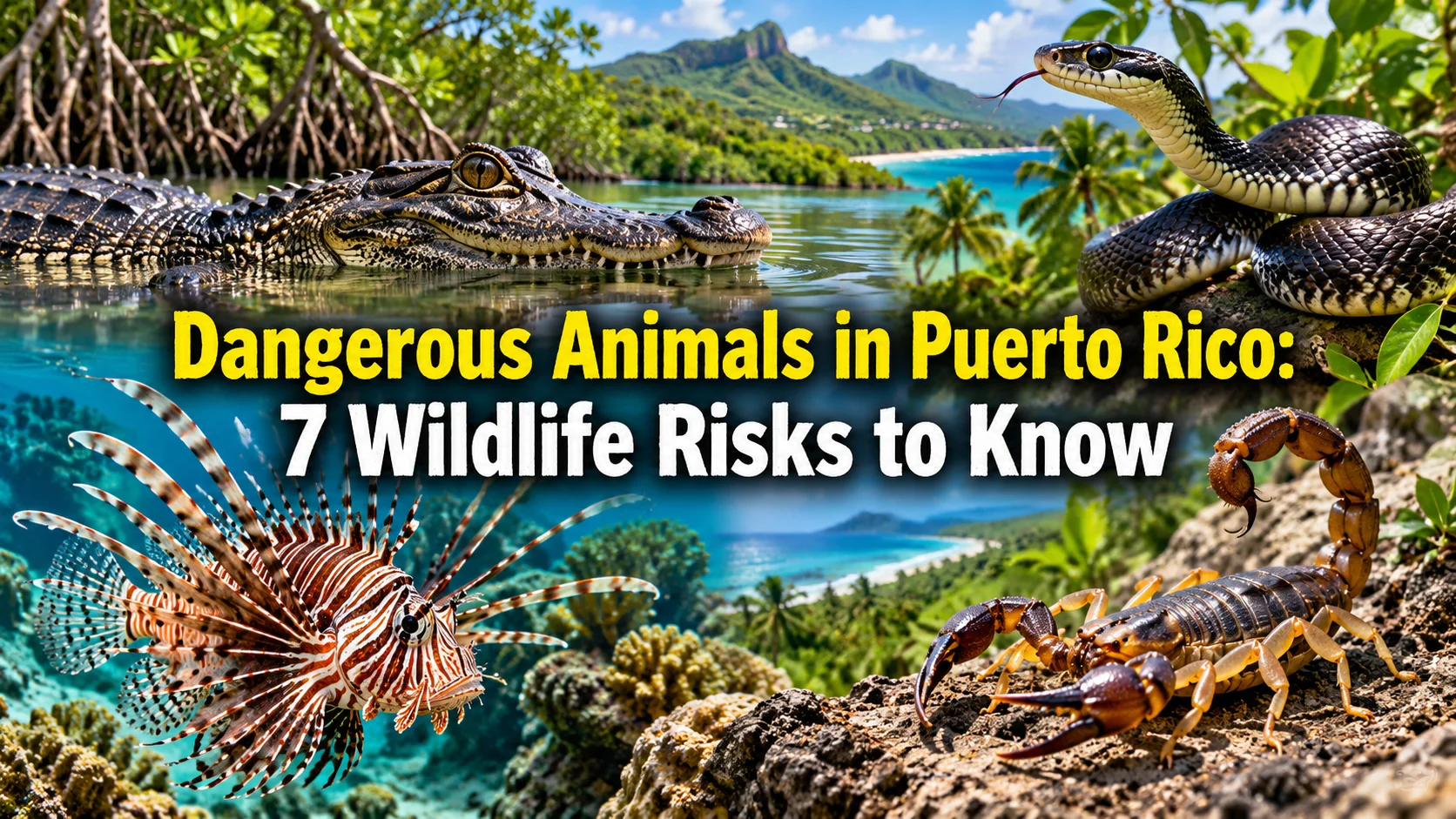
Puerto Rico has diverse tropical wildlife, but the island is not packed with animals that routinely threaten people. A few species can still cause serious bites, venomous injuries, painful stings, or disease exposure when encounters go wrong. Some are native, while others were introduced and became established. Understanding the difference between an animal’s ability to cause harm and the likelihood of actually encountering that danger gives a more accurate picture of Puerto Rico’s wildlife risks.
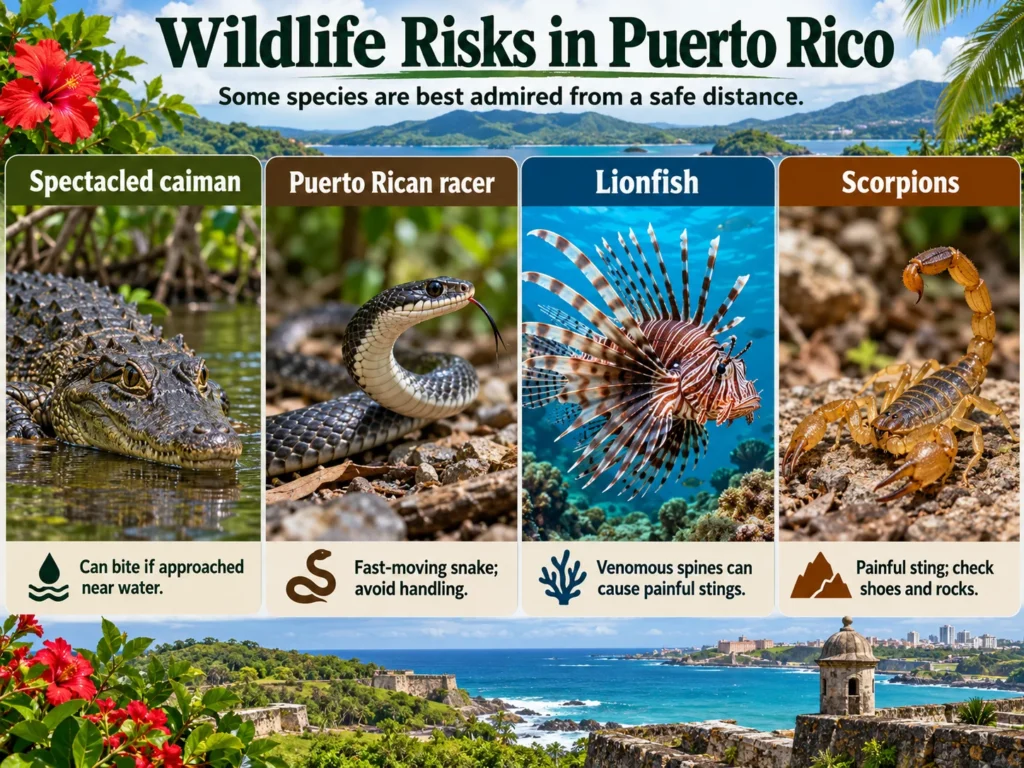
Dangerous animals in Puerto Rico include spectacled caimans, small Indian mongooses, the venomous Puerto Rican racer, Caribbean giant centipedes, scorpions, lionfish, and sharks. Their risks vary greatly: some bite or sting defensively, mongooses matter because of rabies, and sharks represent potentially severe but comparatively uncommon marine encounters.
How Dangerous Is Puerto Rico’s Wildlife?
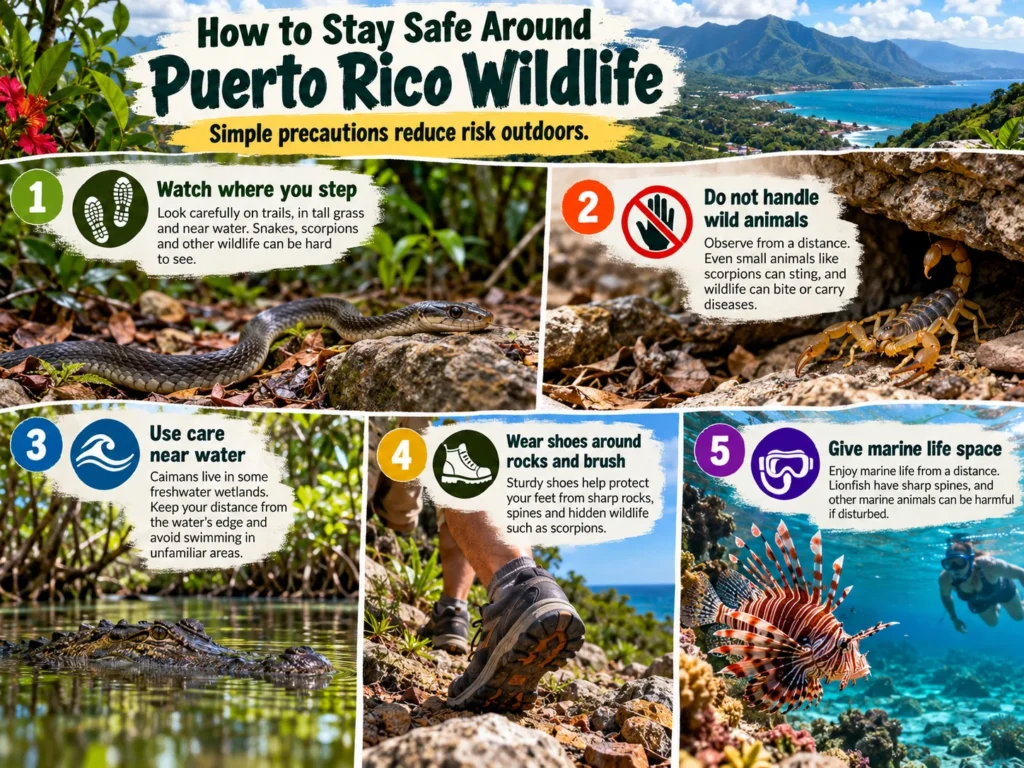
When discussing dangerous animals in Puerto Rico, it is important to remember that most wildlife does not seek confrontations with people. “Dangerous” can mean several things. A caiman has the physical power to cause major injury, a mongoose matters partly because of rabies, and a lionfish presents a venomous-spine hazard rather than an attack risk.
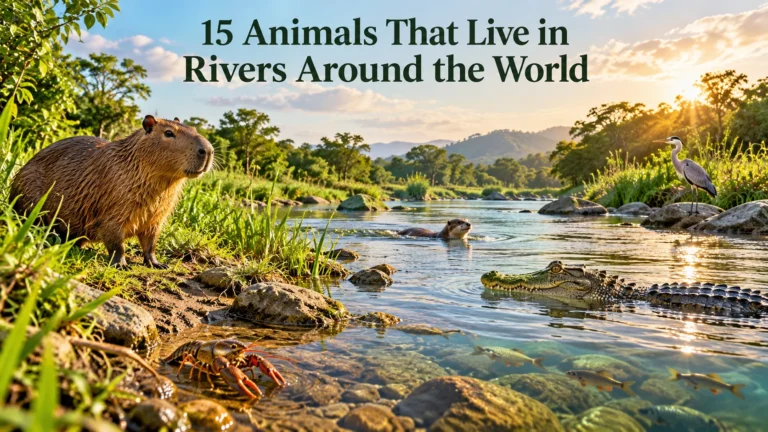
Some of these species may overlap with Animals That Live in Rivers or other freshwater habitats, while others are associated with coastal, terrestrial, or urban environments. Actual risk depends on habitat, behavior, and how close the encounter becomes. A species capable of severe injury may still be encountered rarely, while a smaller animal can matter because of disease or venom. This article therefore considers both possible severity and realistic exposure.
Native vs Introduced Dangerous Animals
Dangerous animals in Puerto Rico include both naturally occurring species and introduced animals. The Puerto Rican racer is a native snake, while sharks are natural members of the surrounding marine ecosystem. Scorpions and large centipedes are also part of the island’s terrestrial invertebrate fauna. Other notable risks came from introductions. Spectacled caimans are exotic crocodilians that became established in Puerto Rico. Small Indian mongooses were introduced to Caribbean islands and later became an important rabies reservoir. Lionfish, originally from the Indo-Pacific, are now invasive across Atlantic and Caribbean waters.
Dangerous Land and Freshwater Animals in Puerto Rico
1. Spectacled Caiman
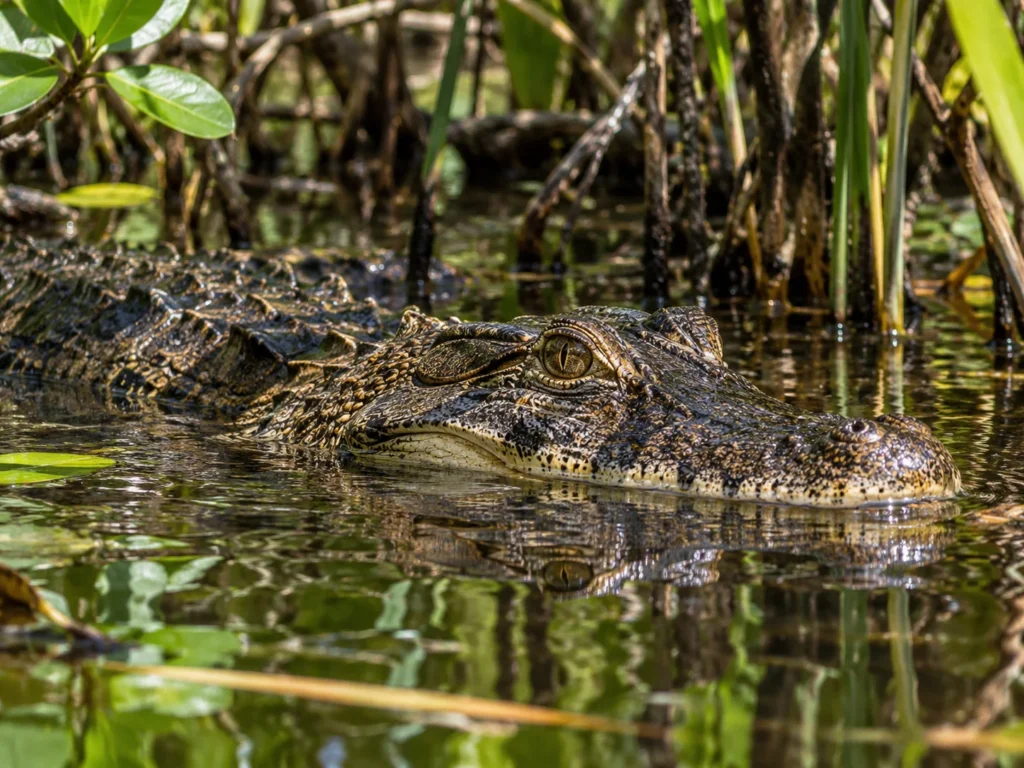
Spectacled caimans are among the dangerous animals in Puerto Rico because these introduced crocodilians have established populations on the island. They occur in freshwater environments such as lagoons, wetlands, reservoirs, and connected waterways. Their strong jaws mean a defensive or close-range bite could cause serious injury. That does not mean attacks are routine. The practical concern is giving caimans space, especially around the water’s edge. They should also not be confused with a widespread native crocodile population. Puerto Rico’s established crocodilian is the introduced spectacled, or common, caiman.
2. Small Indian Mongoose
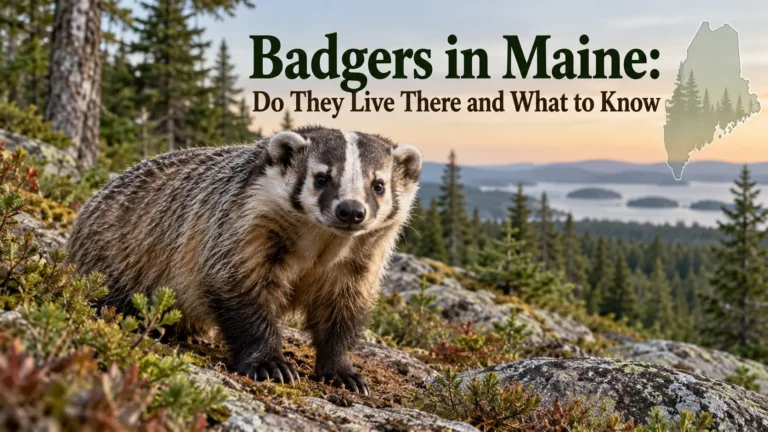
The small Indian mongoose is one of the dangerous animals in Puerto Rico from a wildlife-health perspective, even though it is physically much smaller than a caiman. Although mongooses may sometimes be loosely compared with Badger Animals because of their low-slung bodies and active foraging habits, they belong to a different mammal family. Mongooses were introduced to the island and became a reservoir for rabies. Bites or scratches from infected animals can therefore carry a risk disproportionate to the animal’s size. They do not normally hunt people, and problems are more likely when an animal is approached, cornered, handled, or behaving abnormally. Their place on this list comes mainly from bite exposure and rabies relevance rather than raw strength.
3. Puerto Rican Racer
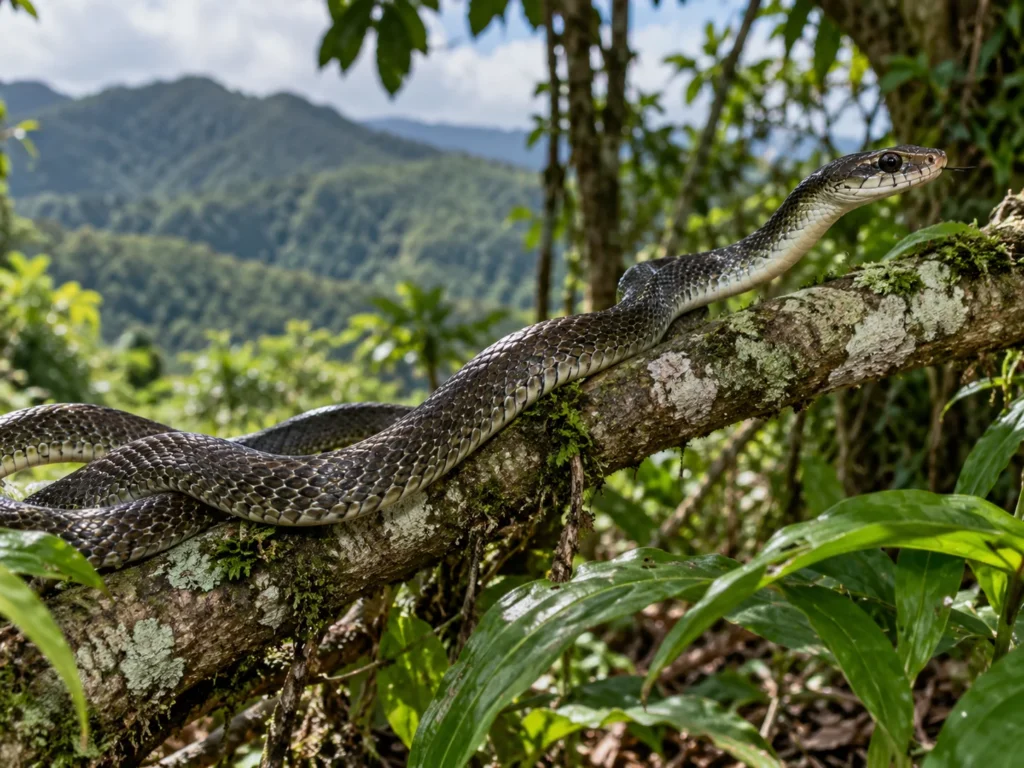
The Puerto Rican racer is one of the dangerous animals in Puerto Rico that challenges the claim that the island has no venomous snakes. This native, rear-fanged snake uses venom in prey capture and can produce medically significant symptoms in people. Published bite reports describe localized pain, bruising, swelling, and some broader symptoms. The documented patients recovered, so the racer should not be presented like a highly dangerous viper or cobra. Still, it is genuinely venomous, and handling one creates unnecessary bite risk.
4. Caribbean Giant Centipede
Large Scolopendra centipedes are among the dangerous animals in Puerto Rico, including the Caribbean giant centipede. These fast-moving arthropods use venom to subdue prey and can inflict a painful bite when trapped, stepped on, or handled.
Their bite risk is real, but claims that every encounter is deadly are unsupported. The key point is that a large centipede is a venomous animal capable of substantial pain and local effects. Accidental close contact is a more realistic concern than active pursuit.
5. Puerto Rican Scorpions
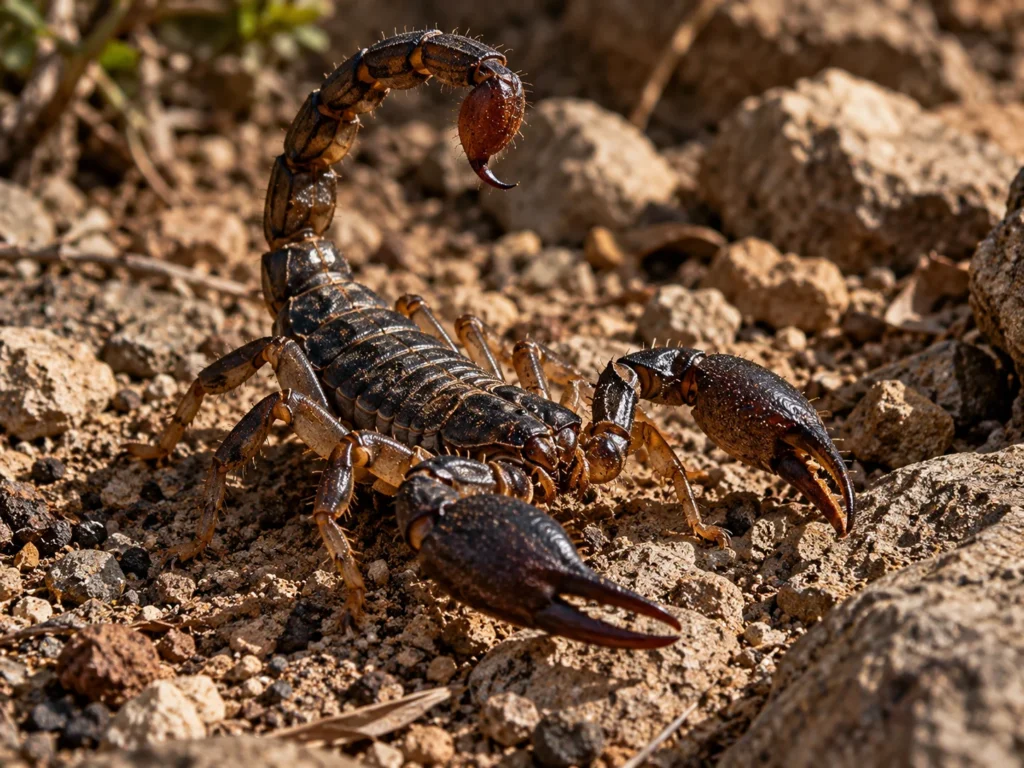
Scorpions are also among the dangerous animals in Puerto Rico, and the island and its satellite islands support a diverse scorpion fauna. Scorpions use venom primarily to capture prey and defend themselves, and a sting can cause pain and other symptoms. Medical importance varies by species and circumstances. It is therefore misleading to describe all Puerto Rican scorpions as deadly. They are better treated as venomous animals that deserve caution, particularly when moving rocks, wood, stored materials, or other objects that may provide shelter.
Dangerous Marine Animals Around Puerto Rico
6. Lionfish
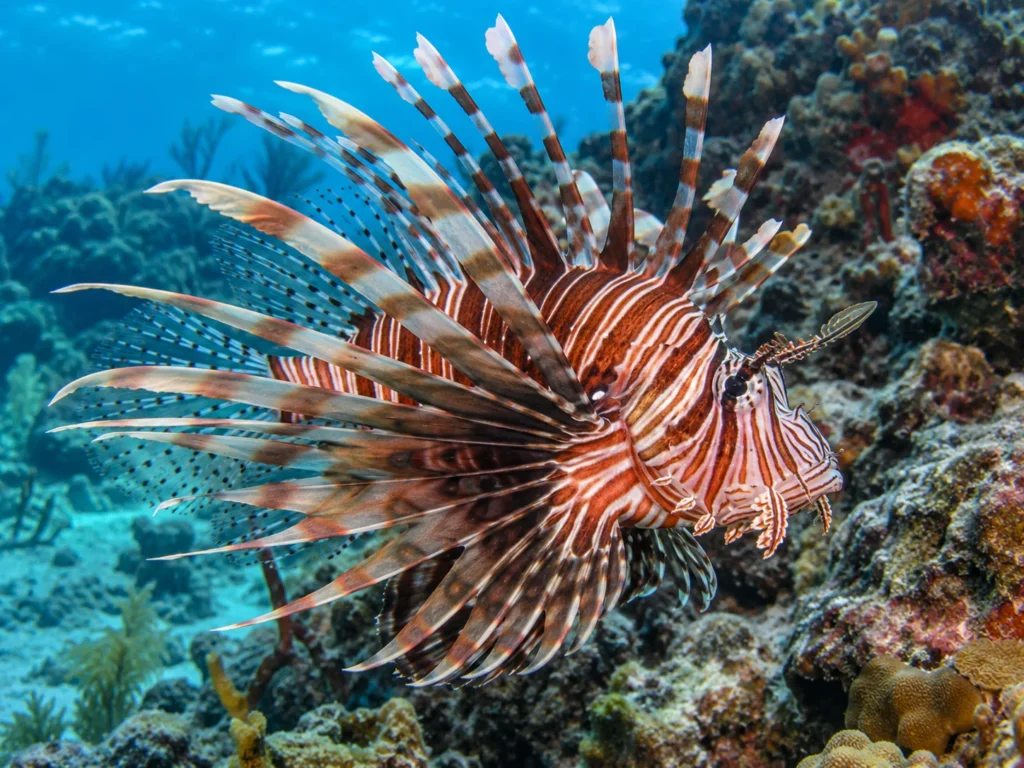
Lionfish are among the dangerous animals in Puerto Rico’s surrounding waters and are invasive predators now established across much of the Caribbean. Their danger to humans comes from venomous dorsal, pelvic, and anal spines. Accidental puncture can cause intense pain and other symptoms, especially when a fish is handled or contacted closely. Lionfish do not normally chase swimmers. The hazard is contact-based: their ornate fins may attract attention from divers and snorkelers, but the venomous spines should not be touched. A venomous animal is not necessarily an aggressive one.
7. Sharks
Sharks are among the dangerous animals in Puerto Rico’s surrounding waters because several species occur there, and a large shark is capable of causing severe bite injuries. Documented unprovoked incidents have occurred, but the historical total remains small compared with the amount of human activity in coastal waters. Sharks belong in the discussion because the potential severity of a bite is high, not because attacks are routine. Calling Puerto Rican waters “shark-infested” would distort the actual risk. Most shark encounters do not result in an attack.
Quick Risk Comparison
Dangerous animals in Puerto Rico can cause harm in very different ways, so a simple “most dangerous” ranking can be misleading.
| Animal | Main Risk | Status in Puerto Rico | Realistic Framing |
| Spectacled caiman | Powerful bite | Introduced and established | Potentially serious |
| Small Indian mongoose | Bite and rabies | Introduced | Important disease-related risk |
| Puerto Rican racer | Venomous bite | Native | Clinically relevant but uncommon |
| Caribbean giant centipede | Venomous bite | Present locally | Painful defensive bite |
| Scorpions | Venomous sting | Local fauna | Species-dependent |
| Lionfish | Venomous spines | Invasive | Contact-based marine hazard |
| Sharks | Bite | Marine wildlife | Severe potential, low frequency |
The table shows why size alone is a poor measure of danger. A mongoose is small but important from a rabies perspective, while a shark can cause catastrophic injury yet has a comparatively low encounter rate.
Are There Venomous Snakes in Puerto Rico?
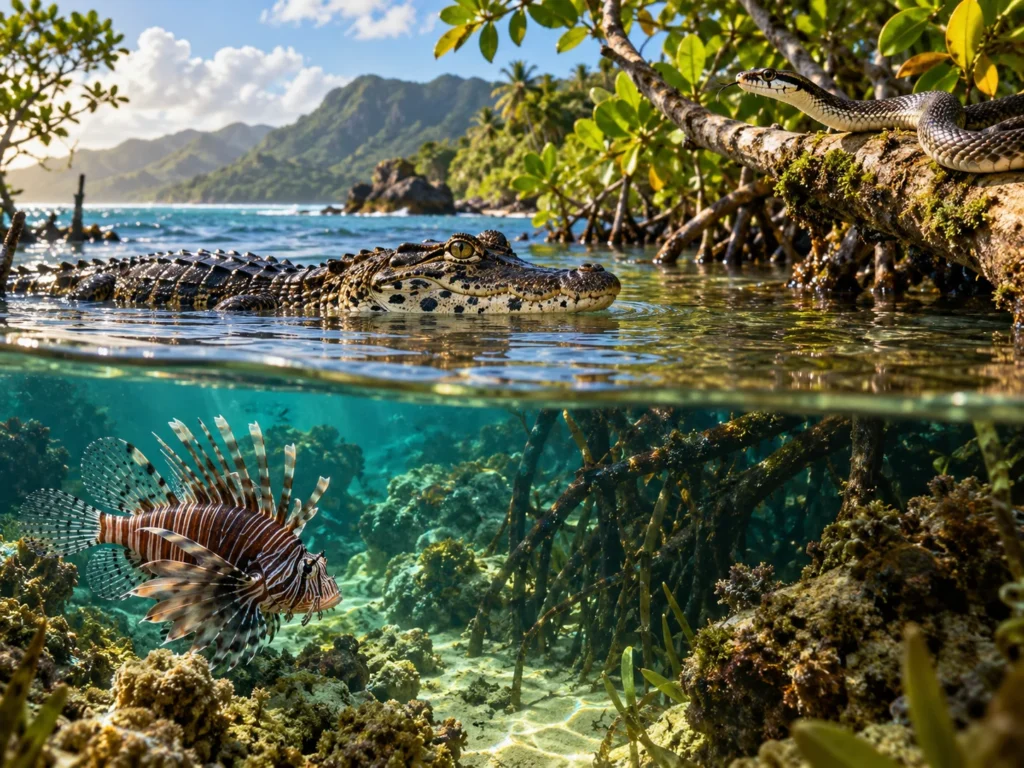
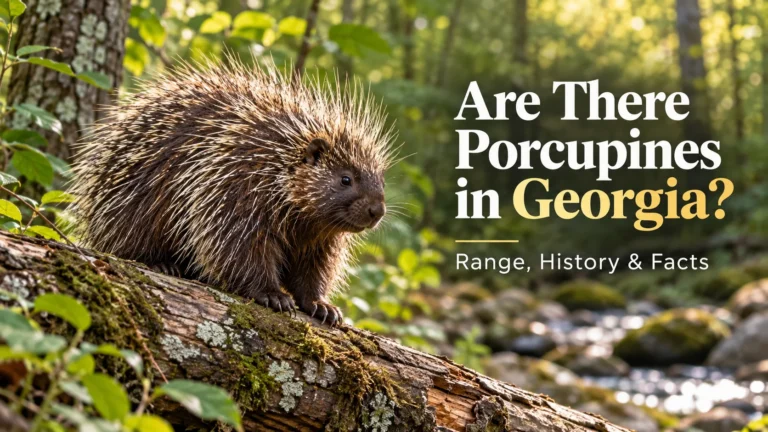
Yes. Among dangerous animals in Puerto Rico, the Puerto Rican racer is a native rear-fanged snake that produces venom and has caused documented human envenomations. Reported symptoms include pain, bruising, and swelling that can extend beyond the bite site. This is very different from topics such as Porcupines in Georgia, where the focus is on regional wildlife presence rather than venomous snake risk. Puerto Rico does not have the same snakebite profile as regions inhabited by highly dangerous vipers or cobras, and serious encounters with the racer are uncommon. The Puerto Rican boa, by contrast, is a large but nonvenomous snake and should not be grouped with the racer as the same type of hazard.
Are There Crocodiles or Caimans in Puerto Rico?
Among dangerous animals in Puerto Rico, established spectacled caimans are notable because they are introduced rather than native. They have been recorded from multiple freshwater systems and are the crocodilians most relevant to ordinary wildlife discussions on the island. Caimans and crocodiles are related but distinct groups, so describing every crocodilian seen in Puerto Rico as a crocodile is inaccurate. Isolated crocodile records or released animals do not prove that a widespread native crocodile population exists.
Why Are Mongooses a Bigger Concern Than They Look?
A mongoose may not look like one of the dangerous animals in Puerto Rico, but its rabies connection changes the risk calculation. Public-health authorities recognize mongooses as a rabies reservoir on the island, making bites or scratches more consequential than their small size suggests. This is why dangerous wildlife should not be ranked only by body size or teeth. A mongoose does not need the physical power of a caiman to represent a meaningful hazard; its importance comes primarily from disease exposure associated with close contact.
Which Puerto Rico Animals Look Dangerous but Usually Pose Less Risk?
The Puerto Rican boa can become impressively large, but it is nonvenomous and generally avoids people. It may bite defensively if handled or threatened, yet it should not be described as one of the island’s venomous snakes. Large iguanas can also look intimidating because of their claws, teeth, and powerful tails. They can defend themselves if cornered or grabbed, but they are not in the same risk category as caimans, venomous species, or rabies-associated wildlife. Appearance alone is a poor guide to danger.
Land Risks vs Marine Risks
The wildlife a person might encounter depends heavily on activity and habitat. Around freshwater areas, caimans are the most obvious large-animal concern, while mongooses, racers, centipedes, and scorpions are terrestrial risks associated with vegetation, shelter, or close contact. In marine environments, lionfish are mainly a contact hazard around reefs, while sharks represent a much rarer but potentially severe bite risk. Keeping these categories separate is more useful than treating every dangerous species as if it occurs in the same places.
Common Misconceptions About Dangerous Puerto Rico Wildlife
Puerto Rico is not full of deadly snakes, and its large native boa is nonvenomous. The Puerto Rican racer is venomous, but describing it as equivalent to a cobra or dangerous viper exaggerates the documented risk. Spectacled caimans are established but introduced, while mongooses matter largely because of rabies. Lionfish injure through venomous spines instead of pursuing swimmers; not every scorpion should be labeled deadly, and shark presence does not mean attacks are common.
Frequently Asked Questions
What is the most dangerous animal in Puerto Rico?
There is no single perfect answer because the risks differ. A caiman can cause major physical injury, a mongoose is important because of rabies, and venomous animals such as the Puerto Rican racer and lionfish create different forms of exposure.
Are there venomous snakes in Puerto Rico?
Yes. The Puerto Rican racer is a native rear-fanged venomous snake. Documented bites have caused pain, swelling, and bruising. However, serious encounters are uncommon, and it should not be portrayed as equivalent to highly dangerous vipers or cobras.
Are there crocodiles or caimans in Puerto Rico?
Introduced spectacled caimans are established in Puerto Rico and occur in several freshwater systems. Caimans are crocodilians but are not the same as true crocodiles. Puerto Rico should not be described as having a widespread native crocodile population.
Are mongooses dangerous in Puerto Rico?
They can be. Small Indian mongooses are an important rabies reservoir in Puerto Rico, so bite or scratch exposure is more concerning than their size suggests. They are not normally animals that seek out people to attack.
Are there dangerous animals in the ocean around Puerto Rico?
Yes. Lionfish have venomous spines capable of causing painful stings, and sharks occur in surrounding waters. Their risks are different: lionfish injuries usually involve direct contact, while serious shark bites are possible but historically uncommon.
Final Thoughts
Dangerous animals in Puerto Rico range from introduced caimans and rabies-associated mongooses to the native Puerto Rican racer, venomous arthropods, lionfish, and sharks. Their ability to cause harm varies enormously, and none should be treated as if it presents the same everyday risk. The useful approach is to understand how each animal can cause injury and avoid unnecessary close contact. Respectful distance and leaving wildlife unhandled greatly reduce the chance that an ordinary sighting becomes a dangerous encounter.

One Comment