Animals That Live in Plains: 17 Species and Adaptations
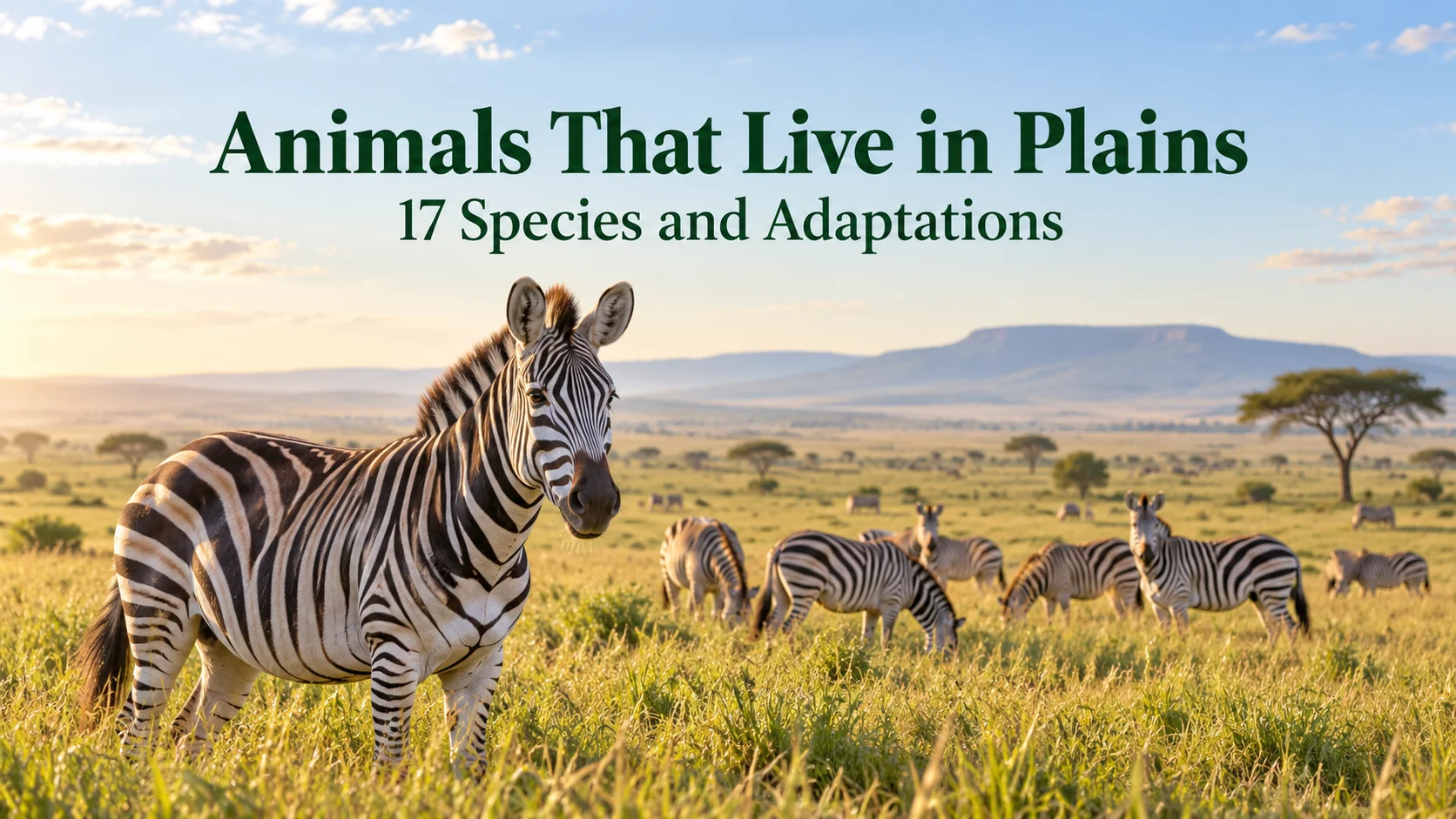
Animals that live in plains occupy some of the world’s largest open landscapes, from African savannas and North American prairies to South American grasslands and Eurasian steppes. These habitats offer abundant grasses but relatively little cover, favoring fast runners, herd-forming grazers, burrowing mammals, and wide-ranging predators. Plains wildlife has evolved many different ways to find food, avoid danger, survive seasonal changes, and move efficiently across exposed terrain.
Animals that live in plains include wildebeest, zebras, lions, cheetahs, bison, pronghorn, prairie dogs, rheas, saiga antelope, and many others. Different plains range from tropical savannas to temperate prairies and dry steppes, so their wildlife varies widely. Common adaptations include speed, migration, herding, burrowing, and efficient grazing.
What Are Plains Habitats?
A plain is a broad area of relatively flat or gently rolling land. Animals That Live in Plains may occupy grasslands, shrublands, wetlands, or cultivated areas within these open landscapes. Some plains also contain river systems that support Animals That Live Around Rivers, adding another layer of habitat diversity. In wildlife discussions, the term often refers to large grassland regions with high visibility and limited dense forest cover. Different regions use more specific names.
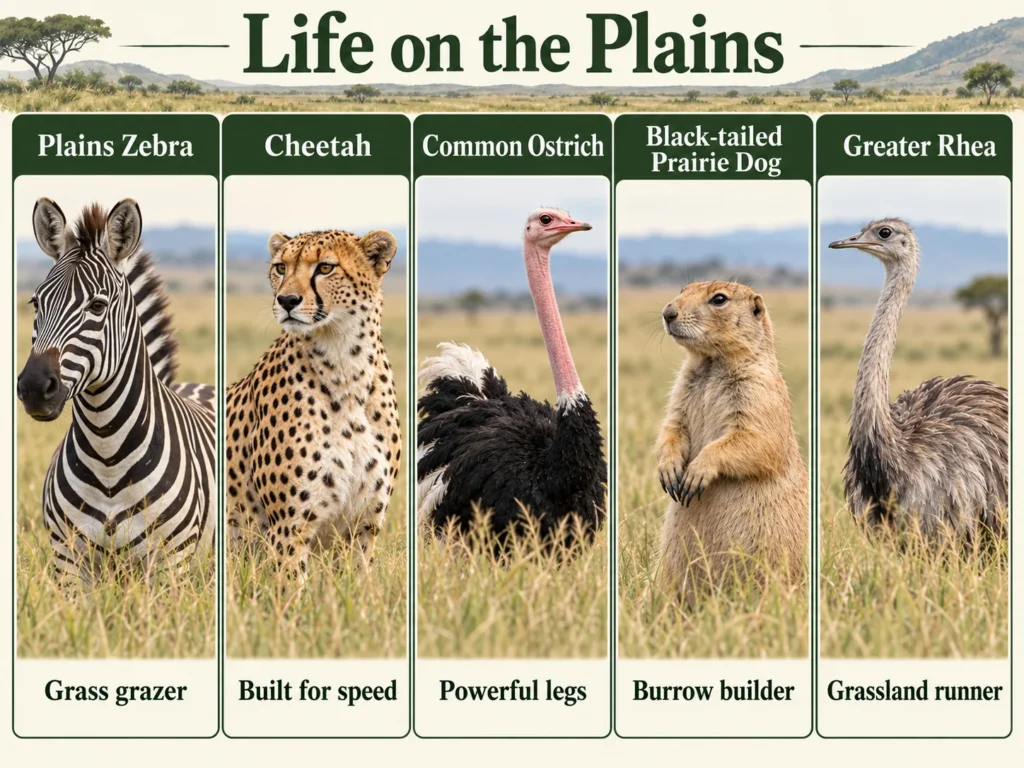
North American temperate grasslands are commonly called prairies, African tropical grasslands with scattered trees are savannas, and the drier temperate grasslands of Eurasia are often called steppes. The Pampas are extensive grasslands in South America. These environments may look similar from a distance, but climate, rainfall, vegetation, and animal communities differ substantially.
Animals That Live in Plains at a Glance
| Animal | Main Region | Plains Habitat | Key Adaptation |
| Blue wildebeest | Africa | Savanna plains | Migration and grazing |
| Plains zebra | Africa | Savanna grassland | Herding and mobility |
| African lion | Africa | Savanna/open grassland | Cooperative predation |
| Cheetah | Africa | Open savanna | High-speed pursuit |
| Spotted hyena | Africa | Savanna and grassland | Flexible hunting |
| Common ostrich | Africa | Open grassland | Fast ground movement |
| Plains bison | North America | Great Plains | Grazing and herding |
| Pronghorn | North America | Prairie/open plains | Speed and mobility |
| Black-tailed prairie dog | North America | Prairie | Burrowing |
| Black-footed ferret | North America | Prairie | Prairie-dog specialization |
| Coyote | North America | Grassland/open plains | Flexible predation |
| Greater rhea | South America | Pampas | Ground running |
| Pampas deer | South America | Grassland plains | Grazing and browsing |
| Maned wolf | South America | Open grassland | Long-legged movement |
| Saiga antelope | Eurasia | Steppe | Migration |
| Bobak marmot | Eurasia | Steppe grassland | Burrowing |
| Mongolian gazelle | East Asia | Open steppe | Long-distance movement |
1. Blue Wildebeest
Blue wildebeest are among the best-known Animals That Live in Plains, especially across the broad savannas of eastern and southern Africa. They are grazers that depend heavily on grasses and may travel considerable distances as seasonal rainfall changes the availability of fresh vegetation. Some populations participate in large migrations, moving between areas that provide suitable grazing and water at different times of year. Their herd behavior also provides more eyes and ears for detecting predators across open terrain. Wildebeest therefore illustrate two major plains adaptations: mobility and group living.
2. Plains Zebra
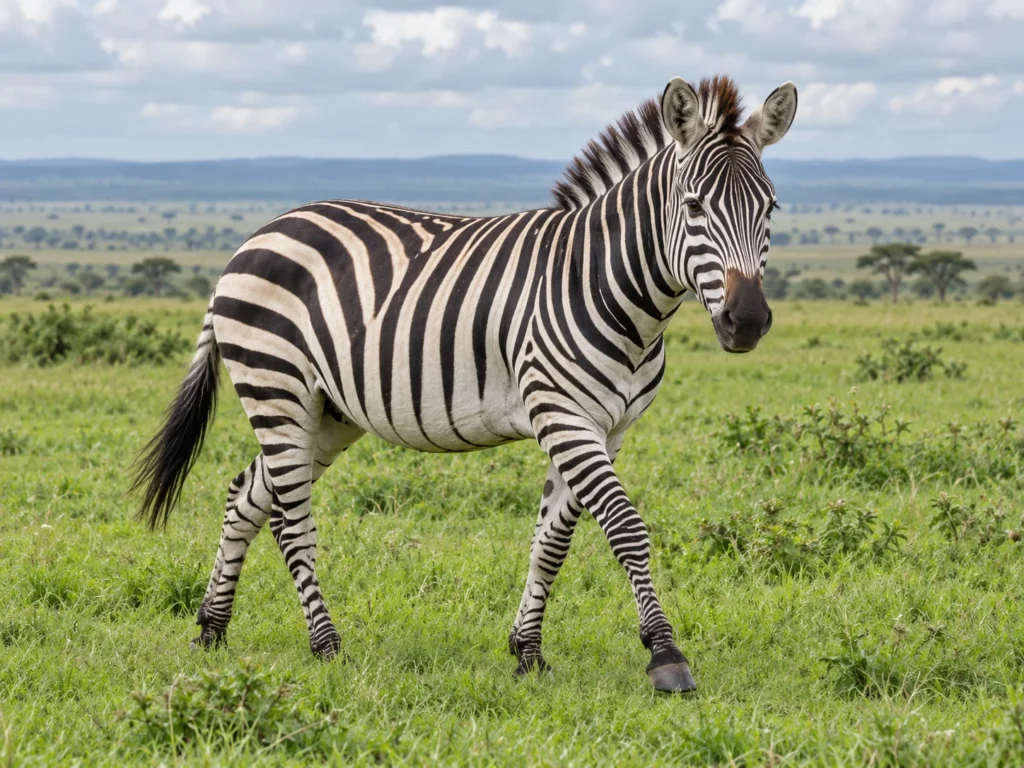
Plains zebras are classic Animals That Live in Plains, inhabiting grasslands, savannas, and other relatively open habitats across parts of eastern and southern Africa. They spend much of their time grazing and frequently form social groups. Living in herds can improve predator detection, while their ability to move across large areas helps them respond to changes in water and grass availability. Plains zebras are not restricted exclusively to treeless plains, but open grasslands form an important part of their range.
3. African Lion
African lions are major predators in many savanna and grassland ecosystems. Open plains can support dense populations of large herbivores, giving lions access to prey such as zebra, wildebeest, and antelope. Lions frequently hunt cooperatively, although hunting strategy varies with prey, habitat, and pride composition. They also use woodland and scrub, so describing lions as plains-exclusive would be inaccurate. They are better understood as adaptable predators that often thrive in open savanna landscapes.
4. Cheetah
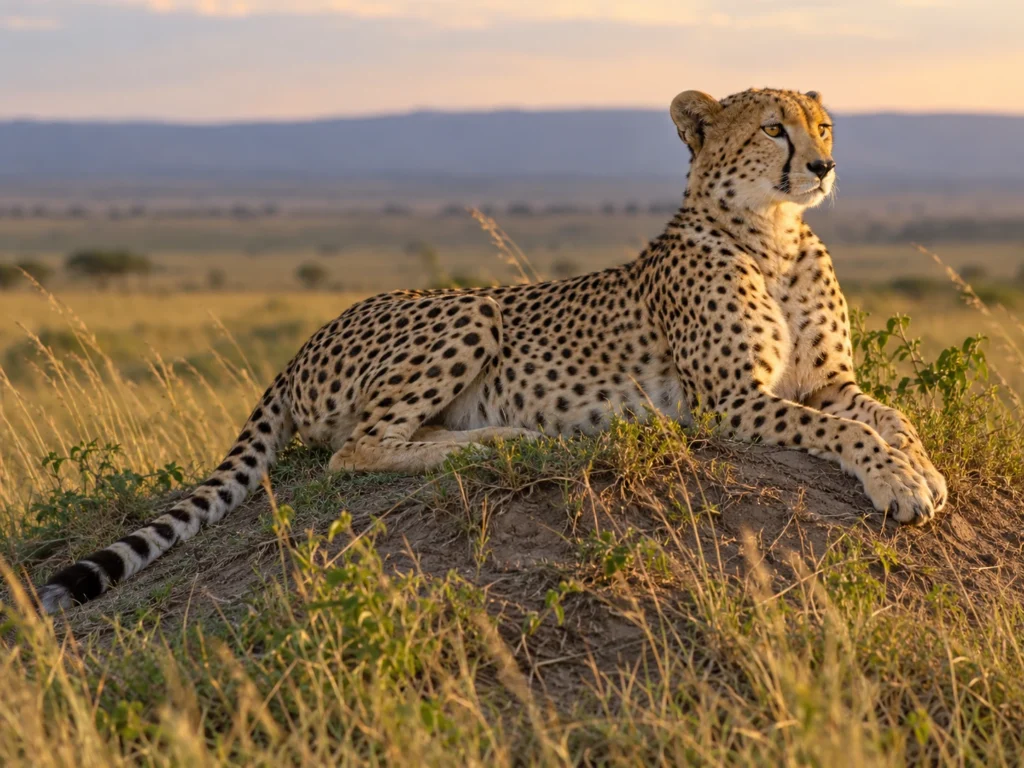
Cheetahs are among the Animals That Live in Plains that are especially well suited to open grasslands and savannas where visibility and space allow rapid pursuit of prey. Their long limbs, flexible spine, specialized feet, and balancing tail contribute to exceptionally fast acceleration and maneuverability. Instead of relying primarily on ambush from dense cover, cheetahs can pursue suitable prey across relatively open ground. They also occur in other open and semi-open environments, but plains provide an ideal setting for their distinctive hunting style.
5. Spotted Hyena
Spotted hyenas live in savannas, grasslands, and several other African habitats. Although popularly portrayed mainly as scavengers, they are effective hunters that can pursue prey across open country. Their social clans can defend territories and exploit a wide range of food resources. This flexibility makes spotted hyenas successful members of plains ecosystems where prey abundance and seasonal conditions may change considerably.
6. Common Ostrich
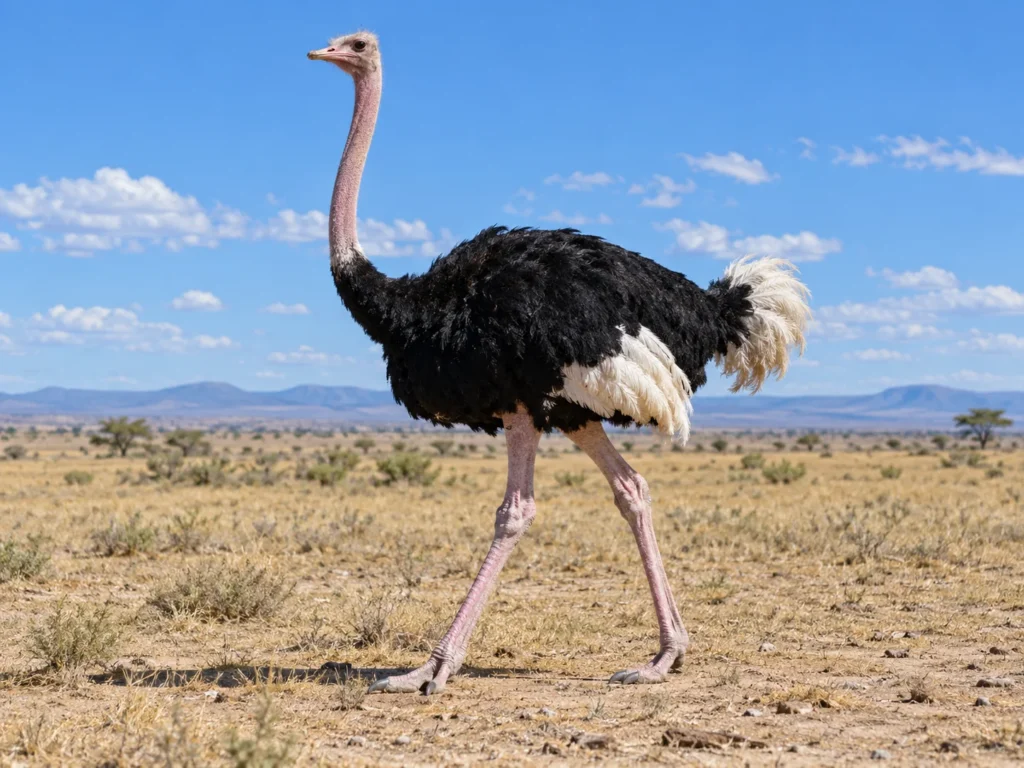
The common ostrich is a large flightless bird of African savannas and open grasslands. Instead of flying away from danger, ostriches rely heavily on powerful legs and rapid terrestrial movement. Their long necks also give them a high vantage point, helping them monitor their surroundings. Their lifestyle demonstrates how ground-based speed can become particularly valuable in habitats where trees and other hiding places are limited.
7. Plains Bison
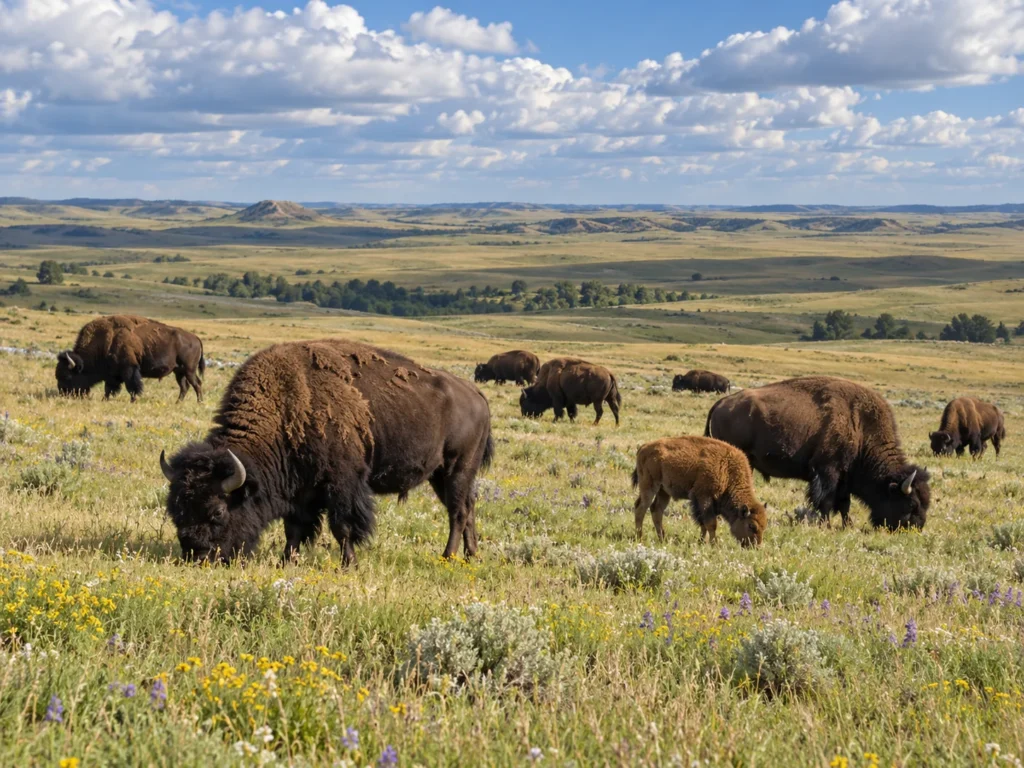
Plains bison are among the most iconic Animals That Live in Plains across North America’s Great Plains. They graze on grasses and sedges and historically moved across enormous areas in response to changing forage conditions. Although their size and defensive behavior can sometimes place them in discussions about Dangerous Animals, bison are primarily grazing herbivores. Their grazing, trampling, and wallowing can alter vegetation structure and create small habitat variations used by other organisms. Bison are therefore more than simply large plains herbivores; they can significantly influence the grassland environment around them.
8. Pronghorn
Pronghorn inhabit open grasslands, shrublands, and semi-arid landscapes across western North America. Their exceptional running ability is particularly useful in exposed country. With few places to hide, detecting danger early and moving rapidly can be more effective than relying on dense vegetation for protection. Some pronghorn populations also make substantial seasonal movements as they seek suitable food and avoid difficult winter conditions.
9. Black Tailed Prairie Dog
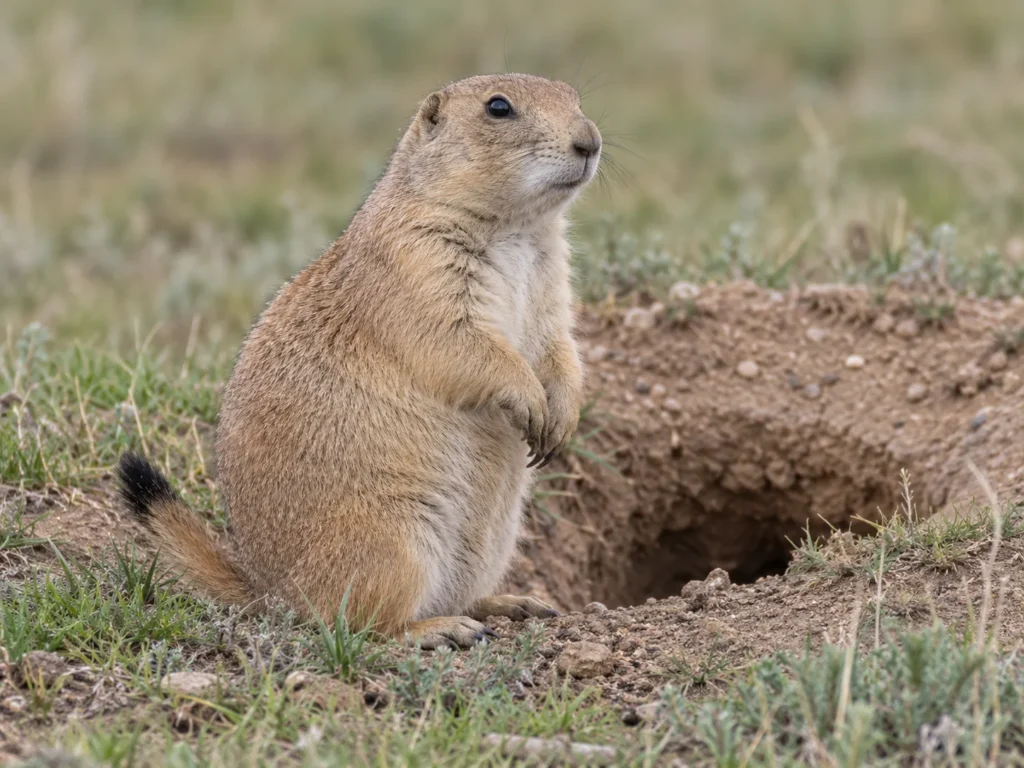
Black-tailed prairie dogs are small Animals That Live in Plains, closely associated with the grasslands of central and western North America. They live in colonies and construct extensive underground burrow systems. These burrows protect them from predators, shelter them from severe weather, and provide places to raise young. Prairie-dog activity also modifies vegetation and soil, while their colonies create habitat and feeding opportunities for numerous other plains species.
10. Black-Footed Ferret
Black-footed ferrets are highly specialized predators of North American prairie ecosystems. They depend strongly on prairie dogs, which provide both their principal prey and the burrows that ferrets use for shelter. This relationship ties black-footed ferret survival closely to healthy prairie-dog colonies. Their specialized lifestyle demonstrates how one plains species can depend heavily on another, creating an important link in the grassland food web.
11. Coyote
Coyotes are extremely adaptable predators and occur in far more than just plains. Across prairie and Great Plains environments, they may hunt rodents, rabbits, birds, and other small animals while also taking carrion, fruit, and additional foods when available. Their flexible diet helps them cope with changing seasonal conditions. Coyotes belong on a plains list because they frequently use these landscapes, not because grasslands are their only habitat.
12. Greater Rhea
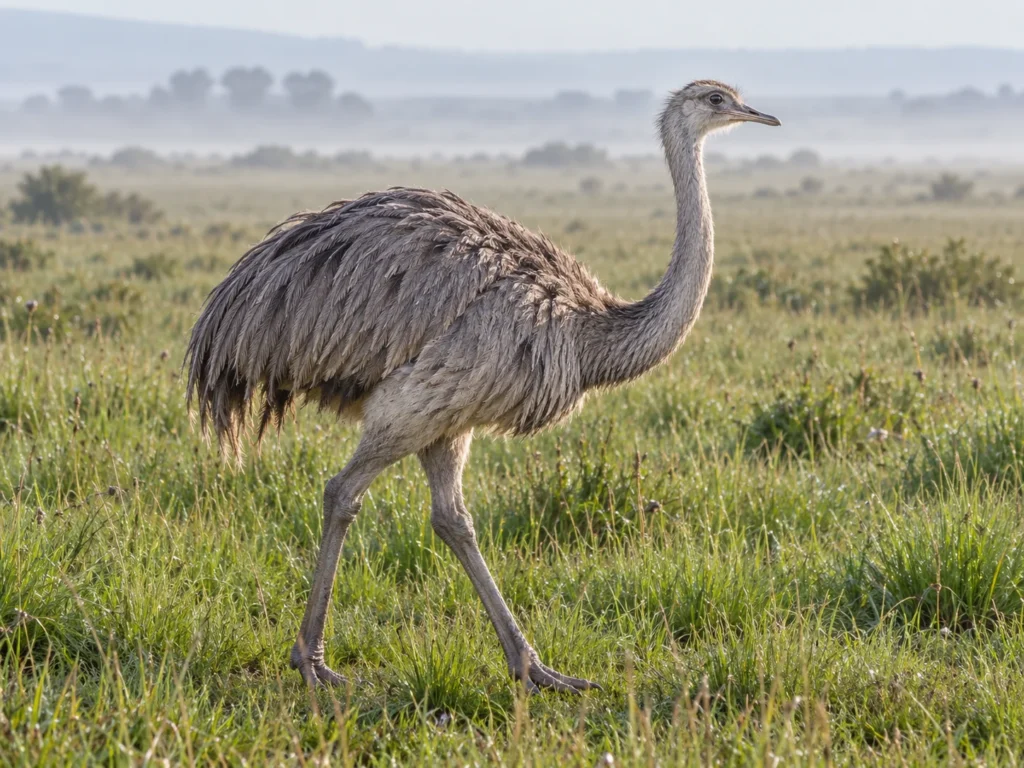
Greater rheas are large flightless Animals That Live in Plains across South American grasslands, including parts of the Pampas. Like ostriches, they rely on strong legs rather than flight when moving across open country. They consume a varied diet that may include plants, seeds, fruits, and small animals. Their height and running ability help in exposed habitats where detecting threats and moving quickly can be important for survival.
13. Pampas Deer
Pampas deer are native to open grasslands of South America and are especially associated with the region that gives them their name. They feed on a mixture of grasses and other vegetation, using open landscapes that can vary considerably in plant height and moisture. Modern agriculture and habitat alteration have changed much of their original environment, making the remaining suitable grassland areas particularly significant for surviving populations.
14. Maned Wolf
The maned wolf inhabits open grasslands, savannas, and related environments across parts of South America. Its unusually long legs suit it well for moving through tall grasses and other open vegetation. Unlike many large canids, the maned wolf is generally a solitary forager and has an unusually broad diet containing both animal prey and substantial plant material. Its distinctive body shape makes it one of the most recognizable mammals of South American open-country habitats.
15. Saiga Antelope
Saiga antelope are distinctive Animals That Live in Plains, inhabiting the open steppes and semi-arid landscapes of Central Asia. These antelopes are highly mobile and may travel across large areas in response to seasonal food, weather, and reproductive needs. Their enlarged nose is a notable adaptation that helps filter dusty air and condition air before it reaches the lungs. Mobility is especially important in steppe environments where food and water can be widely scattered and highly seasonal.
16. Bobak Marmot
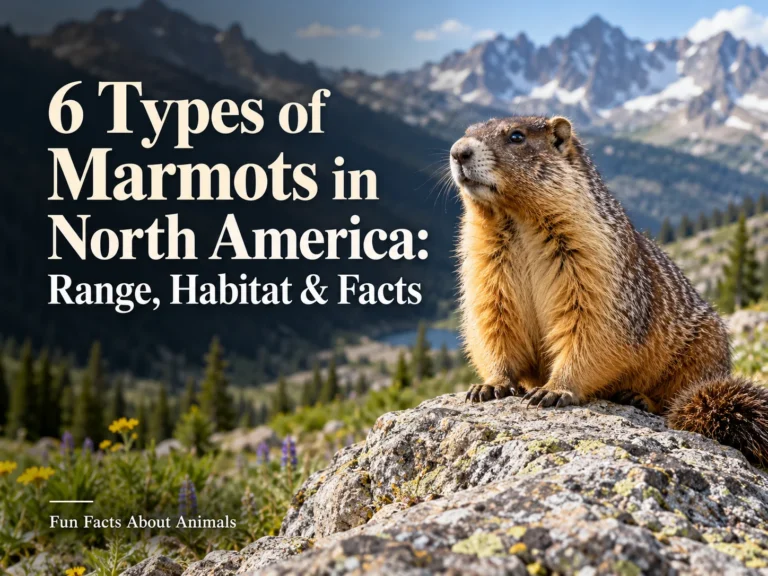
Bobak marmots are burrowing mammals associated with Eurasian steppe grasslands. Unlike Marmots in North America, which include species adapted to different mountain and grassland environments, bobak marmots are strongly associated with the open steppes of Eurasia. They build underground burrows that protect them from predators and extreme weather. The burrows are also essential during hibernation, allowing marmots to survive seasons when above-ground food becomes scarce. Their lifestyle shows that not every plains animal depends on speed; for some species, disappearing below the open landscape is a much more effective survival strategy.
17. Mongolian Gazelle
Mongolian gazelles inhabit vast open steppes across Mongolia and neighboring parts of eastern Asia. They are highly mobile animals that can shift across broad landscapes as vegetation and weather conditions change. Unlike animals tied to permanent territories, they can respond to a highly variable environment by moving toward better grazing areas. This mobility is particularly useful on plains where resources can fluctuate dramatically across seasons and years.
How Plains Animals Survive Open Landscapes
Open habitats create a distinctive challenge for Animals That Live in Plains: they often have fewer trees, rocks, or dense plants available for immediate cover.
| Adaptation | Why It Helps | Examples |
| Speed | Helps escape predators or catch prey | Cheetah, pronghorn, ostrich |
| Herding | Improves detection and group defense | Zebra, wildebeest, bison |
| Burrowing | Provides shelter and protection | Prairie dog, bobak marmot |
| Migration | Helps track seasonal food and water | Wildebeest, saiga |
| Flexible hunting | Allows predators to use changing prey | Lion, hyena, coyote |
| Long-distance movement | Helps find scattered resources | Pronghorn, Mongolian gazelle |
Different species solve the same basic plains problems in very different ways. A cheetah relies on acceleration, while a prairie dog retreats underground. Wildebeest move with herds, whereas maned wolves often forage alone. These adaptations differ from those of Animals That Live in Mountains, which must often cope with steep terrain, colder conditions, and higher elevations. This diversity helps grassland plains support complex food webs despite appearing relatively simple compared with forests.
African Plains vs Great Plains, Pampas and Steppe
Animals That Live in Plains face different conditions depending on region. African savanna plains generally occur in warmer climates and may contain scattered trees among extensive grasses. Large grazers such as wildebeest and zebra support major predators including lions, cheetahs, and hyenas. The North American Great Plains are temperate grasslands historically dominated in many areas by bison and other grazing wildlife. Burrowing animals such as prairie dogs have an especially important ecological influence.
South America’s Pampas and related grasslands support distinctive species such as greater rheas and Pampas deer, while broader South American open habitats also support maned wolves. Eurasian steppes tend to be comparatively dry, open, and strongly seasonal. Animals such as saiga antelope, bobak marmots, and Mongolian gazelles cope through migration, burrowing, or extensive movement.
Why Plains Support So Many Grazers and Predators
Grasses can grow across huge areas and recover after grazing more effectively than many woody plants, helping Animals That Live in Plains find abundant forage across open landscapes. This makes grasslands able to support large herbivore populations. Where herbivores become abundant, predators gain opportunities as well.
Lions, cheetahs, hyenas, coyotes, and black-footed ferrets represent very different hunting strategies, but all benefit from prey communities supported by open-land ecosystems. Burrowing animals add another layer. Prairie dogs and marmots use underground spaces for protection while also altering soils and vegetation above them.
FAQs
What animals live in plains?
Animals That Live in Plains include wildebeest, zebras, lions, cheetahs, bison, pronghorn, prairie dogs, coyotes, greater rheas, saiga antelope, and Mongolian gazelles. Species vary according to climate and region.
What animals live in the African plains?
African savanna plains support wildebeest, plains zebras, lions, cheetahs, spotted hyenas, ostriches, elephants, gazelles, and numerous other species.
What animals live in the Great Plains?
North America’s Great Plains support animals such as plains bison, pronghorn, prairie dogs, coyotes, black-footed ferrets, badgers, grassland birds, and many smaller mammals. However, regional searches such as Badgers in Maine involve a different part of North America, showing how badger distribution and habitat can vary considerably across the continent.
Are plains and grasslands the same?
Not always. A plain is defined mainly by relatively flat terrain, while vegetation dominated by grasses defines a grassland. Many famous wildlife plains are grasslands, but the two terms are not scientifically identical.
How do animals survive in plains?
Animals That Live in Plains use adaptations such as speed, herd behavior, burrowing, migration, camouflage, efficient grazing, and long-distance movement. The best strategy depends on the species and the type of plains habitat.
What predators live on plains?
Plains predators include African lions, cheetahs, spotted hyenas, coyotes, black-footed ferrets, and many birds of prey. Different predators specialize in prey ranging from tiny rodents to large grazing mammals.
Final Thoughts
Animals that live in plains show how many different survival strategies can develop in open landscapes. Some travel in large herds, others sprint across exposed ground, while burrowing species escape weather and predators by moving underground. African savannas, North American prairies, South American grasslands, and Eurasian steppes each support distinct wildlife communities. What connects them is the challenge of surviving in broad, relatively open environments where mobility, shelter, food availability, and predator awareness strongly shape animal life.