
15 Animals That Live in Rivers Around the World
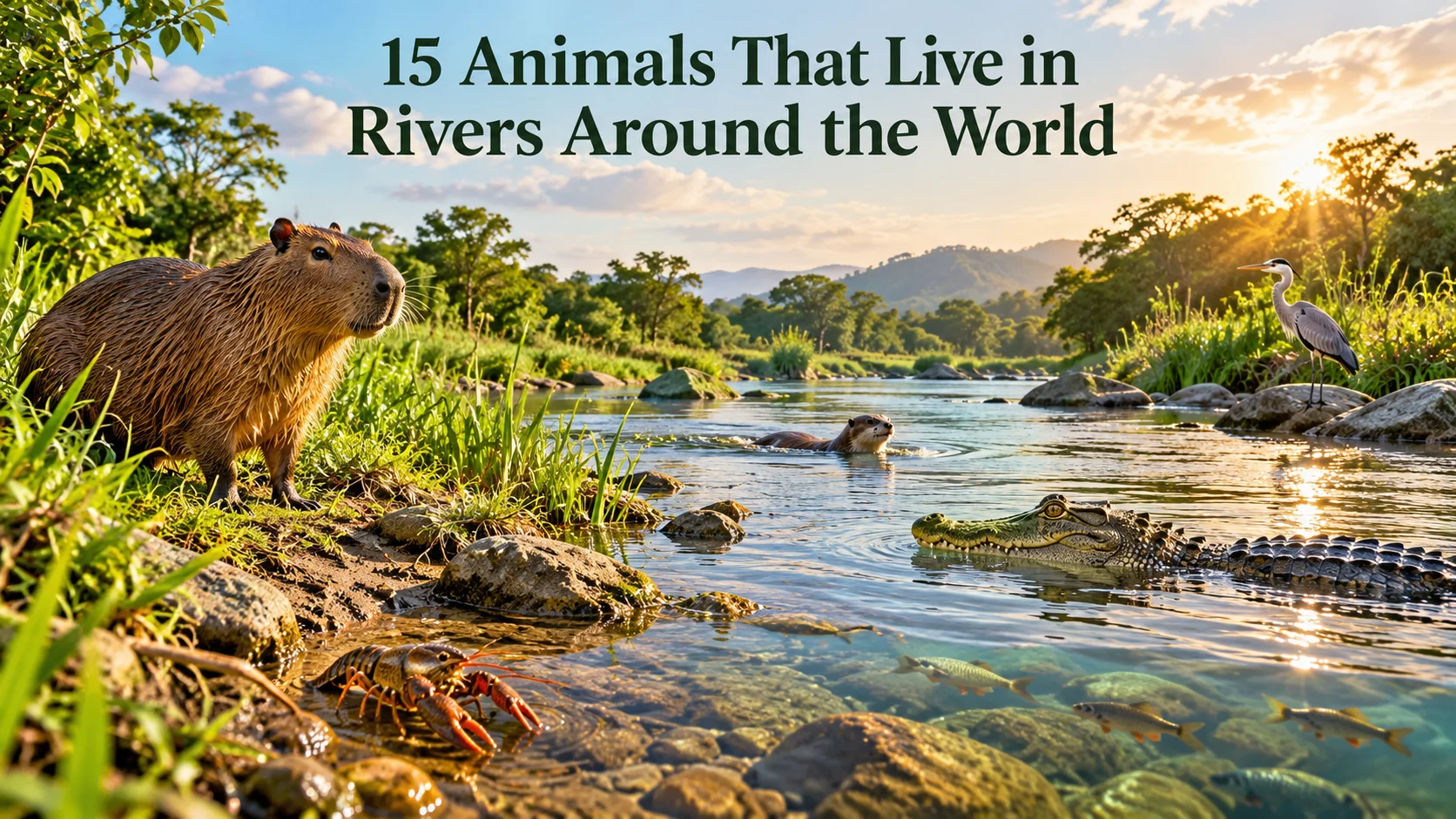
Animals That Live in Rivers support far more wildlife than fish alone. Mammals, reptiles, amphibians, insects, and other animals may live directly in flowing water or depend on nearby riverbanks, floodplains, and vegetation. Some remain in rivers for most of their lives, while others use them for feeding, breeding, migration, or shelter. These 15 river animals show how different species have adapted to currents, changing water levels, muddy bottoms, and life along freshwater waterways.
River animals include river otters, beavers, capybaras, river dolphins, platypuses, crocodiles, salmon, catfish, trout, eels, frogs, crayfish, freshwater mussels, and mayfly nymphs. Their river adaptations include streamlined bodies, webbed feet, strong tails, sensory systems, burrowing, migration, and ways of staying secure in flowing water.
What Is a River Habitat?
A river habitat includes more than the moving water visible between its banks. The river channel, riverbed, shallow margins, banks, vegetation, and floodplain can all provide important habitat for wildlife. This variety of conditions helps support many Animals That Live in Rivers, from fully aquatic species to mammals that move between land and water.
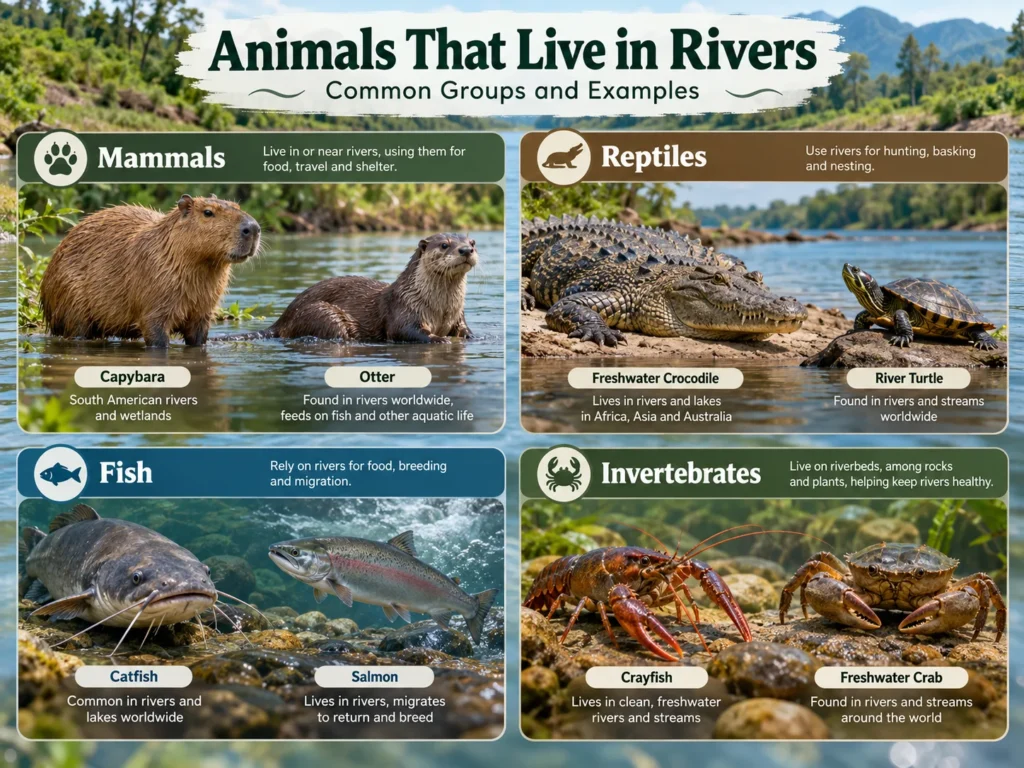
Conditions also change from one section of a river to another, with differences in current speed, depth, temperature, oxygen, and the type of material covering the bottom. These habitat differences are especially important when comparing aquatic wildlife with land-based species, such as Porcupines in Georgia, which depend on very different environmental conditions. For that reason, not every animal on this list spends its entire life underwater. Otters and capybaras move between land and water; salmon may migrate between rivers and oceans, while mussels and aquatic insect larvae remain closely associated with the riverbed. Many of these species can also occur in streams, lakes, wetlands, or other connected freshwater habitats.
Quick Comparison of Animals That Live in Rivers
| Animal | How It Uses Rivers | Key Adaptation |
| River otter | Hunts and travels in waterways | Webbed feet and streamlined body |
| Beaver | Lives along rivers and streams | Strong tail and dam building |
| Capybara | Uses river margins and nearby vegetation | Semi-aquatic body |
| Amazon river dolphin | Lives within major South American river systems | Echolocation |
| Platypus | Forages in rivers and streams | Electroreception |
| Freshwater crocodile | Hunts and rests around freshwater waterways | Powerful swimming tail |
| Fly River turtle | Lives in rivers and connected freshwater habitats | Flipper-like limbs |
| Salmon | Uses rivers for spawning and migration | Strong swimming ability |
| Catfish | Many species occupy river bottoms | Sensitive barbels |
| Trout | Lives in cool flowing water | Streamlined body |
| Freshwater eel | Moves through rivers and connected waters | Flexible elongated body |
| River-associated frog | Uses flowing water and river margins | Jumping and camouflage |
| Crayfish | Shelters on riverbeds | Claws and hiding behavior |
| Freshwater mussel | Lives partly buried in substrate | Muscular foot |
| Mayfly nymph | Develops underwater in rivers and streams | Gripping adaptations |
15 Animals That Live in Rivers
1. River Otter
River otters are among the best-known Animals That Live in Rivers, although they also use streams, lakes, and other freshwater habitats. They hunt fish, amphibians, crustaceans, and other available prey while using nearby banks for resting and shelter. Their long, streamlined bodies reduce resistance in the water, while webbed feet and powerful tails help with swimming. Dense fur provides insulation, which is especially important for otters living in colder regions. Sensitive whiskers can also help them detect movement while hunting underwater.
2. Beaver
Beavers are among the animals most closely associated with rivers and streams. They build lodges and, in suitable locations, construct dams from wood, mud, stones, and vegetation. Their webbed hind feet and broad, flattened tails make them capable swimmers. Beaver dams can slow moving water and create ponds and wetlands, changing the surrounding habitat for fish, amphibians, birds, and other wildlife. This makes beavers important ecosystem engineers as well as river animals.
3. Capybara
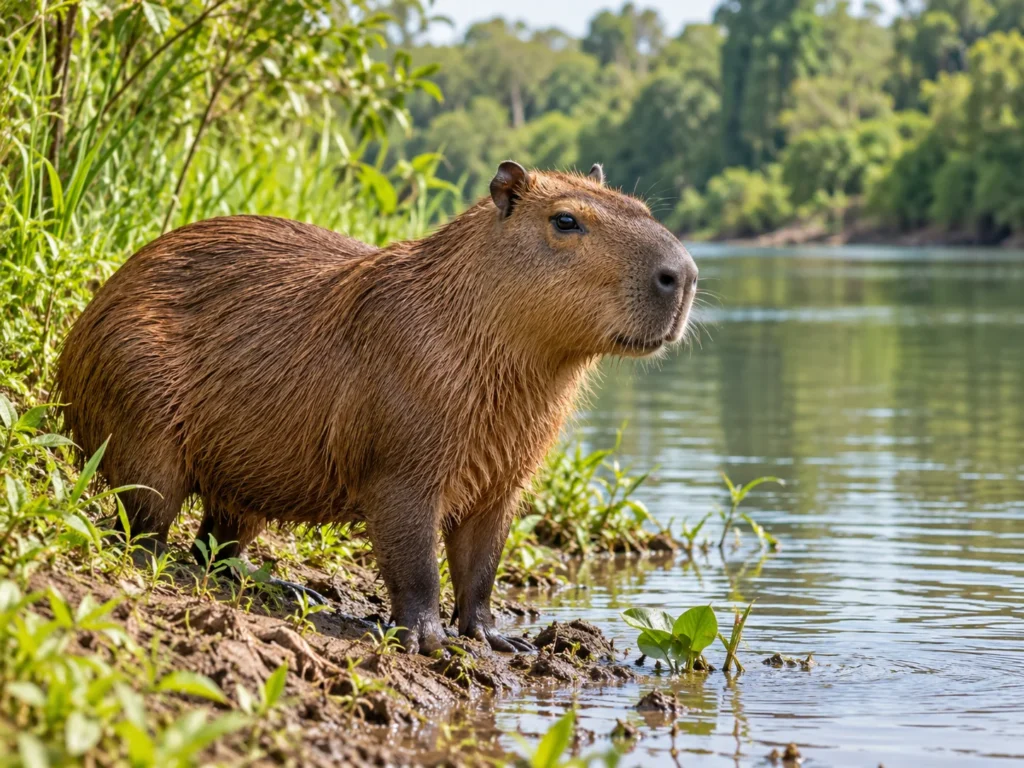
Capybaras are among the most recognizable Animals That Live in Rivers, although they also use marshes, wetlands, and other water-rich habitats across much of South America. These large rodents spend considerable time in or near water and commonly feed on grasses and aquatic vegetation. Their partially webbed feet help them move through wet ground and water. Capybaras may enter rivers to cool down or escape threats, and they can remain partly submerged when danger is nearby. Their social lifestyle also helps group members remain alert to predators.
4. Amazon River Dolphin
The Amazon river dolphin, often called the boto, inhabits the Amazon and Orinoco river systems of South America. It can move through river channels as well as seasonally flooded forests when water levels rise. Visibility in these environments is often poor, so echolocation plays an important role in finding prey and navigating obstacles. River dolphins also have relatively flexible bodies that help them maneuver through complex underwater environments containing branches, vegetation, and submerged trees.
5. Platypus
Platypuses are among the most distinctive Animals That Live in Rivers, inhabiting freshwater rivers, streams, and creeks in eastern Australia and Tasmania. They spend much of their feeding time underwater, searching along the bottom for insect larvae, worms, crustaceans, and other small prey. Their webbed feet make them efficient swimmers, while dense fur helps keep the body insulated. One of their most distinctive adaptations is electroreception: receptors in the bill detect weak electrical signals produced by prey, allowing the platypus to hunt even when its eyes and ears are closed underwater.
6. Freshwater Crocodile
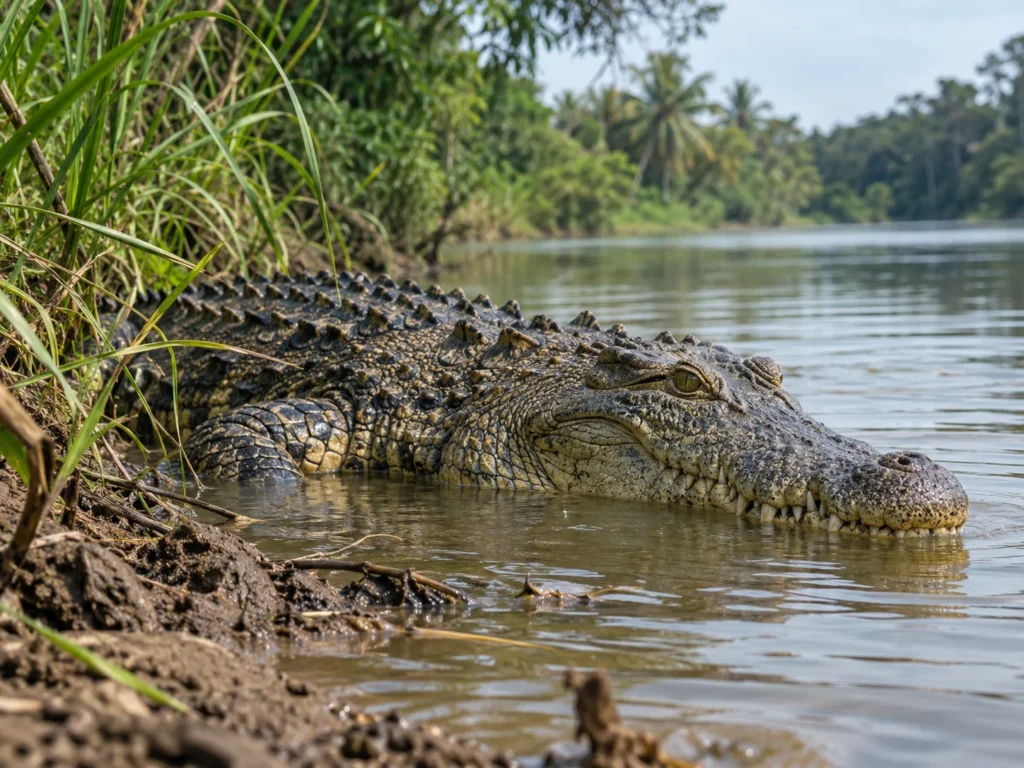
Freshwater crocodiles occur in northern Australia and use rivers, creeks, pools, wetlands, and other freshwater environments. Unlike larger saltwater crocodiles, they are generally smaller and more closely associated with inland freshwater systems.
A strong tail provides much of the power needed for swimming, while the eyes and nostrils are positioned so the crocodile can remain mostly submerged while observing its surroundings. It typically relies on ambush tactics rather than chasing prey over long distances.
7. Fly River Turtle
The Fly River turtle, also called the pig-nosed turtle, is one of the more unusual Animals That Live in Rivers, occurring in parts of New Guinea and northern Australia. It inhabits rivers, lagoons, and other freshwater systems rather than being restricted to just one type of waterway. Unlike most freshwater turtles, its limbs are broad and flipper-like, giving it a swimming style that resembles that of marine turtles. The streamlined shell also helps it move efficiently through the water. Females leave the water to lay eggs on suitable banks or sandy areas.
8. Salmon
Salmon are among the best-known animals associated with river migration. Many species begin life in freshwater, later move to the ocean, and eventually return to freshwater systems to reproduce. Reaching spawning grounds can require swimming against strong currents and passing natural obstacles. Their powerful bodies and strong tails help with this demanding journey. Salmon also connect river and marine ecosystems because nutrients carried in their bodies can eventually enter riverbank food webs.
9. Catfish
Catfish are an extremely diverse group, and many species are among the Animals That Live in Rivers around the world. Some occupy bottom habitats where light levels may be low and the water can contain suspended sediment. The whisker-like structures around their mouths, known as barbels, contain sensory receptors that help them locate food, which can be especially useful when visibility is poor. Habitat requirements vary greatly among catfish species, so not all catfish should be treated as having the same river lifestyle.
10. Trout
Many trout inhabit cool, clean rivers and streams where flowing water provides relatively high oxygen levels. Their streamlined bodies and strong fins allow them to maintain position and move efficiently through currents. Rather than constantly fighting the strongest flow, trout often use calmer areas behind rocks, submerged logs, or changes in the riverbed. These current breaks allow them to conserve energy while remaining close to drifting insects and other food carried downstream.
11. Freshwater Eel
Freshwater eels are among the many Animals That Live in Rivers, spending significant parts of their lives in rivers, streams, and connected freshwater systems. Their long, flexible bodies allow them to move through narrow spaces, around rocks, and across complex bottom habitats. Some freshwater eels undertake extraordinary migrations between freshwater and the sea during their life cycles. The details vary by species, but their ability to use connected river systems demonstrates how waterways can function as both habitat and migration routes.
12. River-Associated Frogs
Many frog species live beside rivers, streams, and other flowing freshwater habitats. They may use vegetation, wet rocks, shallow margins, or pools connected to the main river channel. Strong hind legs help frogs jump away from danger and move through water, while camouflage can make them difficult for predators to detect. Some species breed in flowing water, although frogs as a group occupy many different habitats, so not every frog should be considered a river animal.
13. Crayfish
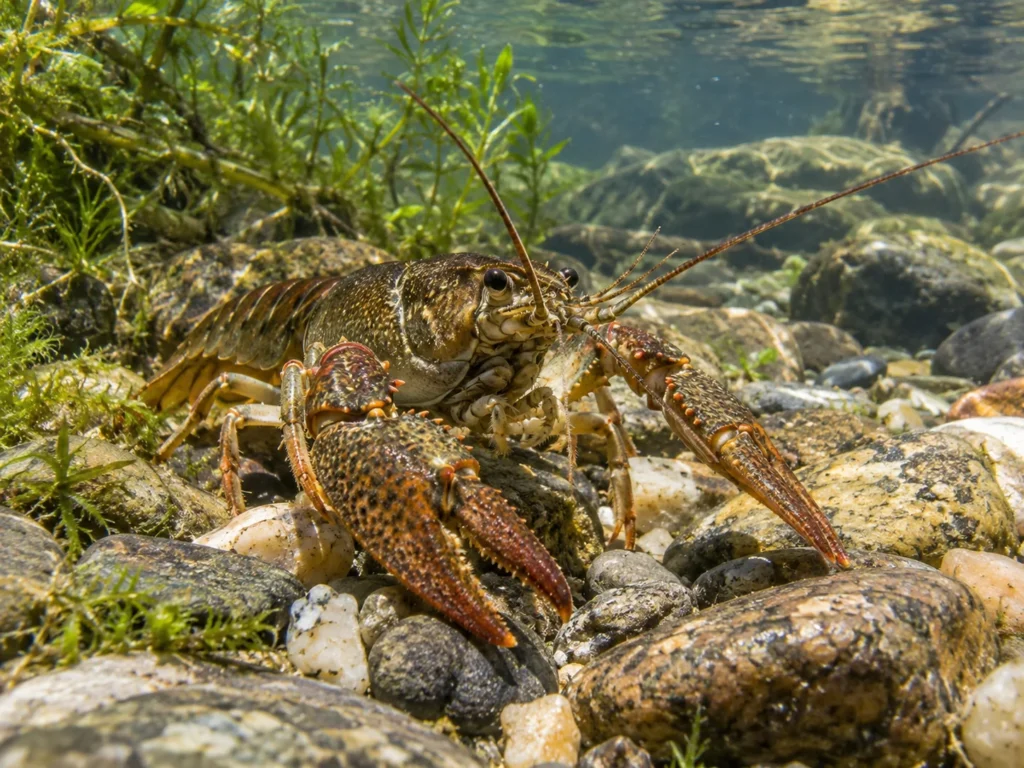
Crayfish are among the many Animals That Live in Rivers, usually staying close to the riverbed in areas with rocks, logs, vegetation, or burrows that provide shelter from predators and stronger currents. Their large claws are useful for handling food, defending themselves, and interacting with other crayfish. As omnivores and scavengers, they can consume plant material, dead organisms, and small animals, making them important participants in freshwater food webs.
14. Freshwater Mussel
Freshwater mussels spend most of their lives partly buried in the bottoms of rivers, streams, or lakes. Instead of chasing food, they filter microscopic particles and organic material from the water around them. A muscular foot helps them anchor themselves and slowly reposition within the substrate. Many freshwater mussels also have unusual life cycles in which larvae temporarily attach to fish, allowing the young mussels to disperse to new parts of the river system.
15. Mayfly Nymph
Mayflies are another example of Animals That Live in Rivers during an important stage of their life cycle. Their nymphs develop underwater in rivers and streams, where they become a major food source for trout and many other freshwater animals. Species living in strong currents may have flattened bodies or structures that help them grip rocks rather than being swept downstream. After completing their aquatic development, they emerge from the water as winged adults, and this adult stage is usually much shorter than the underwater juvenile period.
How Are Animals Adapted to River Life?
River animals must deal with a challenge that animals in still water experience less intensely: constant movement. Currents can carry organisms downstream, make swimming more demanding, and shift sediment or debris along the riverbed. These pressures are very different from the conditions faced by land mammals such as Badgers in Maine, which depend on terrestrial habitats rather than flowing freshwater environments.
Larger swimmers such as otters, salmon, and crocodiles use powerful tails, fins, or webbed feet to move through water. Smaller riverbed animals may solve the problem differently. Mayfly nymphs cling to rocks, crayfish shelter beneath solid objects, and freshwater mussels remain partly buried in the substrate.
Finding food can also require specialized senses. River dolphins use echolocation, platypuses detect electrical signals, and catfish use sensitive barbels when visibility is poor. River survival is therefore not based on one adaptation but on many different solutions to moving water.
Why Are Rivers Important for Wildlife?
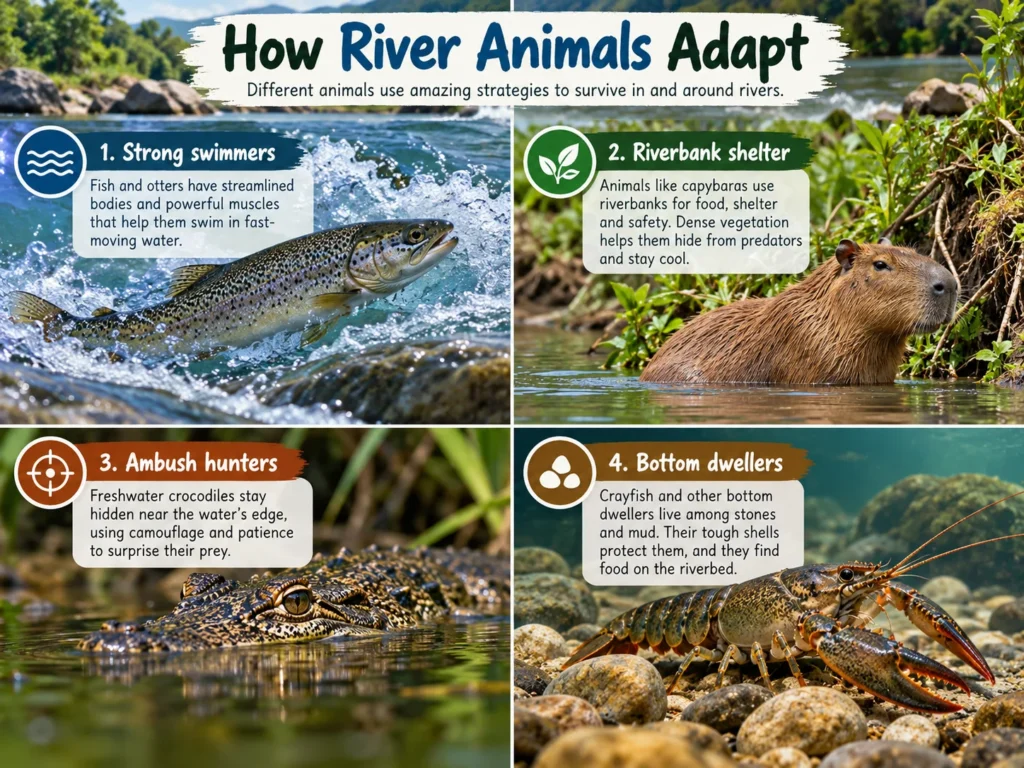
Rivers provide drinking water, food, shelter, breeding areas, and travel routes for many Animals That Live in Rivers. Fish may use different sections of a river during different stages of life, while mammals and birds can depend on vegetation growing along the banks for feeding, resting, or protection.
Floodplains and river margins are equally important. Seasonal changes in water level can create temporary feeding grounds, nursery areas, and wetlands that support species not normally seen in the main river channel. Healthy rivers therefore connect aquatic and terrestrial ecosystems rather than functioning as isolated strips of water.
Frequently Asked Questions
What animals live in rivers?
Many animals live in or depend on rivers, including otters, beavers, capybaras, river dolphins, crocodiles, turtles, salmon, trout, catfish, eels, frogs, crayfish, freshwater mussels, and aquatic insect larvae. The exact wildlife varies with climate, river size, water temperature, and geographic region.
What mammals live in rivers?
River-associated mammals include river otters, beavers, capybaras, platypuses, hippos, and several species of river dolphin. Some spend much of their time in water, while others use rivers mainly for feeding, movement, cooling, or protection.
What fish commonly live in rivers?
Common river fish groups include trout, salmon, catfish, carp, eels, minnows, and many others. Different species favor different conditions, from cold fast-flowing headwaters to deeper and slower sections farther downstream.
Do crocodiles live in rivers?
Yes. Several crocodilian species use river habitats, although their preferred environments differ. Freshwater crocodiles in northern Australia commonly use inland rivers and creeks, while other crocodile species may also inhabit estuaries, wetlands, lakes, or coastal environments.
How do animals survive strong river currents?
Animals use different strategies depending on their size and lifestyle. Some have streamlined bodies, strong tails, fins, or webbed feet. Smaller animals may cling to rocks, burrow into sediment, hide behind objects, or occupy slower sections of the river where the current is weaker.
Final Thoughts
Animals That Live in Rivers that live in rivers have developed many different ways to cope with flowing water, changing depths, limited visibility, and shifting habitats. From migrating salmon to burrowing mussels and echolocating river dolphins, each species uses adaptations suited to its particular place within the river ecosystem.



3 Comments