
Animals That Eat Squirrels: 15 Predators and How They Hunt
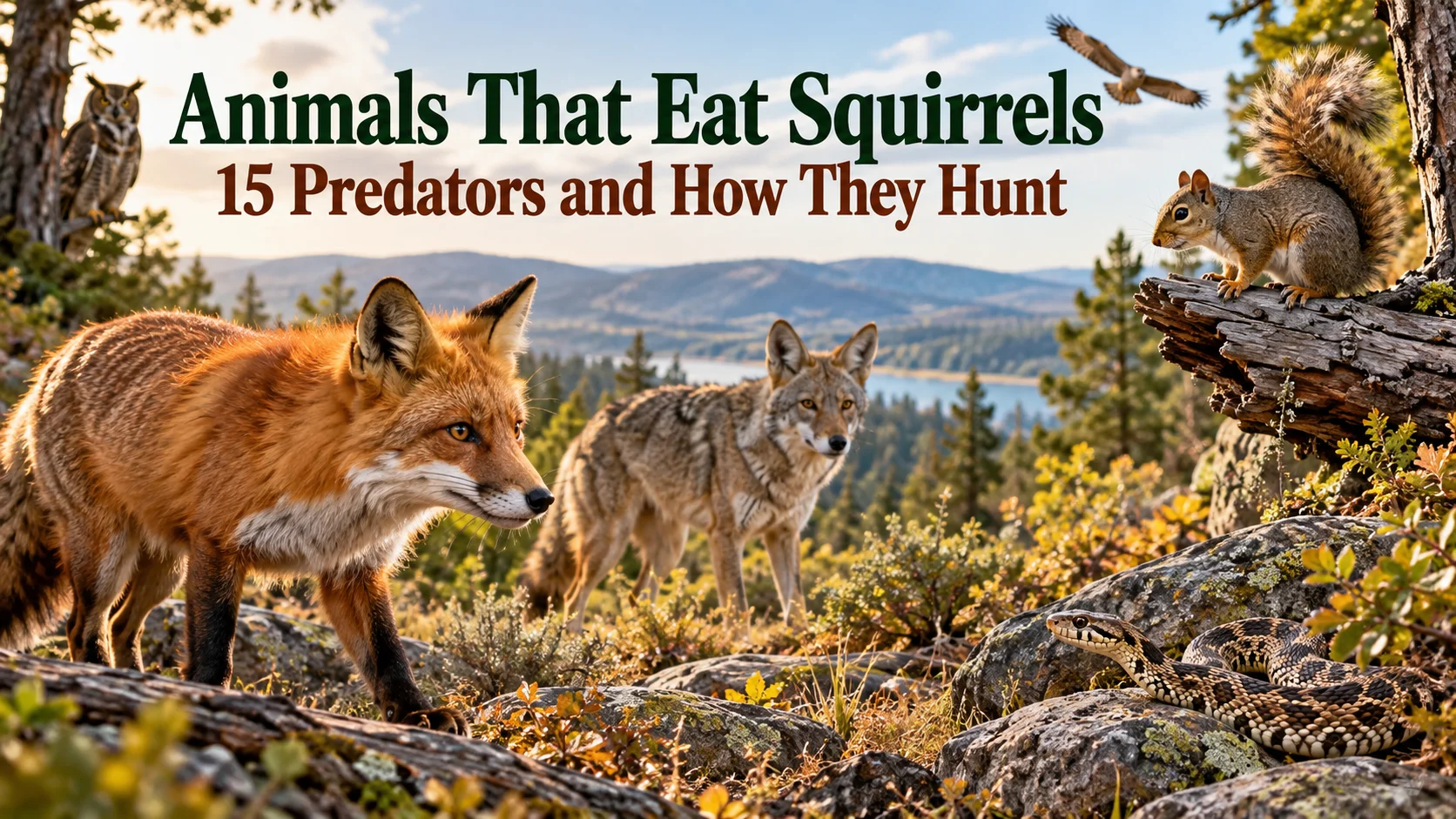
Squirrels are fast, alert, and skilled at using trees, burrows, and dense cover, yet they still form part of many predators’ diets. Animals that eat squirrels include birds of prey, foxes, wild cats, mustelids, snakes, and opportunistic mammals. The exact threat depends on the squirrel species and habitat. Tree squirrels face different dangers from ground squirrels, while young squirrels can be vulnerable to predators that rarely catch healthy adults.
Animals that Animals That Eat Squirrels include hawks, owls, eagles, foxes, coyotes, bobcats, badgers, weasels, snakes, raccoons, domestic cats, and pine martens. Some actively hunt squirrels, while others take them opportunistically. Ground squirrels face many terrestrial hunters, whereas tree squirrels are also vulnerable to climbing predators and birds of prey.
What Animals Eat Squirrels?
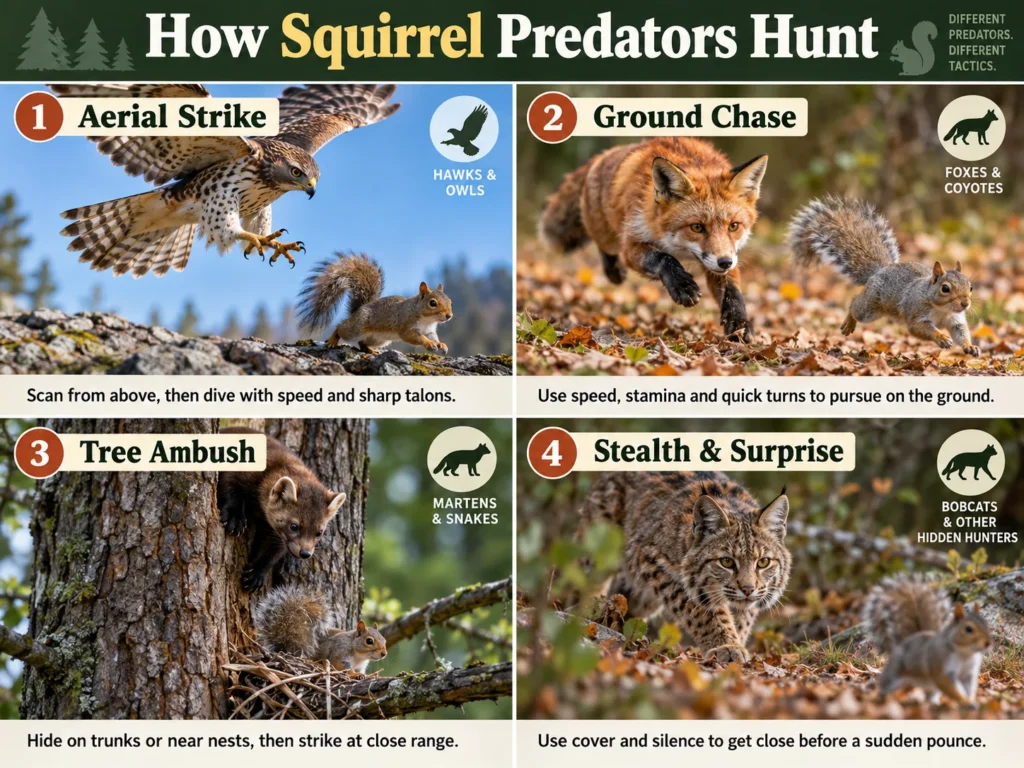
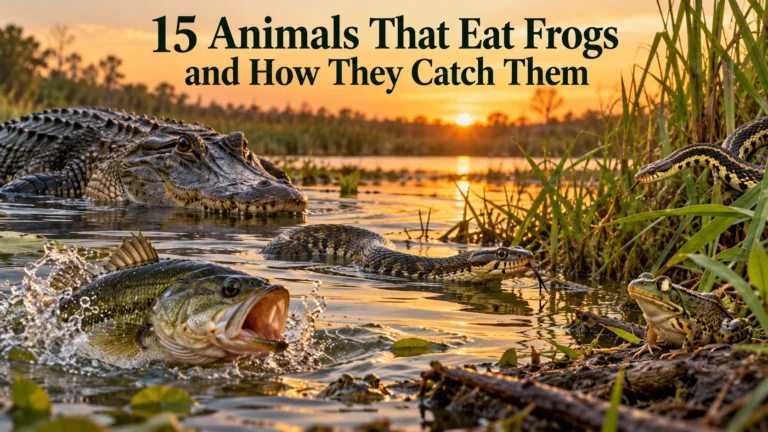
Squirrels live in habitats ranging from city parks and hardwood forests to grasslands and mountain meadows, bringing them into contact with many predators. Some raptors regularly take ground squirrels, while foxes, coyotes, bobcats, and mustelids catch them as part of a broader small-mammal diet. In wetter habitats, some of these same predators may also overlap with Animals That Eat Frogs, showing how predator diets can shift with local prey availability. Nestlings and juveniles can be easier targets for snakes, raccoons, and climbing predators, while overall predation pressure changes with location, season, habitat, and prey availability.
15 Animals That Eat Squirrels
1. Red-Tailed Hawk
Red-tailed hawks are well-known predators of ground squirrels in North America. They often watch from a perch or circle above open habitat before dropping quickly onto exposed prey. Squirrels are only one part of their varied diet, but open fields, grasslands, roadsides, and forest edges can make ground-foraging squirrels easier to spot.
2. Great Horned Owl
Great horned owls eat many mammals and birds, including squirrels. Their quiet flight, strong feet, and excellent low-light vision make them effective ambush hunters. Most tree squirrels are active by day, but squirrels moving near dawn, dusk, or at night can be vulnerable, while flying squirrels face greater overlap with nocturnal owls.
3. Golden Eagle
Golden eagles hunt across open and rugged landscapes, and ground squirrels are important prey in parts of their North American range. They scan wide areas from the air or high vantage points before attacking. This makes them more relevant to ground-dwelling squirrels than to squirrels that spend most of their time inside dense tree canopies.
4. Ferruginous Hawk
Ferruginous hawks live mainly in open country across western North America. In some areas, ground squirrels are major prey. These large hawks hunt from the air, elevated perches, or locations near burrow systems. Squirrels feeding away from their burrows can become especially exposed where vegetation is short and visibility is high.
5. Prairie Falcon
Prairie falcons are fast raptors of dry, open landscapes. Animals That Eat Squirrels Although falcons are often associated with bird prey, prairie falcons also hunt mammals, and some ground squirrel species can be major food sources. Their speed allows them to close distance rapidly, giving squirrels little time to reach a burrow once an attack begins.
6. Red Fox
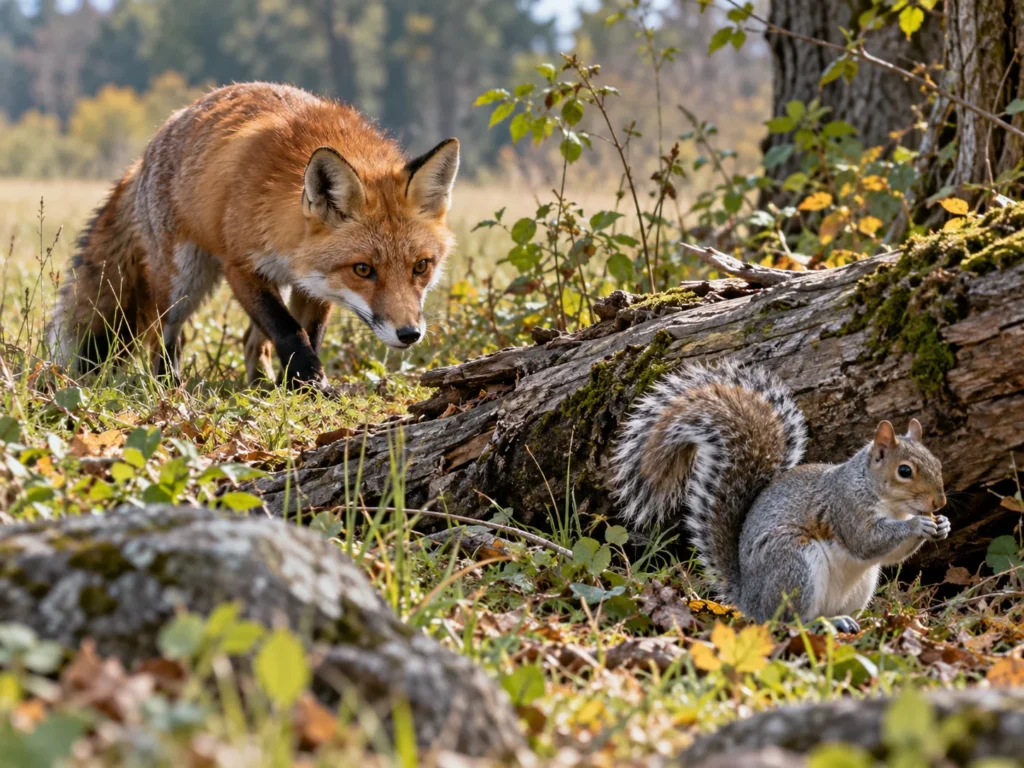
Red foxes are adaptable hunters that eat rodents, rabbits, birds, insects, and other foods. They may catch ground squirrels or tree squirrels encountered on the ground. Foxes use hearing, scent, stalking, and sudden pounces when hunting small mammals, but squirrels are usually part of a broad and flexible diet rather than their only target.
7. Coyote
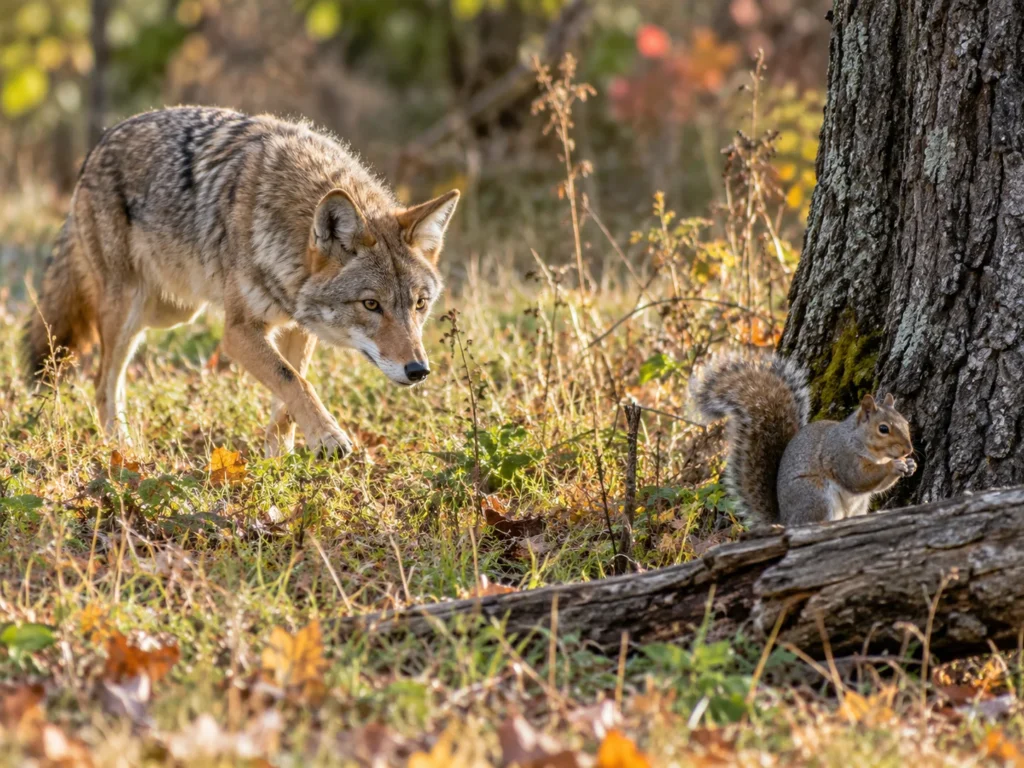
Coyotes have highly flexible diets that change by region and season. Ground squirrels and other rodents can become important where they are abundant. Coyotes may stalk, chase, or investigate burrow areas while hunting. Because they cannot pursue healthy tree squirrels through the canopy, most squirrel predation occurs at or near ground level.
8. Bobcat
Bobcats are stealthy ambush predators that eat rabbits, rodents, birds, and squirrels. They usually approach through vegetation or uneven terrain before making a short, explosive attack. Ground squirrels are easier targets, but tree squirrels can also be vulnerable while feeding on the ground. How often bobcats eat squirrels depends heavily on local prey availability.
9. Domestic Cat
Animals That Eat Squirrels Free-ranging domestic cats can prey on squirrels, particularly juveniles or individuals caught away from secure cover. Adult squirrels are larger and harder to catch than many common cat prey species, so squirrels are not necessarily a major part of a cat’s diet. Encounters are most likely in gardens, parks, suburbs, and woodland edges.
10. Raccoon
Raccoons are omnivores rather than specialist squirrel hunters, but they can prey on squirrels when opportunities arise. Their climbing ability gives them access to trees, cavities, and nest sites. Young squirrels are especially vulnerable because they cannot escape as effectively as adults, making raccoons more important as opportunistic nest predators than as regular hunters of healthy adults.
11. Long-Tailed Weasel
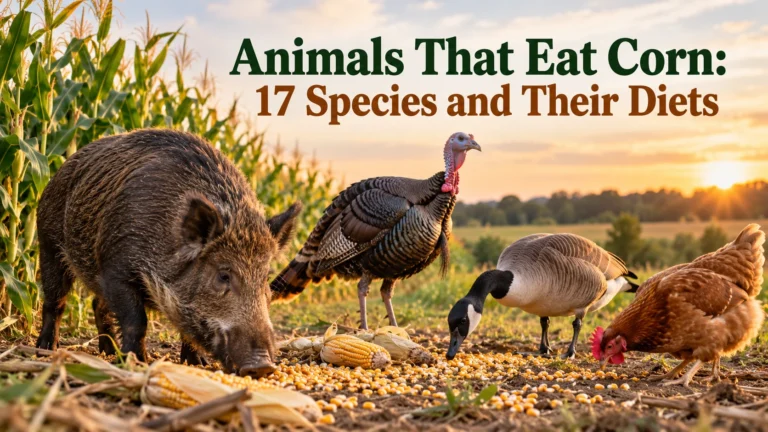
Long-tailed weasels are slender carnivores that specialize in small mammals. Their narrow bodies allow them to pursue prey through cover and into tight spaces that stop larger predators. Unlike many Animals That Eat Corn, long-tailed weasels rely mainly on animal prey rather than plant-based foods. Ground squirrels are documented prey in parts of their range, and burrows do not always provide complete protection when a determined weasel can investigate entrances and tunnels.
12. American Badger
American badgers are powerful digging specialists, and ground squirrels are among their regular prey. Strong forelimbs and long claws allow badgers to excavate burrows that protect squirrels from many other predators. In some open landscapes, badgers and coyotes may even hunt in the same area, forcing prey to choose between staying underground and fleeing aboveground.
13. Gopher Snake
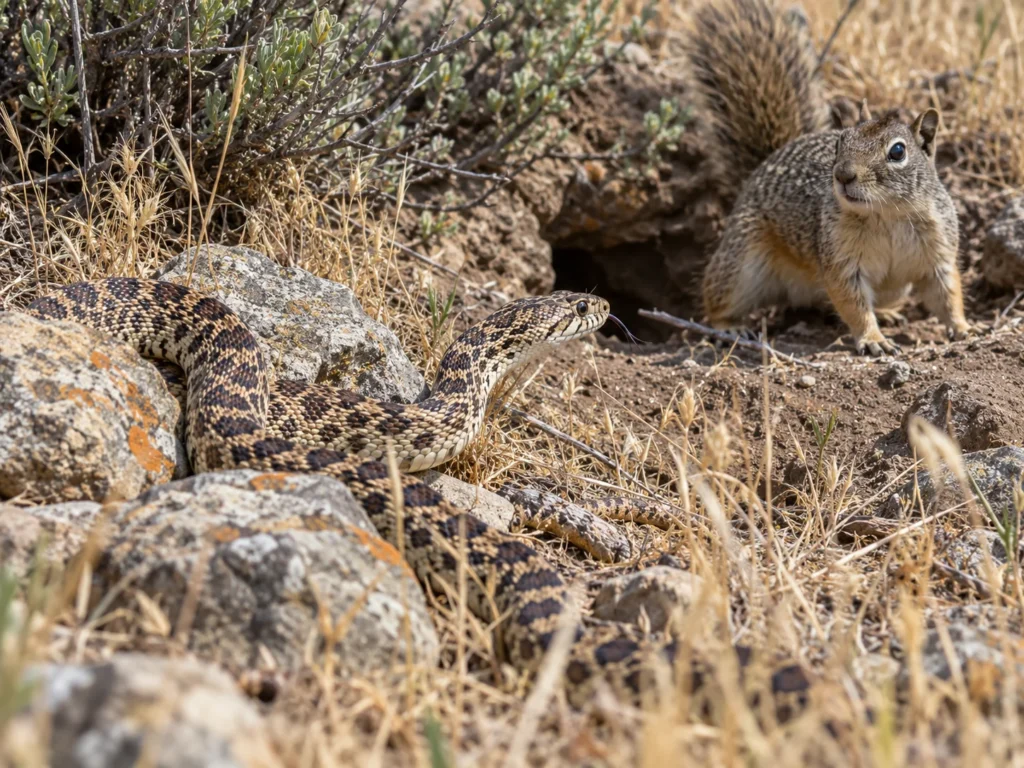
Gopher snakes are nonvenomous constrictors found across much of western North America. They prey on rodents and can enter burrows, making them effective predators of suitably sized ground squirrels. Instead of chasing prey across open ground, these snakes can investigate underground refuges where squirrels normally gain protection from aerial hunters.
14. Western Rattlesnake
Western rattlesnakes prey on small mammals, including ground squirrels where their ranges overlap. They depend on concealment and a rapid venomous strike rather than extended pursuit. Ground squirrels can detect and respond to snakes, but young, inexperienced, or poorly positioned individuals may still become vulnerable when they approach an ambush site.
15. Pine Marten
Pine martens are agile woodland mustelids and excellent climbers. In Britain and Ireland, they are natural predators of squirrels and have an especially interesting relationship with native red squirrels and introduced gray squirrels. Their ability to hunt both on the ground and in trees lets them reach places unavailable to many mammalian predators.
Quick Comparison of Squirrel Predators
| Animals That Eat Squirrels | Main Hunting Method | Squirrels Most Exposed |
| Red-tailed hawk | Aerial strike | Ground squirrels |
| Great horned owl | Nocturnal ambush | Flying or exposed squirrels |
| Golden eagle | Aerial attack | Ground squirrels |
| Red fox | Stalk and pounce | Ground-level squirrels |
| Coyote | Stalking and pursuit | Ground squirrels |
| Bobcat | Ambush | Ground-level squirrels |
| Raccoon | Climbing and nest investigation | Young squirrels |
| Long-tailed weasel | Pursuit through cover | Ground squirrels |
| American badger | Digging | Burrowing squirrels |
| Gopher snake | Burrow entry and constriction | Accessible ground squirrels |
| Pine marten | Climbing and pursuit | Tree squirrels |
Birds That Eat Squirrels
Birds of prey are among the most effective predators of squirrels, particularly when squirrels spend time in open habitats. Hawks and eagles can scan large areas from above, while owls create an additional nighttime threat. Unlike many Animals That Eat Honey, these raptors rely mainly on animal prey rather than energy-rich foods taken from bee nests. This aerial hunting advantage forces ground squirrels to stay alert not only to predators on the ground but also to attacks coming from above.
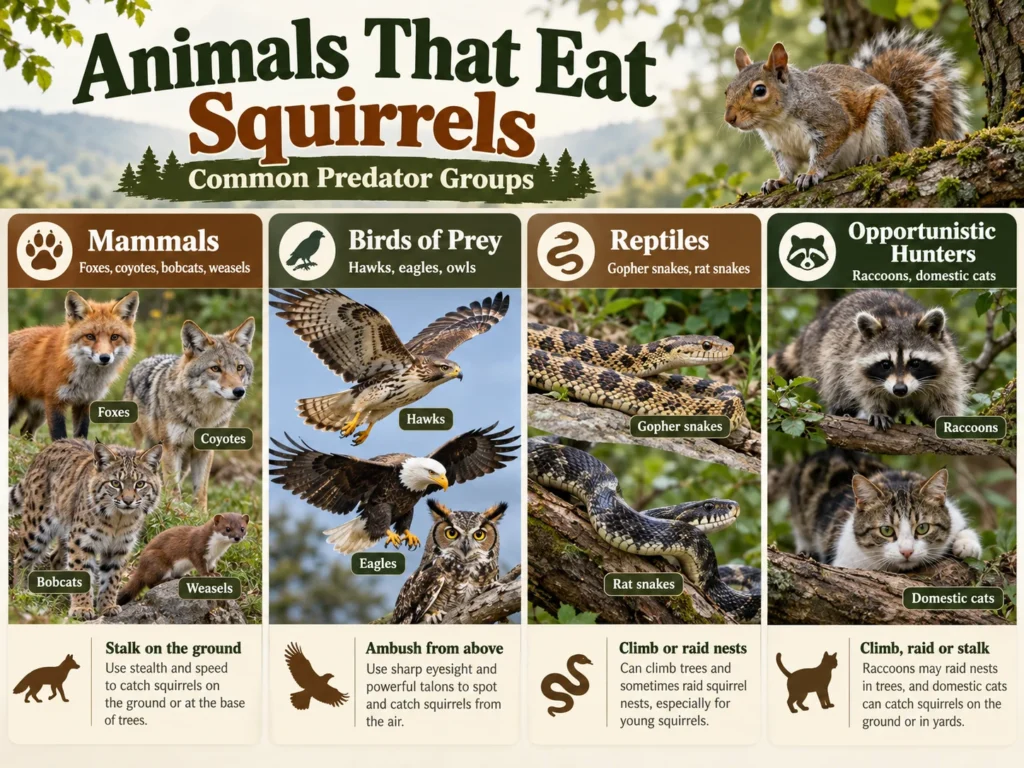
Not every raptor regularly eats squirrels. Predator size, habitat, and squirrel size all matter. In places with abundant ground squirrels, however, some hawks, eagles, and falcons can depend heavily on them as prey.
Mammals That Eat Squirrels
Mammalian predators use several different hunting strategies. Foxes and bobcats rely on stealth, coyotes cover large areas on foot, weasels enter narrow spaces, and badgers can dig into burrow systems. Climbing mammals create an additional threat for tree squirrels. Raccoons and pine martens can reach elevated areas that protect squirrels from many ground predators. Domestic cats also prey on squirrels around human-modified habitats, especially when squirrels spend time on lawns or near low cover.
Do Snakes Eat Squirrels?
Yes, some snakes are among the Animals That Eat Squirrels. Gopher snakes and western rattlesnakes are documented predators of ground squirrels where their ranges overlap. Snakes may also encounter young squirrels in burrows or other sheltered locations. This should not be generalized to all snakes. Whether a snake can take a squirrel depends on the snake’s size, hunting method, geographic range, and the size or age of the squirrel.
Tree Squirrel Predators vs Ground Squirrel Predators
Tree and ground squirrels face overlapping but different risks from Animals That Eat Squirrels. Tree squirrels can escape upward quickly, but raptors and skilled climbing mammals can still reach them. Nestlings are particularly vulnerable because they lack the speed and agility of adults. Ground squirrels rely heavily on burrows and early detection. Aboveground, hawks, eagles, falcons, foxes, coyotes, and bobcats may attack them, while badgers, weasels, and some snakes can partly overcome the protection a burrow provides.
How Do Squirrels Avoid Predators?
Squirrels remain successful because they have several defenses. Vigilance is critical: detecting danger early gives a squirrel time to reach a tree, burrow, rock pile, or dense vegetation before a predator closes the distance. Many squirrels also use alarm calls and visual signals. Tree squirrels can keep trunks and branches between themselves and a predator, while ground squirrels often stay within quick reach of burrows. These defenses are not perfect, and Animals That Eat Squirrels are more likely to succeed when squirrels are feeding, distracted, young, inexperienced, or too far from secure cover.
Frequently Asked Questions
What Is the Main Predator of Squirrels?
There is no single main predator of all squirrels. Important predators vary by squirrel species, habitat, and region and can include hawks, owls, foxes, coyotes, bobcats, mustelids, badgers, snakes, and other opportunistic hunters.
Do Hawks Eat Squirrels?
Yes, several hawk species eat squirrels. Red-tailed hawks commonly prey on ground squirrels, while other hawks may take tree or flying squirrels depending on their size, habitat, and geographic range.
Do Owls Eat Squirrels?
Yes, some owls eat squirrels. Great horned owls are documented squirrel predators, and nocturnal flying squirrels can be particularly exposed because their activity periods overlap with owl hunting.
Do Snakes Eat Squirrels?
Yes, certain snakes prey on squirrels. Gopher snakes and some rattlesnakes can take ground squirrels, while other snakes may prey on young squirrels if they can reach suitable nests or burrows.
What Animals Eat Baby Squirrels?
Baby and juvenile squirrels can be eaten by raccoons, snakes, birds of prey, cats, mustelids, and other predators able to reach nests or catch inexperienced young. Their vulnerability generally decreases as their mobility and escape skills improve.
Final Thoughts
Animals that eat squirrels use very different strategies, from aerial attacks and ambushes to climbing, digging, and entering burrows. The most important predators vary with squirrel species, habitat, and region. Squirrels survive these pressures through speed, vigilance, alarm behavior, climbing ability, burrow use, and quick access to cover.

One Comment