
Animals That Eat Cactus: 15 Species That Brave the Spines
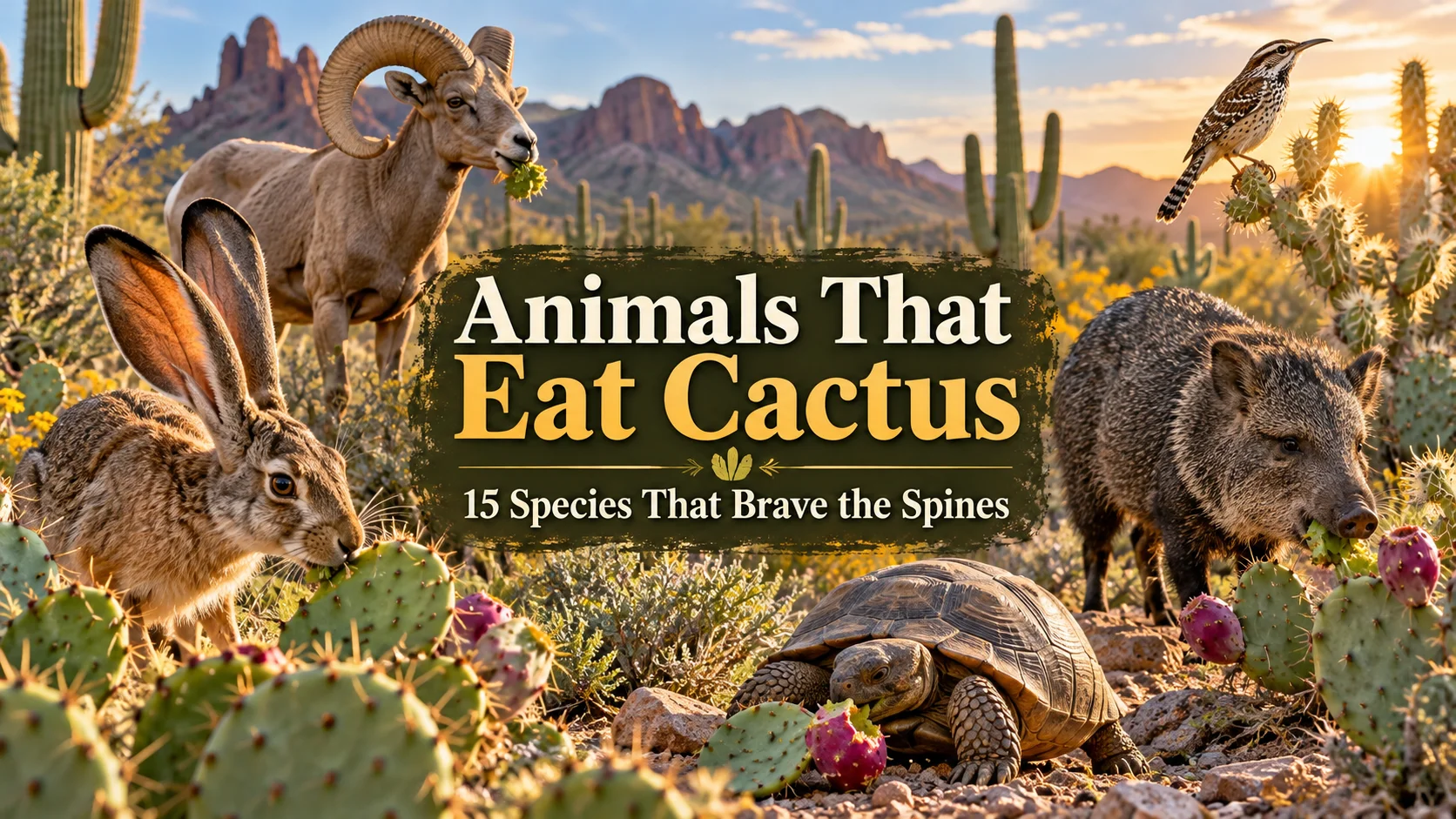
Cactus may look like one of the least inviting foods in nature, yet many animals regularly feed on it. Some chew through fleshy pads, others target fruit, flowers, pollen, or seeds, while a few even eat cactus tissue from the inside. In dry habitats, cactus can also provide valuable dietary moisture. The animals below show that being a cactus eater does not mean using one single feeding strategy.
Animals that eat cactus include javelinas, desert tortoises, Galápagos land iguanas, prairie dogs, jackrabbits, woodrats, pronghorn, deer, coyotes, quail, cactus finches, and cactus moth caterpillars. Some eat prickly pear pads directly, while others target fruit, flowers, pollen, seeds, or internal cactus tissue.
Why Do Animals Eat Cactus?
Cactus can be a useful food source in environments where fresh vegetation and standing water are limited. Fleshy cactus tissues store moisture, while fruits can provide sugars, seeds, and additional water. Flowers may offer nectar and pollen, making cactus valuable to very different kinds of Animals That Eat Cactus. Prickly pear cactus, particularly species in the genus Opuntia, is one of the most important examples.
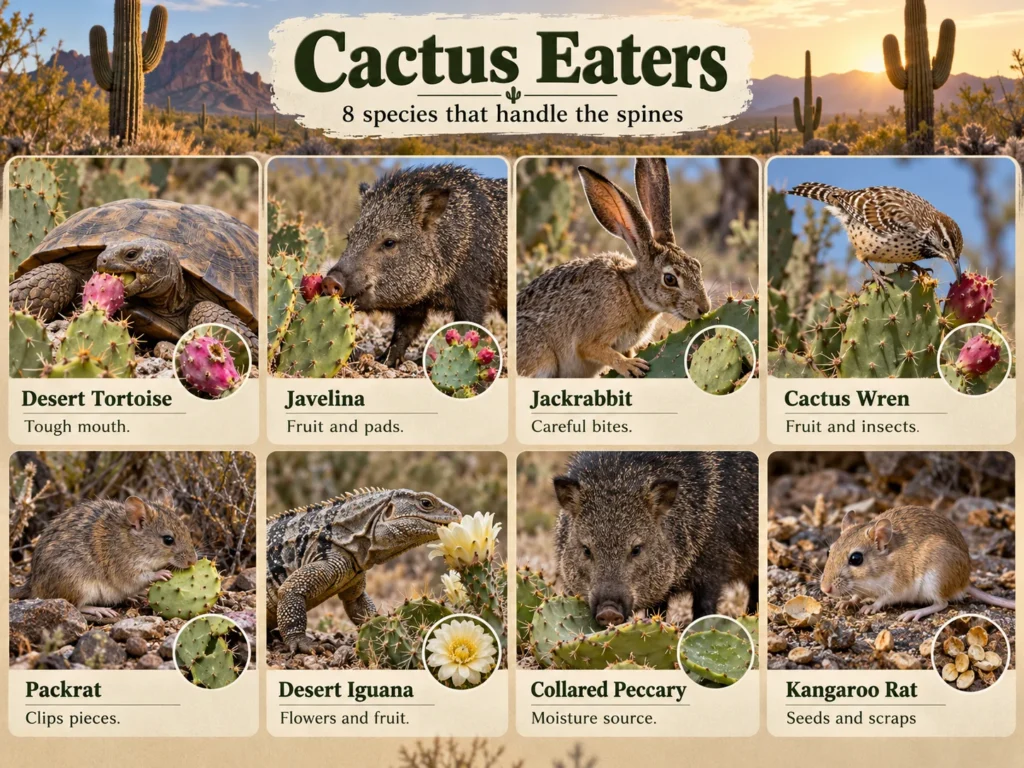
Its flattened green pads are modified stems that hold water, while its flowers and fruit attract herbivores, omnivores, birds, and insects. Not every cactus eater uses the plant in the same way. Some animals regularly browse the pads, while others only take advantage of seasonal fruit. The tiny barbed bristles called glochids, along with larger spines, also mean that different species need different ways of reaching the edible tissue.
15 Animals That Eat Cactus
The following Animals That Eat Cactus are documented cactus feeders, but their diets and feeding strategies vary considerably.
1. Javelina
Javelinas, also known as collared peccaries, are among the clearest examples of animals that genuinely eat prickly pear pads. They consume pads, stems, fruit, and other plant material in dry parts of the southwestern United States and Mexico. Unlike many animals that avoid the most heavily defended portions, javelinas can tackle spiny pads directly. They may shred cactus tissue with their teeth and can sometimes flatten or manipulate pads before feeding. This makes cactus much more than an occasional snack in some areas.
2. Desert Tortoise
Desert tortoises have a largely plant-based diet that includes grasses, wildflowers, leafy vegetation, fruit, and cactus pads. Succulent cactus tissue can be especially useful during dry conditions because it contributes both nutrients and dietary moisture. Unlike many Animals with sharp claws that rely on their claws for hunting, climbing, or defense, desert tortoises depend more on their protective shells and sturdy limbs. Cactus does not replace every other source of water in a desert tortoise’s life, but moist vegetation can play an important role in helping these reptiles cope with arid conditions.
3. Galápagos Land Iguana
Galápagos land iguanas have a particularly close relationship with Opuntia cactus. Depending on location and season, they may eat fleshy cactus stems, fallen pads, flowers, and fruit. Cactus is especially valuable in the dry Galápagos landscape because succulent plant tissues also contribute moisture. Rather than being simply another food item, Opuntia can form an important part of the iguana’s survival strategy in habitats where fresh water is limited.
4. Española Giant Tortoise
The Española giant tortoise is another major cactus-feeding reptile. On dry Galápagos islands, giant tortoises can rely heavily on native Opuntia for both food and moisture. They may consume fallen pads, fruit, and other accessible cactus material. Their relationship with cactus differs from that of North American desert tortoises because it is part of a distinctive island ecosystem where Opuntia can be one of the most important available plant resources.
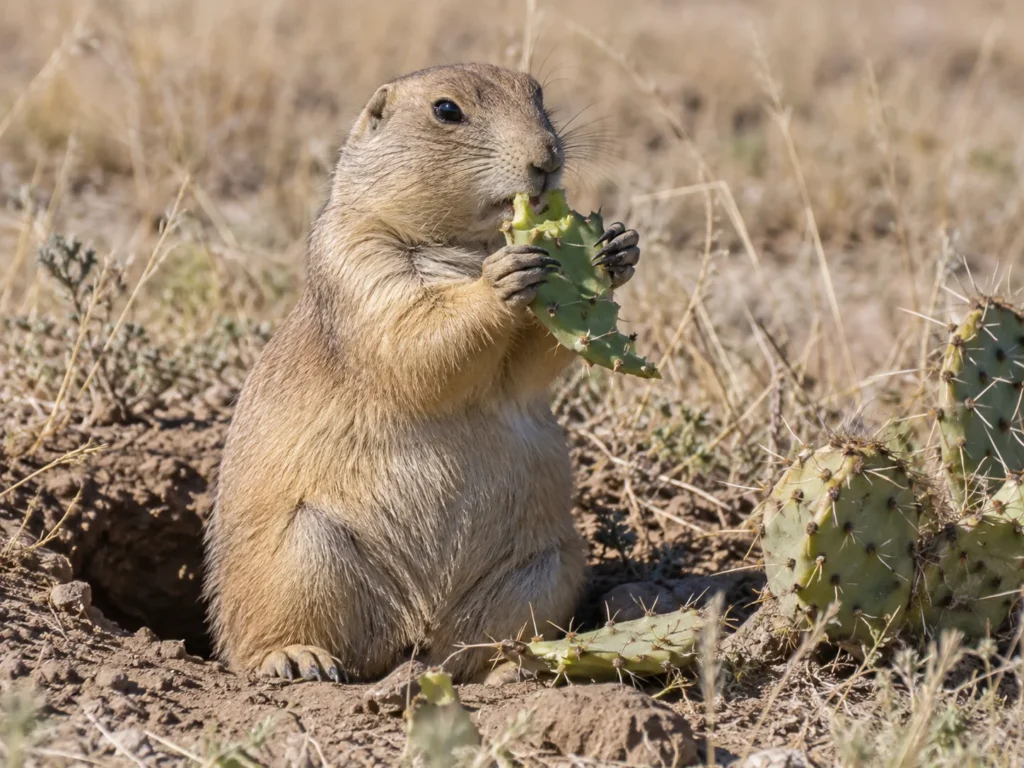
5. Black-Tailed Prairie Dog
Black-tailed prairie dogs may look like grassland specialists, but plains prickly pear can become an important seasonal food. In some studied areas, cactus has made up a substantial portion of the prairie dog’s winter diet. This flexibility shows that small mammals can adapt their feeding habits to local conditions, much as small monkey breeds may rely on different foods depending on their species and habitat. In certain environments and seasons, prickly pear can become a major part of the available forage for prairie dogs.
6. Black-Tailed Jackrabbit
Black-tailed jackrabbits feed on grasses, shrubs, and other vegetation, but they can also eat prickly pear cactus. The fleshy pads are particularly useful in dry landscapes because they combine plant material with stored moisture. Jackrabbits should not be treated as cactus specialists, but their willingness to browse succulent pads helps them take advantage of vegetation that many other animals would find difficult to eat.
7. Desert Cottontail
Desert cottontails are also documented consumers of prickly pear. Animals That Eat Cactus their diet is broad and typically includes grasses, herbs, leaves, and other available vegetation, with cactus forming one part of that larger menu. This makes the cottontail an example of an opportunistic cactus eater rather than an animal that depends primarily on cactus. Availability, season, and local vegetation all influence how important prickly pear becomes.
8. White-Throated Woodrat
The white-throated woodrat, often called a packrat, has a stronger connection with cactus than many other small rodents. It feeds on prickly pear, cholla, and other desert plants, gaining both nutrition and moisture from succulent tissues. Woodrats are useful examples because they show that smaller mammals can exploit cactus regularly without being limited to fallen fruit. Their feeding behavior is closely tied to the plant resources available around their desert shelters.
9. Pronghorn
Pronghorn can browse plains prickly pear as part of their diet, although the cactus’s spines affect how accessible it is. When spines are reduced, damaged, or removed by events such as fire, prickly pear may become much more attractive as forage. This makes pronghorn especially useful for understanding cactus defenses. Their feeding behavior shows that animals do not simply ignore the spines; the physical defenses can directly influence whether a cactus is eaten.
10. Desert Bighorn Sheep
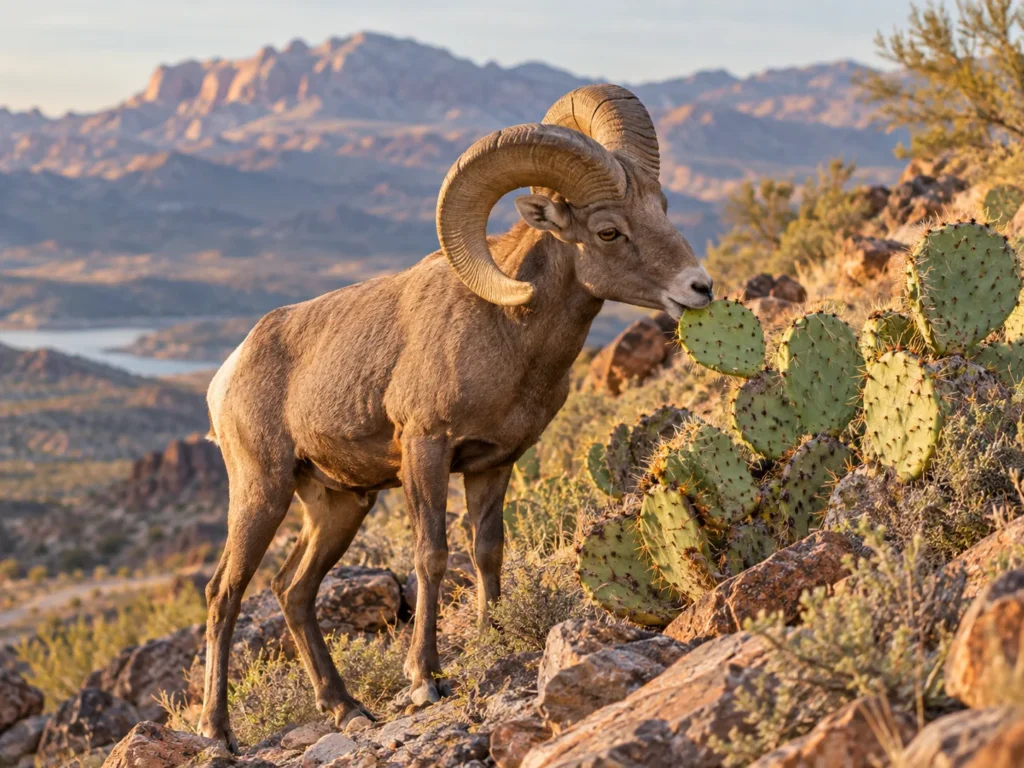
Desert big horn sheep are among the notable animals with long horns, and they may consume prickly pear when suitable vegetation is limited. One of their most interesting feeding behaviors is using their horns or muzzle movements to help remove or scrape away spines before reaching the softer pulp.
This is a good example of behavioral problem-solving rather than biological immunity. The sheep do not need to be completely unaffected by spines; they can reduce the obstacle before feeding on the cactus.
11. White-Tailed Deer
White-tailed deer are opportunistic browsers and may feed on prickly pear pads or fruit when cactus is available. The importance of cactus varies with location, season, and the availability of more preferred forage. Deer therefore belong on the list as flexible cactus consumers rather than specialists. In dry or difficult conditions, prickly pear can provide an additional source of plant material and moisture.
12. Coyote
Coyotes are omnivores, so their diet is far broader than meat alone. During fruiting seasons, they may consume large amounts of cactus fruit, including prickly pear and saguaro fruit. Unlike javelinas, coyotes are better thought of as fruit-focused cactus eaters rather than regular consumers of heavily spined pads. The ripe fruit provides carbohydrates, seeds, and moisture, making it a useful seasonal food in desert environments.
13. Gambel’s Quail
Gambel’s quail use desert vegetation in several ways, including feeding on prickly pear fruit. The fruit provides both food and moisture, which can be especially valuable in hot, arid habitats where free-standing water may not always be available. These birds demonstrate another important point: an animal can qualify as a cactus eater without ever chewing through the thick green pad itself.
14. Common Cactus Finch
The common cactus finch uses Opuntia in a very different way from large herbivores. During flowering periods, it can feed heavily on cactus pollen and nectar. At other times, fruit and seeds become important resources. This makes the cactus finch one of the most specialized feeders on the list. Instead of targeting Animals That Eat Cactus only fleshy stems, it takes advantage of multiple reproductive parts of the cactus as they become available throughout the year.
15. South American Cactus Moth Caterpillar
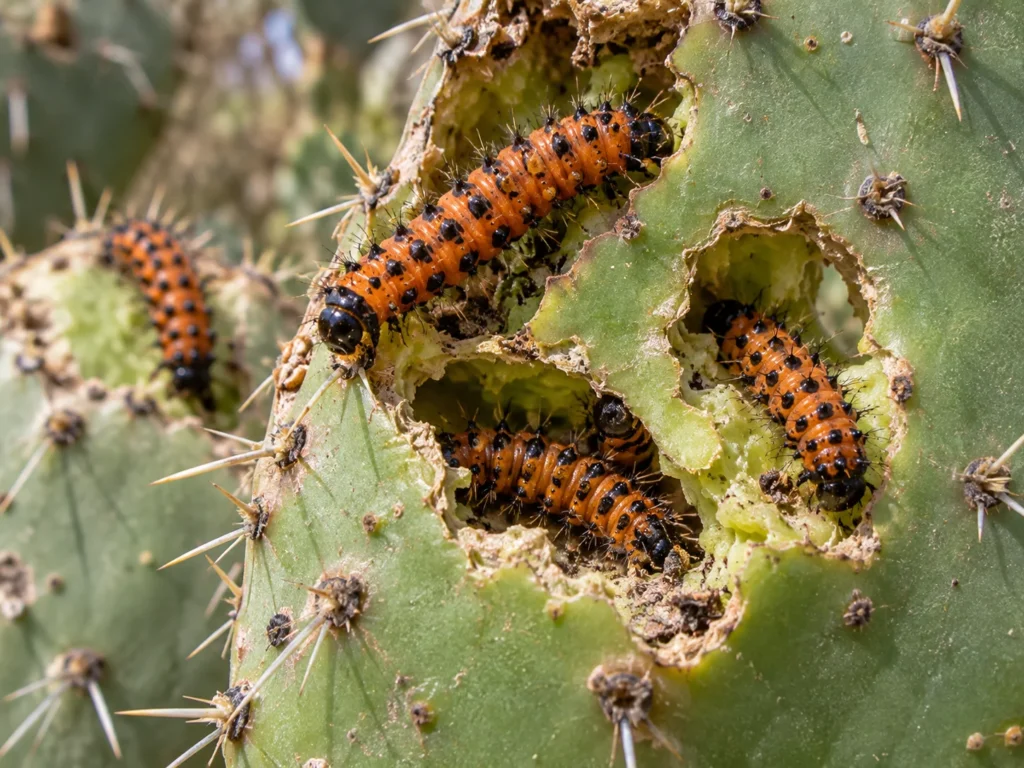
The South American cactus moth caterpillar may be the most unusual cactus eater of all. The larval stage enters Opuntia pads and consumes the internal plant tissue from the inside.
This strategy allows the caterpillar to bypass much of the cactus’s external protection. Heavy infestations can hollow out pads and severely damage plants, showing that cactus feeding can range from ordinary herbivory to highly destructive internal feeding.
How Do Animals Eat Cactus Without Getting Hurt?
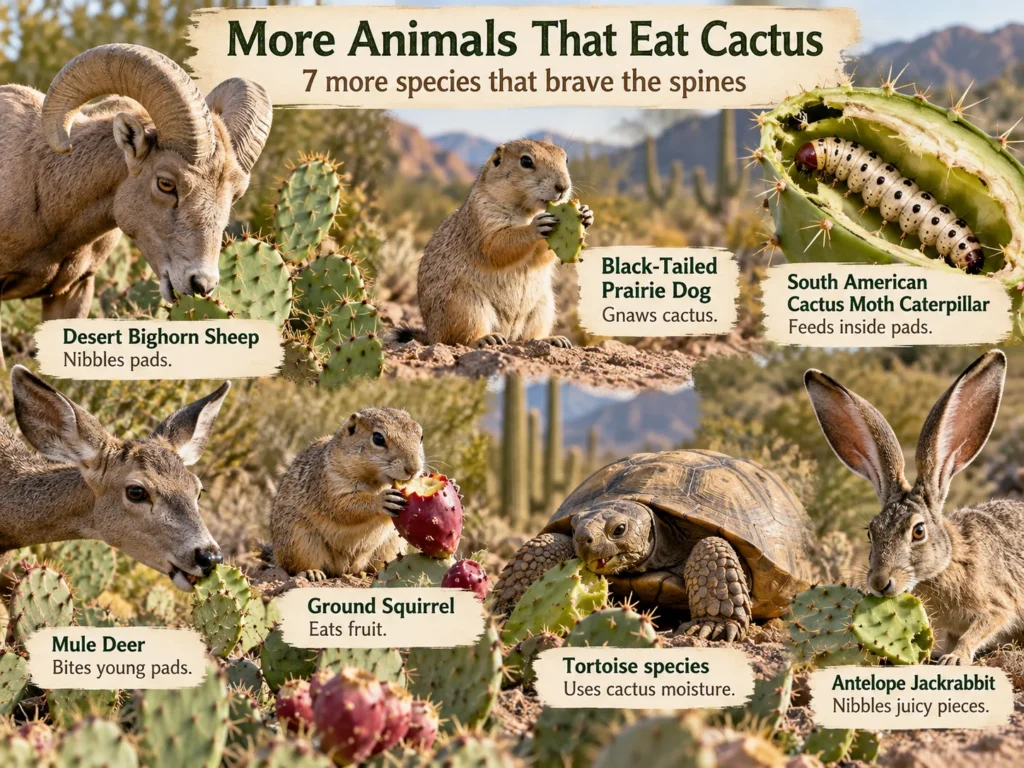
There is no single cactus-eating adaptation shared by every species. Different Animals That Eat Cactus solve the problem of spines and glochids in different ways. Javelinas can handle and shred spiny pads, while desert bighorn sheep may scrape spines away before feeding. Some rodents can bite around more heavily defended areas, and prickly pear becomes easier for larger grazers to eat when its spines are damaged or removed.
Fruit feeders such as coyotes and Gambel’s quail avoid much of the problem by targeting the fruit instead of the pad. Cactus moth larvae take an entirely different approach by entering the cactus and feeding from within. For this reason, it is misleading to say that cactus-eating animals are simply “immune” to spines.
Which Parts of Cactus Do Different Animals Eat?
Cactus can provide several different food sources, and the part eaten depends on the species.
| Cactus Part | Examples |
| Pads and stems | Javelina, desert tortoise, land iguana, prairie dog |
| Fruit | Coyote, Gambel’s quail, tortoises |
| Flowers | Galápagos land iguana |
| Pollen and nectar | Common cactus finch |
| Seeds | Common cactus finch |
| Internal tissue | Cactus moth caterpillar |
Some species use more than one part of the plant. A land iguana, for example, may eat pads, flowers, and fruit depending on what is available. This variety is one reason cactus can support such a broad range of wildlife.
Do Animals Get Water From Cactus?
Yes, Animals That Eat Cactus obtain useful dietary moisture from cactus. Succulent pads contain stored water, while cactus fruits can also be juicy and moisture-rich.
Desert tortoises, Galápagos land iguanas, woodrats, quail, and other species can benefit from this moisture when living in dry environments. However, eating cactus does not automatically mean that an animal never needs another water source. The importance of cactus-derived moisture varies by species, season, habitat, and the availability of other foods and water.
Key Takeaways
- Animals That Eat Cactus do not all chew through spiny pads.
- Javelinas are among the strongest examples of true cactus pad-eaters.
- Coyotes and Gambel’s quail mainly target cactus fruit.
- Common cactus finches feed on flowers, pollen, nectar, fruit, and seeds.
- Cactus moth caterpillars eat the plant from inside the pad.
- Cactus can provide both nutrition and useful dietary moisture.
Frequently Asked Questions
What Animals Eat Prickly Pear Cactus?
Many animals eat prickly pear, including javelinas, desert tortoises, prairie dogs, jackrabbits, cottontails, woodrats, pronghorn, deer, coyotes, quail, land iguanas, and giant tortoises. Different species may eat the pads, fruit, flowers, seeds, or other parts rather than consuming the entire plant.
How Do Javelinas Eat Cactus Without Getting Hurt?
Javelinas are well suited to feeding on tough desert vegetation and can shred prickly pear pads even when spines remain. They may also manipulate or flatten pads before eating them. This does not mean cactus spines are harmless to javelinas, but they are unusually capable cactus feeders.
Do Rabbits Eat Cactus?
Some wild rabbits and hares do. Desert cottontails and black-tailed jackrabbits have both been documented feeding on prickly pear. Cactus is generally one part of a broader plant-based diet rather than the only food they eat.
Do Coyotes Eat Cactus?
Yes. Coyotes commonly eat cactus fruit, including prickly pear and saguaro fruit, when it is available. They are better described as seasonal fruit consumers than regular chewers of heavily spined cactus pads.
Do Animals Get Water From Cactus?
Yes. Animals That Eat Cactus,Succulent cactus pads and fruits can supply dietary moisture to animals living in dry habitats. Desert tortoises, land iguanas, woodrats, birds, and other species can benefit from this moisture, although cactus does not necessarily replace every other water source.
Final Thoughts
Animals that eat cactus use surprisingly different strategies. Javelinas tackle the pads, bighorn sheep can remove spines, coyotes and quail target fruit, cactus finches feed on flowers and seeds, and cactus moth larvae eat the plant from inside. Together, they show how cactus can function as food, moisture, and an important part of dryland ecosystems.
One Comment