15 Animals With Shells and How Their Shells Protect Them
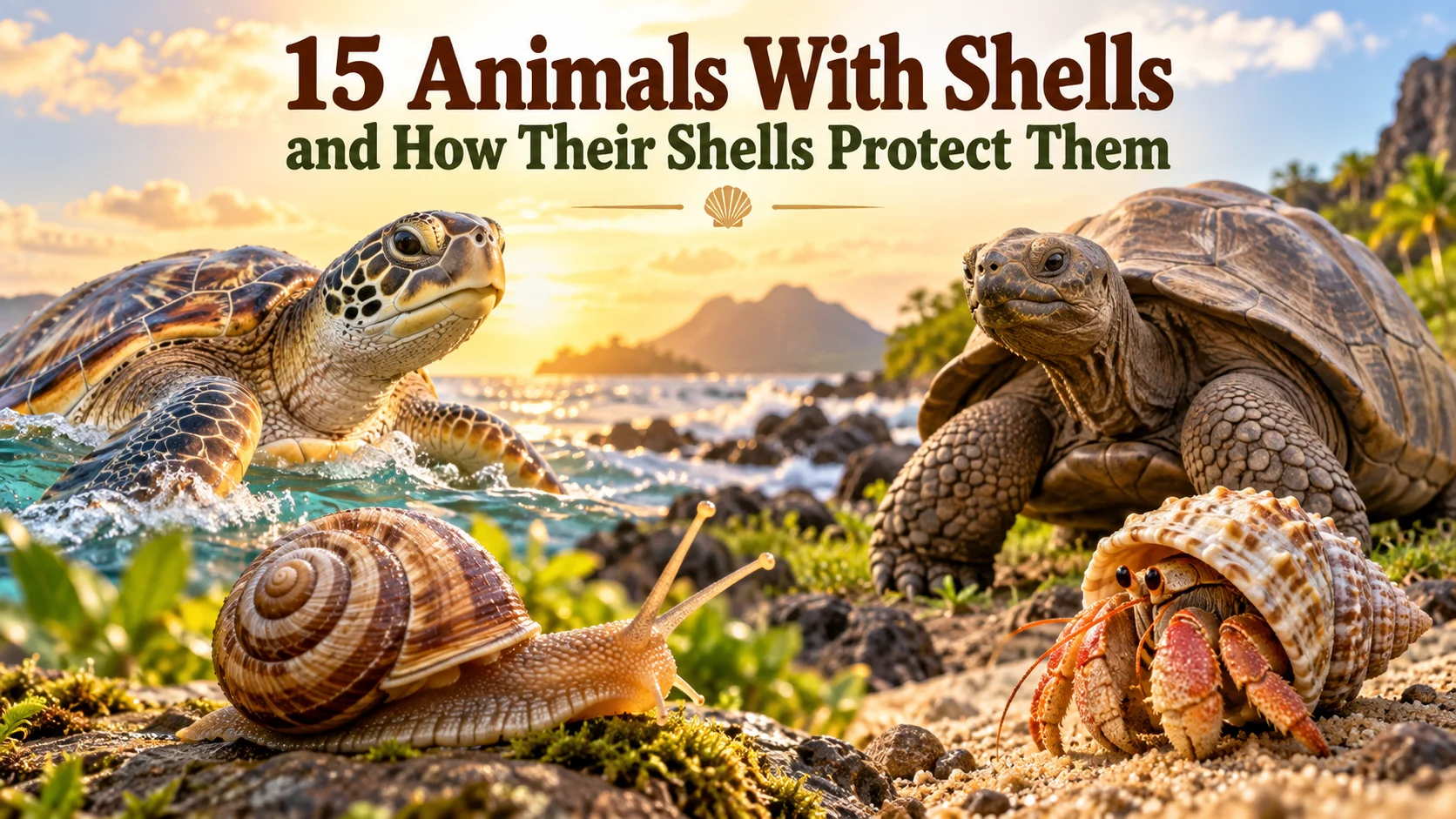
Shells are among the most effective protective structures in the animal kingdom. Some animals grow hard coverings as part of their bodies, while others build mineralized shells or borrow empty ones for safety. From oceans and rivers to forests and rocky shores, animals with shells include turtles, tortoises, snails, clams, oysters, nautiluses, and many other species. Although these coverings may look similar, they differ in structure, material, growth, and the way they help each animal survive.
Animals with shells include turtles, tortoises, snails, clams, oysters, mussels, scallops, conchs, nautiluses, chitons, and limpets. Their shells may contain bone, keratin, calcium carbonate, or other hard materials. Shells can protect soft tissues, reduce water loss, provide structural support, improve camouflage, and help animals survive predators or harsh environments.
Animals With Shells at a Glance
| Animal | Shell Type | Main Function |
| Green sea turtle | Bony shell | Protection and support |
| Gopher tortoise | Bony shell | Defense on land |
| Common snapping turtle | Bony shell | Body protection |
| Garden snail | Mollusk shell | Defense and moisture retention |
| Giant African land snail | Mollusk shell | Protection from damage and drying |
| Giant clam | Bivalve shell | Protects soft tissues |
| Oyster | Bivalve shell | Defense |
| Mussel | Bivalve shell | Protects the body |
| Scallop | Bivalve shell | Protection and movement |
| Queen conch | Gastropod shell | Body protection |
| Chambered nautilus | Chambered shell | Protection and buoyancy |
| Chiton | Eight shell plates | Flexible armor |
| Limpet | Cap-shaped shell | Defense and attachment |
| Hermit crab | Borrowed shell | Protects soft abdomen |
| Horseshoe crab | Hard carapace | External body protection |
15 Animals With Shells
1. Green Sea Turtle
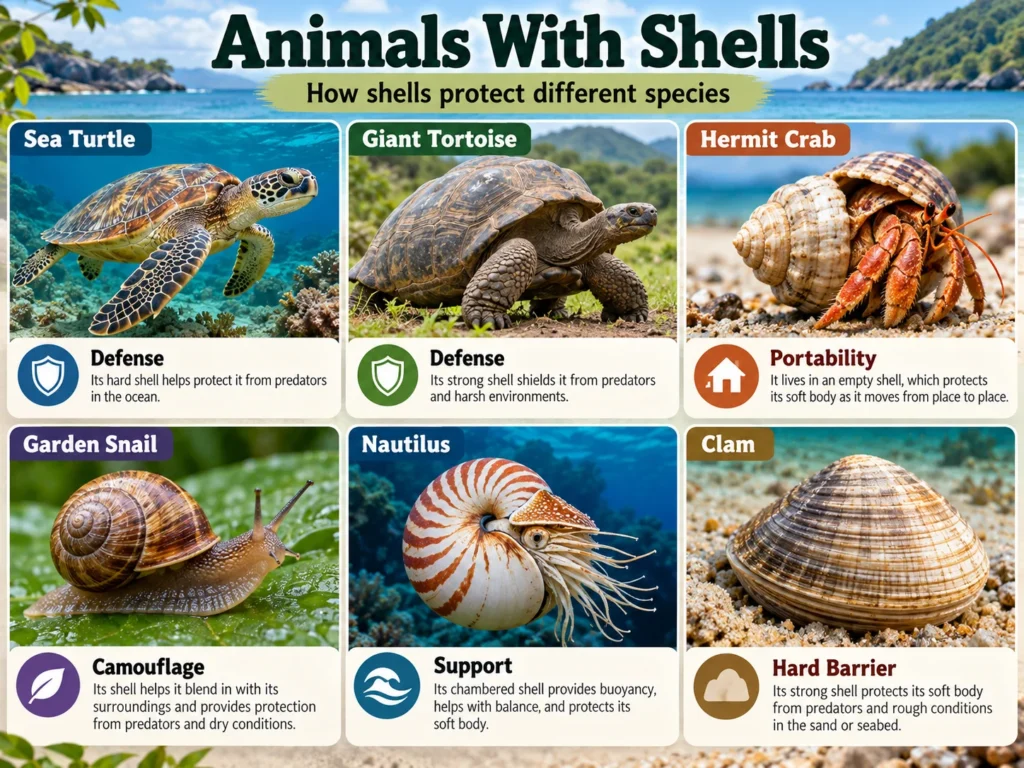
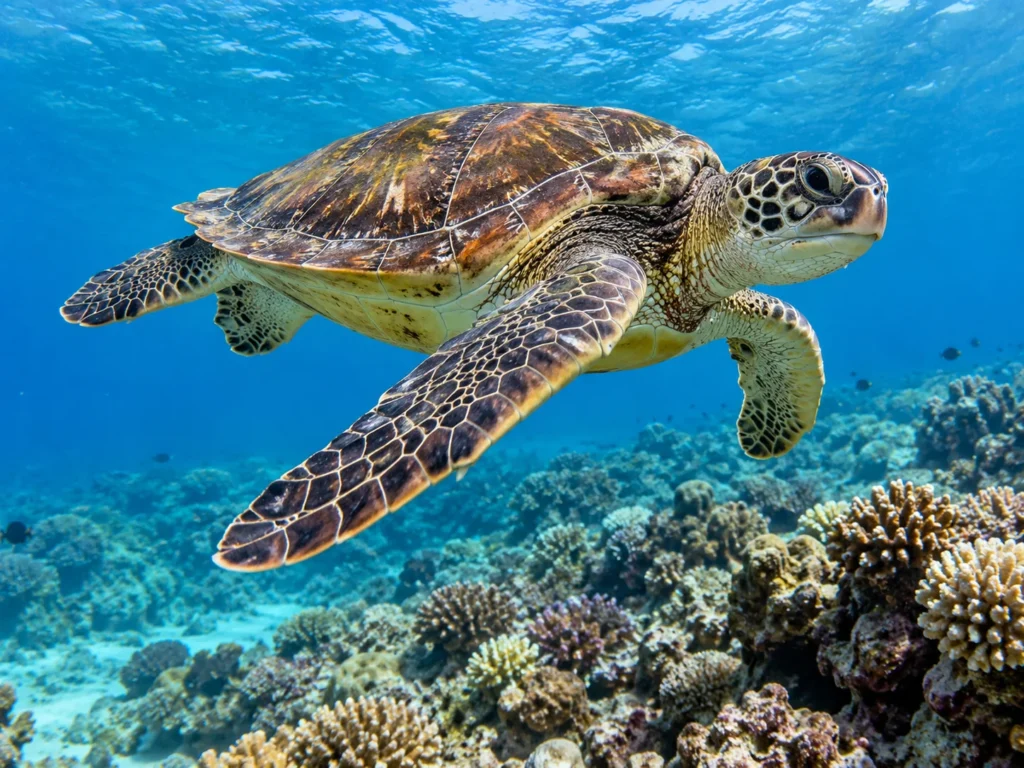
The green sea turtle is one of the most recognizable animals with shells, with a broad, streamlined shell adapted for ocean life. Its upper shell, called the carapace, is joined to the lower plastron, and both are connected to the skeleton. Ribs and vertebrae form part of this structure, so a turtle cannot leave its shell. The shell protects vital organs while its relatively flat shape reduces drag in the water. This contrasts with the more domed shells of many land tortoises.
2. Gopher Tortoise
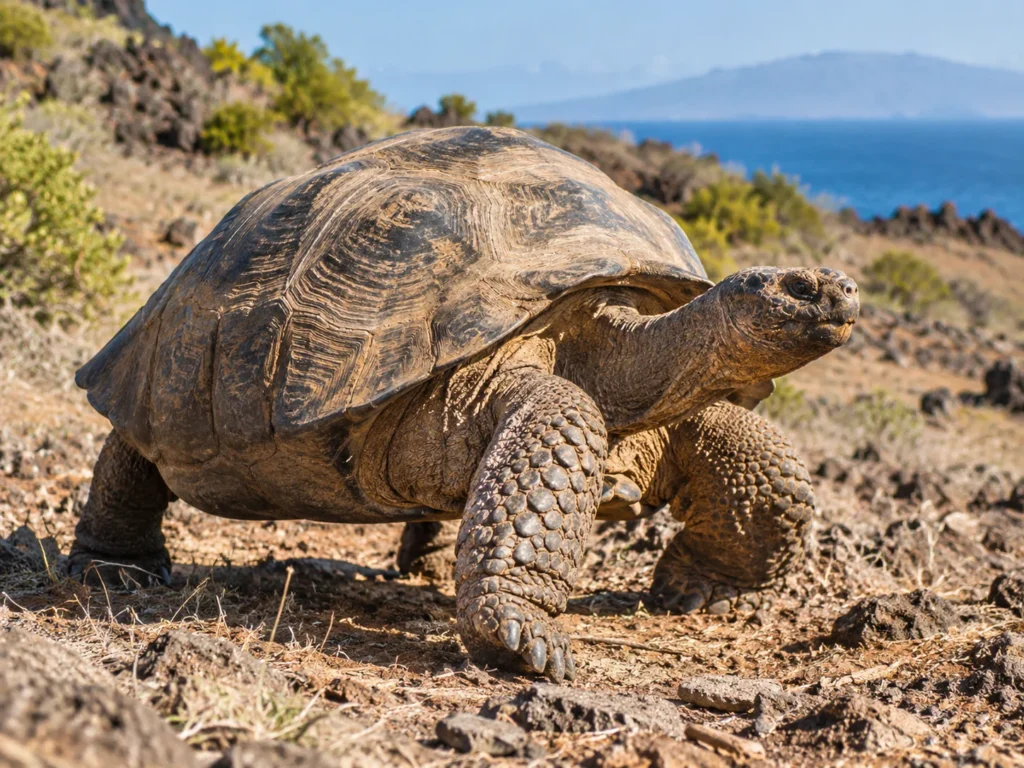
The gopher tortoise has a high, domed shell that provides strong protection on land. When threatened, it can pull much of its head and limbs inward, leaving the hard shell exposed to danger. Its shell grows with the animal and remains part of the skeleton throughout life. Gopher tortoises also dig deep burrows, so their survival depends on both physical armor and a sheltered underground habitat.
3. Common Snapping Turtle
The common snapping turtle has a lower, rougher shell than many familiar tortoises. Its plastron, the lower portion of the shell, is relatively small and does not completely shield the underside. Because its shell provides less all-around coverage, this turtle also relies on powerful jaws and defensive behavior when threatened on land. Its survival strategy combines a protective shell with active defense rather than armor alone.
find out Animals with Sharp Claws
4. Garden Snail
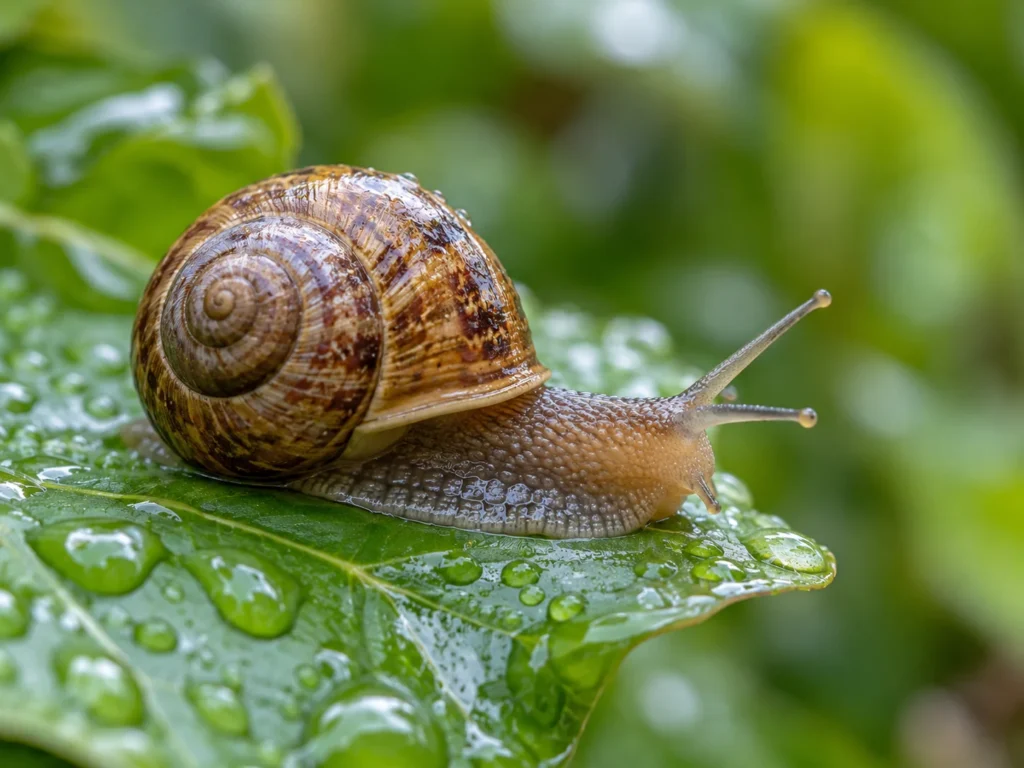
A garden snail carries a coiled shell made mainly from calcium carbonate. The shell begins forming early in life and enlarges as new material is added around its opening. The shell protects the snail’s soft body from predators and minor injuries while also helping reduce water loss. When conditions become dry or threatening, the snail can withdraw much of its body inside, making the shell especially valuable for life on land.
5. Giant African Land Snail
The giant African land snail has a large, elongated spiral shell that grows with the animal. Calcium is important for building and maintaining this mineralized structure. Besides shielding the soft body from physical damage, the shell helps reduce moisture loss. The snail can retreat inside when threatened or when conditions become unfavorable. Serious shell damage can therefore be dangerous because the shell is a living and essential part of the animal.
6. Giant Clam
Giant clams have two thick shell halves, called valves, connected by a hinge. Their soft tissues sit between these valves, which can be drawn toward one another for protection. The shell is made largely from calcium carbonate and continues growing throughout the clam’s life. In reef habitats, it provides a strong barrier against physical damage and some predators while supporting an animal that may eventually become extremely large.
7. Oyster
An oyster is enclosed by two hard shell valves that are often uneven and irregular. Because oysters usually attach permanently to a surface, their shells do not need the smooth symmetry seen in many mobile mollusks. A strong muscle closes the valves around the soft body when necessary. The rough exterior can also blend into rocks, reefs, and oyster beds, giving the shell a useful protective and structural role.
8. Mussel
Mussels have two hinged shell valves that enclose their soft tissues. Marine mussels often anchor themselves to rocks and other hard surfaces using strong threads, while freshwater species occupy rivers, streams, and lakes. The shell protects the animal from predators, moving water, and temporary exposure to air in tidal areas. Closing the valves creates a durable barrier around tissues that would otherwise be highly vulnerable.
9. Scallop
Scallops are bivalve mollusks recognized by their fan-shaped shells. Like clams and mussels, they have two valves that can close around the body. What makes many scallops unusual is their ability to swim. By rapidly opening and closing the shell, they force water outward and propel themselves away from danger. Their shell therefore contributes to both protection and escape, making it more than a passive defensive covering.
10. Queen Conch
The queen conch is a large marine snail with a heavy spiral shell. Young conchs have thinner shells, while mature animals develop a thickened, flared outer lip. The animal produces its own shell and remains connected to it throughout life. As it grows, additional material is deposited at the shell opening. This sturdy structure protects its soft organs and gives adult conchs a substantial physical defense against many threats.
check out 15 Animals species with scales
11. Chambered Nautilus
The chambered nautilus has a coiled external shell divided internally into multiple chambers. The animal itself occupies the largest, outermost chamber. Older chambers play an important role in buoyancy. By regulating gas and fluid inside them, the nautilus can control its position in the water more efficiently. At the same time, the hard outer shell protects its soft body, combining defense with a specialized movement-related function.
12. Chiton
A chiton does not have one continuous shell. Instead, eight overlapping plates cover its back, creating armor that remains flexible as the animal moves over uneven rocks. Chitons commonly live on rocky marine surfaces where waves can be strong. Their plates protect the upper body, while a muscular foot helps them grip the surface. This combination allows them to remain protected without sacrificing the flexibility needed for life on rough shorelines.
13. Limpet
Limpets have simple, cap-shaped shells that sit tightly against rocks. Beneath the shell is a broad muscular foot that provides an exceptionally strong grip. This design works well in wave-exposed coastal habitats. The shell protects the body from predators and impacts, while the tight attachment helps limit water loss when the tide recedes. Its low profile also reduces the chance of being swept away by strong moving water.
14. Hermit Crab
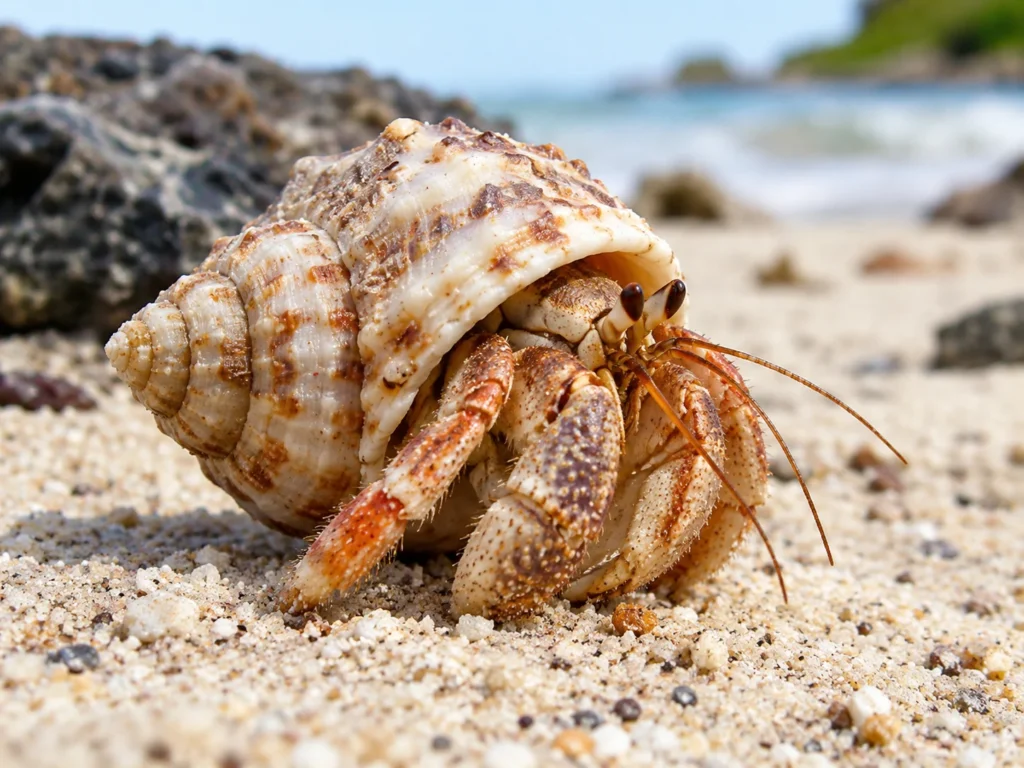
Hermit crabs are unusual because they generally do not produce the spiral shells they occupy. Their abdomen is soft and vulnerable, so they use empty gastropod shells left behind by snails. As a hermit crab grows, its current shell eventually becomes too small. It must then find a larger suitable shell and transfer into it. Borrowed shells are therefore central to both protection and competition among hermit crabs.
15. Horseshoe Crab
The horseshoe crab has a broad, hard covering commonly described as a shell, although it is technically part of an exoskeleton. The carapace protects much of the animal’s upper body. Unlike a turtle shell, this rigid outer covering cannot simply expand forever. Young horseshoe crabs molt as they grow, leaving the old exoskeleton behind and forming a larger one. This makes them a useful example of how “shell-like” protection differs among animal groups.
What Exactly Counts as an Animal Shell?
The word “shell” can refer to several different protective structures, which is why animals with shells can be biologically very different from one another. Turtle shells contain bone and are integrated with the skeleton, while mollusks such as snails, clams, and conchs secrete mineralized shells around their soft bodies. Crustaceans and horseshoe crabs have exoskeletons rather than mollusk-style shells. Hermit crabs add another variation because they usually rely on shells produced by other animals. Similar appearances can therefore hide major biological differences.
What Are Animal Shells Made Of?
Many mollusk shells consist mainly of calcium carbonate combined with organic material produced by the animal. This creates a hard structure that can expand as new material is deposited. Turtle shells have a bony framework, and most species also have outer scutes made from keratin. Arthropod exoskeletons are built largely from chitin and proteins and may contain additional minerals that increase hardness.
check out small monkey breeds
How Do Shells Help Animals Survive?
Protection from predators is the clearest advantage, but animals with shells can benefit from these structures in several other ways. Land snails gain protection against moisture loss, limpets are better protected against waves and drying, and nautiluses use internal shell chambers to help manage buoyancy. Shape matters too. Sea turtles have streamlined shells suited to swimming, while many tortoises have high domes that provide robust terrestrial armor. The same general idea—hard external protection—has therefore evolved into very different survival tools.
Do Animal Shells Grow With Them?
Many shells grow with the animal, but the process varies among animals with shells. Turtle shells enlarge as the skeleton develops, while snails and other mollusks add new material around growing shell margins. Animals with rigid exoskeletons must use a different strategy: they molt the old covering and replace it with a larger one. Hermit crabs do not enlarge their borrowed shells at all; instead, they search for larger empty shells as their bodies grow.
FAQs
What animals have shells?
Animals with shells include turtles, tortoises, snails, clams, oysters, mussels, scallops, conchs, nautiluses, chitons, and limpets. Some animals commonly described as shelled, such as horseshoe crabs, technically have hard exoskeletons instead.
Are turtle shells part of their skeleton?
Yes. A turtle’s shell is part of its skeleton and includes modified ribs, vertebrae, and other bones. The carapace and plastron are living structures connected to the body rather than removable coverings.
Can a turtle leave its shell?
No. A turtle cannot leave its shell because its ribs and spine are integrated into it. The shell grows with the turtle and remains an essential part of its body throughout life.
Do hermit crabs make their own shells?
No. Hermit crabs usually occupy empty gastropod shells made by snails. As they grow, they must find larger shells that provide enough space and protection for their soft abdomens.
What are snail shells made of?
Snail shells are made mainly from calcium carbonate along with organic materials produced by the snail. New material is added as the animal grows, gradually enlarging the shell.
Do shells grow as animals get bigger?
Many do, but not all in the same way. Turtle and mollusk shells grow with the animal, while animals with rigid exoskeletons generally molt. Hermit crabs instead replace their borrowed shells with larger ones.
Final Thoughts
Animals With Shells show how different species have evolved hard coverings for protection, support, moisture control, movement, and survival. A turtle’s bony armor, a nautilus’s chambered shell, and a hermit crab’s borrowed shelter may look related, but each works in a very different biological way.