15 Animals With Trunks or Trunk-Like Noses
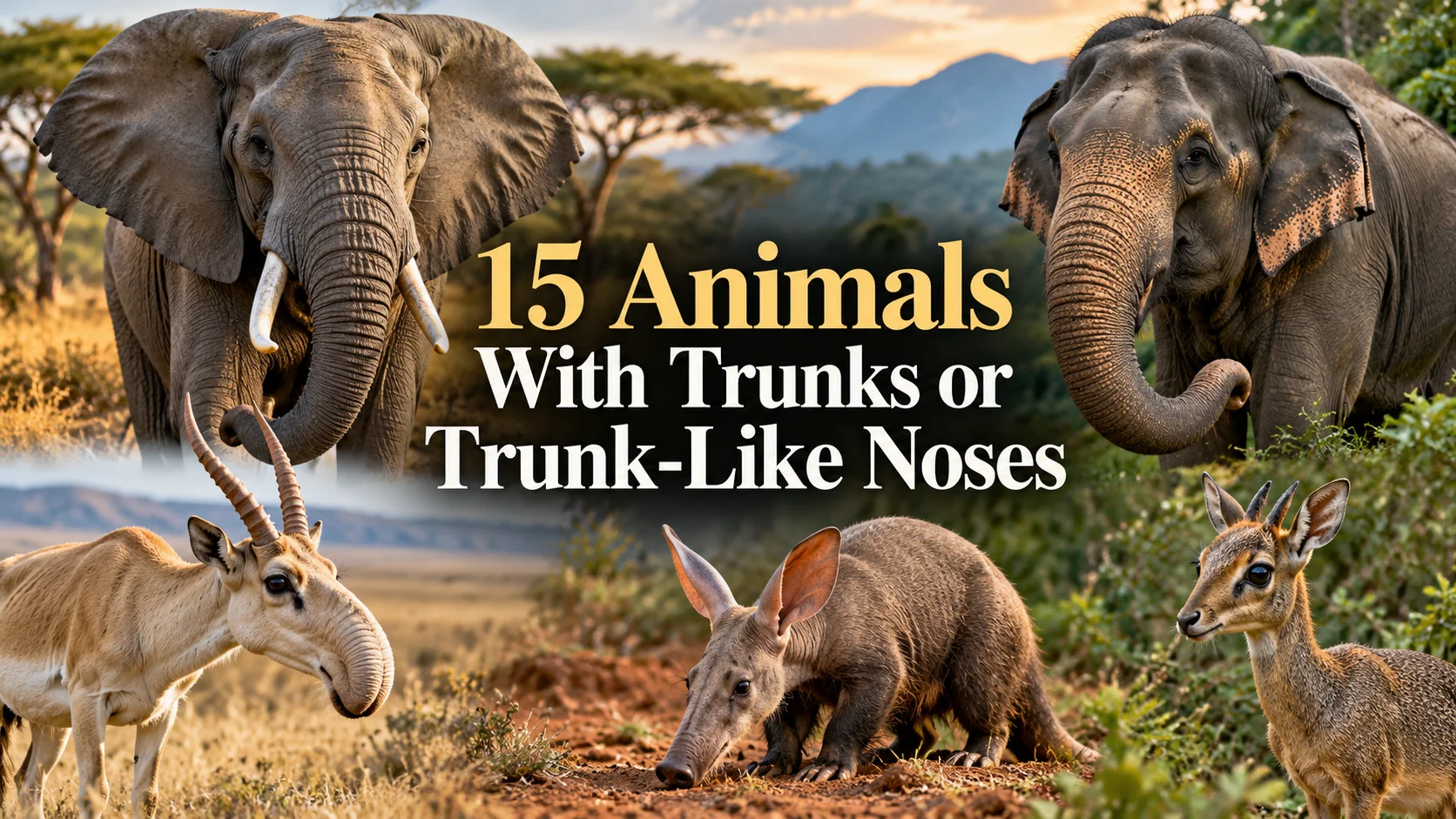
Elephants are famous for their trunks, but they are not the only animals with unusually long or flexible noses. Some mammals have genuine proboscises that can grasp vegetation, while others have enlarged noses or elongated snouts adapted for smelling, feeding, cooling the body, or communication. These structures may look similar from a distance, yet they evolved for very different purposes. Here are 15 animals with trunks or trunk-like noses and the fascinating ways they use them.
Animals with trunks or trunk-like noses include African and Asian elephants, several tapir species, saiga antelopes, proboscis monkeys, elephant seals, aardvarks, giant anteaters, elephant shrews, and dik-diks. Elephants have the most advanced true trunks, while other species use elongated noses for feeding, smell, air conditioning, communication, or social display.
Animals With Trunks at a Glance
| Animal | Type of Structure | Main Function |
| African bush elephant | True trunk | Feeding, touch, smell, communication |
| African forest elephant | True trunk | Feeding and sensory exploration |
| Asian elephant | True trunk | Grasping, smelling, drinking assistance |
| Baird’s tapir | Short proboscis | Browsing vegetation |
| Malayan tapir | Short proboscis | Feeding and smell |
| South American tapir | Short proboscis | Grasping leaves and fruit |
| Mountain tapir | Short proboscis | Browsing |
| Saiga antelope | Enlarged nose | Filtering and conditioning air |
| Proboscis monkey | Enlarged nose | Display and vocal communication |
| Northern elephant seal | Inflatable proboscis | Display and vocalization |
| Southern elephant seal | Enlarged proboscis | Social and breeding display |
| Aardvark | Elongated snout | Finding insect prey |
| Giant anteater | Long snout | Accessing ants and termites |
| Elephant shrew | Mobile elongated nose | Locating insects |
| Dik-dik | Elongated nose | Smell and temperature regulation |
15 Animals With Trunks or Trunk-Like Noses
1. African Bush Elephant
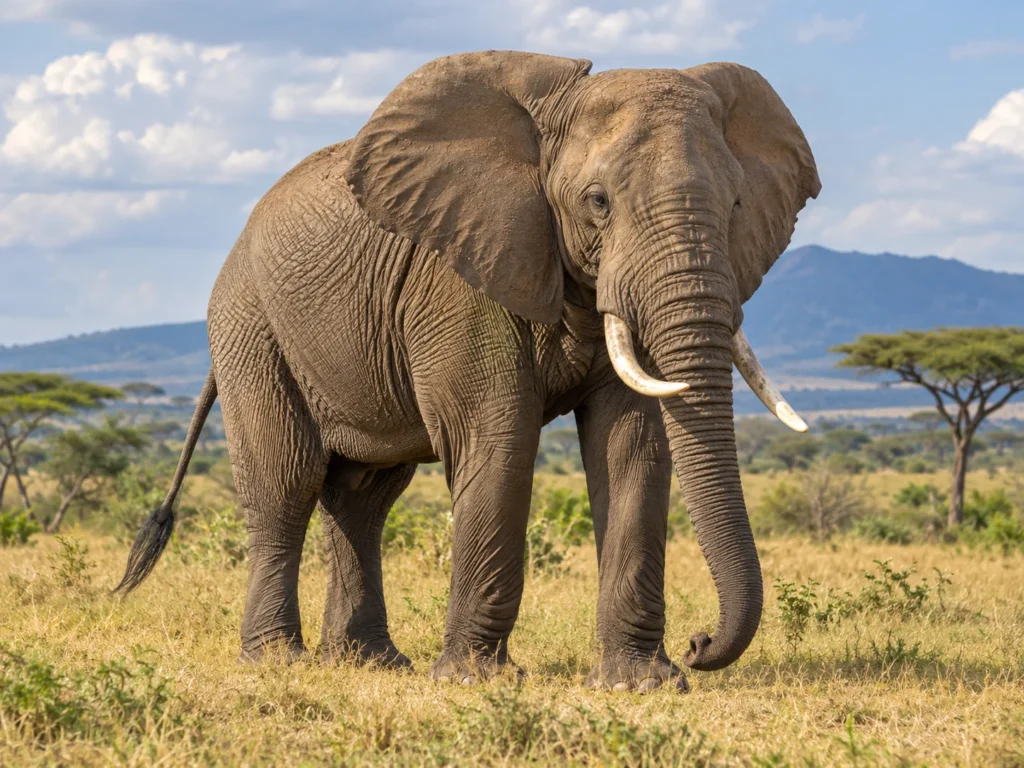
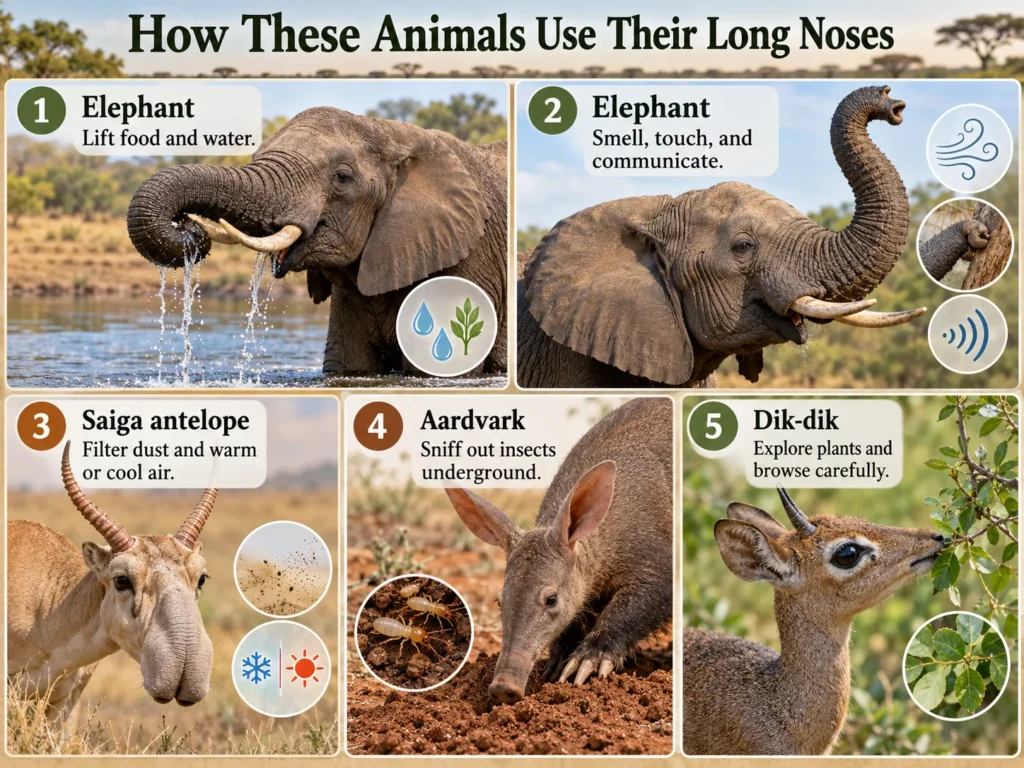
Among animals with trunks, the African bush elephant has one of the most versatile anatomical structures found in any mammal. Its trunk is formed from the elongated nose and upper lip and contains no bones, allowing an extraordinary range of movement. Unlike many Animals With 3 Toes, elephants have a very different foot structure, with broad weight-bearing feet adapted to support their massive bodies. Elephants use their trunks to grasp grasses, branches, fruit, and other food. They also rely on them for smelling, touching companions, bathing, breathing, and drawing up water before pouring it into the mouth. The trunk is sensitive enough for delicate exploration yet powerful enough to manipulate heavy objects.
2. African Forest Elephant
African forest elephants are another clear example of animals with trunks, possessing highly flexible true trunks, but their feeding environment differs considerably from the open landscapes occupied by many bush elephants. They live primarily in dense tropical forests of Central and West Africa. Their trunks allow them to investigate vegetation, collect fruit, strip plant material, and explore objects without relying entirely on vision. A strong sense of smell is particularly useful in thick forests where visibility may be limited. The trunk also plays an important role during social interactions between elephants.
3. Asian Elephant
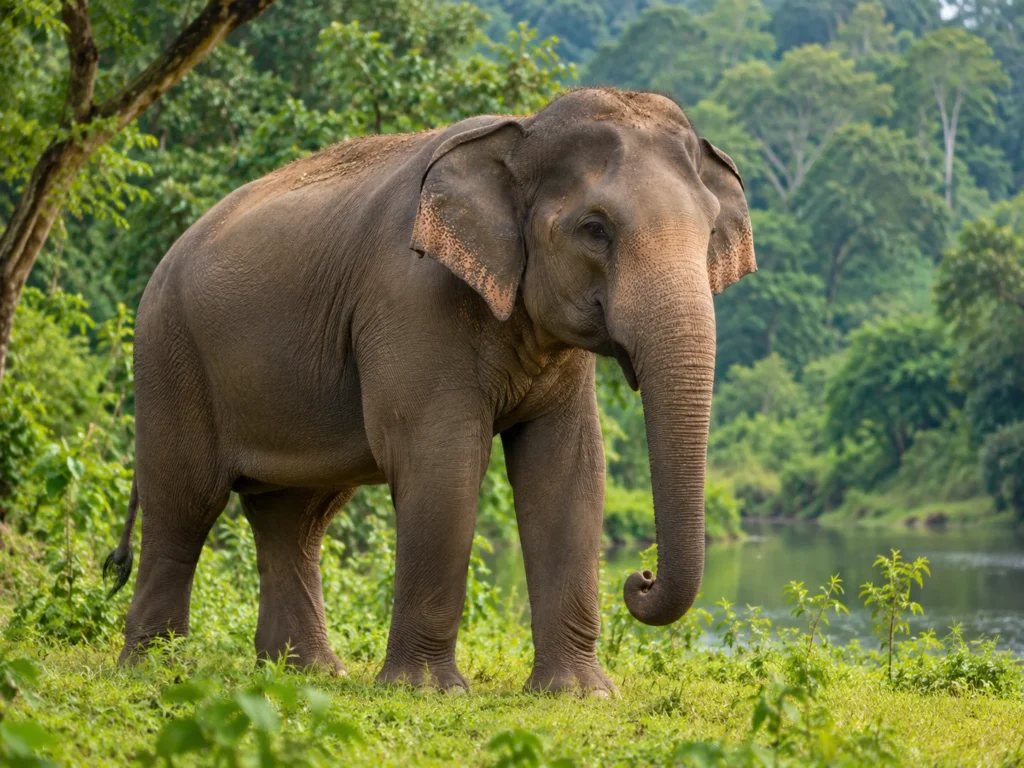
Among animals with trunks, the Asian elephant performs many of the same tasks with its trunk as African elephants do. It is used for feeding, smelling, touching, bathing, drinking assistance, and communication. One noticeable difference occurs at the trunk tip. Asian elephants have a single prominent finger-like projection, whereas African elephants have two. This flexible tip gives the animal remarkable control when picking up food or investigating small objects. An Asian elephant does not drink water directly through its trunk. Instead, it draws water into the trunk and then transfers it to its mouth.
4. Baird’s Tapir
Baird’s tapir is one of the animals with trunks or short proboscises, although its structure is much shorter than an elephant’s and is formed by the nose and upper lip. It can move this fleshy structure while searching for food and exploring its surroundings. The tapir uses its proboscis to help grasp leaves, shoots, fruit, and other vegetation. Strong sensory abilities are useful in the dense forests of Central America, where Baird’s tapirs often move through thick vegetation and may forage during low-light conditions. Unlike an elephant trunk, however, a tapir’s proboscis is relatively short and much less powerful.
5. Malayan Tapir
The Malayan tapir is another of the animals with trunks or short proboscises, with a prominent flexible structure formed by its extended nose and upper lip. Although it is not usually grouped with Animals With Stripes, its bold black-and-white body pattern is one of its most distinctive visual features. While browsing, the tapir can extend its nose toward vegetation and use it to help pull leaves or other plant material closer to the mouth. Smell is also important for investigating its environment. Malayan tapirs occur in Southeast Asian forests and frequently spend time near water. Their short proboscis demonstrates that a useful grasping nose does not need to approach the extreme length of an elephant’s trunk.
6. South American Tapir
Also called the lowland tapir, the South American tapir belongs among animals with trunks or short proboscises and uses its flexible nose while browsing through forests, wetlands, and other vegetated environments. Its mobile snout can help manipulate leaves, shoots, and fruit before they are eaten. Tapirs are important plant consumers and can also influence seed movement through the landscapes they inhabit. The structure resembles a miniature trunk in appearance, but it is better described as a short proboscis. Its strength lies in flexibility and precise manipulation rather than the powerful lifting abilities seen in elephants.
7. Mountain Tapir
Mountain tapirs are also included among animals with trunks or short proboscises and inhabit high-elevation forests and grasslands in the Andes. Like other members of the tapir family, they possess a short, flexible proboscis formed by the nose and upper lip. The structure helps them browse on leaves, twigs, and other vegetation found in their cool mountainous habitat. It can bend and move as the animal explores plants close to its face. The mountain tapir shows how the same basic proboscis design can remain useful in a dramatically different environment from the tropical lowlands occupied by many other tapir species.
Animals With Trunk-Like Noses
The remaining animals do not possess elephant-style grasping trunks. Instead, they fit more naturally among Animals With Big Noses, having enlarged noses or elongated snouts that perform specialized functions ranging from filtering dusty air and improving smell to producing deeper calls. These structures may resemble trunks in appearance, but their anatomy and functions can be very different from an elephant’s true trunk.
8. Saiga Antelope
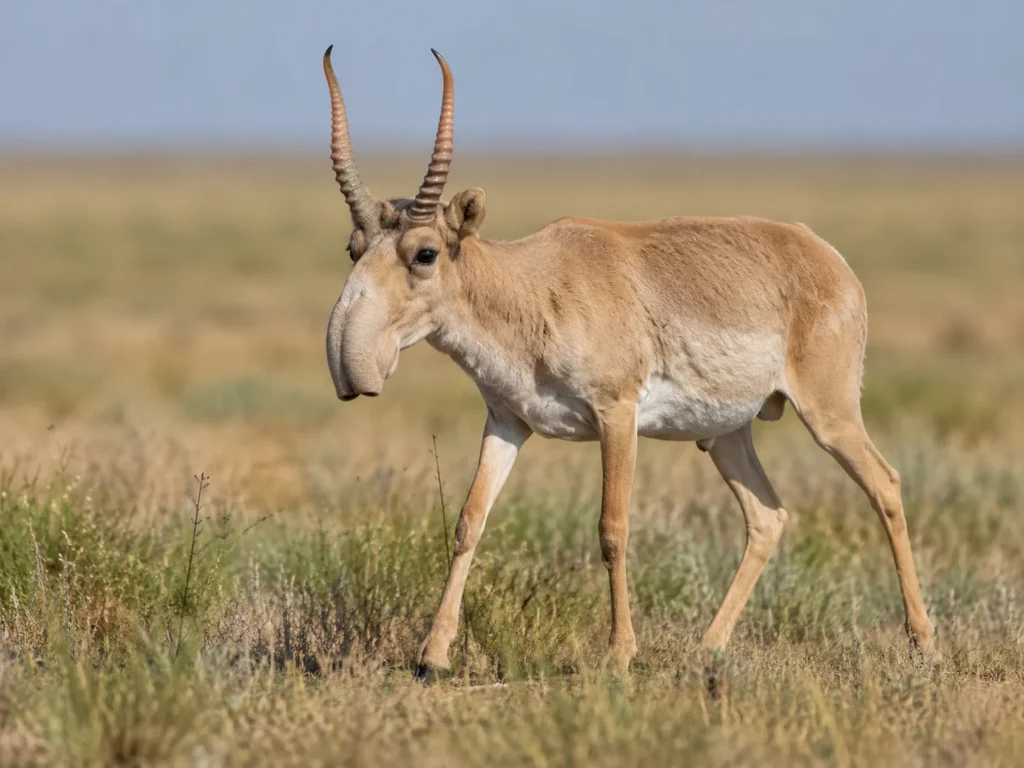
The saiga antelope is sometimes grouped with animals with trunks because it has one of the strangest enlarged noses among hoofed mammals. Its swollen, flexible nasal structure hangs over the mouth and gives the animal an unmistakable appearance. This nose is an adaptation to life on open, often dusty steppes. During warmer periods, its nasal passages can help filter dust stirred up by moving herds. In cold conditions, the nose also helps condition freezing air before it reaches the lungs. Despite its trunk-like appearance, a saiga cannot use its nose to grasp food like an elephant or tapir.
9. Proboscis Monkey
Adult male proboscis monkeys are often mentioned alongside animals with trunks because they develop enormous pendulous noses that can hang over the mouth. Females have prominent noses too, but those of mature males are substantially larger. The nose is strongly associated with social and sexual signaling rather than feeding. Research indicates that larger male noses are connected with visual signals of male size and status. Nasal anatomy also influences their vocalizations, helping produce distinctive low-frequency calls. The proboscis monkey therefore provides an unusual example of an extended nose shaped largely by communication and sexual selection.
10. Northern Elephant Seal
Mature male northern elephant seals are often grouped with animals with trunks because they develop a large inflatable nose called a proboscis. When relaxed, it hangs over the mouth, producing the elephant-like appearance that inspired the species’ name. The structure becomes particularly important during the breeding season. Large males produce loud calls when establishing their presence and interacting with rivals, and the inflated proboscis contributes to the resonance of these vocal displays. Females and young males do not develop the same enormous nose, making it a striking example of sexual dimorphism.
11. Southern Elephant Seal
Male southern elephant seals also appear in discussions of animals with trunks because they develop an enlarged proboscis as they mature. Like their northern relatives, they are dramatically larger than females and compete intensely during the breeding season. The enlarged nose contributes to the distinctive appearance and vocal displays of adult males. It is not a grasping organ, nor does it function like the feeding trunk of an elephant. Instead, it forms part of a broader set of male traits associated with social dominance and reproductive competition.
12. Aardvark
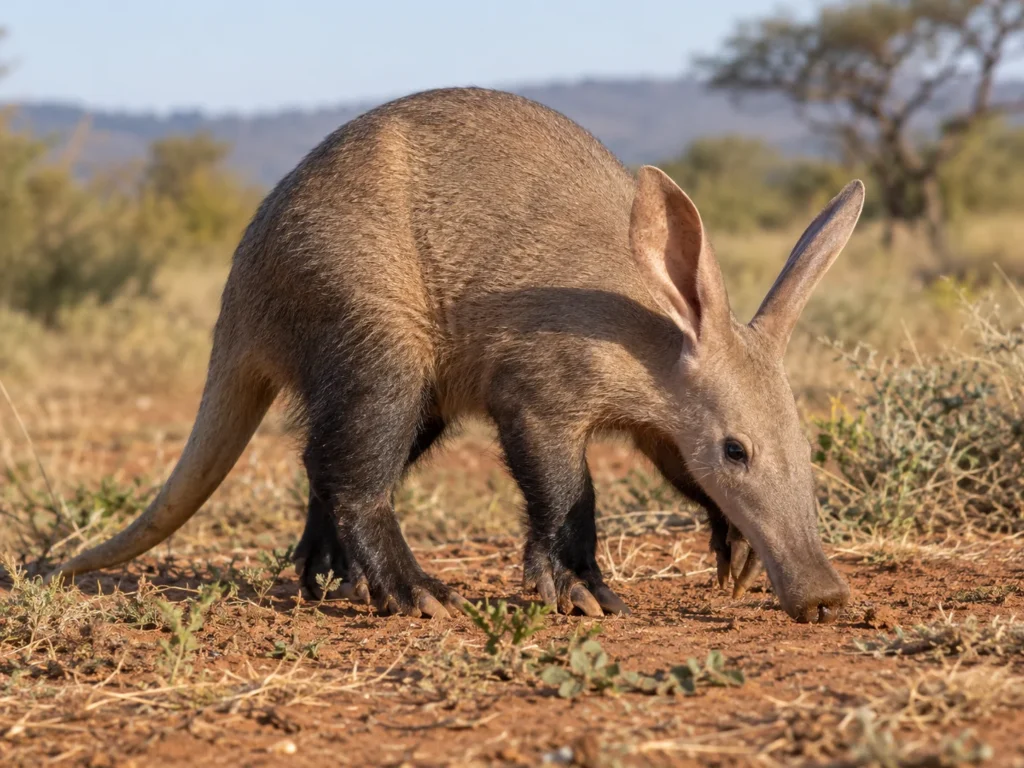
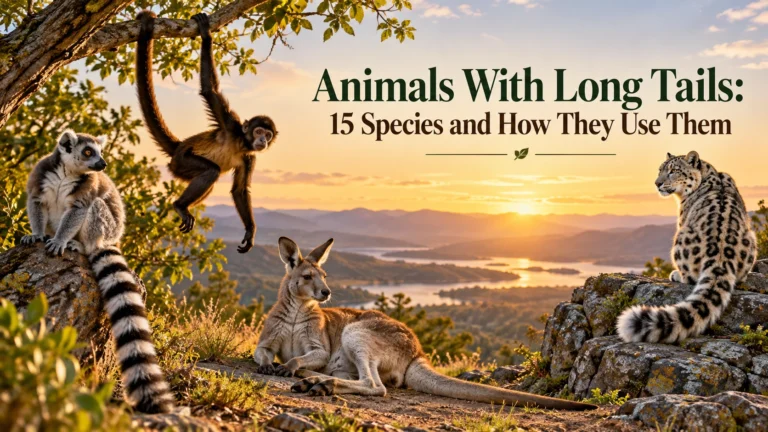
An aardvark has a long, tubular snout designed for an entirely different task: locating insects underground. Unlike many Animals With Long Tails, which may use their tails for balance, communication, or movement, aardvarks rely more heavily on smell and digging ability when searching for food. These nocturnal African mammals feed heavily on ants and termites. A powerful sense of smell helps an aardvark locate colonies hidden beneath soil or inside termite structures, while strong claws break open the nest so it can collect insects with its long tongue. Its snout may look trunk-like, but it is not prehensile and functions mainly as a sensory and feeding tool.
13. Giant Anteater
The giant anteater possesses an extremely long head and narrow snout suited to its specialized insect diet. It feeds primarily on ants and termites. After tearing into a colony with its powerful forelimbs and claws, the anteater inserts its exceptionally long tongue through the narrow mouth. Smell plays an important role in locating suitable feeding sites. Although competitors sometimes describe an anteater as an animal with a “trunk,” its snout cannot manipulate objects like an elephant’s. Its elongated shape instead allows efficient access to small insect prey.
14. Elephant Shrew
Elephant shrews, increasingly called sengis, are often included among animals with trunks because their long, mobile noses resemble tiny elephant trunks. Despite the name, they are neither true shrews nor miniature relatives of modern elephants in appearance or lifestyle. A sengi continuously moves its nose while investigating the forest floor and surrounding vegetation. Smell helps it locate insects and other small invertebrates, which form an important part of its diet. Its nose is much smaller and simpler than an elephant trunk, but its mobility makes it one of the clearest examples of a genuinely trunk-like nose in a small mammal.
15. Dik-Dik
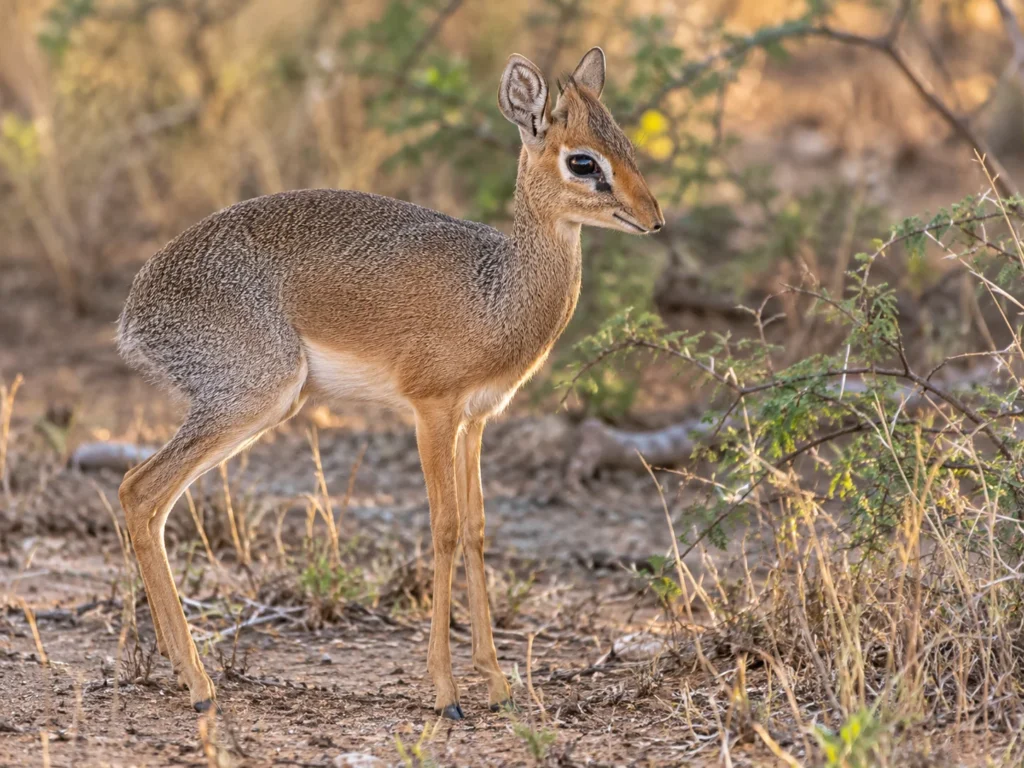
The dik-dik is a tiny African antelope with an elongated and highly specialized nose. The structure is particularly pronounced in some species and may appear almost like a miniature trunk. Its nasal passages perform more than an ordinary smelling function. Blood vessels and airflow within the nose contribute to temperature regulation and water conservation, useful adaptations for animals living in hot, relatively dry environments. Dik-diks cannot grasp objects with their noses. Their elongated nasal system demonstrates how a trunk-like appearance can evolve for physiological rather than feeding purposes.
What Exactly Is an Animal Trunk?
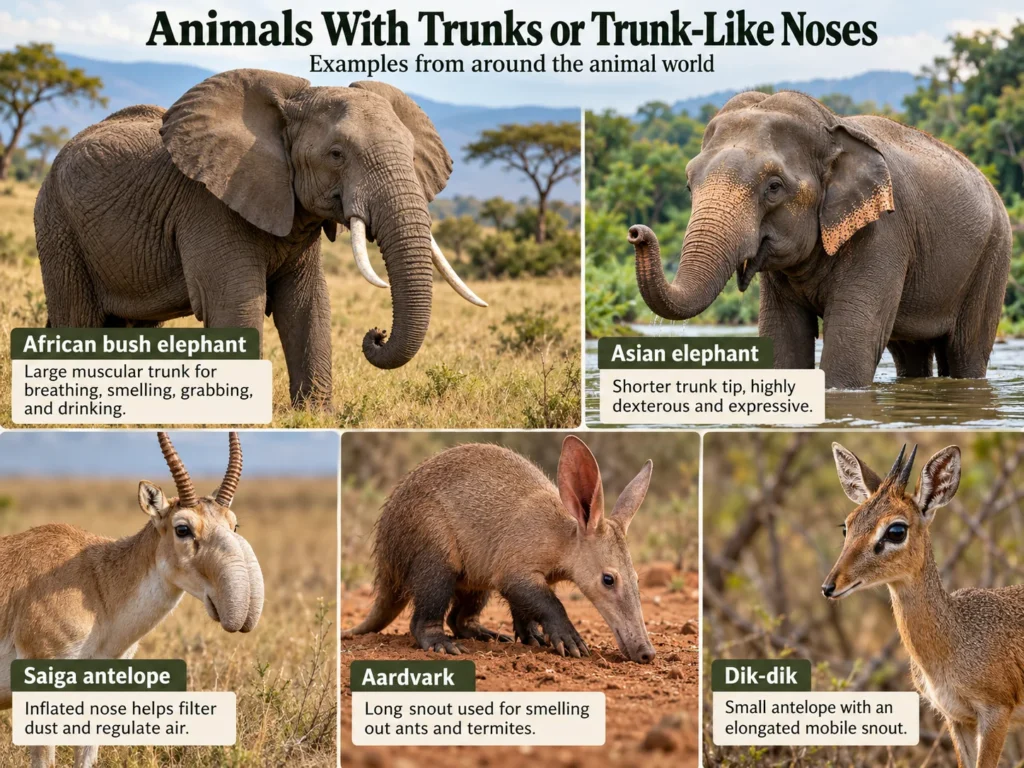
When discussing animals with trunks, a trunk is broadly understood as an elongated, flexible nasal structure, but the word is used more loosely in everyday descriptions than in anatomy. An elephant possesses the most specialized version. Its trunk combines the nose and upper lip into an exceptionally muscular organ capable of precise movement, grasping, touch, smell, breathing, and communication.
Tapirs also have a nose-and-upper-lip proboscis, although theirs is much shorter. Saigas, elephant seals, proboscis monkeys, anteaters, and other animals on this list have enlarged or elongated nasal structures rather than equivalent elephant trunks.
Why Did Some Animals Evolve Long Noses?
Among animals with trunks and trunk-like noses, long nasal structures did not evolve for one universal reason. Instead, different environments and lifestyles produced superficially similar structures with completely different jobs.
Elephants and tapirs benefit from reaching and manipulating vegetation. Aardvarks and elephant shrews rely heavily on smell while searching for hidden food. Saiga noses help manage the air entering the respiratory system, while the nasal structures of male proboscis monkeys and elephant seals contribute to social communication. This is a good example of why appearance alone does not reveal how an anatomical feature functions.
Elephant Trunk vs. Tapir Proboscis
| Feature | Elephant | Tapir |
| Structure | Nose and upper lip | Nose and upper lip |
| Length | Extremely long | Short |
| Flexibility | Exceptional | High |
| Grasping ability | Highly developed | Useful for browsing |
| Main uses | Feeding, smell, touch, breathing, communication | Feeding and sensory exploration |
| Strength | Extremely powerful | Relatively limited |
Both structures are useful for manipulating food, but an elephant trunk is far more specialized and versatile.
Which Animal Has the Most Advanced Trunk?
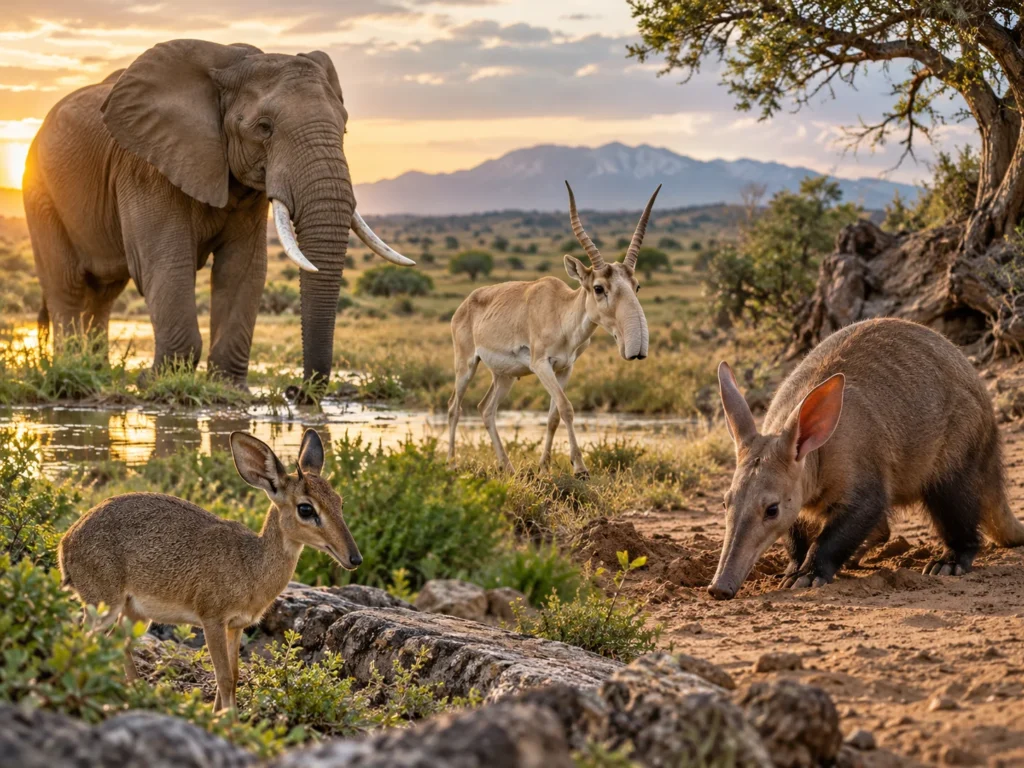
Elephants have the most complex and versatile trunks among living animals. Their trunks contain an enormous network of muscle units and can perform movements ranging from powerful lifting to remarkably delicate manipulation.
The same organ supports breathing, smell, tactile exploration, feeding, bathing, drinking assistance, social interaction, and vocal communication. No other living trunk-like structure combines this range of functions to the same degree.
FAQs
What animals have trunks besides elephants?
Tapirs are the clearest living examples besides elephants, possessing short, flexible proboscises formed from the nose and upper lip. Saigas, elephant seals, proboscis monkeys, sengis, and several other mammals have trunk-like or elongated noses rather than true elephant-style trunks.
Do tapirs really have trunks?
Yes, tapirs have short, flexible proboscises. Their noses and upper lips extend forward and can help grasp vegetation while feeding, although they are far shorter and less powerful than elephant trunks.
Is a proboscis the same as a trunk?
The terms overlap, but “proboscis” is broader. It can refer to an elongated nose or feeding structure in many animals, whereas “trunk” is most commonly associated with the highly muscular proboscis of elephants.
Why does the saiga antelope have such a large nose?
The saiga’s enlarged nose helps it cope with its steppe environment. Its complex nasal passages can filter dusty air and help condition inhaled air during extreme seasonal temperatures.
What is an elephant seal’s trunk used for?
Adult male elephant seals use their enlarged proboscises primarily in social and breeding contexts. The structure contributes to their resonant calls and displays during interactions with rival males.
Which animal has the longest and most versatile trunk?
Elephants possess the longest and most versatile true trunks among living land animals. Their trunks combine extraordinary flexibility, strength, touch sensitivity, smell, feeding ability, and communication functions.
Final Thoughts
Elephants and tapirs provide the clearest examples of mammals with true trunk-like proboscises, but many other animals have evolved unusual noses for completely different reasons. From a saiga filtering dusty air to an elephant seal amplifying its calls, these structures show how similar-looking traits can solve very different survival challenges.