Skinny Animals: 15 Naturally Slender Species Explained
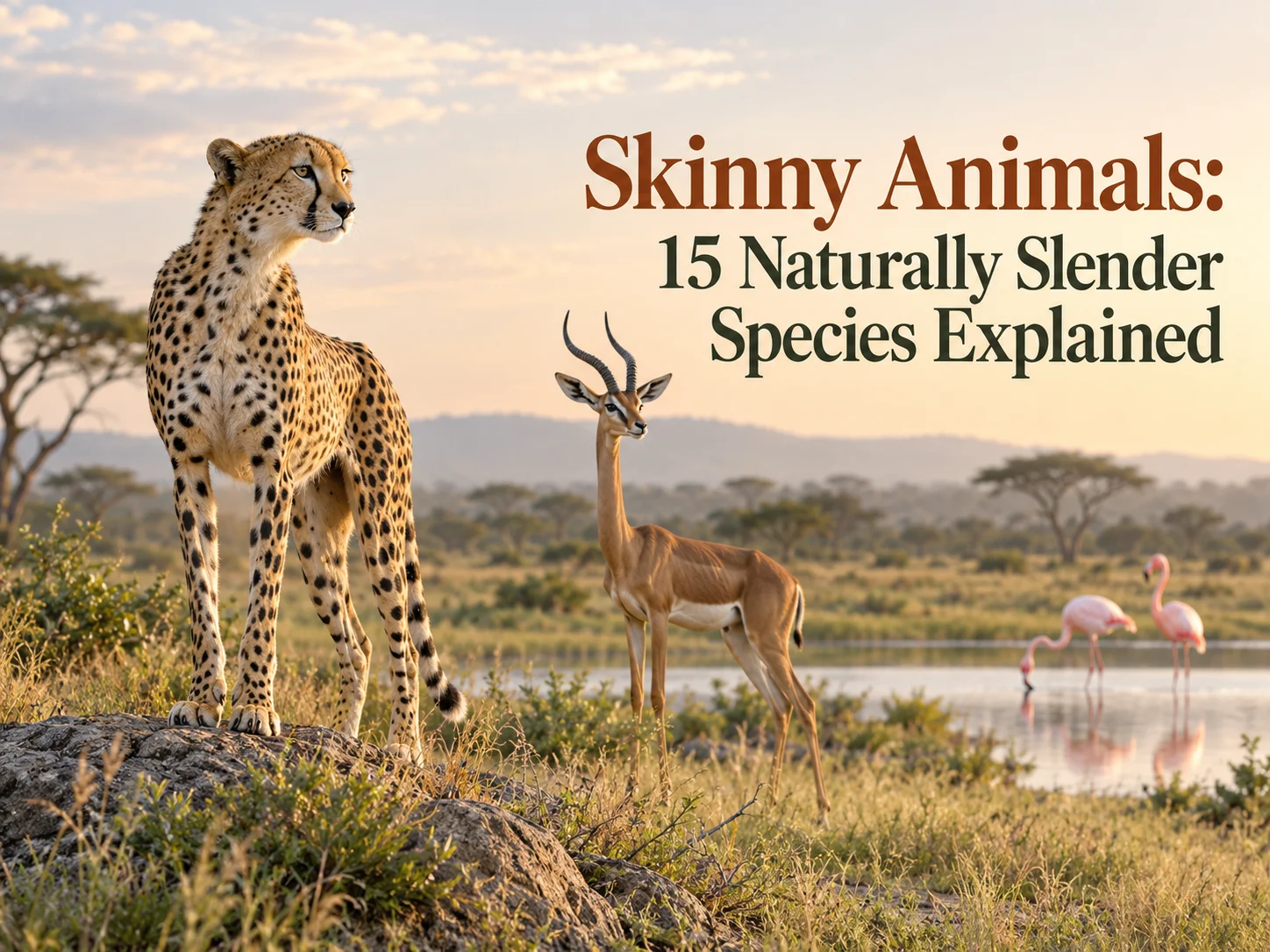
Some animals look remarkably thin, with long legs, narrow bodies, tiny waists, or almost thread-like shapes. That does not necessarily mean they are underweight or unhealthy. For many species, a slender body is simply normal anatomy and may support running, browsing, burrowing, wading, camouflage, or movement through specialized habitats. These 15 skinny animals show just how differently nature can shape a body while keeping it perfectly suited to its environment.
Naturally skinny animals include gerenuks, gazelles, Greyhounds, stoats, egrets, needlefish, stick insects, and other species with unusually slender proportions. Their appearance is generally normal for their species rather than a sign of poor health. Long limbs, narrow bodies, elongated necks, and twig-like forms can support feeding, movement, burrowing, or camouflage.
What Does “Skinny” Mean for an Animal?
“Skinny” is an informal word rather than a scientific body category. Biologists are more likely to describe an animal as slender, elongated, gracile, lean, or long-limbed. These terms describe normal body proportions without suggesting that the animal lacks enough food or is in poor condition. Animals can look thin for very different reasons. A giraffe appears narrow because of its extraordinarily long neck and legs, while a stick insect is genuinely twig-like. Greyhounds have naturally lean athletic frames, and stoats have elongated bodies that help them move through confined spaces.
Skinny vs Underweight
A naturally slender animal has the body proportions expected for its species or breed. An underweight animal, by contrast, has less healthy body condition than would normally be expected for that individual. The difference matters because appearance alone can be misleading. A healthy Greyhound normally looks much leaner than a stockier dog breed, while a massive giraffe can still create a surprisingly skinny silhouette. Throughout this list, “skinny” refers to naturally slender anatomy rather than starvation or poor health.
15 Skinny Animals With Naturally Slender Bodies
These animals are not ranked from thinnest to thickest. Each has been included because its normal body form is particularly narrow, elongated, long-limbed, or visually delicate.
1. Gerenuk — The Long-Necked Slender Antelope
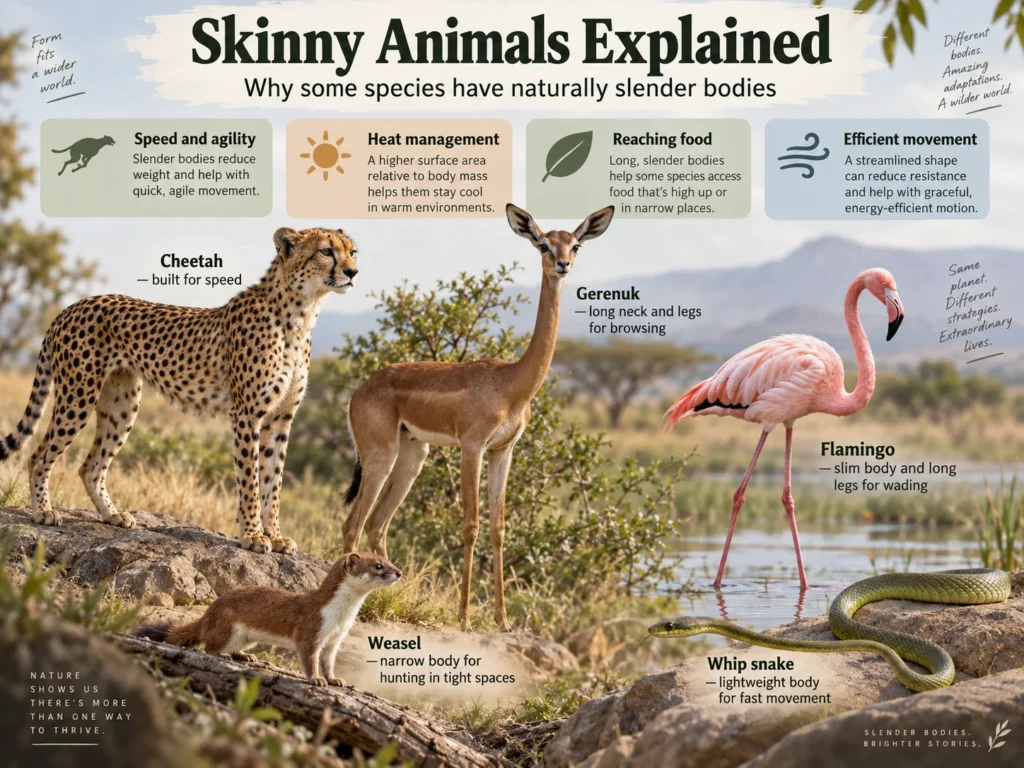
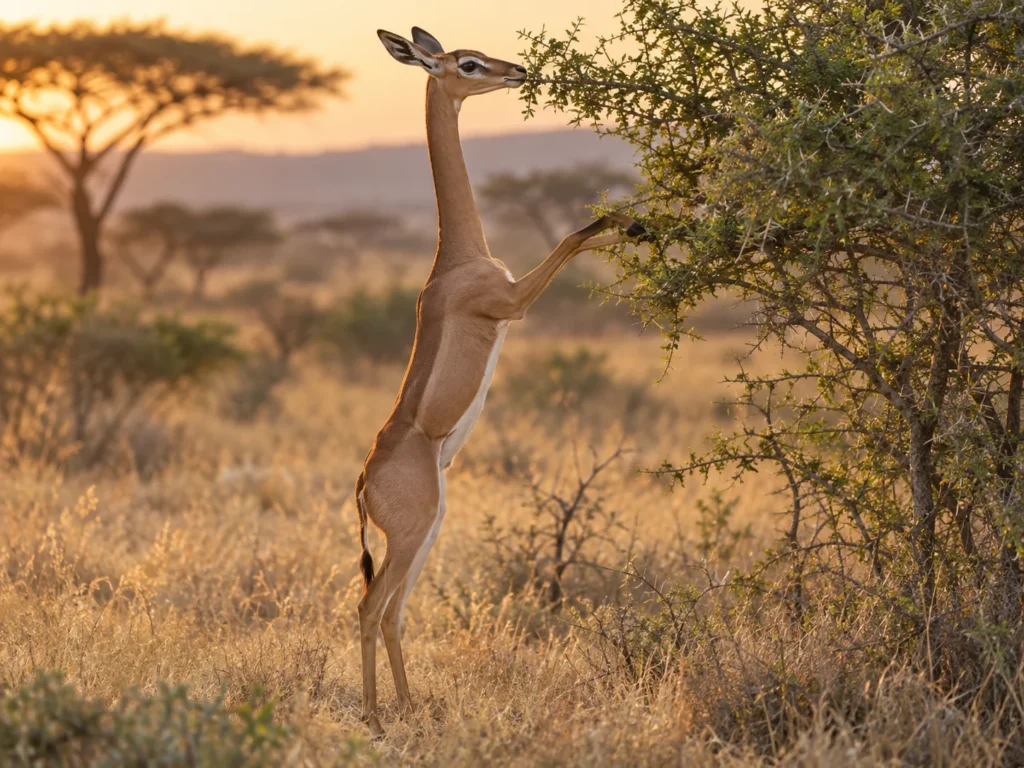
Few antelopes look as delicate as the gerenuk. It has a narrow torso, remarkably long thin legs, and an elongated neck that gives it an almost stretched appearance. These proportions are closely connected with the way it feeds. Gerenuks browse shrubs and trees and can stand upright on their hind legs to reach leaves above the feeding height of many other herbivores. Their slender frame is therefore not a sign of weakness; it is part of a highly distinctive browsing body plan.
2. Dama Gazelle — The Lightly Built Desert Antelope
The dama gazelle has a graceful, lightly built appearance created by long limbs, a slender neck, and a relatively narrow frame. Its elegant proportions are particularly noticeable when the animal moves across the open landscapes of northern Africa. This gazelle demonstrates why “skinny” does not have to mean frail. Its body is naturally athletic and suited to an active life in open habitat. Like other gazelles, its movement depends on an entire system of muscles, bones, and limbs rather than thinness alone.
3. Giraffe — Tall, Narrow, but Far From Lightweight
A giraffe can look extraordinarily skinny when viewed from the front or at a distance. Its enormously long legs and neck create a tall, narrow silhouette that few other mammals can match. Yet giraffes are not lightweight animals. Adults can have substantial body mass, so their thin appearance is mainly a product of extreme proportions rather than a small body. The long neck is especially important for browsing vegetation at heights unavailable to many other herbivores, while the long legs contribute to the giraffe’s towering stature.
4. Greyhound — The Naturally Lean Sprinter
Greyhounds have one of the most recognizable lean builds among domestic dogs. Their long legs, deep chest, tucked abdomen, sleek coat, and naturally low-fat appearance produce an unmistakably athletic silhouette. This shape reflects the Greyhound’s heritage as a sighthound bred for high-speed pursuit. Its body combines long limbs with powerful muscles and a flexible running motion. A Greyhound therefore normally looks much thinner than many other dog breeds, which is why its natural leanness should not automatically be confused with poor body condition.
5. Whippet — A Smaller Slender Sighthound
Whippets resemble smaller, more compact Greyhounds. They have long limbs, a deep chest, a sharply tucked waist, and a sleek overall outline that can make them look surprisingly skinny next to heavier-built dogs. Their slender frame is typical of sighthounds and accompanies an athletic body designed for rapid movement. Despite the delicate appearance, Whippets are muscular runners. Their example shows particularly well why visual thinness and physical weakness are not the same thing.
6. Stoat — Built Long and Narrow
The stoat, also known as an ermine in its white winter coat, has the classic elongated weasel shape. Its body is long and narrow, while the legs are comparatively short and the neck appears stretched. This flexible form is highly useful for a small predator. Stoats can chase rodents and other prey through burrows, tunnels, and dense vegetation where a wider-bodied predator would have more difficulty moving. Their seemingly skinny appearance is therefore closely associated with maneuverability in confined spaces.
7. Ferret — The Flexible Tube-Shaped Mammal
Ferrets have an unusually long, narrow torso supported by short legs. When stretched out, their body can appear almost tube-shaped, a form shared with many members of the mustelid family. That elongated construction makes ferrets remarkably flexible and capable of navigating tunnels and tight spaces. Their shape is so distinctive that a healthy ferret may appear unusually thin when compared with a similarly sized but stockier mammal. Again, this is normal anatomy rather than evidence that the animal lacks sufficient body condition.
8. Meerkat — The Slender Upright Sentinel
Meerkats have naturally slender bodies, relatively long tails, and narrow heads. Their famous habit of standing upright on the hind legs exaggerates that shape, creating an especially thin silhouette when they scan the surrounding landscape. They live in burrow systems across dry regions of southern Africa and possess powerful claws for digging. Their body combines a slim frame with adaptations for an active terrestrial lifestyle. Although small and lightly built, meerkats are energetic social mammals rather than fragile-looking versions of heavier animals.
9. Red Slender Loris — A Gracile Tree-Dwelling Primate
The red slender loris lives up to its name. This Sri Lankan primate has a naturally slender body and long, gracile limbs. “Gracile” simply means lightly built and delicate in overall structure. Its body is very different from the heavier frames of many familiar primates. The loris moves deliberately through trees, gripping branches with its hands and feet as it searches for food. Its narrow torso and elongated limbs are normal components of its arboreal body plan, making it one of the clearest skinny-looking mammals on this list.
10. Great Egret — The Long-Legged Wader
Great egrets create an elegant, remarkably thin silhouette because of their extremely long legs and S-shaped neck. Their narrow bill adds even more length to the overall appearance. These birds forage in shallow wetlands, slowly walking through water before striking at fish and other aquatic prey. Long legs help keep much of the body above the water, while the elongated neck extends their reach. Much of the egret’s skinny appearance therefore comes from stretched body proportions rather than an unusually narrow torso.
11. Needlefish — A Pencil-Thin Swimmer
Needlefish are immediately recognizable because of their long, narrow bodies and elongated jaws. Some species look almost pencil-shaped when viewed from the side, making them obvious candidates for a list of naturally skinny animals. Their thin appearance is simply part of the normal needlefish body plan. Rather than describing them as underweight fish, it is more accurate to call them elongated and streamlined. Their extended jaws are also a defining feature, giving the front of the body an even more dramatically stretched appearance.
12. Slender Snipe Eel — Thinness Taken to an Extreme
The slender snipe eel takes elongated anatomy to an extraordinary level. It can reach roughly five feet in length while weighing only a few ounces, giving it an exceptionally narrow, ribbon-like body. This deep-sea fish also has long, curved jaws lined with tiny teeth that help it capture shrimp in open water. Its extreme length-to-mass proportions make it one of the most convincing examples of a truly slender vertebrate. Unlike a giraffe, which only looks narrow because of long proportions, the snipe eel is genuinely very thin throughout most of its body.
13. Stick Insect — A Living Twig
Stick insects make thinness part of an effective disguise. Their narrow bodies and long, delicate legs closely resemble twigs, stems, and small branches. Many species strengthen the illusion by remaining motionless or gently swaying like vegetation. This is a clear example of slender anatomy contributing directly to camouflage. A stockier body would make the insect’s outline much easier to distinguish from surrounding plants. Its almost impossibly thin appearance is therefore not accidental—it is closely tied to staying visually hidden from predators.
14. Twig Catfish — Skinny for Camouflage
Twig catfish have long, narrow bodies, pointed snouts, and brownish coloration that make them resemble submerged sticks. They often occupy environments containing dead leaves, branches, and vegetation where that appearance becomes especially useful. Their thin body shape helps break up the recognizable outline of a fish, allowing them to blend convincingly into their surroundings. The similarity to sticks is so strong that the body form is reflected in their common name. Like the stick insect, this species demonstrates how a skinny appearance can function as camouflage rather than simply affecting movement.
15. Brahminy Blindsnake — A Snake That Looks Like a Worm
The Brahminy blindsnake is a tiny, extremely thin reptile that is frequently mistaken for an earthworm. Adults are only several inches long, with smooth, shiny bodies and heads that do not stand out strongly from the neck. These snakes spend much of their lives beneath soil, leaf litter, logs, and other cover. Their small, narrow form works well with this fossorial lifestyle—meaning a lifestyle adapted to digging and underground movement. The blindsnake shows just how narrow a vertebrate body can become while remaining perfectly functional.
Why Are Some Animals Naturally So Slender?
There is no single reason animals develop slender bodies. Similar appearances can arise from very different lifestyles. For animals such as stoats and ferrets, an elongated body can help with movement through tight spaces. Long-legged species such as egrets and antelopes use very different body plans for wading, running, or reaching food. Gerenuks and giraffes use extended proportions while browsing, while stick insects and twig catfish benefit from looking like parts of their surroundings.
Aquatic animals add another form of slenderness. Needlefish and snipe eels have highly elongated shapes, while burrowing reptiles such as blindsnakes have narrow bodies suited to moving beneath the surface. The important point is that slender anatomy does not represent one universal adaptation. Similar-looking body forms can serve completely different ecological functions.
Skinny-Looking Animals Are Not Always Small
A skinny silhouette tells us surprisingly little about an animal’s actual size or weight. Giraffes are enormous mammals despite their narrow appearance, while Greyhounds combine a lean frame with substantial athletic muscle. Great egrets look especially thin because their necks and legs are elongated. Stick insects genuinely have narrow twig-like bodies, and slender snipe eels take that thinness to an extreme throughout much of their length. This is why body mass, body fat, size, and proportions should not be treated as interchangeable concepts. An animal can be large and skinny-looking, small and stocky, or genuinely extremely narrow.
Key Takeaways
- “Skinny” is an informal description rather than a scientific animal category.
- Naturally slender animals are not automatically unhealthy or underweight.
- Long legs, necks, and bodies can support specialized feeding, movement, or habitat use.
- Stick insects and twig catfish use narrow, stick-like forms as camouflage.
- Similar thin appearances can occur for very different reasons across mammals, birds, fish, reptiles, and insects.
Frequently Asked Questions
What Is the Skinniest Animal in the World?
There is no universally accepted scientific ranking for the “skinniest animal.” Different species are thin in different ways. Slender snipe eels have extremely narrow bodies relative to their length, while blindsnakes and stick insects are also remarkably thin. Comparing them directly is difficult because their anatomy and body sizes are completely different.
Why Are Some Animals Naturally Skinny?
Animals can develop slender body proportions because of genetics, evolutionary history, habitat, feeding style, locomotion, or camouflage. A stoat’s long body helps with movement through confined spaces, while a stick insect’s narrow outline helps it resemble vegetation. There is no single explanation that applies to every skinny-looking species.
Are Greyhounds Naturally Skinny?
Yes. Greyhounds naturally have a lean sighthound body plan with long legs, a deep chest, a tucked waist, and relatively little body fat compared with many breeds. Their naturally slim appearance should not automatically be interpreted as poor health, although the condition of an individual dog cannot be judged solely from breed type.
What Animal Has a Long, Skinny Body?
Many animals have naturally long, narrow bodies. Examples include stoats, ferrets, needlefish, slender snipe eels, twig catfish, and Brahminy blindsnakes. Each has a different reason for its elongated appearance, ranging from burrowing and hunting in confined spaces to camouflage or specialized aquatic anatomy.
Are Skinny-Looking Animals Unhealthy?
Not necessarily. Many species and breeds are naturally lean, long-limbed, or narrow-bodied. Their appearance can be completely normal and healthy for their anatomy. Being naturally slender is different from an individual animal being underweight, so appearance should always be interpreted relative to the normal body form of that species.
Final Thoughts
From the twig-like stick insect to the long-necked gerenuk, skinny animals demonstrate how dramatically body shapes can vary across nature. Their slender proportions may support camouflage, movement, feeding, burrowing, or life in specialized habitats. Looking thin does not automatically mean being small, weak, unhealthy, or underweight.