Deaf Animals: 15 Examples and How They Sense the World

The phrase “deaf animals” sounds simple, but animal hearing is far more complicated than it appears. Some individual animals genuinely lack functional hearing, either from birth or after hearing loss later in life. Other species simply have limited hearing, while some creatures without visible ears can still detect sound through vibrations, sensory hairs, or underwater particle motion. Understanding these differences helps separate true deafness from unusual ways of sensing the acoustic world.
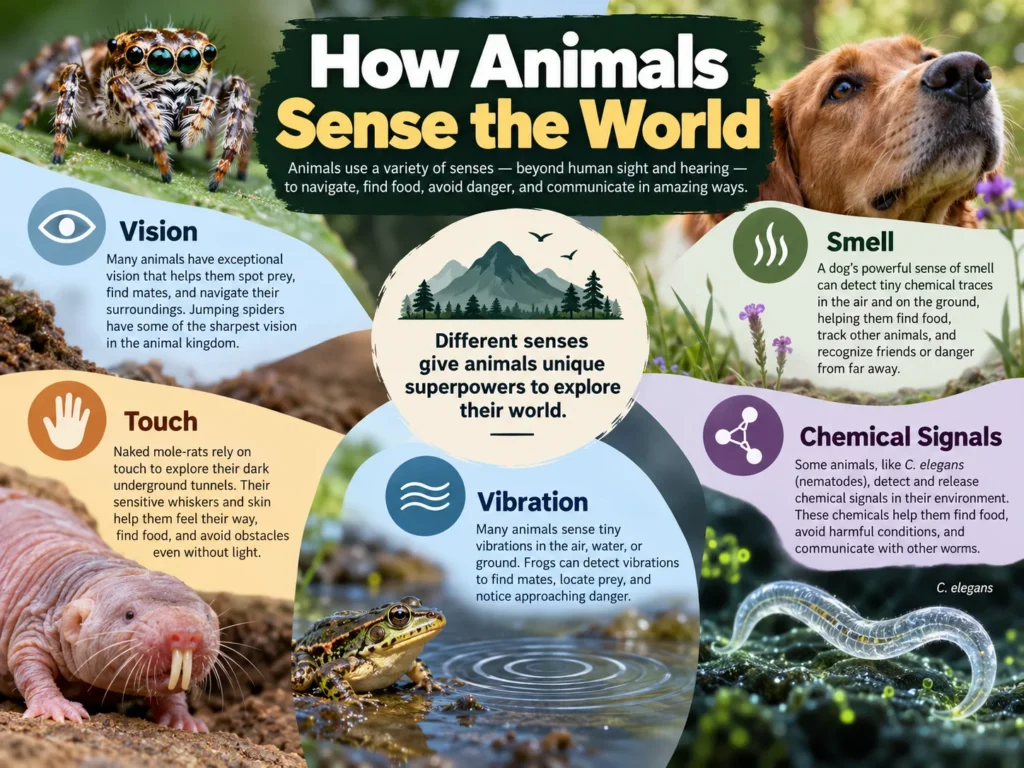
Some dogs, cats, horses, cattle, alpacas, mink, and pigs can genuinely experience congenital or acquired deafness. Other animals, including mole-rats, snakes, salamanders, spiders, octopuses, oysters, and even tiny nematodes, are not necessarily deaf but detect sound through limited or highly unusual sensory systems.
What Does “Deaf” Mean in Animals?
True deafness means that functional hearing is absent or severely impaired in an affected animal. It can be congenital, meaning present from birth or developing soon afterward, or acquired later through factors such as aging, injury, disease, or severe noise exposure. Deafness can also affect one ear or both.
Unilateral deafness affects one side, while bilateral deafness affects both ears. An animal that is deaf in only one ear may still respond to sound, making the hearing loss difficult to notice without specialized testing. The situation becomes more complicated when discussing wild species with very different body plans, including Animals With Flippers, reptiles, and other animals that lack familiar mammalian-style outer ears. A snake or spider may not possess visible external ears, but that does not mean it lives in complete silence.
| Classification | What It Means |
|---|---|
| True deafness | Functional hearing is absent or severely impaired |
| Limited hearing | Sound is detected, but sensitivity is restricted |
| Unusual sound detection | Acoustic information is sensed through different structures |
| Often mislabeled deaf | Commonly called deaf despite measurable sound sensitivity |
15 Deaf or Commonly Misunderstood Animals
The following examples include animals that can genuinely be deaf, species with unusually limited hearing, and creatures that are often incorrectly described as deaf because their auditory systems differ from ours.
1. Domestic Dog

Some domestic dogs are genuinely born deaf, making them one of the clearest examples discussed among deaf animals. Congenital hearing loss may affect one ear or both and occurs more frequently in certain breeds and genetic lines. This is very different from Animals With No Legs, where the defining feature is body structure rather than sensory ability. Some pigmentation patterns, including particular piebald and merle-associated genetics, are linked with increased risk of deafness. However, coat appearance alone cannot determine whether a dog hears normally. Dogs as a species certainly are not deaf; this is a condition affecting particular individuals.
2. Domestic Cat
Congenital deafness also occurs in domestic cats, so cats are another important example among deaf animals. White pigmentation, especially when combined with blue eyes in some cats, is associated with a higher risk of hearing loss. That does not mean every white or blue-eyed cat is deaf. Many hear normally. The important distinction is that particular pigmentation genetics can be associated with development of the inner ear, rather than blue eyes or white fur directly causing deafness.
3. Horse
Horses can experience both congenital and acquired hearing loss and are therefore sometimes included in discussions of deaf animals. Hereditary deafness has been documented in some lines, including associations with certain white-pattern phenotypes. However, it would be inaccurate to assume that horses with extensive white coloration cannot hear. As with dogs and cats, hearing ability must be considered at the individual level rather than predicted solely from outward appearance.
4. Cattle
Hereditary deafness has also been documented in cattle, adding them to the range of deaf animals affected by inherited hearing disorders. Certain genetic cases have been investigated in specific breeds and lines, showing that true congenital hearing disorders are not limited to companion animals. Unlike Animals That Eat Cactus, whose defining trait relates to feeding behavior and diet, cattle in this context are being discussed because of inherited hearing loss. Normal cattle use hearing extensively, so cattle should not generally be described as animals with poor hearing. Instead, they demonstrate that inherited deafness can occur across a wide range of domesticated mammals.
5. Alpaca
Some alpacas can be born deaf, making them another example among deaf animals, with research finding a strong association between congenital deafness and the blue-eyed white phenotype in certain populations. Yet appearance is not a reliable diagnosis. Some blue-eyed white alpacas retain functional hearing. This makes alpacas a useful example of why a physical characteristic may indicate increased genetic risk without guaranteeing that an individual animal is deaf.
6. American Mink
Inherited deafness has been extensively studied in certain white American mink, making them a notable example among deaf animals, particularly animals associated with the Hedlund phenotype. In affected mink, changes within the cochlea can disrupt normal auditory function. These animals provide an important research example because they show how genes involved in pigmentation can sometimes also influence structures necessary for hearing.
7. Domestic Pig
True hereditary deafness has been documented in particular domestic pig lines, so pigs can also appear in discussions of deaf animals, including research involving white Rongchang pigs. This does not mean domestic pigs generally have weak hearing. Instead, certain inherited changes can interfere with auditory structures and produce serious hearing loss in affected individuals. Pigs therefore belong among the examples of animals in which genuine genetic deafness can occur.
8. Naked Mole-Rat
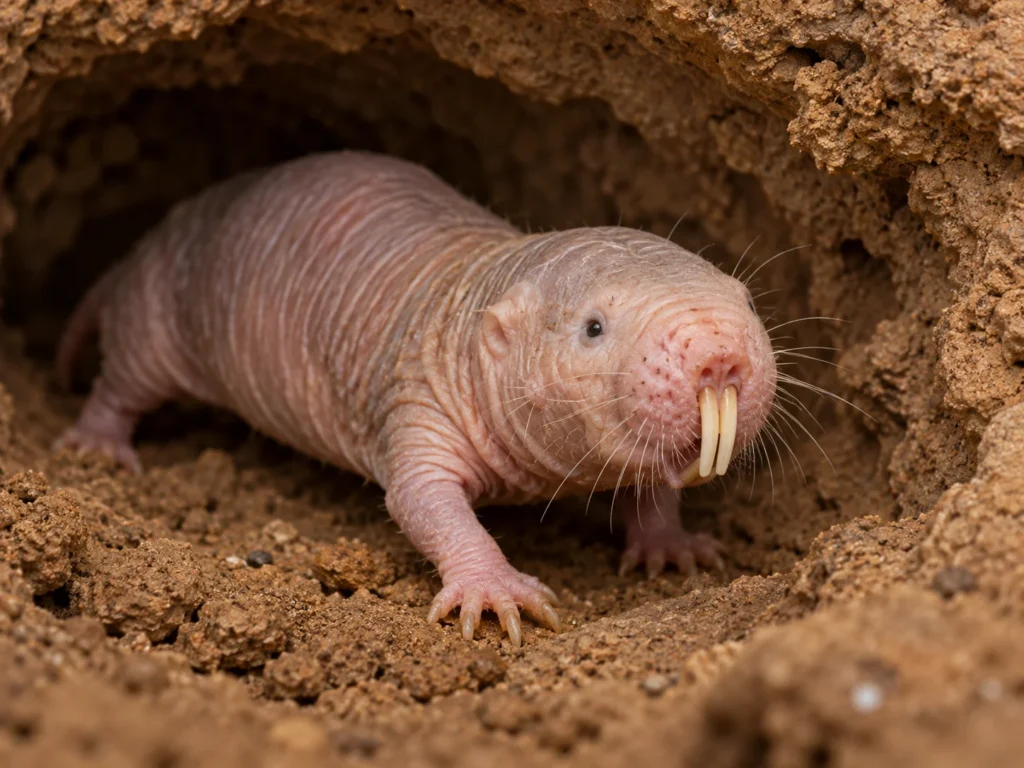
Naked mole-rats are sometimes described as nearly deaf because their auditory sensitivity is poor compared with many other mammals. That description goes too far. They can hear and are highly vocal social animals. Their hearing is particularly suited to lower-frequency communication in underground tunnels, although their thresholds and ability to localize sound are relatively poor. They represent limited hearing, not true deafness.
9. Blind Mole-Rat
Blind mole-rats also possess a restricted auditory system. They are relatively insensitive to higher frequencies and have difficulty localizing brief sounds, but experiments show that they can still detect lower-frequency acoustic signals. Their subterranean lifestyle makes low-frequency information especially relevant. Like naked mole-rats, they show why extremely poor hearing should not automatically be classified as complete deafness.
10. Snake
Snakes are among the animals most commonly and incorrectly called deaf. They lack visible external ears and do not have the conventional tympanic eardrum familiar in many terrestrial vertebrates. They nevertheless possess functional inner-ear structures and can respond to low-frequency acoustic energy, particularly vibrations transmitted through the ground, head, and jaw. Their hearing system is very different from ours, but saying that snakes cannot hear anything is misleading.
11. Salamander
Many salamanders lack a conventional tympanic middle ear, yet they are not necessarily unable to detect sound. Experimental research shows that some salamanders respond to low-frequency airborne sound as well as substrate vibrations. Mechanical energy can reach the inner ear through pathways involving movement of the head and body. Salamanders therefore demonstrate that an external eardrum is not required for every form of vertebrate hearing.
12. Jumping Spider
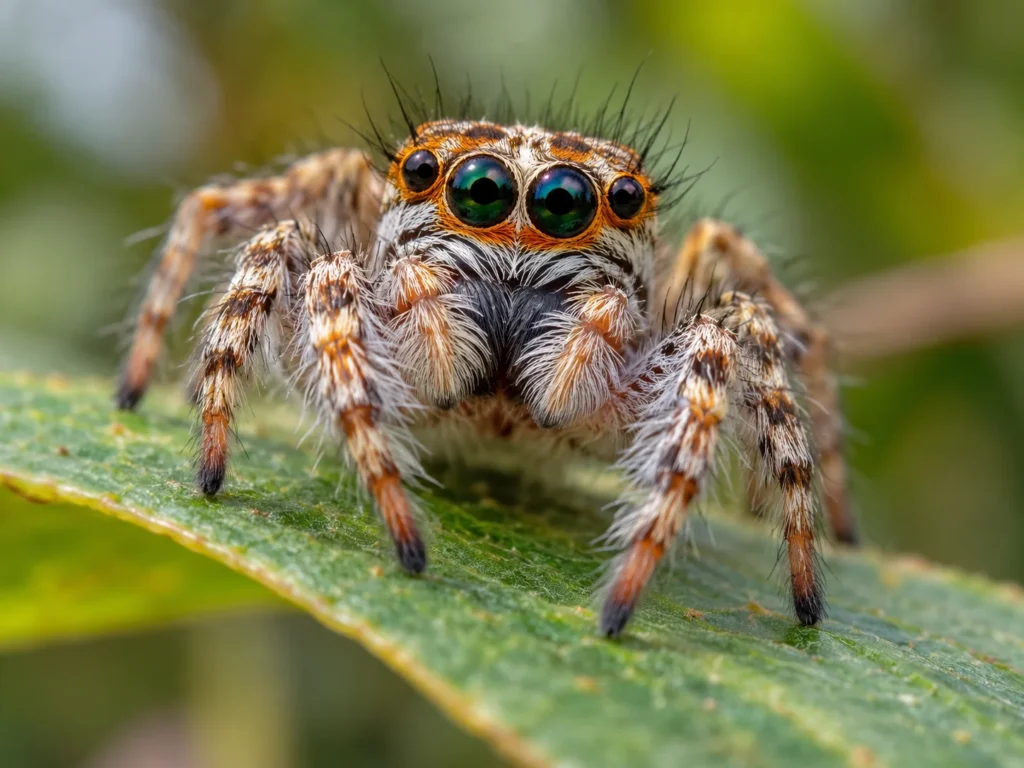
Jumping spiders have no vertebrate-style ears, but experiments have demonstrated that they can respond to low-frequency airborne sound. Sensory hairs on their legs can move when acoustic waves reach them, providing information about distant events. This form of sound detection is very different from hearing through an eardrum, yet it allows the spider to respond to acoustic cues from surprisingly far away.
13. Common Octopus
Octopuses do not have mammalian-style ears, but they can detect mechanical components of underwater sound. Their sensory systems, including structures called statocysts, are sensitive to particle motion in the surrounding water. This means it is inaccurate to say an octopus is simply deaf and “feels vibrations instead.” Particle motion is itself an important component of underwater acoustic information.
14. Pacific Oyster
Even oysters provide evidence that recognizable ears are not necessary for acoustic sensitivity. Unlike Animals With Big Noses, which are often discussed for enlarged nasal structures and smell-related adaptations, oysters detect their surroundings without anything resembling a mammalian nose or ear. Pacific oysters have been shown to alter their behavior when exposed to low-frequency sound, with researchers observing changes in how widely their shells are opened. An oyster does not hear in anything resembling the mammalian sense, but it can detect mechanically transmitted acoustic information in its aquatic environment.
15. C. elegans
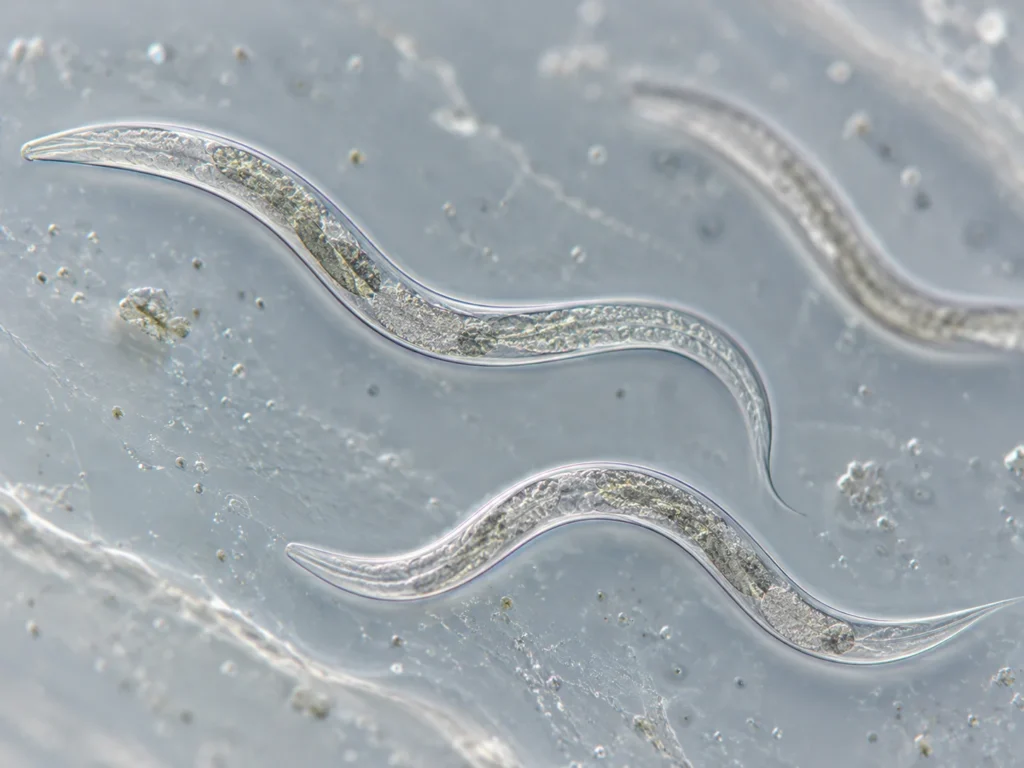
One of the most surprising examples is Caenorhabditis elegans, a tiny nematode with no ears at all. Laboratory experiments have shown that it responds to airborne sound. Acoustic waves can cause its body surface to vibrate, activating mechanosensory neurons and triggering behavioral responses. This tiny animal provides an especially strong reminder that visible ears are a poor test of whether an organism can detect sound.
How Do Deaf Animals Sense the World?
For genuinely deaf animals, losing auditory information does not mean losing the ability to interact effectively with the environment. They can still use vision, smell, touch, body movement, vibration, and familiar environmental cues. A deaf dog, for example, may pay close attention to hand movements, visual signals, ground vibration, or physical contact. Other species may already depend heavily on smell or touch whether or not hearing is present. However, it is misleading to claim that deaf animals automatically develop “super senses.” They may become more attentive to information available through other sensory channels, but this does not mean every remaining sense becomes biologically stronger.

Can Animals Without Ears Still Hear?
Yes. External ears are only one biological solution for detecting acoustic information. Snakes can detect low-frequency mechanical signals through structures connected to the inner ear. Salamanders can receive acoustic energy without a conventional eardrum. Jumping spiders use sensitive hairs that move in response to airborne sound.
Aquatic animals work under different physical conditions. Octopuses respond strongly to underwater particle motion, while oysters can react behaviorally to low-frequency acoustic stimulation. Even C. elegans demonstrates sensitivity to airborne sound despite having neither ears nor a conventional auditory organ. These examples make a simple rule such as “no ears means deaf” scientifically unreliable.
Deafness vs Poor Hearing vs Vibration Detection
The word “deaf” should therefore be used carefully.
| Animal | Classification | What It Detects |
|---|---|---|
| Deaf dog | True deafness in affected individual | Little or no functional auditory input |
| Naked mole-rat | Limited hearing | Mainly lower-frequency sound |
| Snake | Unusual hearing | Low-frequency acoustic and mechanical signals |
| Jumping spider | Alternative sound detection | Airborne sound through sensory hairs |
| Octopus | Underwater acoustic sensing | Particle motion |
| C. elegans | Mechanosensory sound detection | Sound-induced body vibration |
For deaf animals, the key difference is whether functional auditory perception is actually absent. Detecting acoustic information in an unfamiliar way should not automatically be reclassified as deafness.

Are White Animals More Likely to Be Deaf?
Among deaf animals and animals at increased risk of hearing loss, certain pigmentation traits are associated with congenital deafness in some species and genetic lines. This has been documented in animals including dogs, cats, horses, camelids, mink, and pigs. The relationship involves genes that can influence pigmentation and development of structures within the auditory system. It is therefore much more complicated than simply saying that white fur causes deafness.
Blue eyes do not directly cause hearing loss either. Many white and blue-eyed animals hear normally, while deafness can also occur in animals without those traits. Pigmentation can sometimes be a risk marker, not a diagnosis.
Key Takeaways
- Genuine deafness occurs in individual animals, including some dogs, cats, horses, cattle, alpacas, mink, and pigs.
- Deafness can be congenital or acquired and may affect one ear or both.
- Naked mole-rats and blind mole-rats have limited hearing but are not deaf.
- Snakes and salamanders detect acoustic information despite lacking conventional external ears.
- Spiders, octopuses, oysters, and nematodes use very different sound-detection mechanisms.
- An animal without visible ears does not necessarily live in silence.
Frequently Asked Questions
What Animals Can Be Born Deaf?
Dogs, cats, horses, cattle, alpacas, mink, pigs, and several other mammals can experience congenital deafness. The condition usually affects particular individuals, breeds, genetic lines, or color-associated phenotypes rather than making an entire species naturally deaf.
Are Snakes Deaf?
No. Snakes lack external ears and conventional eardrums, but they can detect low-frequency acoustic and ground-borne vibrations through structures connected to the inner ear. Their auditory system works differently from human hearing, so describing snakes as completely deaf is inaccurate.
Can Animals Without Ears Hear?
Yes. Visible outer ears are not necessary for all types of acoustic perception. Snakes, salamanders, spiders, octopuses, oysters, and even tiny nematodes can detect mechanical or acoustic signals without possessing mammalian-style ears.
Can Deaf Animals Feel Vibrations?
Yes. Deaf animals may still detect mechanical vibrations through touch and other sensory receptors even when genuine deafness affects auditory perception. Deaf individuals may use these vibrations along with visual, tactile, and chemical cues, although vibration detection should not automatically be considered replacement hearing.
Are White Animals Always Deaf?
No. Certain genes associated with white pigmentation can increase the risk of congenital deafness in some species or breeds, but many white animals hear normally. Coat color or blue eyes alone cannot establish whether an individual animal is deaf.
Final Thoughts
“Deaf animals” are not one simple biological category. Some individuals genuinely lack functional hearing, while other species merely hear poorly or detect acoustic information through systems unlike our own. Snakes, spiders, octopuses, oysters, and even tiny nematodes show why visible ears alone tell us very little about an animal’s ability to sense sound.