Quiet Animals: 16 Species That Make Little Noise
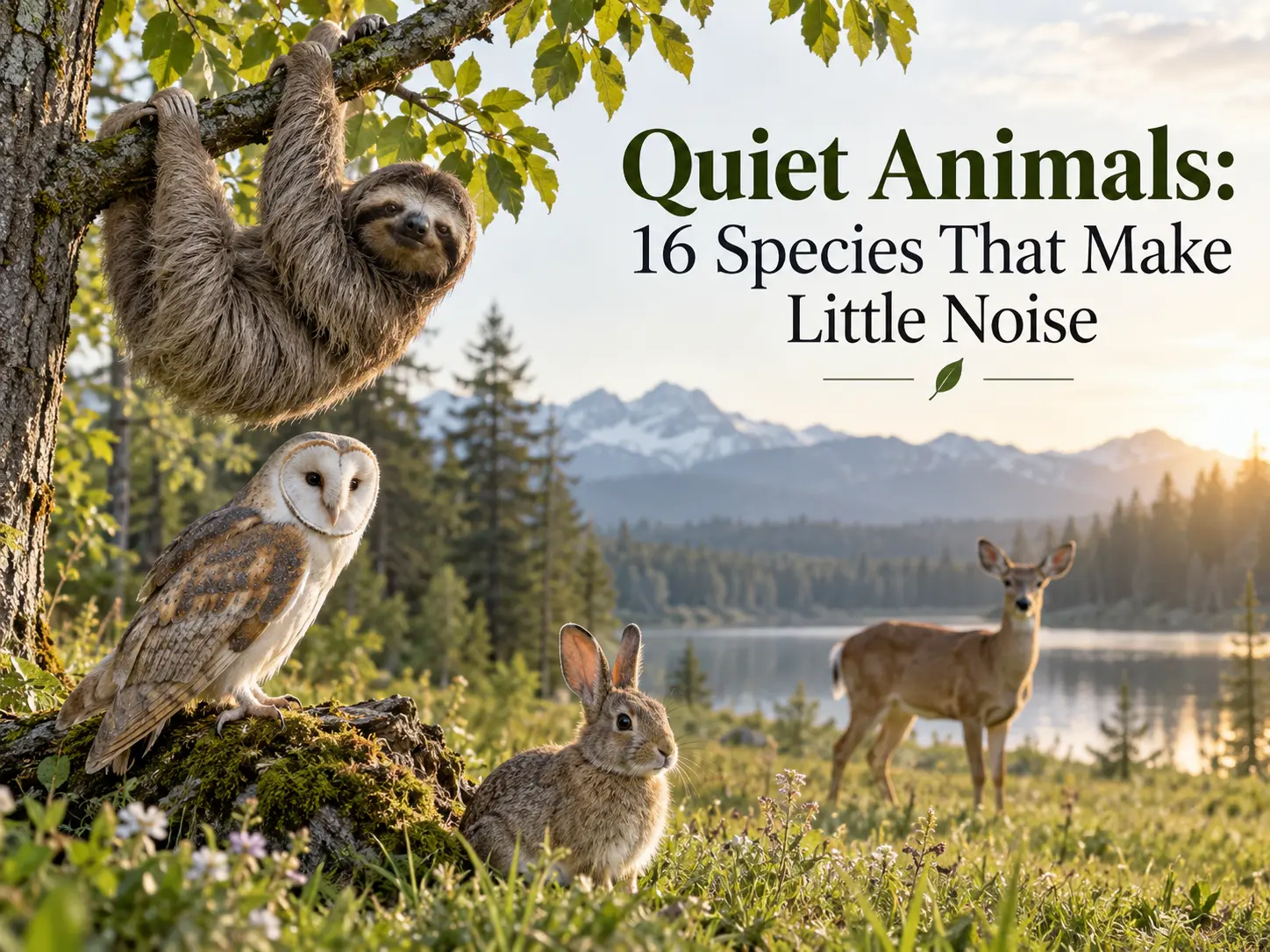
Some animals attract attention with roars, calls, or constant chatter, while others go through much of their lives making little obvious noise. Yet “quiet” does not always mean silent. One species may rarely vocalize, another may move with remarkable stealth, and another may communicate through vibrations, scent, touch, or visual signals instead of loud calls. The quiet animals below show how many different forms low-noise behavior can take across mammals, birds, reptiles, and invertebrates.
Quiet animals include giraffes, rabbits, sloths, deer, snow leopards, barn owls, snakes, octopuses, jellyfish, sea stars, snails, earthworms, spiders, butterflies, sea cucumbers, and clams. Some are rarely heard, while others move quietly or rely on visual, chemical, tactile, or vibrational signals instead of frequent vocal communication.
What Makes an Animal Quiet?
There is no universal scientific category called a “quiet animal.” The term can describe several different behaviors. Some animals produce relatively few noticeable vocalizations during ordinary activity, while others are impressive because they can move with little sound. Certain predators depend on stealth, and many invertebrates communicate through channels that humans do not experience as ordinary calls or voices.
That distinction matters because quiet does not equal mute. Giraffes, rabbits, sloths, deer, barn owls, and snakes can all produce sounds in particular situations. Spiders, octopuses, snails, and other animals may rely heavily on vibrations, body posture, color changes, touch, or chemical cues. The best way to understand quietness is therefore to ask how each species moves and communicates rather than assuming it makes no sound at all.
Quiet Mammals
1. Giraffe
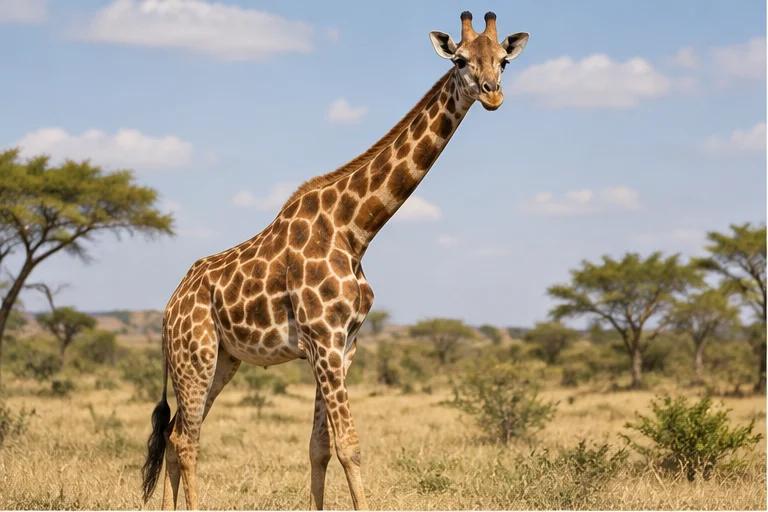
Giraffes are often described as silent because they are not commonly heard by people, but they are not mute. They can produce grunts, snorts, bleats, whistles, and other calls in different situations. Much of their communication is comparatively subtle, and visual contact is also important in their social lives. Their quiet reputation comes from infrequent obvious vocalization rather than an inability to make sound.
2. Rabbit
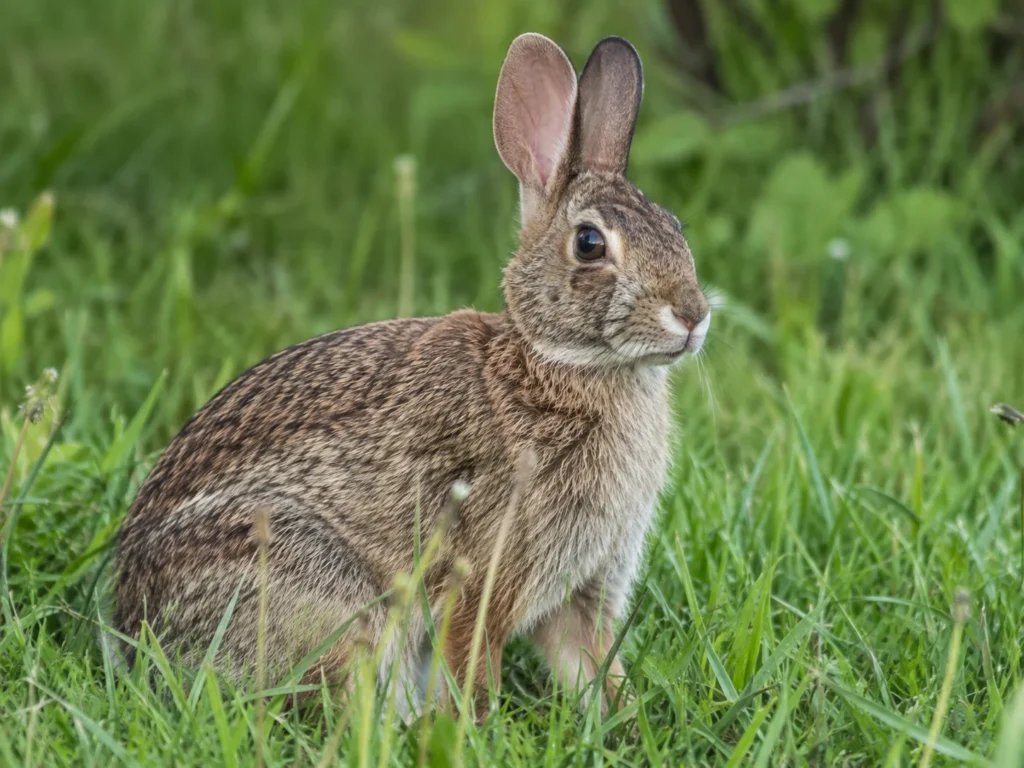
Rabbits are generally quiet mammals and often communicate without frequent vocal calls. Body posture, scent, ear position, and movements such as hind-foot thumping can carry important information. They are still capable of producing sounds, particularly when frightened, distressed, or threatened. A rabbit that seems silent most of the time is therefore using other communication channels rather than living without communication.
3. Sloth
Sloths fit the idea of quiet animals because their movements are slow and unobtrusive, and many species are not regularly heard calling. They are not completely silent, however. Some sloths produce high-pitched calls, especially between mothers and young or during stressful situations. Their low-profile behavior reflects a slow-moving lifestyle more than the absence of a voice.
4. Deer
Deer often move through woodland and open habitats without producing constant vocal noise. They also use scent, posture, tail position, and other visual signals to communicate. Still, deer can grunt, bleat, bark, snort, or make breeding calls depending on the species and situation. They are better described as frequently quiet than as naturally voiceless animals.
5. Snow Leopard
Snow leopards are stealth-oriented predators adapted to rugged mountain environments. Their careful stalking and broad, fur-covered paws support controlled movement as they approach prey. They are not silent cats and can produce several vocal sounds. Their inclusion among quiet animals is therefore based mainly on stealthy movement rather than an inability to vocalize.
Animals Known for Quiet Movement
6. Barn Owl
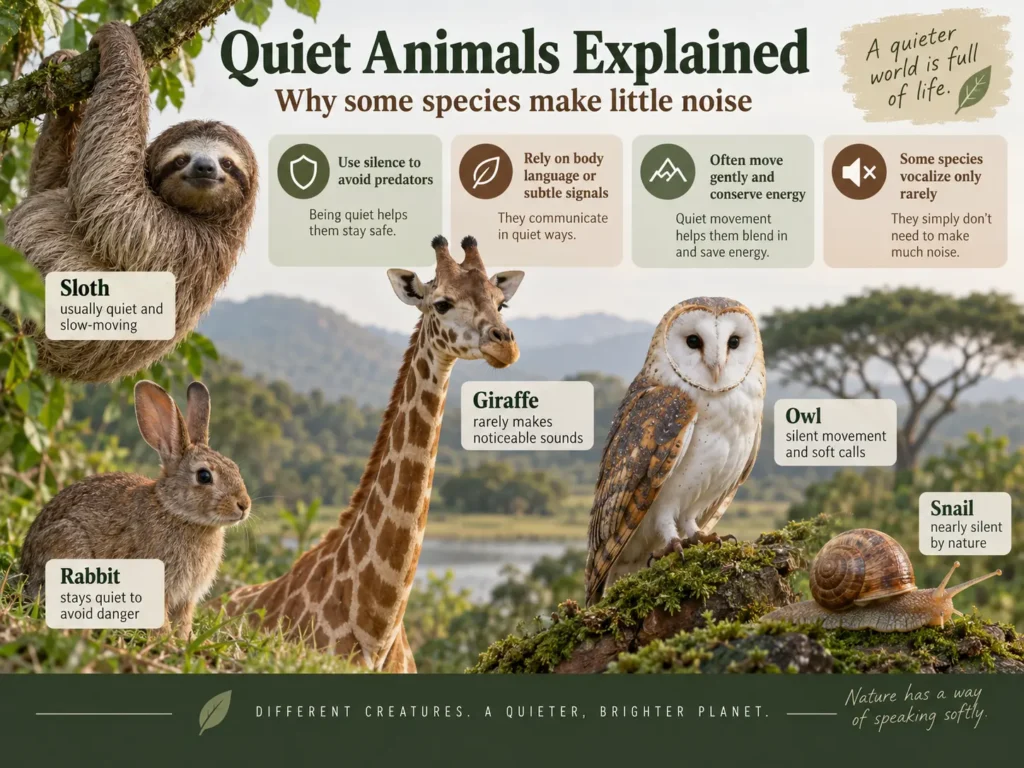
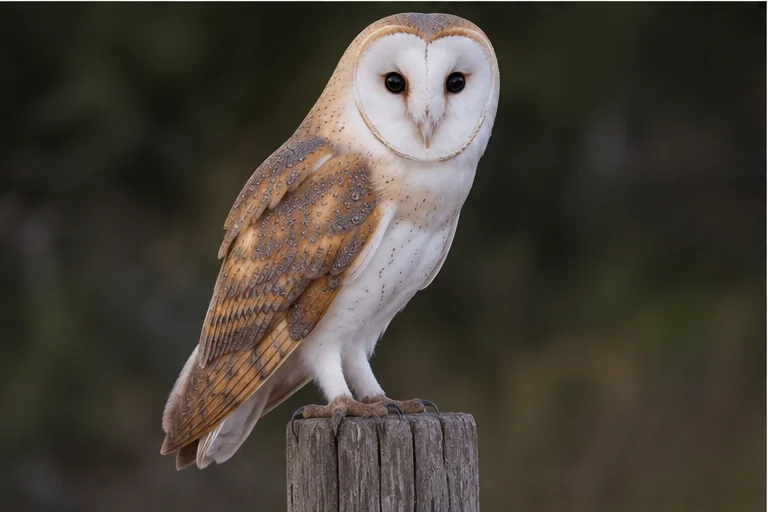
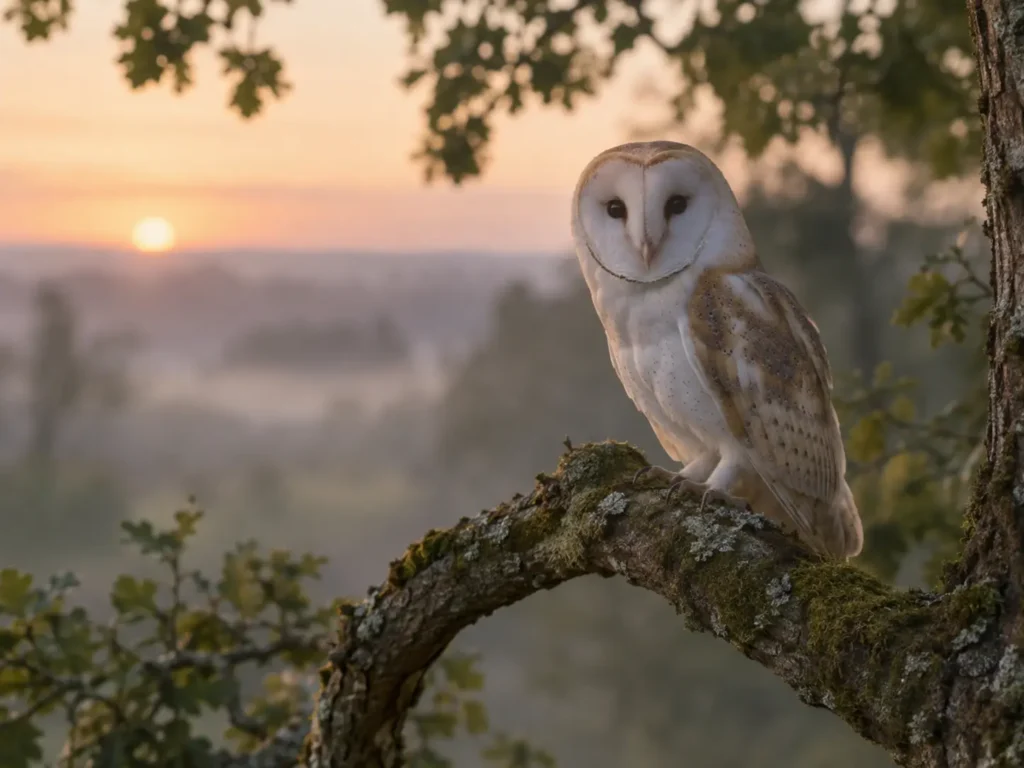
Barn owls provide one of the clearest examples of quiet movement. Their flight feathers have specialized soft surfaces and fringed edges that help reduce the noise created as air passes over the wings. This is valuable during hunting because quieter flight can make an approaching owl harder for prey to detect. Barn owls still scream, hiss, and make other calls, so their flight—not the whole bird—is unusually quiet.
7. Snake
Snakes can move with surprisingly little noise when gliding across suitable ground, making many species difficult to detect until they are close. They gather chemical information with the tongue and can also detect vibrations through structures connected with the jaw. Snakes are not universally silent; many hiss, and some species produce rattling, rubbing, or other defensive sounds when threatened.
8. Octopus
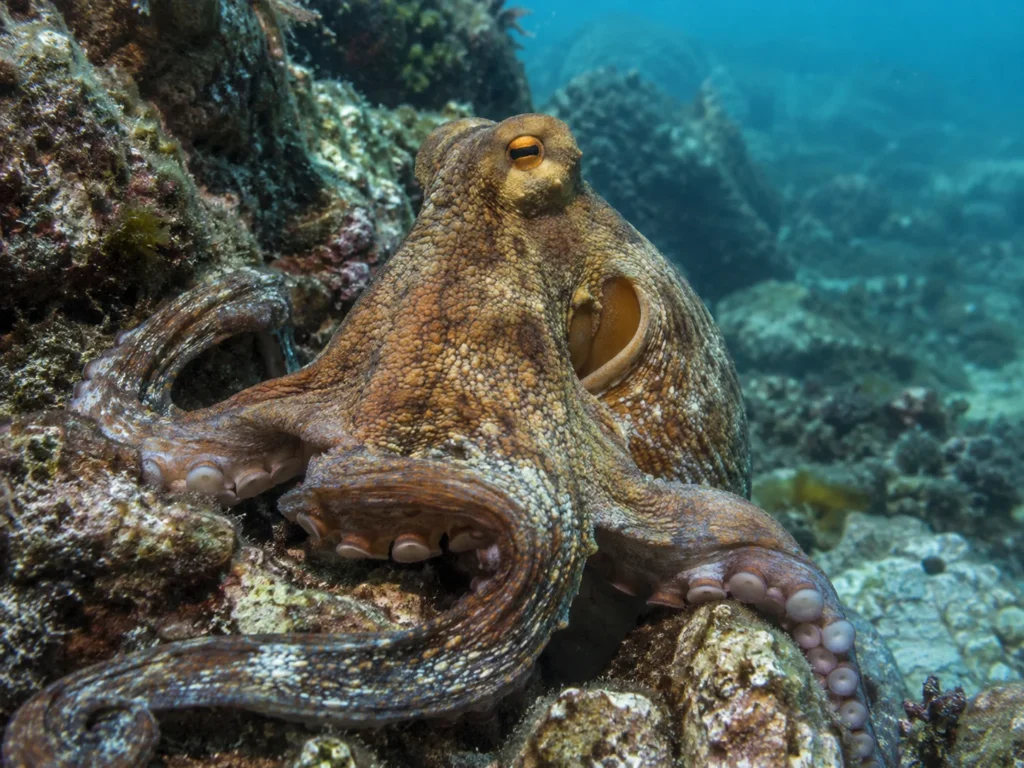
An octopus does not need mammal-like vocal communication to send useful signals. Many species change color, contrast, skin texture, posture, or movement during camouflage, threat displays, courtship, and other interactions. Their soft bodies also allow controlled movement across the seafloor. Calling an octopus “quiet” is therefore most useful when referring to non-vocal signaling and unobtrusive movement.
Quiet Marine and Aquatic Animals
9. Jellyfish
Jellyfish drift or pulse through water without a vertebrate-style voice or vocal organ. Their nervous systems are very different from those of mammals, birds, or reptiles, so familiar ideas such as calling and vocal conversation do not apply well to them. They are reasonable examples of quiet animals, but it is safer to say they do not rely on ordinary vocal communication than to claim they produce absolutely no physical sound.
10. Sea Star
Sea stars move using hundreds of tube feet and usually progress slowly across rocks, reefs, or the seafloor. They do not communicate through recognizable vocal calls. Instead, they respond to chemical, tactile, and environmental information around them. Their quietness is therefore largely a result of their body plan and behavior rather than a special adaptation designed to suppress sound.
11. Sea Cucumber
Sea cucumbers are slow-moving marine invertebrates that spend much of their time on or within the seafloor. They lack the kind of vocal communication familiar in birds and mammals and respond primarily to their immediate physical and chemical environment. Their movements are generally subtle, making them a better example of naturally low-profile behavior than of scientifically measured “silence.”
12. Clam
Most clams spend their lives buried in sediment, attached to surfaces, or resting where they can filter food from the water. They have no vertebrate-style vocal system and do not depend on loud calls for social communication. A clam may close its shell or adjust its position in response to disturbance, so its behavior is quiet largely because it is sedentary and mechanically simple.
Small Animals That Communicate Quietly
13. Snail
Land snails move slowly using muscular contractions along the foot and communicate without familiar vocal calls. Chemical cues are especially important for locating food, recognizing surroundings, and finding potential mates, while touch also provides information. Their low speed and lack of conspicuous vocalization make snails seem exceptionally quiet, although they remain responsive to changes in their environment.
14. Earthworm
Earthworms spend much of their lives beneath the soil, where audible communication is less prominent than sensitivity to touch and vibration. They react to physical changes in their surroundings and move using coordinated muscular contractions. Earthworms do not produce bird- or mammal-like calls, so their “quietness” reflects a very different sensory world rather than deliberate silence.
15. Spider
Many spiders communicate through vibrations transmitted across webs, leaves, soil, or other surfaces. These signals can carry information during courtship, territorial encounters, or prey detection. Some species also use visual displays and chemical cues. To a person, this communication may seem silent, but for the spider, the vibrations can provide detailed information about nearby animals and potential mates.
16. Butterfly
Butterflies are usually associated with visual rather than vocal communication. Wing patterns, body movements, courtship behavior, and chemical cues can all help individuals recognize or locate one another. Most butterflies do not depend on obvious calls, which makes them appear quiet to human observers. Their communication demonstrates that an animal can exchange information effectively without making frequent audible sounds.
Different Types of Quietness in Animals
Quietness takes several forms, and comparing those forms is more useful than ranking unrelated species from “quietest” to “loudest.”
| Type of Quietness | Example Animal | Main Behavior |
| Low-profile vocalization | Giraffe | Usually not heard frequently |
| Quiet flight | Barn owl | Wing structure reduces flight noise |
| Stealth movement | Snow leopard | Careful stalking |
| Visual communication | Octopus | Color and body-pattern signals |
| Vibrational communication | Spider | Web or surface vibrations |
| Chemical communication | Snail/butterflyy | Chemical cues and scent |
The table shows why calling all these animals “silent” would be misleading. A barn owl may be noisy when calling but remarkably quiet while flying, whereas a spider communicates through vibrations that humans may not notice at all.
Why Can Being Quiet Help Animals?
For predators, reducing movement noise can improve the chance of approaching prey before being detected. Barn owls benefit from quiet flight, while stealthy cats depend on careful approaches before an attack. Prey animals can also benefit from remaining inconspicuous when predators are nearby, although quiet behavior should not automatically be given the same explanation in every species.
In other animals, low vocal activity is simply part of a different communication system. Vibrations, scent, color, posture, and touch can carry information without loud airborne calls. Quietness can therefore be an adaptation, a consequence of anatomy, or simply one feature of a species’ normal behavior.
Do Quiet Animals Still Communicate?
Yes. Communication does not require a voice. Rabbits use posture, scent, and foot thumps; deer combine vocal sounds with scent and visual signals; spiders detect and produce vibrations; and octopuses can alter color and body appearance. Chemical signals are also widespread among invertebrates. Even animals that are rarely heard may vocalize when circumstances change. Distress, mating, territorial defense, parent-young contact, or alarm can trigger sounds that are uncommon during routine activity. A species can therefore be quiet most of the time while still having a varied communication system.
Common Misconceptions About Quiet Animals
One common misconception is that quiet animals are physically incapable of making sound. Giraffes, rabbits, sloths, deer, snakes, and barn owls all provide counterexamples. Another mistake is calling an owl silent without specifying that its specialized advantage is quiet flight; barn owls themselves have recognizable vocal calls. It is also risky to claim that marine invertebrates such as jellyfish are proven to make “zero sound.” Their biology is very different from vertebrate vocal communication, and complete acoustic silence is a stronger claim than necessary. There is also no universal scientific ranking that identifies one species as the quietest animal on Earth.
Frequently Asked Questions
What are some of the quietest animals?
Animals commonly considered quiet include giraffes, rabbits, sloths, barn owls, snow leopards, snakes, octopuses, jellyfish, snails, spiders, butterflies, and clams. They are quiet for different reasons, ranging from infrequent vocalization and stealthy movement to reliance on non-vocal communication.
Are giraffes really silent?
No. Giraffes are often quiet and may be rarely heard by human observers, but they can vocalize. Reported sounds include grunts, snorts, whistles, bleats, and other calls. Their reputation for silence comes mainly from relatively inconspicuous vocal behavior.
Why do owls fly so quietly?
Owls have specialized flight feathers with soft surfaces and fringed edges that reduce aerodynamic noise. This helps them approach prey without producing the louder wing sounds typical of many birds. Owls still vocalize, so “silent flight” does not mean the bird itself is silent.
How do quiet animals communicate?
Quiet animals can use visual displays, body posture, scent, chemical cues, touch, vibrations, color changes, and occasional vocalizations. Spiders are well known for vibrational signals, while octopuses can communicate information through changes in body color and appearance.
Are there animals that never make sounds?
It is safer not to describe an animal as producing absolutely no sound unless that claim has been specifically demonstrated. Many invertebrates lack ordinary vocal systems, but physical movement can still create vibrations. “Non-vocal” or “generally quiet” is usually more scientifically accurate than “completely silent.”
Final Thoughts
Quiet animals reveal that silence and communication are not opposites. A giraffe may vocalize only occasionally, a barn owl can reduce the sound of flight, a spider can signal through vibrations, and an octopus can communicate visually without relying on a familiar voice. Looking at the specific behavior behind quietness gives a more accurate picture than simply calling an animal silent. Across mammals, birds, reptiles, and invertebrates, low-noise behavior can support stealth, subtle signaling, or a lifestyle that does not depend on frequent audible calls.