
Animals with Long Horns: 17 Remarkable Species

Animals with long horns include antelopes, wild goats, sheep, buffalo, and domestic cattle, with some of the most striking headgear in the animal kingdom. Their horns may be straight, spiral, corkscrew-shaped, or dramatically curved, and their size often differs between males and females. Some are used mainly during competition, while others also help with defense or display. These 17 long-horned animals show how widely horn shape, length, thickness, and function can vary.
Animals with exceptionally long horns include greater kudu, markhor, sable antelope, oryx, ibex, wild water buffalo, and several cattle breeds. True horns usually contain a bony core covered by keratin and are not the same as deer antlers. Horn length, spread, circumference, and shape should be compared separately.
Animals with Long Horns at a Glance
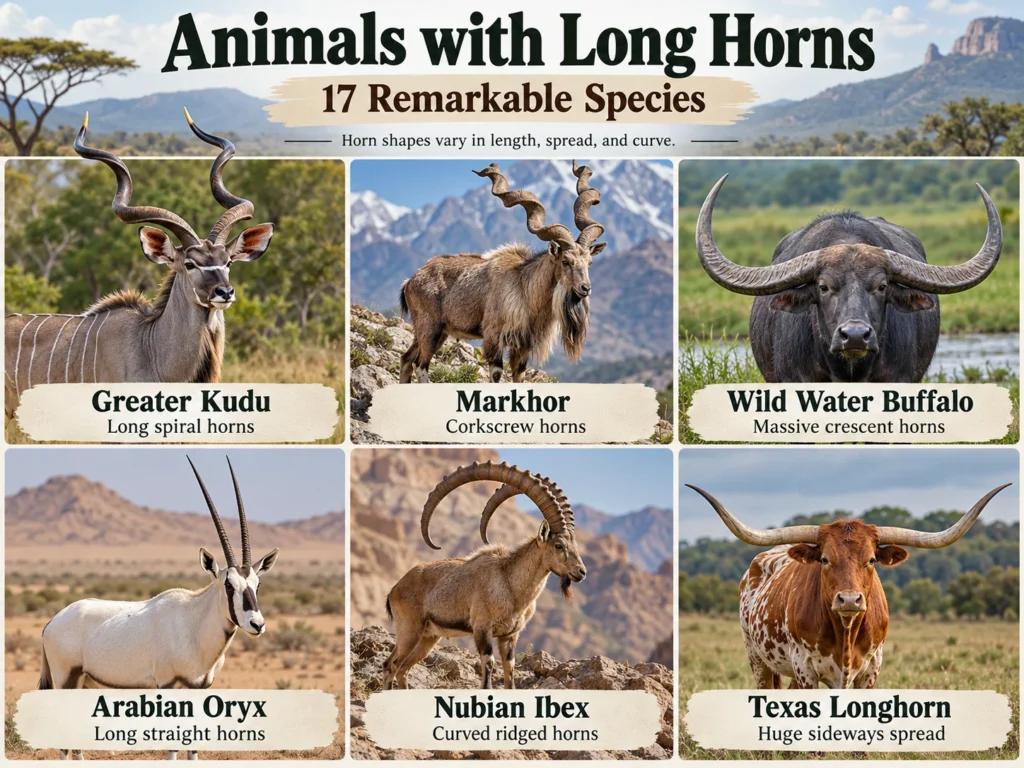
| Animal | Approximate Horn Measurement | Horn Shape | Horned Sexes |
| Greater kudu | Up to about 1.8 m | Long spiral | Mainly males |
| Markhor | Large males can exceed 1.5 m | Corkscrew | Both, males much larger |
| Sable antelope | Up to about 1.5 m or more | Sweeping backward | Both |
| Wild water buffalo | Around 1.5 m in exceptional males | Crescent-shaped | Both |
| Arabian oryx | Up to around 1 m or more | Long and straight | Both |
| Scimitar-horned oryx | Around 1 m or more | Sweeping backward | Both |
| Addax | Roughly 70–110 cm | Twisted | Both |
| Gemsbok | Often around 85 cm | Straight, spear-like | Both |
| Nubian ibex | Males up to about 1.2 m | Curved backward | Both |
| Alpine ibex | Males around 1 m | Thick and ridged | Both |
| Mouflon | Around 80–90 cm in large males | Curling | Mainly males |
| Bighorn sheep | Around 90 cm+ along curve | Massive curl | Both |
| Blackbuck | Around 50–70 cm | Spiral | Mainly males |
| Giant eland | Males can exceed 1 m | Spiral | Both |
| Common eland | Up to around 1.2 m | Corkscrew | Both |
| Texas Longhorn | Exceptional tip-to-tip spreads over 2 m | Sweeping sideways | Both |
| Ankole-Watusi | Exceptional spread and circumference | Broad and upward-curving | Both |
These figures are approximate. Some sources measure along a curved horn, while domestic cattle are often compared by tip-to-tip spread, so the numbers should not be treated as a single exact ranking.
What Counts as a True Horn?
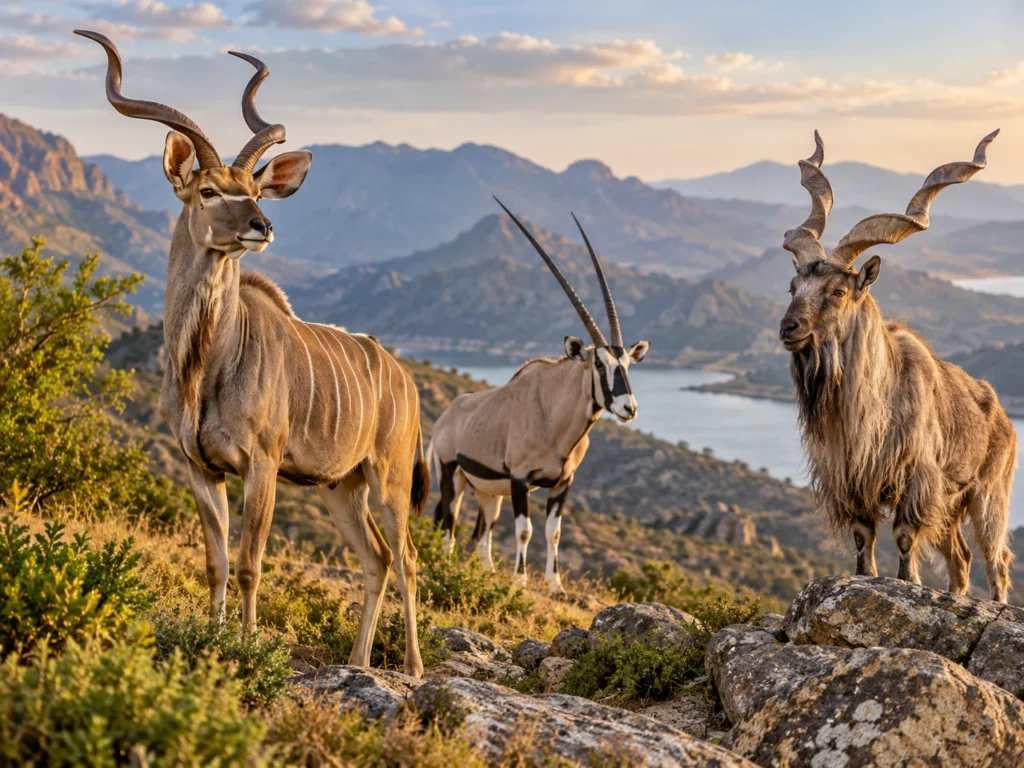
True horns are most strongly associated with members of the Bovidae family, including cattle, buffalo, antelopes, goats, and sheep. They normally consist of a bony core covered by a tough keratin sheath and usually remain attached throughout life. This makes them different from antlers. Deer antlers are solid bone, are often branched, and are typically shed and regrown. Rhinos also have structures called horns, but these lack the bony core of a typical bovid horn. Understanding that distinction helps prevent animals such as elk and moose from being incorrectly included in lists of true long-horned species.
1. Greater Kudu
The greater kudu is one of the most recognizable animals with long spiral horns. Mature males can develop horns reaching roughly 1.2 to 1.8 meters when measured along the spiral. The horns usually form two or more elegant turns and are used during contests between males. Females generally do not have the large spiral horns that make adult bulls so distinctive. Greater kudus are native to eastern and southern Africa, where their tall bodies and patterned coats help them blend into woodland and bush habitats.
2. Markhor
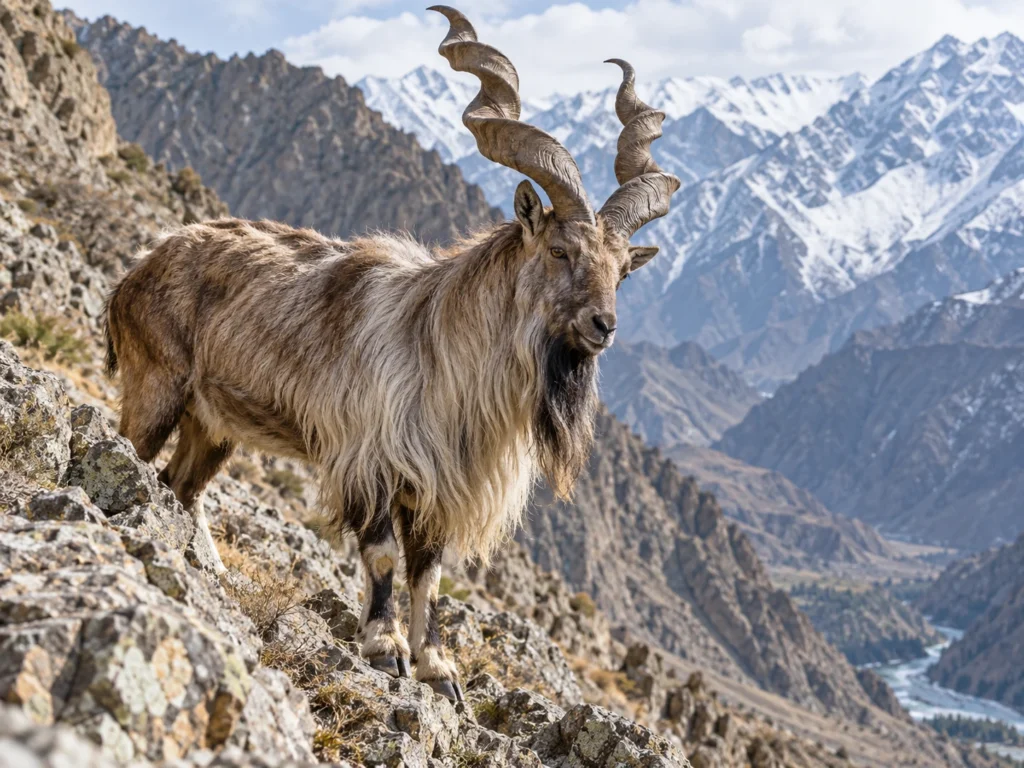
The markhor has some of the most dramatic corkscrew horns found on any wild goat. Large adult males can carry horns exceeding 1.5 meters in exceptional cases. Females also have horns, but theirs are much shorter and more slender. In males, horn size becomes especially noticeable with age and plays an important role during competition. Markhors inhabit mountainous regions of Central and South Asia, where their twisted horns are as visually distinctive as their long coats.
3. Sable Antelope
Sable antelopes have long, heavily ridged horns that sweep backward in a graceful curve. Large males can develop horns approaching or exceeding 1.5 meters along the curve. Both sexes are horned, although male horns are generally thicker and more heavily built. Males use them during contests, often dropping to their knees while pushing or fencing with rivals. The species occurs across parts of eastern and southern Africa and is especially recognizable for its dark adult males and bold facial markings.
4. Wild Water Buffalo
Wild water buffalo carry huge crescent-shaped horns that extend outward from the skull before curving back. In exceptional males, the horn spread and individual horn size can be enormous, with measurements approaching 1.5 meters or more depending on how the horns are measured. Females also have horns but usually smaller ones. These heavy horns are very different from the slender structures of oryx or blackbuck, showing that long horns can also be extremely massive.
5. Arabian Oryx
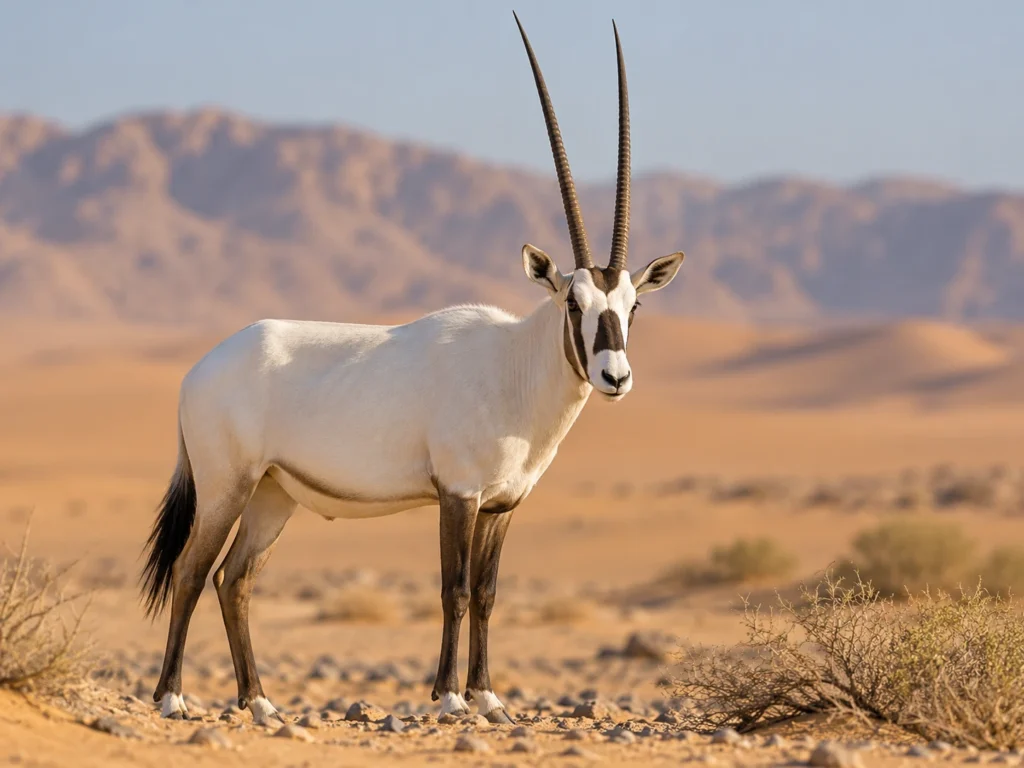
Arabian oryx have long, narrow horns that appear almost completely straight when viewed from the side.
Both males and females carry horns, although females may sometimes have slightly longer and more slender ones. Their pale bodies and straight horns make them especially well suited visually to open desert environments. The horns are used during social interactions and defense, while their relatively straight form makes them very different from the spirals seen in kudu or markhor.
6. Scimitar-Horned Oryx
The scimitar-horned oryx is named for its long horns, which curve backward like a scimitar sword. Both sexes grow the horns, which can reach around a meter or more in length. They are slender, ridged, and much more strongly curved than those of the Arabian oryx. This North African antelope is also a conservation success story, with reintroduction programs restoring animals to areas where the species had disappeared from the wild.
7. Addax
Addax are desert antelopes with long, twisted horns that can form several turns as they grow. Adult males usually have thicker and somewhat longer horns than females, although both sexes are horned. Measurements often fall around 70 to 110 centimeters depending on sex and the method used. Their pale coloration and spiral horns are characteristic adaptations of one of the world’s most desert-specialized antelopes.
8. Gemsbok
Gemsbok carry some of the straightest and most striking horns among African antelopes. The horns commonly reach around 80 to 90 centimeters and can appear almost spear-like. Both sexes have them. Females often carry longer, slimmer horns, while males tend to have thicker bases suited to heavier fighting. Gemsbok use their horns in social competition and can also defend themselves when necessary. Their straight shape makes them easy to distinguish from the curved horns of sable antelopes.
9. Nubian Ibex
Male Nubian ibex can develop enormous ridged horns that curve strongly backward over the shoulders. In large males, these horns may reach around 1.2 meters, making them remarkably long relative to the animal’s body size. Females also grow horns, but theirs are much shorter and lighter. The species lives in rocky desert and mountain environments, where males use their horns during ritualized contests for dominance.
10. Alpine Ibex
The Alpine ibex is another mountain goat known for oversized male horns. Mature males develop thick horns marked by prominent ridges and sweeping backward curves. Large individuals may carry horns around a meter long, while females have much smaller versions. Horn growth continues over many years, so older males often possess the most imposing headgear. These horns are particularly important during male competition, when rivals clash and push rather than simply using them as defensive weapons.
11. Mouflon
Male mouflon have large curling horns that can form a broad arc beside the head. In mature rams, the horns may reach approximately 80 to 90 centimeters along the curve. Females in some populations have small horns, while in others they may be hornless. Mouflon horns contribute to social status and are used during clashes between males, especially during the breeding season.
12. Bighorn Sheep
Bighorn sheep are famous for massive curled horns rather than exceptionally long, slender ones. The horns of mature rams can extend more than 90 centimeters along the curve and become extremely thick and heavy. Ewes also have horns, but theirs are much smaller and less dramatically curled. Rams use their horns in spectacular head-to-head contests. This species demonstrates why horn mass and circumference can be just as impressive as total length.
13. Blackbuck
Male blackbucks develop elegant corkscrew horns that commonly reach 50 to 70 centimeters in length. The horns rise upward and twist several times, creating one of the most recognizable shapes among Asian antelopes. Females usually lack the long spiral horns seen in adult males. Blackbucks use visual displays and direct competition when establishing dominance, making the horns both a physical and social trait.
14. Giant Eland
The giant eland is the largest antelope species and carries thick spiral horns in both sexes. Males can develop horns exceeding one meter, while females usually have shorter and more slender ones. The spirals are tighter and heavier than those of many other long-horned antelopes. Their horns are used during social interactions, and males can also employ their size and headgear when competing for dominance.
15. Common Eland
Common elands also possess long, corkscrew-shaped horns. Large males can develop horns approaching about 1.2 meters, although females usually carry shorter and lighter ones. Unlike the wide spirals of a greater kudu, eland horns twist more tightly around their own axis. Males also develop much thicker horn bases as they mature. The species is widespread across parts of eastern and southern Africa and combines enormous body size with surprisingly elegant horns.
16. Texas Longhorn Cattle
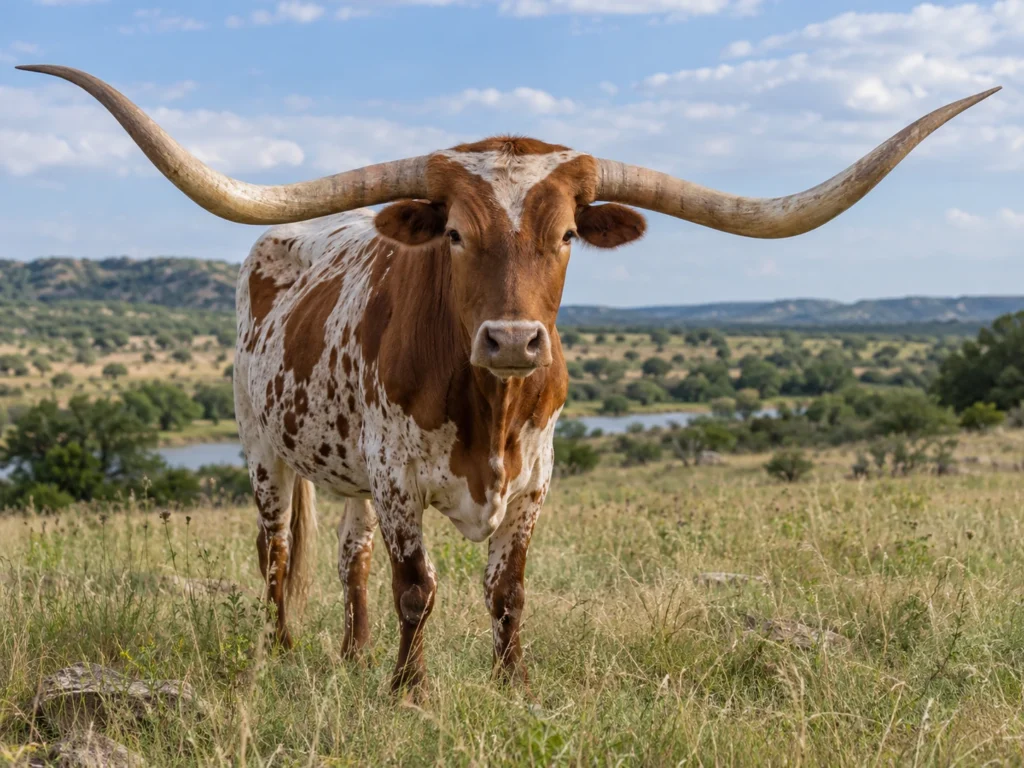
Texas Longhorn cattle are famous for extraordinary horn spread rather than simply the length of one horn. Mature animals can develop sweeping horns extending well beyond the sides of the head, and exceptional individuals exceed two meters from tip to tip. Because breed records commonly use tip-to-tip measurements, these figures should not be compared directly with a kudu horn measured along its spiral. Both bulls and cows can develop impressive horns, although shape and spread vary considerably between individuals.
17. Ankole-Watusi Cattle
Ankole-Watusi cattle have some of the most visually enormous horns of any domestic bovine. Their horns sweep outward and upward and can become extraordinarily thick at the base. The breed is especially famous for horn circumference, not merely length. Exceptional animals have produced record-sized horn bases measuring close to a meter around. This makes the Ankole-Watusi a perfect example of why horn size cannot be reduced to one measurement. Length, spread, thickness, and overall mass can tell very different stories.
Horn Length vs. Horn Span
Different species are often compared unfairly because horn measurements are taken in different ways.
| Measurement | What It Means |
| Horn length | Distance from base to tip of one horn, sometimes following the curve |
| Tip-to-tip spread | Straight distance between the outer horn tips |
| Horn span | Overall width created by the pair of horns |
| Circumference | Thickness around the horn, often measured near the base |
A Texas Longhorn with a huge tip-to-tip spread therefore does not automatically have a longer individual horn than a greater kudu or markhor.
Why Do Animals Have Long Horns?
Competition
In many species, males use horns during contests for breeding opportunities or social rank. Kudu, ibex, sheep, and sable antelope are good examples.
Display
Large horns can visually advertise age, size, condition, or maturity. This can influence rivals before physical fighting even begins.
Defense
Some animals also use horns against predators or other threats. Straight oryx horns can be particularly effective defensive tools when the animal is cornered.
Social Signaling
Horn shape and size may help individuals assess one another during social encounters. This can reduce the need for every dispute to become a serious fight. Different functions can operate together, so it is inaccurate to claim that all long horns evolved for one single purpose.
Horns vs. Antlers
Horns and antlers may look similar, but their anatomy and growth are different. True horns usually contain a permanent bony core covered by keratin. They are characteristic of cattle, sheep, goats, buffalo, and antelopes and generally continue developing rather than being shed annually. Antlers are made of bone and are typical of deer. They are commonly branched and, in most species, are shed and regrown each year. That is why elk and moose may have enormous headgear but are not technically animals with true horns.
FAQs
What animal has the longest horns?
There is no single simple answer because horn records use different measurements. Greater kudu and markhor can develop exceptionally long individual horns, while Texas Longhorn cattle are especially notable for enormous tip-to-tip spread.
What is the difference between horns and antlers?
True horns usually have a bony core covered by keratin and are generally permanent. Antlers are solid bone, commonly branched, and are typically shed and regrown by deer.
Do horns keep growing?
In many bovids, horns continue growing gradually through much of the animal’s life. Growth rate can slow with age, and horn size varies with sex, genetics, nutrition, and species.
Do female animals have horns?
Yes, in many species. Female oryx, buffalo, ibex, eland, and some sheep have horns, although they are often shorter or thinner than those of males. In some species, females are usually hornless.
Which animals have spiral horns?
Greater kudu, markhor, addax, blackbuck, giant eland, and common eland all have strongly twisted or spiral horns, although their shapes differ considerably.
Why do animals have such long horns?
Long horns can help with competition, dominance displays, defense, and social signaling. The importance of each function varies between species.
Final Thoughts
Animals with long horns demonstrate how one basic structure can evolve into dramatically different forms. Greater kudu carry sweeping spirals, markhor grow corkscrews, oryx have long spear-like horns, while bighorn sheep develop thick curls built for powerful contests. The biggest horns also cannot be judged by appearance alone. Individual horn length, tip-to-tip spread, circumference, shape, and sex differences all matter, making careful measurement and correct horn-versus-antler terminology essential when comparing these remarkable animals.

2 Comments