How Strong Are Kangaroos? Legs, Kicks, Tail, and Power

Kangaroos are exceptionally strong for the movements their bodies are built to perform. Their powerful hind legs generate the force needed for hopping, jumping, kicking, and rapid acceleration, while a muscular tail provides balance and support. Large males can also become heavily built through the shoulders and hindquarters. However, viral claims about exact kick force or kangaroos being several times stronger than humans are often poorly sourced and should be treated cautiously.
Kangaroo strength comes mainly from powerful hind legs, elastic tendons, and a muscular tail. These features allow large kangaroos to hop efficiently, jump long distances, balance while fighting, and deliver forceful kicks. Large males are considerably more muscular than females, especially in species such as the red kangaroo. Exact kick-force figures commonly repeated online are not consistently supported by strong biomechanical evidence.
Kangaroo Strength at a Glance
| Strength Area | What Makes It Impressive |
| Hind legs | Large muscles generate powerful extension |
| Tendons | Store and return elastic energy while hopping |
| Tail | Provides balance, support, and slow-speed propulsion |
| Jumping | Large kangaroos can cover impressive distance per bound |
| Speed | Specialized legs support rapid hopping |
| Fighting | Males grapple and use both hind feet to kick |
| Body size | Large adult males can be heavily muscled |
| Endurance | Hopping becomes efficient as speed increases |
Kangaroo strength is therefore not one simple measurement. Their power comes from a combination of anatomy, elastic energy storage, muscular development, and specialized locomotion.
How Strong Are Kangaroos Really?
Kangaroos are especially strong in the lower body. Their hind legs are much larger than their forelimbs and are adapted to produce the repeated extension needed for hopping and jumping. This does not mean every kangaroo has the same level of strength. Species, sex, body size, age, and physical condition all matter. A large adult male red kangaroo is far more physically imposing than a smaller female or a young kangaroo. The most accurate way to describe kangaroo strength is to focus on what their bodies do exceptionally well: hopping, kicking, jumping, balancing, and supporting body weight through the hindquarters and tail.
Why Are Kangaroo Legs So Powerful?
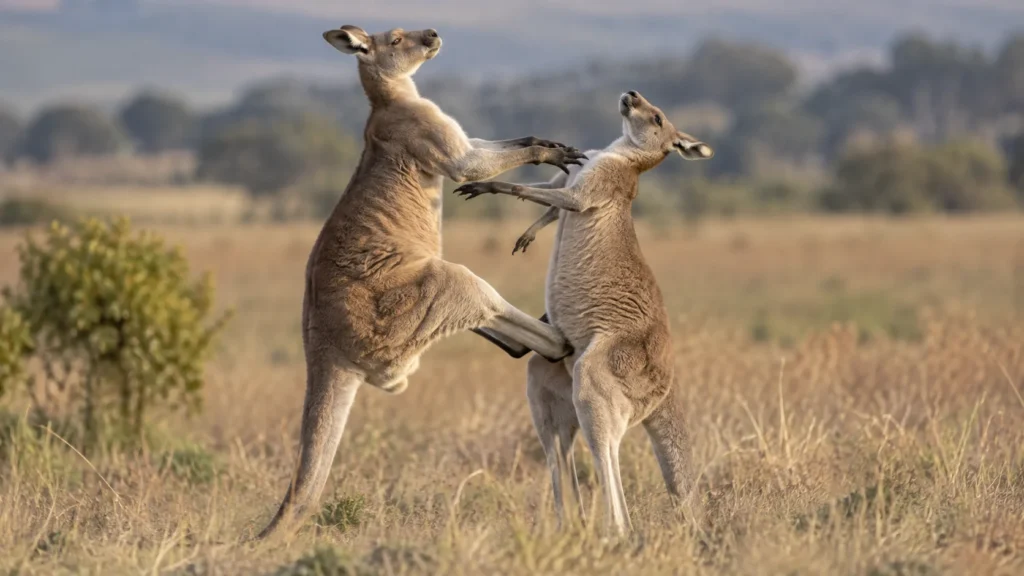
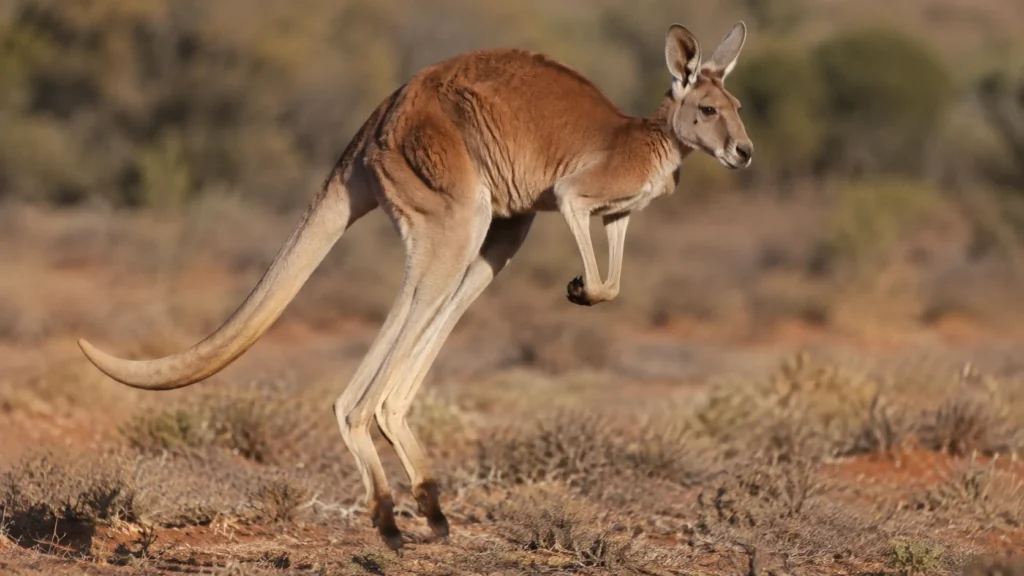
Kangaroo hind legs contain large muscles that extend the hip, knee, and ankle during movement. These muscles work with long feet and strong tendons to produce the distinctive hopping motion associated with kangaroos. The legs are not simply built for one explosive jump. Kangaroos repeatedly compress and extend the limbs as they travel, making efficient use of elastic tissues rather than relying entirely on fresh muscular effort with every hop. This combination gives kangaroos both power and endurance. Their legs can generate force quickly during acceleration or jumping while also supporting long-distance movement across open landscapes.
Their Tendons Work Like Springs
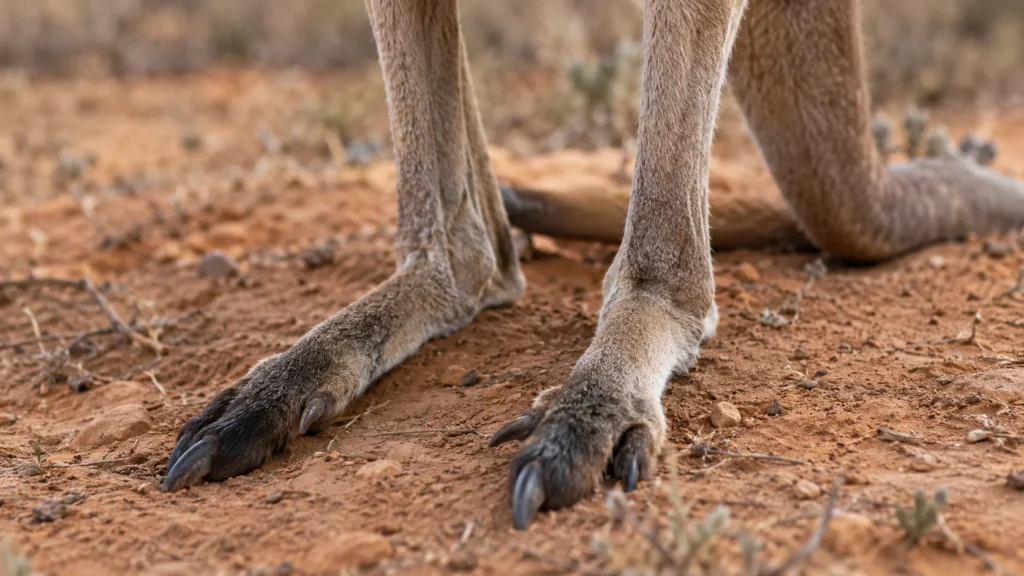
One of the most interesting parts of kangaroo biomechanics is the role of elastic tendons. When a kangaroo lands, parts of the leg stretch and store mechanical energy. Some of that energy is then released during the next hop. This spring-like effect reduces the amount of new muscular energy required each time the animal pushes off the ground. That is why kangaroos are not simply muscular animals that brute-force every movement. Their bodies are engineered around a remarkably efficient combination of muscle power and elastic energy recycling.
How Strong Is a Kangaroo Kick?
Kangaroo kicks are powerful because the same hind limbs used for hopping and jumping can also be used defensively or during fights between males. When considering how strong are kangaroos, their kicking ability is one of the clearest examples of their lower-body power. A kangaroo can lean back and bring both hind feet forward toward an opponent. The exact force of a kangaroo kick is difficult to summarize with one reliable universal number.
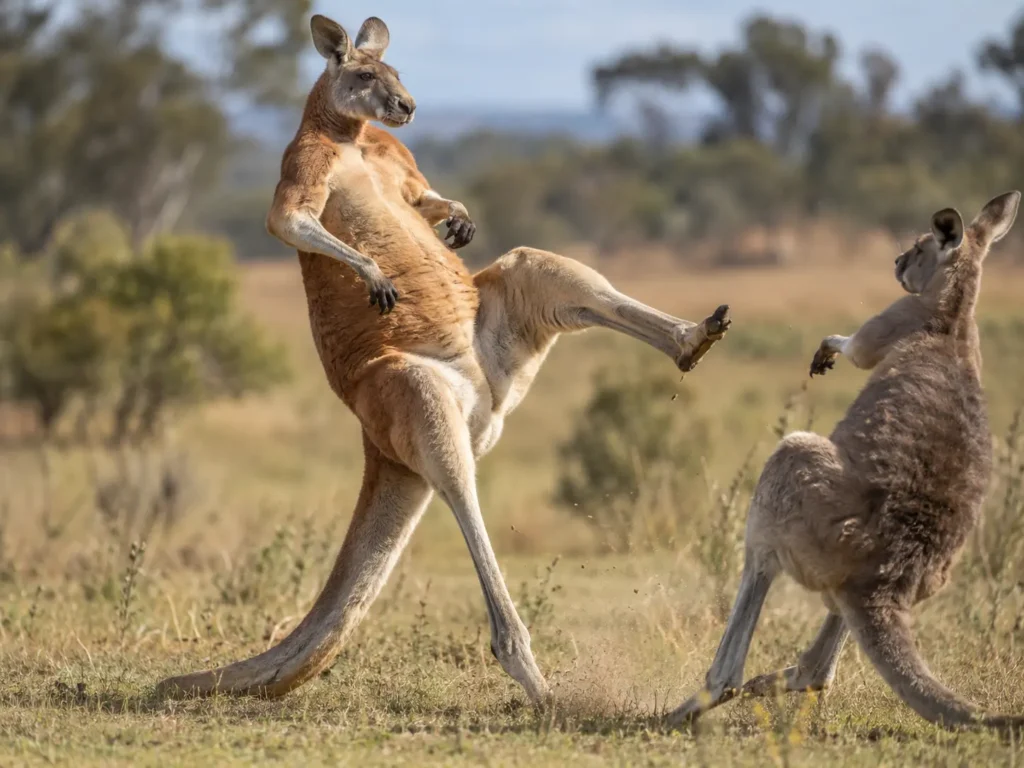
Online articles frequently repeat precise figures in pounds of force or PSI, but these claims are often not linked to strong primary biomechanical measurements. What is clear is that a large kangaroo can deliver a dangerous kick. Strong leg muscles, large feet, and sharp claws can make close contact potentially serious.
Why Kangaroo Kicks Are So Effective
A kangaroo kick combines several physical advantages rather than relying on muscle alone.
- Powerful hind-leg extension generates rapid movement.
- Large feet increase the contact area and reach.
- Strong claws can add injury risk.
- The tail can help stabilize the body.
- Large males have considerable body mass behind the movement.
These factors make the kick an effective fighting and defensive behavior. The important point is that kick strength should be described in biological terms rather than through unsupported viral numbers.
How Strong Is a Kangaroo’s Tail?
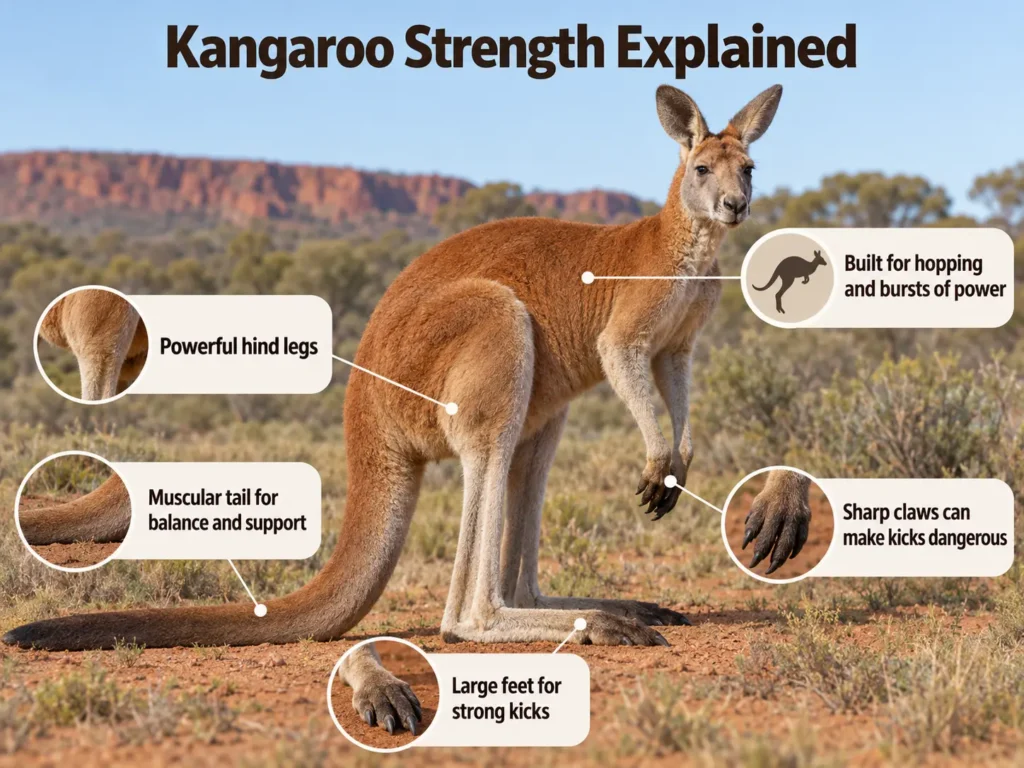
A kangaroo’s tail is much more than a balancing device. It is long, muscular, and strong enough to contribute actively to movement. During slow locomotion, kangaroos can use the tail together with the forelimbs and hind limbs in a form of five-limbed movement often called pentapedal locomotion. The tail helps push and support the body as the hind feet swing forward. During faster hopping, the tail works mainly as a counterbalance. It helps stabilize the body as the powerful hind legs generate repeated forward motion.
Main Roles of the Tail
| Tail Function | How It Helps |
| Balance | Stabilizes the body during hopping |
| Slow movement | Acts as an additional weight-bearing limb |
| Fighting | Helps support the body during kicking |
| Posture | Assists when the animal sits or leans back |
| Control | Helps manage body position during movement |
This makes the tail an important part of kangaroo strength, not just an accessory behind the body.
Can Kangaroos Support Themselves on Their Tails?
Kangaroos can use the tail to support part of their body weight, particularly during slow movement and fighting. However, saying they simply “stand on their tails” can be misleading. During male combat, the tail helps stabilize the body while both hind feet are brought forward for kicking. The tail works together with body posture and the forelimbs rather than functioning completely on its own. Its strength becomes especially obvious when a large male leans backward during a fight. The tail acts as a strong support structure while the hind legs are temporarily off the ground.
How Jumping Shows Kangaroo Power
Kangaroo jumping is one of the clearest demonstrations of lower-body strength. Large kangaroos can make long horizontal bounds and can clear impressive vertical heights when necessary. Red kangaroos are particularly well known for powerful movement. Large individuals can cover many meters in a single emergency bound, while the strongest jumps can reach several meters vertically. These performances are possible because the hind legs generate powerful extension while tendons return stored energy. Jumping is therefore a combination of muscular force, elastic mechanics, and efficient body design.
How Fast Can Kangaroos Move?
Large kangaroo species are capable of impressive hopping speeds. Eastern grey kangaroos, for example, can move at high speeds when travelling or escaping danger. Speed should not be confused directly with strength, but strong hind limbs are essential for rapid acceleration and powerful hopping. The relationship becomes especially important when a kangaroo needs to move quickly across open ground. Interestingly, kangaroo hopping can become more energy-efficient at higher speeds. Their elastic tendons recycle energy from one hop to the next, allowing them to travel rapidly without proportionally increasing muscular effort.
How Male Kangaroos Fight
Male kangaroos compete for access to females and social position. These contests can include upright posturing, pushing, forelimb grappling, and forceful kicking. The famous “boxing kangaroo” image comes from the way males use their forelimbs while standing upright. However, the most dangerous part of the fight is usually the hind legs rather than the forelimbs. A male may grip or push an opponent, lean backward with support from the tail, and kick forward using both hind feet. This fighting style takes advantage of the animal’s strongest body structures.
Are Male Kangaroos Stronger Than Females?
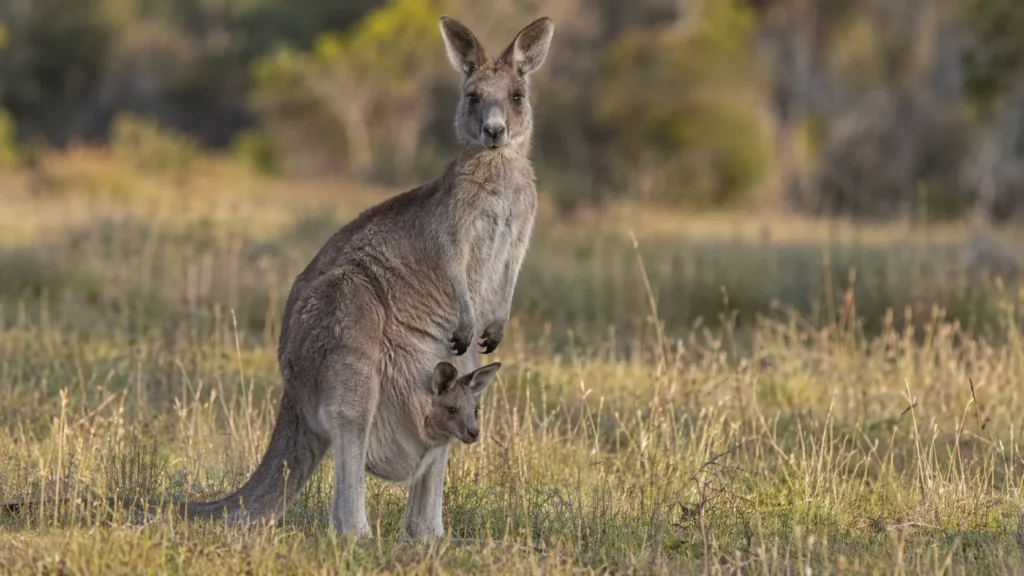
In large kangaroo species, adult males are generally much larger and more muscular than females. This difference is especially noticeable in red kangaroos, where mature males can develop thick shoulders, strong forelimbs, and powerful hindquarters. Male competition contributes to this difference. Larger and stronger males may have advantages when fighting rivals, which can favor greater body size and muscular development over generations. That does not mean every male is stronger than every female. Age, health, species, and individual variation still matter, but the overall sexual size difference is substantial in many kangaroos.
How Strong Are Red Kangaroos?
Red kangaroos are the largest living kangaroo species and provide some of the clearest examples of kangaroo strength. Large males can approach about 90 kilograms and develop a muscular build through the shoulders, tail, and hindquarters. Their size gives them more mass to support and move, while their legs remain specialized for powerful hopping. Large males can also use that strength during competition with other males. Because of their size and muscular development, red kangaroos are usually the species people have in mind when asking how physically powerful kangaroos can become.
Kangaroo vs. Human Strength
A kangaroo-versus-human comparison is difficult because “strength” can mean different things. Humans and kangaroos have evolved for very different kinds of movement.
| Kangaroo | Human |
| Extremely powerful hind legs | More balanced upper and lower body |
| Built for hopping | Built for walking and running |
| Muscular tail adds support | No equivalent tail structure |
| Strong bilateral kicking | Greater hand and arm dexterity |
| Elastic tendons recycle hopping energy | Less specialized hopping mechanics |
| Large males fight using legs and tail | Human strength varies by training |
Kangaroos clearly have major advantages in hopping, jumping, and hind-leg kicking. Humans, however, have very different upper-body capabilities, grip strength, coordination, and movement patterns. It is therefore more accurate to say that kangaroos are exceptionally strong in the movements their bodies are specialized for rather than claiming they are universally stronger than humans.
Common Kangaroo Strength Myths
Myth: Kangaroos Are Exactly Six Times Stronger Than Humans
There is no useful scientific basis for describing whole-body strength with one simple multiplier. Strength must be measured for a specific movement or muscle group.
Myth: Every Kangaroo Kick Produces the Same Force
Kick force would vary with body size, species, position, speed, and individual condition. A single universal force figure is not realistic.
Myth: Kangaroos Are Strong Only Because of Their Legs
Their hind legs are the main source of power, but the muscular tail, elastic tendons, balance, and body structure are also important. Myth: Kangaroos Constantly Fight Male competition can involve physical fights, but fighting is only one part of kangaroo behavior. Much of their time is spent feeding, resting, moving, and interacting socially.
FAQs
How strong is a kangaroo kick?
A large kangaroo can deliver a forceful and potentially dangerous kick using its powerful hind legs and large feet. Exact force figures commonly repeated online are not consistently supported by strong scientific measurements.
Can a kangaroo kick seriously hurt a human?
Yes. Large kangaroos have powerful legs and sharp claws, so a defensive kick can cause serious injury. People should never deliberately provoke or attempt to fight a wild kangaroo.
How strong is a kangaroo’s tail?
The tail is highly muscular and can support substantial body weight during slow movement and fighting. It also provides balance during hopping and helps stabilize the body when both hind legs are used for kicking.
Are kangaroos stronger than humans?
Kangaroos are much more specialized for hopping, jumping, and powerful hind-leg movements. A simple whole-body strength comparison is not scientifically meaningful because humans and kangaroos use their bodies very differently.
How high and far can kangaroos jump?
Large kangaroos can make bounds reaching several meters in height and roughly 10 meters or more in length under exceptional conditions. Exact performance varies by species and situation.
Why do male kangaroos fight?
Adult males may fight over social status and access to females. Their contests involve pushing, forelimb grappling, upright postures, and powerful hind-leg kicks supported by the muscular tail.
Final Thoughts
So, how strong are kangaroos? Their real strength lies in a highly specialized combination of powerful hind legs, elastic tendons, a muscular tail, and efficient movement. These features allow them to hop rapidly, jump impressive distances, maintain balance, and deliver strong kicks when fighting or defending themselves. The most impressive part is not a viral PSI number or a claim that kangaroos are several times stronger than humans. Their strength makes more sense when viewed through anatomy and biomechanics: kangaroos are exceptionally powerful at the movements their bodies evolved to perform.